High-Performance Beam Racking Systems & Logistics Inventory
Explore standard-setting heavy-duty beam storage modules, engineered with high-yield cold-rolled steel, finite element structural validation, and automated powder coating for international distribution centers.
Direct-from-Source Steel Beam Racking Fabrication
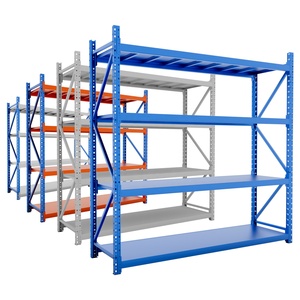
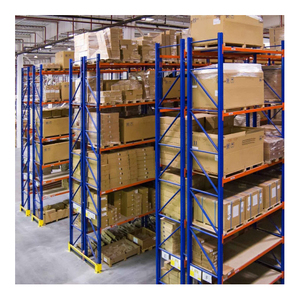
As premier Chinese exporters of beam pallet racking systems, Guangzhou Heda Shelves Co., Ltd. operates with end-to-end metallurgical control. From prime coil uncoiling, high-precision automated multi-punching, CNC cold-roll profile bending, to robotic dual-torch GMAW seam welding, our single-roof production guarantees absolute dimensional accuracy.
Every horizontal load beam and vertical upright assembly is fabricated to strict international standards (FEM 10.2.02, EN 15512, RMI MH16.1, and AS4084-2023). Our surface preparation incorporates a 9-stage alkaline wash, acid pickling, and zirconium-based nano-ceramic phosphating preceding thermosetting electrostatic epoxy powder curing. This ensures exceptional cross-hatch adhesion and extreme chemical resistance across variable tropical, high-humidity, and sub-zero refrigerated environments.
- Certified Structural Traceability: Certified chemical composition analysis (MTC EN 10204 3.1) for every steel batch of Q235B and Q355B structural steel.
- Full Container Yield Optimization: Knock-down nesting protocols maximizing cubic space utilization inside 40ft High Cube containers, minimizing freight per pallet slot.
- Free Computational Layout & FEA Calculations: Complimentary 3D BIM rendering, AutoCAD layout plans, and full structural static/dynamic stress calculations delivered within 24 hours.
Structural Anatomy & Load Metrics of Beam Pallet Racks
A rigorous examination of beam profile geometries, connector claw mechanics, moment-rotation capacities, and standardized load distributions required by international warehouse safety audits.
Interlocking Step vs. Box Beams
Export-grade beam racks leverage two primary profiles: Double-C interlocking Box Beams and Step Beams. Box beams provide exceptional torsional rigidity and flexural resistance under extreme, concentrated dynamic loading.
Step beams integrate an interior recess shelf specifically designed for drop-in wire mesh decking, steel panel inserts, or timber retainers, protecting pallet bases against punch-through failures.
Heavy Claw End Connectors
Each beam terminates in cold-stamped, high-tensile 3-claw, 4-claw, or 5-claw end connectors engineered to transfer bending moments efficiently into the upright columns. This wedge effect tightens dynamically as load increases.
Every connector incorporates an integrated, zinc-plated spring locking pin (locking shear pin) designed to withstand upward forklift dislodgement forces exceeding 5,000 N per ANSI MH16.1 requirements.
Deflection Limits (L/200 vs L/250)
Under maximum rated Uniformly Distributed Load (UDL), structural engineering rules dictate that beam vertical deflection must not breach the $L/200$ (or the stricter European FEM 10.2.02 standard of $L/250$) deflection threshold.
Adhering to these tight limits eliminates dangerous sagging, minimizes side-thrust loads against upright columns, and prevents racking misalignment during rapid automated VNA retrieval.
| Beam Profile (H × W × Thickness) | Material Grade | Clear Entry Span | Rated Capacity (UDL per Pair) | Standard Deflection Limit | Structural Compliance |
|---|---|---|---|---|---|
| Box Beam: 80 × 50 × 1.5 mm | Q235B Carbon Steel | 2300 mm (2 Standard Pallets) | 1,500 kg / level | δ ≤ 9.2 mm (L/250) | EN 15512 / FEM 10.2.02 |
| Box Beam: 100 × 50 × 1.5 mm | Q235B Carbon Steel | 2700 mm (3 Euro Pallets) | 2,000 kg / level | δ ≤ 10.8 mm (L/250) | ANSI MH16.1 / RMI |
| Box Beam: 120 × 50 × 1.5 mm | Q235B Carbon Steel | 2700 mm (Heavy Pallets) | 3,000 kg / level | δ ≤ 10.8 mm (L/250) | AS 4084-2023 / CE |
| Box Beam: 140 × 50 × 1.8 mm | Q355B High-Yield Steel | 3300 mm (Extra Wide Span) | 3,800 kg / level | δ ≤ 13.2 mm (L/250) | EN 15512 / FEM 10.2.02 |
| Step Beam: 110 × 50 × 1.5 mm | Q235B Carbon Steel | 2700 mm (Deck Insert Ready) | 2,200 kg / level | δ ≤ 10.8 mm (L/250) | RMI MH16.1 Spec |
* Load calculation models verified with safety factor ≥ 1.65 based on static yield strength limits and continuous testing validation.
Future Procurement Trends in Beam Racking (2025–2030)
Global logistics directors and engineering procurement teams are transforming how warehouse systems are specified. Discover the key strategic shifts redefining international supply agreements.
1. TEU Cubic Freight Optimization Over FOB Price
Seasoned enterprise buyers no longer evaluate bids solely on base FOB per metric ton. With global maritime shipping rates fluctuating, procurement teams prioritize component interlocking geometries. Knock-down, bundle-optimized upright frames and stack-nesting beam designs increase container packing density by up to 28%, significantly lowering landed cost per pallet location.
2. Stringent Seismic & Site-Specific Dynamic Engineering
Global distribution centers located in seismically active regions (e.g., Latin America, the Pacific Rim, Southern Europe) mandate customized seismic baseplates, anchor bolt pullout shear calculations, and dynamic moment-rotation curves compliant with ASCE 7-22 and Eurocode 8. Exporters providing fully vetted PE-stamped calculations secure substantial competitive advantages.
3. Convergence with Automation (AMR & VNA Interfacing)
Manual warehouses are transitioning to high-throughput hybrid environments. This shift requires tighter millimetric beam straightness tolerances (±1.0 mm total deviation), specialized laser-aligned guidance rub rails, and specialized floor anchoring tolerances. These upgrades support heavy Autonomous Mobile Robots (AMRs), automated pallet shuttles, and man-up turret trucks without structural jamming.
4. Sustainable Low-Embodied Steel & Eco Coatings
Multinational 3PLs and corporate shippers are under strict ESG pressure to reduce Scope 3 emissions. Procurement directives now demand supply from certified EAF (Electric Arc Furnace) steel mills, complete environmental product declarations (EPD), and heavy-metal-free, zero-VOC powder coating facilities with advanced closed-loop effluent filtration.
R&D Horizons in Pallet Racking Engineering
Explore the metallurgical, structural, and digital sensor innovations driving modern high-density beam pallet rack fabrication.
IoT-Enabled Structural Health Monitoring
Smart logistics hubs are piloting integrated strain-gauge sensor pods embedded within high-stress beam-to-column connections. These low-power industrial mesh IoT sensors track dynamic deflection cycles, register forklift impact shocks, and issue immediate structural warnings before fatigue failure occurs.
Zinc-Aluminum-Magnesium (ZM) Alloy Coatings
For demanding cold-chain facilities (-30°C) and marine coastal warehouses prone to cyclic condensation, leading exporters are replacing traditional hot-dip galvanizing with next-generation continuous continuous Zinc-Aluminum-Magnesium (ZM) alloy coated strip steel. This delivers self-healing cut-edge corrosion resistance and longer service life.
Ultra-High-Strength Micro-Alloyed Steels
By transitioning key components from standard mild steel to micro-alloyed boron-titanium treated structural strip (such as Q355B and Q460), beam wall thicknesses can be slimmed down while maintaining superior tensile yield performance. This reduces overall rack deadweight, eases field assembly, and reduces total raw material usage.
Frequently Asked Questions on Importing Beam Racking
Exhaustive answers written by structural engineers to eliminate friction during international supplier validation, manufacturing sign-off, customs clearance, and warehouse commissioning.
What essential warehouse parameters must be provided to obtain an accurate CAD layout and load calculation? +
How does your factory prevent steel embrittlement and coating failure in sub-zero cold storage facilities? +
What are the key structural distinctions between China's Q235B steel grade and ASTM A36 or European S235JR? +
How are beam pallet racking components packaged to prevent damage during multi-week ocean transit? +
How are installation alignment, verticality tolerances, and site assembly supervised for overseas projects? +
What quality control documentation and test certificates accompany each export shipment? +
Accelerate Your Distribution Hub's Storage ROI
Partner directly with China's leading beam pallet racking exporter. Receive custom AutoCAD layouts, structural engineering computations, and competitive factory-direct pricing within 24 hours.
Inquire Now