Featured Industrial Pallet Racking & Automated Storage Equipment
Precision-rolled, Q235B/Q355B high-tensile steel racking systems engineered directly in our Guangzhou manufacturing complex for turnkey international export.
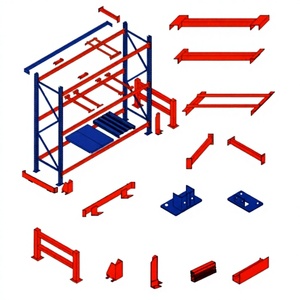
High Duty Selective Warehouse Storage Steel Vertical Pallet Racking Systems Pallet Rack From China with Manufactures Price
View Engineering Specs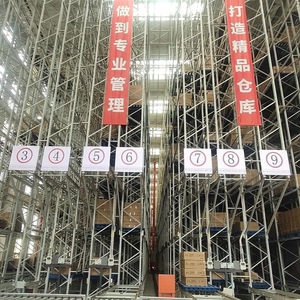
ASRS Inventory Management Stacker Crane Shuttle WMS WCS AMR AGV RGV Logistic Automation Automated Warehouse Racking System
View Engineering Specs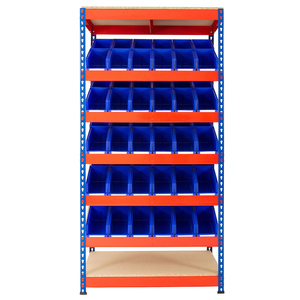
Chinese Warehouse Boltless Medium Duty Small Storage Multi Layer Shelf Rack Unit Supplier Metal Rivet Shelves and Racks
View Engineering Specs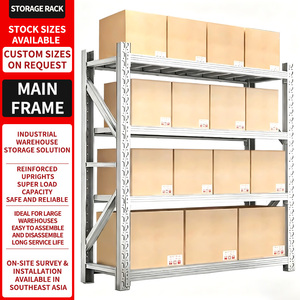
YueYang 300kg Per Layer Adjustable Cold Rolled Steel Epoxy Powder Coated Heavy Duty Industrial Warehouse Rack Pallet Racking
View Engineering Specs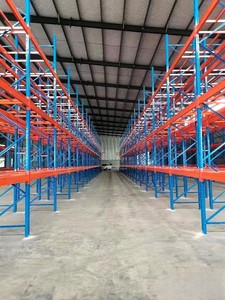
ISO CE Standard 5 Layer Corrosion Protection Blue and Orange Selective High Bay Storage Heavy Duty Pallet Racking System
View Engineering Specs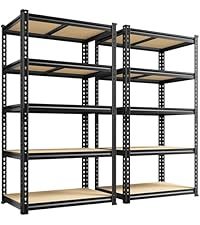
5 Layer Industrial Storage Shelving Racks Heavy Duty Adjustable Boltless Rivet Rack Corrosion Protection Warehouse Powder Coated
View Engineering Specs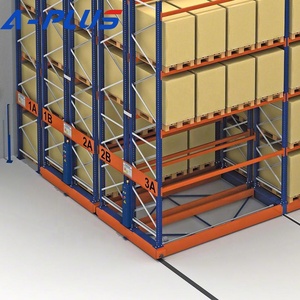
Motor Control Electrical Movable Heavy Duty Pallet Rack/electricity Mobile Racking System For Warehouse Pallet Storage
View Engineering Specs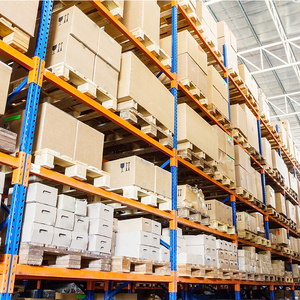
Heavy Duty Steel Fabric Roll Pallet Warehouse Racking Systems Steel Pallet Industrial Racks Nepal, Bhutan, Bangladesh
View Engineering SpecsDouble Deep Pallet Racking: Mechanical Principles, Spatial Thermodynamics, and Kinematics
In modern industrial logistics, facility engineers constantly navigate the friction between direct pallet selectivity and cube utilization efficiency. Standard selective pallet racking offers 100% immediate access to every pallet position but consumes more than 60% of available floor plate area in operational aisles. Conversely, high-density bulk storage systems like Drive-In racking maximize volumetric density at the severe expense of SKU selectivity, inducing pallet honeycombing and extended material handling equipment (MHE) transit times. Double Deep Pallet Racking stands as the optimal structural compromise, positioning pallets two-deep in back-to-back configurations, effectively eliminating alternate operating aisles and driving floor area utilization up by 30% to 45% compared to single-deep configurations.
Manufactured by precision China roll-forming mills such as Guangzhou Heda Shelves Co., Ltd., double deep upright frames and load beams are roll-formed using cold-coiled Q235B and Q355B structural carbon steel, delivering yield strengths upwards of 235 to 355 MPa. The architectural backbone utilizes continuous omega-profile upright columns featuring an 11-fold cross-sectional deformation geometry. This geometry resists torsional stress and column buckling under heavy eccentric dynamic loads imposed by extended pantograph reach trucks operating at heights exceeding 9 meters.
MHE Integration: Telescopic Pantographs vs. Extended Fork Geometry
The operational efficiency of double deep storage is inextricably linked to specialized Material Handling Equipment. Standard counterbalanced forklifts cannot service double deep racks. Facilities must deploy either pantograph reach trucks equipped with hydraulic scissor extensions or specialized reach trucks fitted with bidirectional telescopic hydraulic forks. Structural considerations include calculating the derated lifting capacity of reach trucks: as the pantograph extends into the secondary (rear) pallet bay, the truck's load center shifts from the conventional 600mm to 1,200mm or 1,400mm, reducing net mast capacity by 30% to 45%. HEDA engineers incorporate standard bottom support pallet guide rails and beam-mounted positioning sensors to assist forklift drivers, eliminating blind impacts on rear upright columns and ensuring rapid pallet docking cycles.
Double Deep vs. Alternative Industrial Pallet Storage Configurations
Examine the architectural trade-offs among primary pallet racking methodologies. Data derived from standardized 1,200 x 1,000mm ISO/Euro pallets with 1,000 kg nominal unit loads.
| Storage System Type | Floor Utilization (%) | Direct Selectivity | Required Aisle Width | Equipment Requirement | Relative Cost / Position | Throughput Velocity |
|---|---|---|---|---|---|---|
| Double Deep Racking | 55% – 65% | 50% (LIFO pair) | 3,000 mm – 3,400 mm | Deep-Reach Pantograph Truck | Low – Medium | Moderate – High |
| Standard Selective | 35% – 45% | 100% (Pure FIFO) | 3,200 mm – 3,800 mm | Standard Counterbalance / Reach | Baseline (Lowest) | Maximum |
| Very Narrow Aisle (VNA) | 55% – 60% | 100% | 1,600 mm – 1,900 mm | Wire/Rail Guided VNA Man-up | High | High |
| Drive-In / Drive-Through | 65% – 75% | 15% – 20% (Strict LIFO) | Aisleless (Channel entry) | Standard Counterbalance | Low – Moderate | Low (Aisle queuing) |
| Radio Shuttle Automation | 70% – 85% | 20% – 30% (Batch FIFO) | Aisle-free storage lanes | Semi-automated Li-ion Shuttle | Medium – High | High (Automated transfer) |
Why Global Procurement Officers Partner with HEDA Shelves China
Founded in 2001 and headquartered in Guangzhou, China, Guangzhou Heda Shelves Co., Ltd. has grown into an international benchmark for structural steel warehouse solutions. Spanning over 30,000 square meters of specialized production facilities with an annual throughput exceeding 360,000 metric tons, HEDA integrates custom structural engineering, multi-axis roll-forming, automated robotic welding, and turnkey maritime container export under a single ISO 9001:2015 and CE-certified roof.
Certified Steel Metallurgy
We source certified hot-rolled coils directly from primary state-owned steel conglomerates (Baosteel, Shougang). Every batch is metallurgically verified for tensile ductility, chemical carbon ratios, and yield limits under ASTM A1011 and EN 10025 standards.
Zero-Defect CNC Cold Profiling
Our facility houses 14 automated rolling lines with integrated CNC punching cassettes, allowing flexible hole pitches (50mm, 75mm, 76.2mm teardrop) without micro-fracturing adjacent steel webs, ensuring structural stability under high cyclic seismic loading.
Pre-Engineered 3D Layouts
HEDA senior logistics architects produce comprehensive AutoCAD floor designs, FEM-compliant load calculation sheets, and photorealistic 3D warehouse digital twins within 24 hours of receiving site civil parameters and forklift kinematic turning radii.
HEDA's 10-Stage Precision Production Protocol
Raw Coil Testing
Spectrographic carbon analysis & gauge micrometer verification.
Precision Slitting
High-speed laser and rotary shear tolerance to ±0.1mm.
Continuous Punching
Multi-punch CNC tooling forming teardrop or diamond upright slots.
Cold Roll Forming
Multi-station gradual cold bending ensuring uniform wall density.
Automated Sawing
Burr-free hydraulic mitre cutting to precise architectural heights.
Robotic Beam Welding
Automated MIG welding of heavy 3-claw/4-claw connector brackets.
Surface Shot Blasting
SA 2.5 mechanical scale descaling creating optimal surface profile.
Phosphating & Rinse
8-stage chemical wash ensuring anti-corrosion chemical passivation.
Electrostatic Coating
Thermoset polyester powder bake cured at 200°C for 70–100μm depth.
Knock-Down Bundling
Container-optimized steel banding with corner edge buffers for export.
Future Procurement Trends in Industrial Storage Systems (2025–2030)
The global warehousing landscape is undergoing unprecedented structural transformation driven by e-commerce SKUs, land acquisition costs, and supply chain decarbonization. Procurement directors no longer assess pallet racking purely as structural steel hardware; it is evaluated as an amortized capital asset driving cubic throughput velocity. Several critical sourcing vectors have emerged:
Raw Material Indexation & Hedging
Volatile international steel indices (HRC benchmarks) have made fixed-quote purchasing obsolete. Sophisticated enterprise buyers are utilizing rolling quarterly steel indexing contracts with Chinese manufacturing partners, pairing purchases with forward maritime freight bookings to stabilize landed costs per pallet position.
Container Loading Cubing Ratios
With volatile maritime container rates, volumetric shipping density determines total landed cost (TCO). Leading Chinese exporters utilize proprietary knock-down (KD) nested beam designs, loading up to 26–28 metric tons across 68 cubic meters in a standard 40-foot High Cube container, lowering unit ocean freight costs by up to 22%.
Cold Chain & Humid Region Resilience
With rapid expansion in pharmaceuticals and food logistics across Southeast Asia, Africa, and Latin America, standard single-coat paint fails rapidly. Procurement specifications now mandate heavy-duty hot-dip galvanizing (HDG compliant with ISO 1461) or marine-grade epoxy powder systems resisting 1,000+ hours of continuous salt spray testing.
Future Product Development Trends: The Next Generation of Double Deep Racking
As logistics facilities transition toward hybrid and dark warehouse models, double deep systems are evolving beyond passive static storage racks into sensor-integrated, semi-automated structural ecosystems:
Dual-Reach AGV / AMR Synchronization
The historical bottleneck of double deep storage—forklift operator blind spots—is being engineered out. Manufacturers are calibrating double deep rack tolerances to match dual-pantograph Autonomous Guided Vehicles (AGVs) and Autonomous Mobile Robots (AMRs) guided by LiDAR and SLAM visual navigation.
High-Strength Micro-Alloy Steel Profiles
Advancements in metallurgical micro-alloying (utilizing trace additions of Niobium, Vanadium, and Titanium) allow HEDA engineers to roll thinner column walls (2.0mm vs. traditional 2.5mm) while maintaining superior elastic yield thresholds, reducing tare weight by 15% without sacrificing beam deflection limits (L/200).
Embedded Telemetric Strain Sensors
Next-generation uprights are being tested with factory-embedded optical fiber strain gauges and IoT beam-deflection load cells. These sensors communicate real-time structural health, seismic settling data, and overload warnings directly to warehouse management software (WMS) platforms.
Frequently Asked Technical Questions: Sourcing Double Deep Racking from China
Actionable answers prepared by HEDA structural engineering and international trade specialists for global logistics operators.
Unlike standard counterbalance aisles requiring 3.8m to 4.2m, a double deep system serviced by a standard pantograph reach truck requires a clean operating aisle of 3,100mm to 3,400mm (based on standard 1,200x1,000mm pallets). Exact aisle width depends on the truck manufacturer's chassis dimensions, turning radius, and the reach mechanism stroke.
HEDA inspects steel coils at entry via ultrasonic thickness gauging and optical emission spectrometry to verify carbon content. Roll forming is executed through a 22-station gradual forming machine that prevents micro-cracking at bend radii. Load tests are validated in accordance with the European FEM 10.2.02 and EN 15512 codes.
Because forklift drivers place pallets into a rear blind bay, double deep racks require heavy-duty pallet support bars (at least two per pallet position), rear pallet safety stop-beams, heavy-gauge floor-mounted column protectors at row ends, and beam guidance mirrors or laser alignment flags.
Guangzhou Heda Shelves Co., Ltd. holds CE certification No. 2435-CPR-8605159, ISO 9001:2015 certification No. 18624Q00169R0M (valid through June 2027), and RoHS compliance documentation. Detailed factory test certificates and mill test reports (MTR) accompany all export documentation.
All upright frames, beams, and horizontal ties undergo multi-layer industrial wrapping: rust-inhibitive VCI film, heavy-duty corrugated board cushioning, high-tensile steel strapping, and custom fumigated timber saddles. Silica gel desiccant packs are placed inside every ocean container to protect against sweat cycles during tropical maritime voyages.
Yes. Because double deep racking uses standardized upright profiles and box beams, an existing selective system can be re-spaced into back-to-back double rows, provided the building's floor slab capacity and anchor pull-out ratings support the higher point loads, and the facility has reach trucks with double-deep pantograph attachments.