Engineered Warehouse Racking & Storage Solutions
Precision-manufactured from high-tensile cold-rolled steel, engineered for ISO 9001:2015 and CE certification standards, and load-tested for seismic and heavy-duty global supply chains.
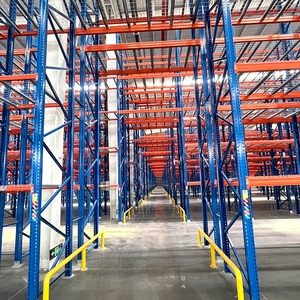
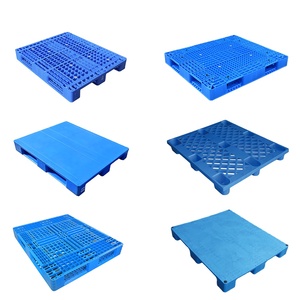
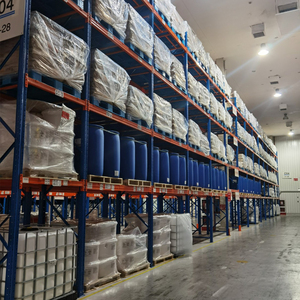
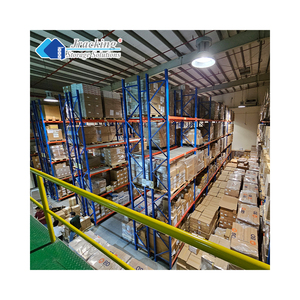
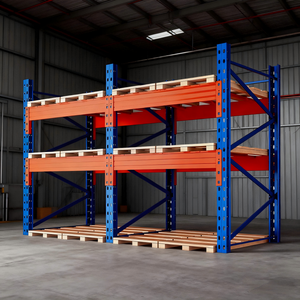
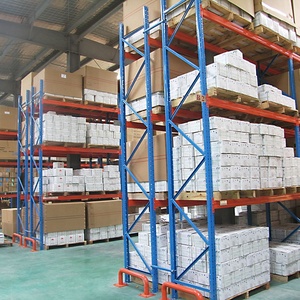
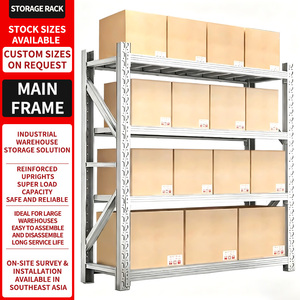
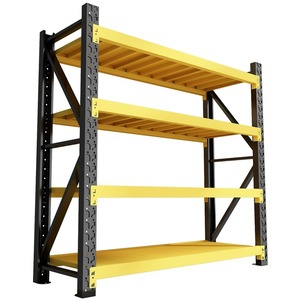
Fully Integrated Roll-Forming Lines
Every upright frame and horizontal load beam is processed in-house. Utilizing CNC automated 24-station continuous roll-forming lines ensures microscopic dimensional tolerance (±0.5mm), critical for multi-tier and high-bay installations exceeding 12 meters.
Stringent Surface Metallurgy & Pretreatment
Unlike regional workshops that apply direct coat finishes, our components undergo an automated 10-stage immersion pickling, degreasing, and zinc-phosphating protocol followed by electrostatic thermosetting polyester powder coating baked at 200°C for exceptional salt-fog and corrosion resistance.
Full-Cycle Overseas Engineering Support
From initial DWG architectural analysis to free 3D CAD/BIM structural modeling, finite element analysis (FEA), and container load optimization (saving up to 30% in ocean freight via precision nesting), we deliver end-to-end reliability for EPC contractors and 3PL enterprises.
Structural Racking Typology & Specification Matrix
Selecting the optimal pallet storage configuration requires balancing floor footprint utilization, selectivity indices, handling equipment requirements, and structural yield criteria.
| Storage System Type | Selectivity Index | Floor Space Utilization | Stock Rotation Mode | Forklift Compatibility | Structural Load Rating | Relative Cost Factor |
|---|---|---|---|---|---|---|
| Selective Pallet Racking | 100% Direct | 40% – 50% | FIFO / LIFO Flexible | Standard Counterbalance / Reach | 1,000kg – 4,500kg / Level | Baseline (1.0x) |
| Double Deep Racking | 50% Semi-Direct | 55% – 65% | LIFO Operational | Deep-Reach Pantograph Forklift | 1,500kg – 3,500kg / Level | 1.25x – 1.35x |
| Drive-In / Drive-Through | < 20% Batch | 65% – 75% | Strict LIFO (Drive-In) / FIFO | Narrow Counterbalance Truck | 1,000kg – 2,000kg / Pallet | 1.40x – 1.60x |
| Radio Shuttle Cart Racking | Semi-Automated | 75% – 85% | Automated FIFO or LIFO | Standard Reach / Stacker | Up to 2,000kg / Pallet Unit | 2.20x – 2.80x |
| Gravity Pallet Flow | Lane Selective | 70% – 80% | Strict Dynamic FIFO | Any Standard Forklift Fleet | 500kg – 1,500kg / Pallet | 2.50x – 3.20x |
| Rack-Supported Mezzanine | 100% Multi-Tier | 150% – 250% (Multiplied) | Piece / Carton / Pallet Hybrid | Pallet Jacks, VRC Lifts, Scissor | 300kg – 1,200kg / m² Deck | 1.80x – 2.40x |
10-Phase Precision Production Standard
HEDA Shelves applies strict chemical, mechanical, and dimensional inspections at every phase of transformation to guarantee structural integrity.
Certified Prime Steel
Mill-certified high-strength Q235B and Q355B hot-rolled coils from Baosteel with documented chemical composition and tensile testing.
Continuous Slitting
High-precision uncoiling and laser-guided slitting ensure uniform strip width within ±0.1mm to eliminate edge camber.
CNC Column Punching
Automated multi-stage punching presses form precise teardrop, diamond, or European omega hole arrays at continuous 50mm/75mm pitch.
Cold-Roll Forming
24 progressive roll stands gently manipulate steel into multi-flanged omega structural profiles without inducing micro-fractures.
Robotic Weld Cells
CO2 gas shielded robotic welders fuse 3-claw and 4-claw connector beam tangs with uniform penetration and zero weld-slag porosity.
Mechanical Straightening
Post-welding dynamic roll-straighteners ensure zero residual torsional warp or deflection across long beam spans up to 4.5 meters.
Chemical Pretreatment
Complete 10-stage bath sequence: hot alkali degreasing, industrial acid pickling, rinsing, neutralizing, and nano-zirconium phosphating.
Electrostatic Coating
Automated Swiss Gema powder application guns deposit an even 60–90 micron layer of weather-resistant TGIC polyester powder.
Thermal Curing Tunnel
Computerized infrared curing furnace keeps elements at 195°C–205°C for 22 minutes to achieve 2H pencil hardness and cross-hatch adhesion.
Packaging & Nesting
Uprights and beams bundled with corrugated wrapping, steel corner protectors, and timber skids optimized for seamless 40HQ unloading.
Future Sourcing & Engineering Trends (2025–2030)
Global warehouse operators are pivoting from traditional static shelving to resilient, automation-ready, and climate-hardened industrial infrastructure.
1. Convergence of Pallet Racks with AMR & ASRS Automation
Traditional selective racking is transitioning rapidly to hybrid automation interfaces. Modern rack uprights and floor anchors must now endure the dynamic kinetic forces of high-speed Automated Guided Vehicles (AGVs) and Autonomous Mobile Robots (AMRs). Tier-1 Chinese manufacturers are producing super-flat tolerance rail profiles with tighter structural deflection limits (L/300 vs traditional L/200) to support robotic vertical shuttles and automated cranes without optical sensor misalignments.
2. Cold Chain Infrastructure Boom & Anti-Embrittlement Steels
The explosive global demand for frozen food, pharmaceuticals, and perishable cold logistics has exposed the structural limitations of standard carbon steels. At temperatures below -25°C, steel experiences ductile-to-brittle transition risk. Emerging procurement contracts now mandate Charpy V-notch impact-tested Q355D steel grades, coupled with hot-dip galvanizing (ASTM A123) or antimicrobial epoxy coatings designed to withstand aggressive condensation cycles without flaking.
3. Decarbonization & Green Steel ESG Compliance
International industrial corporations and EPC conglomerates are under stringent mandates to report Scope 3 supply chain carbon emissions. Chinese rack exporters are adopting Electric Arc Furnace (EAF) scrap-recycled steel and closed-loop powder coating lines that emit near-zero Volatile Organic Compounds (VOCs). Purchasing teams are leveraging verifiable Environmental Product Declarations (EPDs) to meet BREEAM and LEED green warehouse building certifications.
4. Dynamic Seismic Resistance & Site-Specific Geotechnical Engineering
Earthquake compliance (conforming to RMI MH16.1, Eurocode 3 EN 1993-1-3, and AS 4084-2023) has evolved from an optional add-on to a legal prerequisite across Australasia, the Pacific Rim, and the Americas. Modern factory engineering includes non-linear pushover simulations, baseplate anchor shear analysis, and heavy-duty seismic portal ties that dissipate shockwave energy safely away from main structural upright columns.
5. Direct Factory Sourcing vs. Intermediary Trading Entities
Procurement directors are bypassing regional distributor markups (typically 25%–45%) by contracting directly with vetted Chinese manufacturing facilities that maintain internal foreign trade engineering teams. Direct engagement ensures custom beam hole punching pitches, custom RAL brand color matching, personalized structural engineering calculation packages, and guaranteed mill-test certificates (MTC) without intermediary inflation.
6. High-Cube Container Volume Optimization & Nesting Design
With volatile maritime shipping indices, logistics design has become a core engineering competency. Leading Chinese manufacturers now engineer "nested column configurations" where upright Omega profiles slip into one another during packing. Combined with knocked-down pallet support bars and beam nest bundles, container cubic utilization rises from 68% to over 94%, significantly lowering landed cost per pallet position.
Industrial Pallet Racking Procurement FAQ
In-depth structural engineering, international compliance, and import logistics guidance directly from our factory structural engineering department.
What are the critical metallurgical differences between Q235B and Q355B steel in racking fabrication?
The primary difference lies in the minimum yield strength and tensile resilience under load. Q235B offers a nominal yield strength of 235 MPa and a tensile strength of 370–500 MPa, making it ideal for standard selective racking, intermediate beam levels, and static medium-duty shelving where beam deflection governs design rather than ultimate tensile failure. Q355B (comparable to European S355 or American ASTM A572 Grade 50) delivers a yield strength of 355 MPa and tensile rating of 470–630 MPa. We selectively utilize Q355B for bottom-tier upright columns in high-bay systems exceeding 9 meters, seismic bracing diagonals, and cantilever column arms where bending moments and axial buckling pressures reach peak concentration. Utilizing Q355B allows thinner gauge metal to carry equivalent tonnage safely, reducing deadweight loads on the facility floor slab.
How does HEDA calculate and guarantee beam deflection safety under EN 15512 and RMI standards?
Under both European (EN 15512) and American Rack Manufacturers Institute (ANSI MH16.1) codes, pallet racking load beams are subject to strict deflection limits under maximum uniformly distributed load (UDL). The standard design criterion mandates a deflection ratio of no more than 1/200th of the clear beam span ($L/200$), though for automated ASRS or shuttle setups we regularly engineer to a stiffer $L/300$ threshold. For instance, a standard 2,700mm beam carrying two 1,000kg pallets ($2,000\text{ kg total} = 19.62\text{ kN}$) must not deflect more than $2700 / 200 = 13.5\text{ mm}$ at mid-span. Furthermore, our designs incorporate a safety factor of 1.5 to 1.65 against structural yield and are verified using computerized Finite Element Analysis (FEA) software with physical coupon test validation prior to dispatch.
What surface treatment is recommended for warehouses in high-humidity or coastal maritime environments?
For standard temperature-controlled warehouses, our 10-stage electrostatic powder coating (60–90 microns thick) provides excellent indoor durability, easily passing 500 hours of continuous neutral salt spray testing (ASTM B117). However, for tropical maritime zones (such as coastal West Africa, Southeast Asia, or the Caribbean) where ambient humidity exceeds 80% with airborne saline, or for cold-storage walk-in freezers experiencing continuous dew-point condensation, we strongly recommend either: (1) Hot-Dip Galvanizing (HDG) to ASTM A123 / ISO 1461, yielding an 80–110 micron metallurgical zinc-iron alloy layer with sacrificial cathodic protection; or (2) Epoxy Zinc-Rich Primer Undercoating beneath the exterior thermoset polyester topcoat.
What information must an overseas client provide for a fast, free CAD layout and structural quotation?
To enable our engineering office to formulate an accurate CAD floor plan, 3D render, and structural load analysis within 24–48 hours, please supply:
1. Architectural DWG or PDF plan: Exact building length, width, clear ceiling height under roof trusses, and locations of structural building columns, overhead sprinkler mains, fire doors, and loading docks.
2. Pallet Load Profile: Pallet dimension (Width × Depth × Overall Height inclusive of cargo), pallet type (Euro, ISO, Chep, two-way or four-way entry), and maximum gross load weight per pallet.
3. Material Handling Equipment (MHE): Forklift model, maximum mast lift height, minimum turning radius, and required right-angle aisle stacking width ($A_{st}$).
4. Throughput & Environmental Parameters: FIFO vs. LIFO preferences, daily pallet flow rate, indoor operating temperatures, and known seismic zone coefficient ($S_s, S_1$ or PGA rating).
How are knocked-down pallet rack components packed to prevent transport damage and reduce freight costs?
Ocean freight represents a major component of landed material expenditure. HEDA has refined precision nesting packaging protocols over 20+ years: Upright frames are delivered knocked-down (upright posts, diagonal horizontal bracing channels, and baseplates packed flat) or pre-bolted based on client preference. Upright Omega posts are interlocked and strapped into heavy steel bundles wrapped with micro-foam cushion pads and corrugated wraps. Load beams are sorted by span length, grouped with corrugated spacers between connector ears to avoid paint abrasion, and secured to solid wooden skids equipped with nylon lifting slings for rapid forklift de-stuffing at container ports. By minimizing void ratios, we routinely achieve 24 to 26 metric tons per 40ft High Cube container.
Can local installation crews assemble the racking without specialized factory personnel on-site?
Yes. Over 85% of our international projects are successfully erected by our clients' chosen local general contractor or storage crews. Every container shipment includes a detailed installation package comprising color-coded isometric 3D drawings, component identification tags corresponding to bill-of-lading markings, anchor bolt torque charts, and beam elevation schedules. Furthermore, our project engineering team provides asynchronous video guidance and live teleconference walkthroughs during critical alignment phases (such as laser floor shimming and column plumb verticality verification within the 1/500 plumbness tolerance). For large-scale automated or distribution hub facilities exceeding 10,000 pallet positions, on-site certified installation supervisors can be deployed upon request.
Consult Directly with a Senior Storage Structural Engineer
Send your warehouse architectural drawings or cargo profile. Our factory structural engineering department will prepare a complimentary CAD layout, 3D structural render, load calculation sheet, and container shipment optimization report within 24 hours.