Engineered Warehouse Storage & Pallet Racking Systems
From single-bay selective configurations to dense VNA and high-bay cantilever platforms, review our heavy-duty industrial storage series manufactured under strict CE and ISO quality regimens.
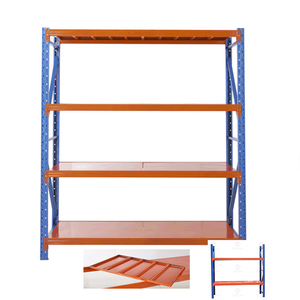
New Warehouse Longspan Racking Customized Color Supermarket Rack Manufacturers 200Kg Steel Wide Span Shelving Racks
- Capacity: 200kg – 500kg / Tier
- Step Beam + Steel/Timber Deck
- 50mm Adjustable Level Pitch
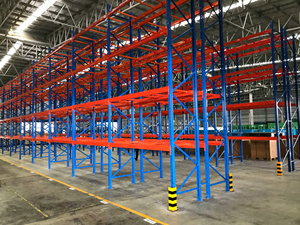
Industrial Heavy-Duty Steel VNA Pallet Racking Systems For Warehouse Storage Factory Wholesale Solution Carton Packing
- Aisle Width: 1,600mm – 1,900mm
- Floor Utilization: Up to 85%
- Max Bay Load: 24,000kg
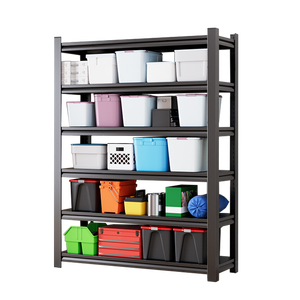
Diy Adjustable Angle Rack Clothes Warehouse Racks Display Stand Slotted Household Metal Storage Angle Steel Shelf Rack
- Modular Boltless / Bolted Fit
- Thickness: 1.2mm – 2.0mm Cold Steel
- Fast Assembly & Knock-Down
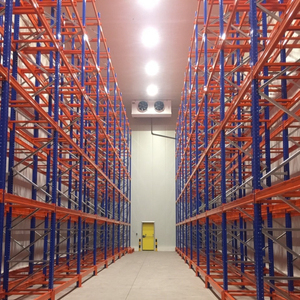
Drive In Racking System With High Density Storage Design Allowing Forklift Entry Maximizing Warehouse Space Utilization
- Continuous Drive-in Corridors
- Reduced Aisle Footprint by 60%
- Cold Storage & Bulk Homogeneous
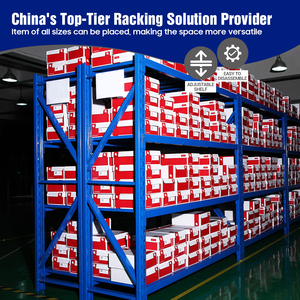
Shelving Light Duty Commercial Storage System For Stockroom Organization In Warehouses Garages And General Storage Areas
- Corrosion Resistant Powder Finish
- 100kg – 150kg Uniform Load
- Multi-tier Mezzanine Capable
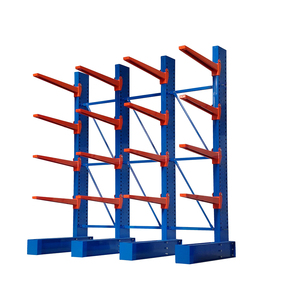
Industry Warehouse Steel Structural Pipe Rack Cantilever Rack for Pipe / Lumber Storage
- Arm Rating: Up to 2,500kg / Arm
- Single & Double Sided Base
- Profiles: H-Section / Roll-Formed
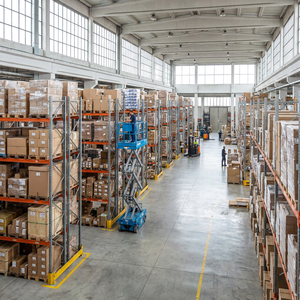
Professional Industrial Racking System Steel Warehouse Storage Equipment Supplier
- 100% Direct SKU Selectivity
- Beam Loads: 1,000kg – 4,500kg
- CE & ISO 9001:2015 Approved
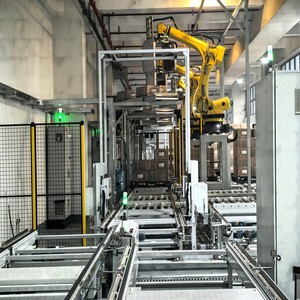
High Bay Heavy Duty Automated Storage and Retrieval System (AS&RS) Pallet Rack for Warehouse
- Heights up to 40+ Meters
- Tolerances within ±1.5mm
- Stacker Crane & WMS Synced
1. Engineering Architecture of Selective Pallet Racking Systems
The mechanical superiority of an industrial selective pallet racking system stems from its beam-to-column locking mechanics and finite element frame stability. Unlike static structural steel shelving, selective pallet racks are dynamically loaded engineering systems subjected to live cyclic loads, operational fork-truck impacts, and seismic load displacements.
Critical Mechanical Parameters: Upright & Beam Engineering
Upright Omega Section Optimization: High-yield Chinese cold roll-forming mills utilize an 11 to 13-bend profile (the classic "Omega" profile). These multifaceted continuous bends disperse vertical compression stresses along the perimeter, dramatically elevating the critical buckling load ($P_{cr}$) without inflating raw steel deadweight.
Beam Connector Physics: Our welded 3-claw, 4-claw, and 5-claw high-ductility steel connectors employ CNC precision-punched hooks that wedge snugly into the upright teardrop or diamond perforations under pallet load. This induces a semi-rigid joint connection ($M - \theta$ curve) that absorbs rotational momentum and stiffens longitudinal aisles.
Deflection Limits: In strict alignment with ISO and FEM guidelines, maximum beam vertical deflection under uniform load ($q$) is strictly engineered not to exceed $\frac{L}{200}$ (or optionally $\frac{L}{250}$ for automated robotic environments), protecting the yield point and preventing residual sagging.
A core reason international buyers source direct from tier-one factories like Guangzhou Heda Shelves Co., Ltd. is the direct traceability of raw materials. Cold-rolled structural coils sourced from primary mills like Baosteel and Shougang feature certified chemistry reports confirming precise Carbon (C ≤ 0.20%), Manganese, and Silicon ratios. This chemical purity prevents micro-fracturing along tight bend radii during high-speed cold roll-forming operations.
2. Technical Comparison Matrix: Selective Racking vs. Alternative High-Density Systems
Procurement engineers must balance pallet selectivity against volumetric cubic capacity. Below is an engineering evaluation contrasting selective racking with five alternative heavy-duty configurations:
| System Type | SKU Selectivity | Cubic Space Efficiency | Aisle Clear Width | Forklift Compatibility | Cost per Pallet Position |
|---|---|---|---|---|---|
| Standard Selective Rack | 100% Direct Access | Moderate (40% - 45%) | 3,000mm – 3,500mm | Standard Counterbalance / Reach | $ (Lowest Baseline) |
| Very Narrow Aisle (VNA) | 100% Direct Access | High (65% - 70%) | 1,600mm – 1,900mm | Specialized VNA Turret Truck | $$ (Moderate) |
| Double Deep Pallet Rack | 50% Immediate Access | High (60% - 65%) | 3,000mm – 3,400mm | Pantograph Reach Truck | $ - $$ (Low-Moderate) |
| Drive-In / Drive-Through | Low (Batch LIFO / FIFO) | Very High (75% - 85%) | Dedicated Drive Lanes | Counterbalance / Reach Entry | $$ (Moderate) |
| Radio Shuttle Cart System | Medium (Channel Batch) | Maximum (80% - 90%) | Front Operating Bay Only | Conventional Fleet + Shuttle | $$$$ (Capital Intensive) |
| High Bay ASRS Automated | 100% Computerized | Maximum Vertical (>90%) | Dedicated Crane Track (<1,500mm) | Automated Stacker Crane | $$$$$ (High CapEx / Low OpEx) |
3. Future Procurement & Technological Trends in Selective Racking (2025–2030)
The global warehousing landscape is undergoing unprecedented structural shifts driven by supply chain volatility, urban real estate premiums, and warehouse robotics. Enterprise buyers evaluating Chinese racking suppliers over the coming decade must calibrate their sourcing specifications around four emerging megatrends:
1. Hybrid Robotic Compatibility (AMR & AGV)
Selective racking is transitioning from human-operated forklift corridors to mixed-mode pathways where Autonomous Mobile Robots (AMRs) operate beneath bottom beam elevations. Chinese factories are adapting base plates, guide rails, and lower-level beam clearances to prevent sensor blind-spots and laser scatter.
2. Micro-Alloy Steel & Gauge Optimization
By shifting from standard hot-rolled structural steel to niobium/vanadium micro-alloyed cold coils (such as Q355B and high-yield cold-rolled variants), advanced suppliers decrease structural self-weight by 12% to 18% while sustaining identical load factors. This reduces international sea container counts and terminal duties.
3. Eco-Friendly Closed-Loop Coating
Stringent environmental audits in China have eliminated primitive open-air dip paint factories. Leading suppliers deploy automated 10-stage pickling, phosphating, and nano-ceramic pretreatments paired with TGIC-free electrostatic epoxy powders, ensuring 500+ hour salt-spray corrosion resistance without hazardous effluents.
4. Step-by-Step Quality Control & Production Flow in Top Chinese Factories
A comprehensive understanding of Chinese manufacturing methodology allows procurement officers to pinpoint where quality variances occur. At our Guangzhou HEDA Shelves industrial facility, each structural member transitions through ten strictly monitored stages:
5. Enterprise Credential & Manufacturing Advantages: Guangzhou Heda Shelves Co., Ltd.
Founded in 2001, Guangzhou Heda Shelves Co., Ltd. has grown into an internationally authoritative force within the industrial warehouse racking ecosystem. Headquartered at Xingang East Road, Haizhu District, Guangzhou, our heavy production infrastructure combines world-class mechanical forming automation with structural engineering consulting.
Audited Certifications & Production Metrics
Factory Scale: 30,000 square meters of specialized manufacturing workshops manned by over 300 experienced engineers, CNC technicians, and certified welders.
Capacity Throughput: Monthly processing capacity exceeding 30,000 metric tons of certified structural steel, allowing rapid delivery schedules for multi-thousand pallet space facilities.
European CE Certification: Fully certified under CE Certificate No. 2435-CPR-8605159, attesting that structural components meet EN 1090-1 and CPR standards for structural steel applications.
ISO 9001:2015 Management System: Authenticated under Registration No. 18624Q00169R0M (valid through June 2027), ensuring documented quality verification from coil incoming inspection to shipping seal checks.
Complimentary 3D CAD & Static Calculations: In-house structural engineers furnish professional 2D floor plans, 3D parametric renderings, and load-bearing stress calculations prior to commercial deposit.
Beyond fabrication prowess, HEDA Shelves provides purpose-built Containerization Optimization. Because warehouse racking uprights and horizontal beams are notoriously volumetric, our engineering team uses specialized software to build mixed-nesting container loading diagrams. Frames, step beams, row spacers, and wire decking are nested inside 40HQ maritime containers to maximize payload weights right up to shipping line caps (26–28 tons), drastically reducing landed freight expenses per pallet location for importers across the Americas, Africa, Europe, Australia, and the Middle East.
Frequently Asked Technical Questions (FAQ)
Clear, engineering-driven answers regarding structural specifications, maritime delivery, installation safety, and factory verification for overseas buyers.