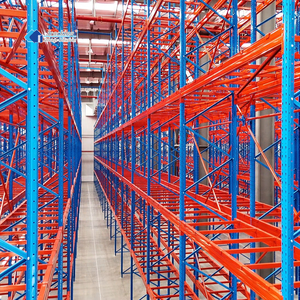
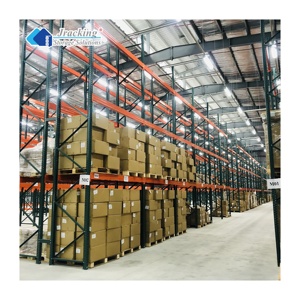
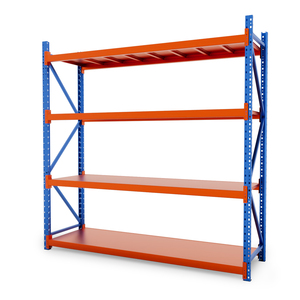
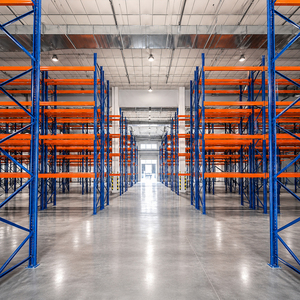
1. Technical Taxonomy: Architectural Comparison of Pallet Shelving Systems
Selecting the optimal pallet shelving system requires a rigorous evaluation of spatial density, stock selectivity, SKU velocity, and material handling equipment (MHE) kinematics. Industrial warehouses frequently confront trade-offs between storage capacity utilization and immediate picking access. The table below delineates the primary structural archetypes manufactured within top-tier Chinese facilities:
| Racking Typology |
Direct Selectivity |
Volumetric Utilization |
Primary MHE Required |
Ideal SKU Velocity |
| Selective Pallet Racking |
100% Immediate |
40% – 50% |
Counterbalance / Reach Truck |
High Velocity, Varied SKUs |
| Double Deep Pallet Racking |
50% Direct |
55% – 65% |
Pantograph / Deep Reach Truck |
Medium-High Velocity, Multiple Pallets/SKU |
| Drive-In / Drive-Through |
Last-In First-Out (LIFO) |
65% – 75% |
Counterbalance / Specialized Reach |
Bulk Homogeneous Goods, Low SKU Diversity |
| Radio Shuttle Automation |
Automated FIFO / LIFO |
75% – 85% |
Standard Forklift + Automated Shuttle |
Massive Throughput, Cold Chain, Food & Beverage |
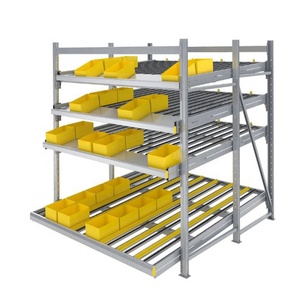
| Gravity Flow Racking |
Strict Mechanical FIFO |
70% – 80% |
Standard Forklift (Separated Aisles) |
Perishables, High-Turnover Distribution Hubs |
| Rack-Supported Mezzanine |
100% Picking Selective |
85% – 95% (Vertical) |
Forklift + Hand Trucks / Vertical Lifters |
Multi-tier Case Picking, Auto Parts, E-Commerce |
Information Gain Insight: While Selective Pallet Racking minimizes operational cycle times, Radio Shuttle and Drive-In frameworks dramatically diminish real estate overhead per pallet position by eliminating interior forklift travel aisles. In cold storage facilities where refrigeration costs are directly proportional to cubic footage, shuttle racking achieves up to a 60% reduction in refrigeration thermal load per unit stored.
2. Engineering & Metallurgy: What Distinguishes Top Chinese Manufacturers
The performance of heavy-duty warehouse shelving under static and dynamic loading depends on metallurgical composition, structural roll-forming precision, and anti-corrosive surface treatment. At Guangzhou Heda Shelves Co., Ltd., raw structural steel is procured exclusively from verified domestic mills in the form of hot-rolled structural steel strip coil—predominantly Q235B and Q355B grades.
Precision Roll-Forming & Cold Bending Technology
The manufacturing process begins with continuous cold-roll forming lines that progressively shape the flat steel strip into omega-style multi-bend upright sections. These profiles feature up to 12 distinct mechanical bends. Multi-bend geometries distribute axial compressive stresses evenly across the column cross-section, mitigating localized web buckling under extreme static vertical loads. Computerized, automated punching systems maintain hole pitch tolerances within ±0.1mm, ensuring interlock between connector studs and upright perforations.
Surface Protection: 10-Stage Pickling, Phosphating, and Electrostatic Coating
Atmospheric moisture, condensation cycles in coastal ports (such as Lagos, Mombasa, Tema, or Durban), and chemical exposures in industrial logistics parks can degrade unprotected structural steel. Premium Chinese fabrication centers integrate a comprehensive 10-stage automated pre-treatment and finishing lifecycle:
Components undergo ultrasonic degreasing, industrial pickling (to remove rolling scale and oxidization), surface neutralization, and dense zinc phosphating. This chemically bonds a microscopic crystalline matrix onto the steel, providing cathodic protection. Subsequently, an electrostatic epoxy-polyester thermosetting powder coat (60–80 microns thickness) is baked at 180°C–200°C. The resulting finish resists salt-spray corrosion, micro-scratching from industrial pallets, and chemical spills.
3. Strategic Enterprise Advantages of Guangzhou Heda Shelves Co., Ltd.
Operating continuously since 2001, Guangzhou Heda Shelves Co., Ltd. represents a manufacturing authority in the Chinese material handling and logistics infrastructure sector. Supplying industrial systems across Africa, Southeast Asia, South America, and Europe, the organization provides distinct engineering and operational capabilities:
Certified Structural Compliance
Every fabrication batch conforms to CE Certification (No. 2435-CPR-8605159) and ISO 9001:2015 Management Standards (No. 18624Q00169R0M), guaranteeing load calculations adhere to international safety factors.
Container-Optimized Logistics
Structural components are packaged in engineered modular bundles that maximize volumetric efficiency in 20GP and 40HQ maritime containers, reducing sea freight costs per pallet position.
Complimentary 3D & CAD Layouts
Our in-house design engineers model comprehensive CAD architectural blueprints, 3D renderings, and floor-slab load simulations before manufacturing begins, preventing costly installation revisions.
4. Future Procurement & Technology Trends in Warehouse Storage Systems
The intralogistics landscape is experiencing structural shifts driven by automation, sustainability, and changing real estate costs. When evaluating long-term warehouse infrastructure investments, global procurement directors should align with these emerging industrial paradigms:
1. Mechanical-Automated Hybridization
Modern supply chain architecture is shifting from pure manual selective racking toward scalable semi-automation. The adoption of Radio Shuttle Systems allows companies to introduce pallet automation incrementally without incurring the high upfront costs or complex IT architecture of fully automated storage and retrieval systems (AS/RS). These frameworks feature modular channels that can be upgraded with autonomous shuttle units as SKU throughput increases.
2. Seismic-Resilient and Climate-Adapted Civil Engineering
Due to stricter building codes across seismic zones and extreme weather regions, procurement teams require sophisticated FEA (Finite Element Analysis) verification. Upright columns now integrate flared base plates with multi-anchor expansion systems capable of withstanding dynamic lateral seismic shearing forces. For coastal and non-climate-controlled storage in developing economies, hot-dip galvanized (HDG) structural zinc plating is increasingly preferred over standard powder coats to eliminate internal tube corrosion over decades of service.
3. Integration of Modular Mezzanines with Automated Guided Vehicles (AGVs)
Urban real estate inflation makes upward vertical expansion more economical than lateral land acquisition. Multi-tier rack-supported mezzanines are engineered with integrated steel composite decking designed for low-clearance sorting AGVs and autonomous mobile robots (AMRs). This structural design allows warehouses to conduct automated small-parts sorting on upper levels while managing heavy pallet loads on the primary ground floor.
5. Global Logistics & Installation Guidance: Mitigating Overseas Procurement Risks
Procuring hundreds of tons of industrial racking from China requires clear project oversight to avoid site mismatches, damaged coatings, or installation bottlenecks. The following guidelines should govern your factory sourcing protocol:
Pre-Shipment Trial Assembly: Leading factories perform structural trial mockups before packing. Key parameters—including connector hook seating depth, locking pin safety clearances, and beam deflection under test weights—should be inspected and documented in factory acceptance reports.
Floor-Slab Load Bearing Verification: The greatest operational hazard is an overlooked foundation slab. Standard heavy-duty racking introduces concentrated point loads through baseplates ranging from 2,000 kg to over 10,000 kg per upright column. Procurement teams must provide slab core-test data (concrete grade, rebar density, and slab thickness) to allow the factory to dimension baseplate surface areas and anchor bolt embedment depths properly.
Frequently Asked Questions (FAQ) – Procurement & Engineering
How do top Chinese factories guarantee the load-bearing safety of custom racking systems?
Load safety is calculated in accordance with international design standards such as EN 15512 (European standard for adjustable pallet racking) or RMI (Rack Manufacturers Institute) specifications. Structural integrity begins with mill-certified Q235B/Q355B structural steel, cold-formed into specialized multi-bend profiles that maximize structural stiffness. Chinese manufacturers conduct comprehensive Finite Element Analysis (FEA) computer modeling to verify deflection limits (typically not exceeding L/200 for beams under maximum uniform distributed load). Physical destructive load tests are carried out on computerized hydraulic test rigs to confirm a safety factor of 1.5 to 1.65 above rated capacities.
What are the trade-offs between electrostatic powder coating and hot-dip galvanizing?
Electrostatic powder coating (60–80 microns thick) provides excellent wear resistance, custom corporate color matching, and high anti-rust performance for standard indoor warehousing at a cost-effective price point. Hot-dip galvanizing involves immersing clean steel components into molten zinc (~450°C), creating an iron-zinc alloy coating that protects against physical abrasions. Galvanizing is recommended for outdoor open-air yards, sub-zero cold storage facilities, chemical environments, or tropical warehouses located within 5 km of an ocean coast.
What critical dimensions are needed to obtain an accurate CAD layout and price quote?
Engineering a project requires six primary metrics: (1) Warehouse architectural drawings indicating internal length, width, clear building height below rafters, and positions of columns, fire suppression lines, and overhead doors; (2) Pallet specifications including overall length, depth, height, and gross weight (including pallet overhang); (3) Forklift model, maximum lifting mast height, and minimum right-angle stacking aisle width; (4) Total inventory SKU count and velocity (FIFO vs. LIFO rotation); (5) Concrete slab thickness, grade (e.g., C25/C30), and rebar reinforcement data; and (6) Destination sea port for CIF/CFR container freight optimization.
How are long upright columns and beams protected against damage during ocean container transit?
Top-tier manufacturers use systematic knock-down bundling protocols designed for 20GP, 40GP, and 40HQ container footprints. Upright frames are either pre-assembled or flat-packed using protective timber runners, industrial bubble wrap, corrugated cardboard sleeves, and heavy-duty PET strapping bands. Corner-edge protectors prevent abrasive scratching. Beams are bundled in matched sets with nested connector brackets, wrapped in plastic film, and secured to the container floor with steel tension banding to eliminate cargo shifting in high seas.
How can overseas buyers manage installation without factory technicians on-site?
Experienced exporters supply detailed engineering packages with every order. This includes color-coded CAD assembly drawings, sequential step-by-step installation manuals, and 3D exploded architectural models identifying every individual beam, cross-bracing strut, baseplate, and shimming plate. Components are clearly marked with stamped or labeled part numbers matching the shipping bill of materials. Remote installation support can be conducted via scheduled video conferences, while large-scale regional installations can be supported by certified on-site assembly supervisors.
Can Chinese pallet shelving systems be configured to integrate with existing legacy racking brands?
Yes. Leading Chinese OEM manufacturers maintain standard tooling for global structural formats. This includes US-standard 2-inch pitch teardrop patterns, European 50mm and 75mm incremental pitch hooks (compatible with Dexion, Stow, and SSI Schaefer standards), and Australian 76.2mm pitch slots. When specifying expansion projects, clients can send physical samples or detailed technical cross-section drawings to allow engineers to mill-match custom upright column dimensions, beam brackets, and locking pin geometries.
Accelerate Your Warehouse Intralogistics Project
Connect directly with our engineering team to receive a complimentary custom 2D/3D CAD layout, structural load analysis, and factory-direct quotation tailored to your operational specifications.