Featured Industrial Adjustable Storage & Pallet Racking Systems
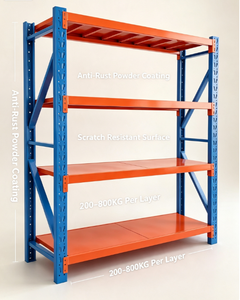
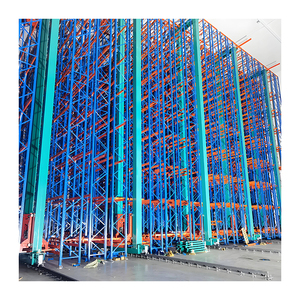
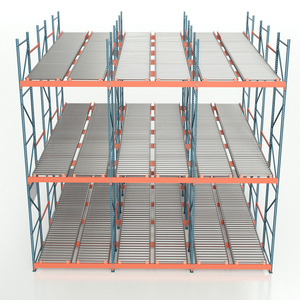
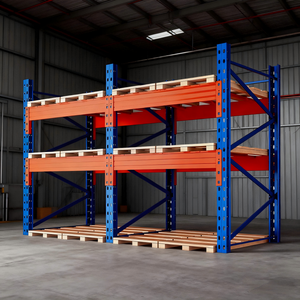
Engineered to comply with international FEM 10.2.02, EN 15512, and RMI standards. Inspect our high-load boltless shelving, multi-tier racking frames, and dynamic density storage solutions below.
Why Tier-1 3PLs and Distribution Hubs Partner With HEDA Shelves
Selecting an adjustable warehouse shelving factory is an engineering commitment that determines facility safety, volumetric utilization, and operational ROI for 15 to 25 years.
End-to-End In-House Manufacturing
Unlike trading intermediaries, our 30,000 m² primary plant handles cold-coiling, precision CNC automated column punching, continuous roll forming, robotic welding, and automatic coating. Zero sub-contracting ensures total metallurgical traceability from raw coil mill test certificates (MTC) to container loading.
Certified Metallurgical Integrity
Manufactured strictly from Baosteel prime grade Q235B and Q355B carbon steel. Our adjustable profiles undergo finite element analysis (FEA) testing, ensuring compliance with European Racking Federation (FEM 10.2.02) guidelines and American RMI standards with minimum 1.5 safety factors under maximum nominal loads.
10-Stage Anti-Corrosion Treatment
To resist harsh coastal warehouse salinity, high-humidity, and cold-storage condensation, all steel elements undergo hot chemical degreasing, ceramic acid pickling, automated phosphating, and 180°C to 200°C cured electrostatic powder coating delivering over 500 hours of neutral salt spray (ASTM B117) corrosion resistance.
Free Rapid 3D Layout & CAD Modeling
Our senior structural engineering team prepares comprehensive AutoCAD floorplans, 3D photorealistic spatial renderings, picking aisle clearance calculations, and permissible floor slab load assessments within 24 hours—eliminating expensive on-site dimensioning discrepancies prior to steel fabrication.
Container Nesting & Freight Optimization
International shipping represents a massive fraction of landed equipment costs. HEDA's engineering department designs interlocking upright profiles, nesting teardrop and box beams, and bundle packaging that boosts container volumetric space utilization by up to 35% in standard 40ft HQ ocean containers.
Full Turnkey Project Lifecycle Support
From custom color-coding matching enterprise branding, bespoke column guard accessories, and slotted angle components to labeled packaging, comprehensive bilingual assembly blueprints, remote video supervisory engineer sessions, and global on-site contractor installation management.
1. The Mechanical Physics of Adjustable Warehouse Shelving Systems
In modern high-velocity distribution centers, warehouse shelving cannot be regarded as simple static furniture; it operates as an engineered, load-bearing spatial superstructure. The load-deflection behavior of adjustable racking systems is governed strictly by beam connector stiffness, column post perforation geometry, and baseplate anchorage mechanics.
Standard industrial adjustable shelving utilizes upright column sections fabricated via progressive cold roll-forming with up to 13 distinct rolling passes. This cold-work process introduces intentional work-hardening along the bend radiuses, boosting yield strength compared to unformed flat sheets. Pitch perforations—typically engineered at 50mm, 75mm, or 76.2mm (3-inch) increments—allow warehouse managers to adjust clear beam heights rapidly as product packaging and pallet heights fluctuate throughout seasonal demand shifts.
Critical Structural Metric: Under standard FEM 10.2.02 deflection criteria, maximum allowable beam deflection under uniformly distributed load (UDL) must not exceed L/200 (where L equals the clear span between uprights). For automated picking and shuttle interfaces, deflection tolerances must tighten to L/300 or L/400 to prevent automated handling vehicle sensor tripping.
2. Future Procurement Trends in Industrial Storage (2026–2030)
Procurement directors and supply chain engineers are no longer purchasing static warehouse shelving in isolation. Three transformative macroeconomic and technological dynamics are reshaping factory specifications globally:
A. Hybrid Automation-Ready Modularity: As facilities transition gradually from manual pick-and-pack operations toward Autonomous Mobile Robots (AMRs) and Automated Storage and Retrieval Systems (AS/RS), adjustable shelving uprights are increasingly pre-punched to accept top-rail guide tracks, optical sensor reflectors, and dynamic roller track cartridges without requiring on-site cutting or structural re-welding.
B. High-Tensile Micro-Alloyed Steels: Environmental regulations and surging global logistics tariffs are pushing factories away from thick low-grade structural steel toward micro-alloyed, high-yield thin-gauge steels (such as Q355B and automotive-grade high-strength cold-rolled strips). This achieves equal or superior moment capacity and buckling resistance while reducing dead load mass by 12% to 18%, significantly lowering oceanic shipping expenses and floor slab stresses.
C. Digital Twin Integration & Structural Health Monitoring: Modern high-bay adjustable racking installations are integrating passive RFID tag arrays and embedded load-cell baseplates. This allows enterprise Warehouse Management Systems (WMS) to track real-time bay weight distribution, dynamically notifying facility safety officers if eccentric loading causes uneven column strain or exceeds certified bay load ceilings.
3. Structural Selection Matrix: Adjustable Shelving vs. Heavy Pallet Racks
To assist logistics facility planners in matching material handling requirements to the appropriate structural typology, our engineering department provides the following baseline comparative design matrix:
| Shelving System Type | Standard Load Capacity | Aisle Width Requirement | Vertical Space Utilization | Primary Ideal Application |
|---|---|---|---|---|
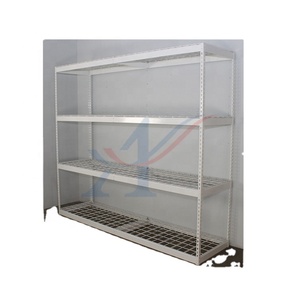
| Boltless Longspan Shelving | 300 – 800 kg / level | 900mm – 1200mm (Manual) | Moderate (Up to 4.5m) | E-commerce pick modules, automotive spare parts, carton archives |
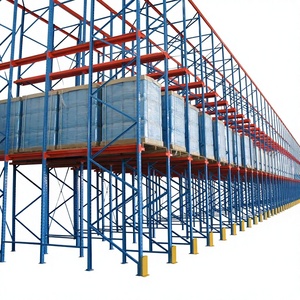
| Selective Pallet Racking | 1,000 – 4,500 kg / level | 2800mm – 3500mm (Counterbalance) | High (Up to 12m) | Fast-moving multi-SKU FMCG, general 3PL public warehousing |
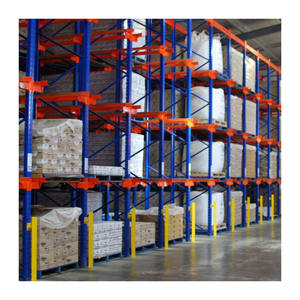
| Drive-In / Drive-Through | 1,000 – 1,500 kg / pallet | Forklift entry lanes (1100mm) | Very High (Up to 80% footprint) | Cold storage, raw agricultural commodities, single-SKU batch goods |
| Radio Pallet Shuttle | Up to 3,000 kg / pallet | Aisle only at lane entry/exit | Maximum (90%+ density) | Deep-freeze cold chains, buffer staging, beverage bottler distribution |
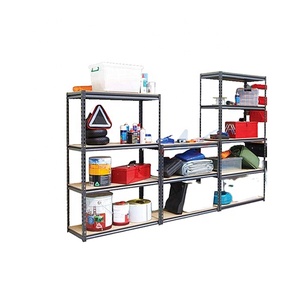
| Slotted Angle Shelving | 100 – 200 kg / shelf | 800mm – 1000mm (Manual) | Standard (Up to 3m) | Retail backroom staging, workshops, small component bins, hardware |
4. Critical Inspection & Maintenance Benchmarks Under ISO 9001
Factory-level structural compliance extends beyond component production into ongoing operational resilience. Over 90% of warehouse rack collapses trace back not to catastrophic overload, but to cumulative mechanical forklift impact damage to lower upright columns. Trusted manufacturers provide standardized column base protectors, heavy-gauge wraparound corner bumpers, and snap-in beam safety locking pins that resist accidental vertical dislodgement by forklift forks during high-speed pallet elevation.
Adjustable Warehouse Shelving Sourcing FAQ
Essential technical, logistics, and compliance queries evaluated by Guangzhou HEDA Shelves' lead structural application engineers.
◆ What distinguishes prime cold-rolled steel from secondary scrap steel in racking?
Prime grade cold-rolled carbon steel (such as Baosteel Q235B or Q355B) exhibits uniform grain boundary cohesion, exact thickness tolerance (±0.05mm), and verified elongation characteristics (>25%). Substandard or scrap-recycled steel contains chemical impurities causing micro-fracturing along column bend radii during continuous cold roll-forming, dramatically degrading structural buckling thresholds.
◆ How do we accurately determine beam level load limits versus overall bay load capacity?
A common error is assuming bay capacity equals beam capacity multiplied by beam levels. While a pair of box beams may support 3,000 kg uniformly distributed, the overall vertical upright frame capacity decreases as the distance between the floor and the first beam level increases (unbraced column length). Our engineers supply comprehensive load charts verifying both beam moment limits and upright frame compression capacities.
◆ Which surface finish is recommended for refrigerated or high-humidity facilities?
For ambient warehouses, standard 10-stage phosphating followed by thermosetting electrostatic polyester powder coating (60–80 microns thickness) provides superior scratch resistance. For continuous sub-zero refrigeration (-25°C cold chain) or tropical coastal marine humidity, we recommend Hot-Dip Galvanization (HDG) per ISO 1461, providing a sacrificial zinc metallurgical bond impervious to peeling.
◆ Can adjustable shelving systems be upgraded to multi-tier mezzanines later?
Yes, provided initial engineering calculations account for the prospective dead and live loads of upper platform decks. HEDA designs modular rack-supported mezzanine frames with oversized baseplates and pre-drilled column connection splices, enabling warehouse owners to add stairs, cat-walk grating, and second-tier picking levels without tearing down base racking frames.
◆ What international structural standards should overseas buyers require?
Overseas project owners should mandate compliance with CE marking (EN 15512: Steel static storage systems - Adjustable pallet racking systems - Principles for structural design), ISO 9001:2015 quality management certifications, and American ANSI MH16.1 (RMI) standards. Every production batch should have verified Mill Test Certificates (MTC) matching steel batch numbers.
◆ How are knockdown components packed to prevent freight damage during transit?
Upright frames are assembled or knocked down with protective bubble cushioning between upright faces, banded with high-tensile steel strapping on dedicated wooden dunnage. Beams are nested in bundles with corrugated corner edge protectors, while small hardware, baseplates, and locking pins are crated in seaworthy fumigated wooden boxes with desiccants to prevent transit corrosion.
Request an Engineered Layout & Factory-Direct Quotation
Send your warehouse dimensions, clear ceiling heights, pallet specs, and forklift parameters. Our engineering department will return a comprehensive AutoCAD floor plan, structural load certificate, and itemized CIF/FOB pricing within 24 hours.