High-Density & Heavy-Duty Pallet Racking Portfolio
Explore our certified structural steel pallet racking systems engineered to optimize volumetric space utilization, elevate load dynamics, and minimize per-pallet storage expenditures.
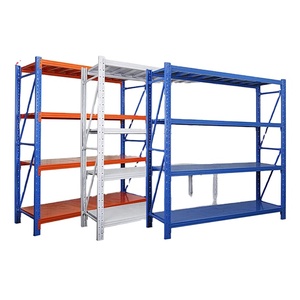
Wholesale Steel Light & Medium Duty 5 Layer Pallet Rack Warehouse Storage Racking Industrial
- 5-tier flexible height adjustment
- Cold-rolled steel beam profile
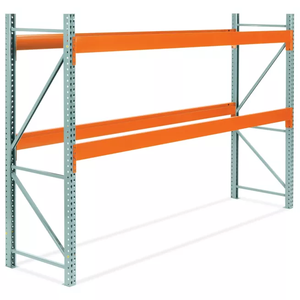
US Style Storage Shelf Unit Adjustable Heavy Load Tear Drop Warehouse Pallet Racking
- Compatible with North American standard
- Patented safety rivet lock pin
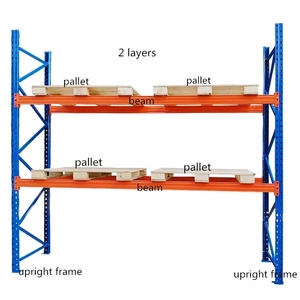
Blue And Orange Pallet Racking, Metal Hanging Carpet Shelf Rack, Sample Shelf Metal Racks
- Specialized textile suspension beams
- Dual-tone electrostatic powder coat
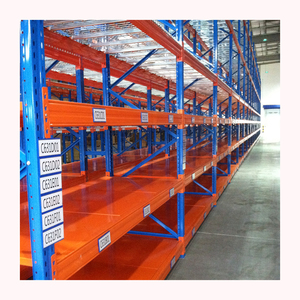
EBILTECH Heavy Duty Shelves Industrial Steel Rack Warehouse Pallet Racking for Medium Weight
- Reinforced interlocking upright column
- Up to 4,500 kg per beam level capacity
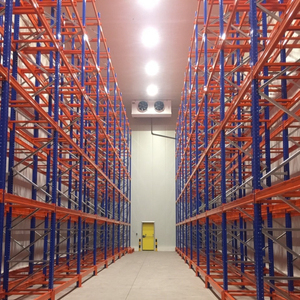
Drive In Racking System With High Density Storage Design Allowing Forklift Entry
- Eliminates operational aisle wastage
- First-In Last-Out (FILO) bulk storage
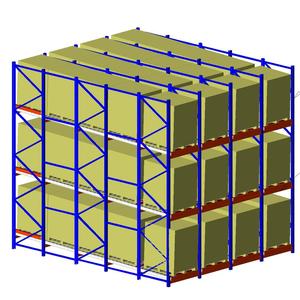
Heavy Duty Steel Roller Dynamic Gravity Pallet Rack 1000kg Capacity Collapsible ODM
- Autonomous FIFO stock circulation
- Zero-power gravity feed roller beds
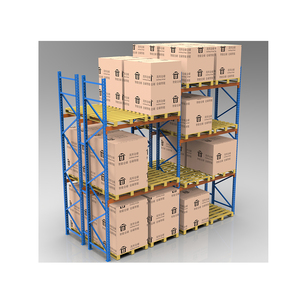
Customized Mobile Van Double Deep Racking System Rack Wide Aisle Density High Bay Pallet
- 2-pallet deep 50% aisle consolidation
- Engineered for pantograph reach trucks
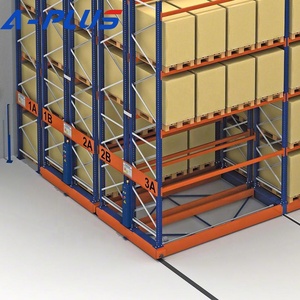
Motor Control Electrical Movable Heavy Duty Pallet Rack / Electricity Mobile Racking System
- Programmable PLC chassis movement
- Up to 85% volumetric cubic efficiency
Structural Engineering Mechanics & Kinematics of Double Deep Pallet Racking
Double Deep Racking configurations occupy a vital strategic equilibrium within modern intralogistics architectures, bridging the operational gap between 100% selective single-deep racks and ultra-dense bulk storage systems like Drive-In or Automated Storage and Retrieval Systems (AS/RS). By engineering back-to-back rack structures two pallets deep rather than single-pallet access, operators eliminate one out of every three forklift transit aisles. This structural consolidation instantly increases total usable cubic warehouse storage density by 30% to 45% over conventional selective configurations.
From an applied structural physics perspective, double-deep installations exert complex eccentric shear and bending moments onto upright frames. When an extended-reach forklift (equipped with pantograph scissors or telescopic forks) extends a 1,200 kg unitized pallet load into the second bay depth, the center of gravity shifts outward across the cantilevered horizontal axis. HEDA Shelves engineers neutralize these deflection stresses by utilizing continuous cold-formed Q235B and Q355B structural steel columns featuring proprietary 11-fold omega profiles, reinforced horizontal bracing geometry, and precision-stamped 5-hook connector brackets that transfer dynamic kinetic energy directly into heavy concrete base anchors.
Deflection & Safety Compliance: All HEDA structural components are manufactured in strict conformance with European Standard EN 15512 (Steel static storage systems) and the American Rack Manufacturers Institute (RMI MH16.1), maintaining a maximum structural beam deflection limit under static working load of L/250.
Furthermore, bottom-tier pallet placement in double-deep configurations demands specialized guidance accessories. Without secondary beam rails or laser-guided truck positioning, operators risk striking rear uprights during deep-reach blind drops. HEDA integrates high-tensile structural guide rails, heavy-gauge column base protectors, and dual-depth pallet run-in channels that ensure high-velocity pallet handling safety and longevity across round-the-clock shift schedules.
Optimal SKU Selectivity Profile
Double deep systems operate on a First-In, Last-Out (FILO) cycle per slot. They achieve peak efficiency when storing 2 to 4 pallets per SKU, making them the industry standard for FMCG manufacturing, dry beverage bottling plants, and temperature-controlled cold warehouses.
Reach Mast Kinematic Requirements
Operations require double-reach pantograph reach trucks or articulating VNA forklifts. HEDA's engineering department works directly with material handling equipment OEMs (Crown, Linde, Toyota, Jungheinrich) to configure exact beam level clear dimensions and aisle clearances.
Volumetric Space Recovery
By transforming traditional selective aisle ratios from 1:1 down to 2:1, double deep configurations reduce physical floor aisle consumption by up to 35%, generating an immediate floor-space recovery of several thousand square meters without external building expansion.
Total Cost of Ownership (TCO)
Compared to dynamic shuttle robotics or automated mini-load systems, double deep pallet racking offers an exceptionally low acquisition capex per pallet position ($38 – $65/position), enabling rapid capital depreciation and a typical return on investment in under 14 months.
Certified Structural Durability
Manufactured using high-strength steel coil stock, automated multi-head robotic welding lines, and rigorous ultrasonic weld-crack inspections. Each installation is backed by finite element analysis (FEA) certified for seismic zones 1 through 4.
High-Density Storage Systems: Comparative Technical Analysis
A quantifiable baseline comparing structural mechanics, capital expenditure, floor space utilization, and equipment dependency across mainstream industrial warehouse racking configurations.
| Racking Architecture | Floor Space Efficiency | Direct SKU Selectivity | Forklift Equipment Match | Capital Cost / Position | Typical Stock Rotation |
|---|---|---|---|---|---|
| Double Deep Pallet Racking | High (60% – 68%) | 50% Direct Immediate | Pantograph Reach / Articulated | $38 – $65 (Low-Mid) | FILO per slot (2-4 Pallets/SKU) |
| Standard Selective Racking | Moderate (35% – 42%) | 100% Instant Access | Counterbalanced / Standard Reach | $25 – $45 (Lowest) | Pure FIFO / High SKU Velocity |
| Drive-In / Drive-Through | Very High (70% – 78%) | Low (15% – 20%) | Narrow Counterbalance Reach | $55 – $85 (Moderate) | Strict FILO / High Bulk Homogeneous |
| Dynamic Gravity Flow Racking | High (65% – 75%) | Moderate (By Lane) | Standard Lift Trucks | $140 – $220 (High) | Strict Autonomous FIFO Flow |
| Radio Shuttle Automated System | Maximum (80% – 88%) | Programmable (Semi-Selective) | Automated Carrier + Standard Forklift | $180 – $320 (Highest) | Hybrid FIFO / FILO Scalable |
Guangzhou HEDA Shelves Co., Ltd. — Factory Direct Precision
Headquartered in Guangzhou since 2001, HEDA Shelves operates a fully integrated 30,000 square meter industrial manufacturing complex, executing end-to-end metallurgical fabrication with complete quality traceability from raw steel coils to outbound ocean containers.
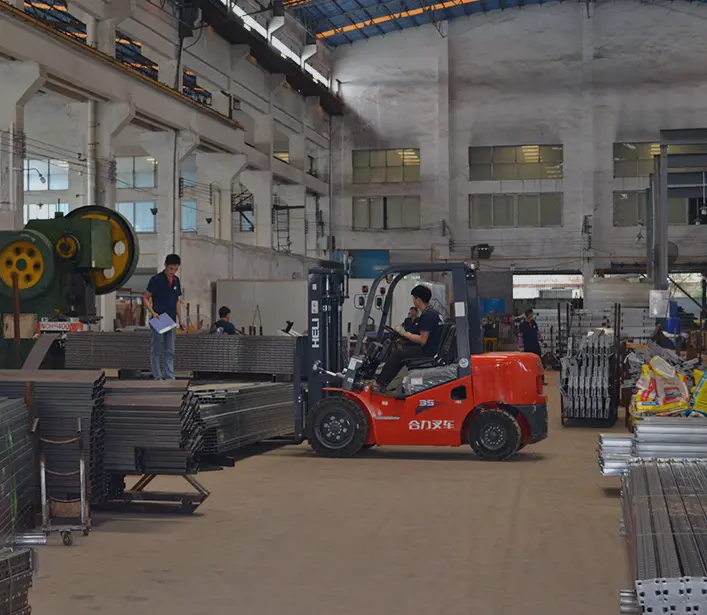
Continuous Roll-Forming Lines
Our facility houses 14 automated multi-station cold roll-forming production lines capable of producing continuous upright columns up to 12 meters in height without structural joint splices, preserving maximum tensile strength.
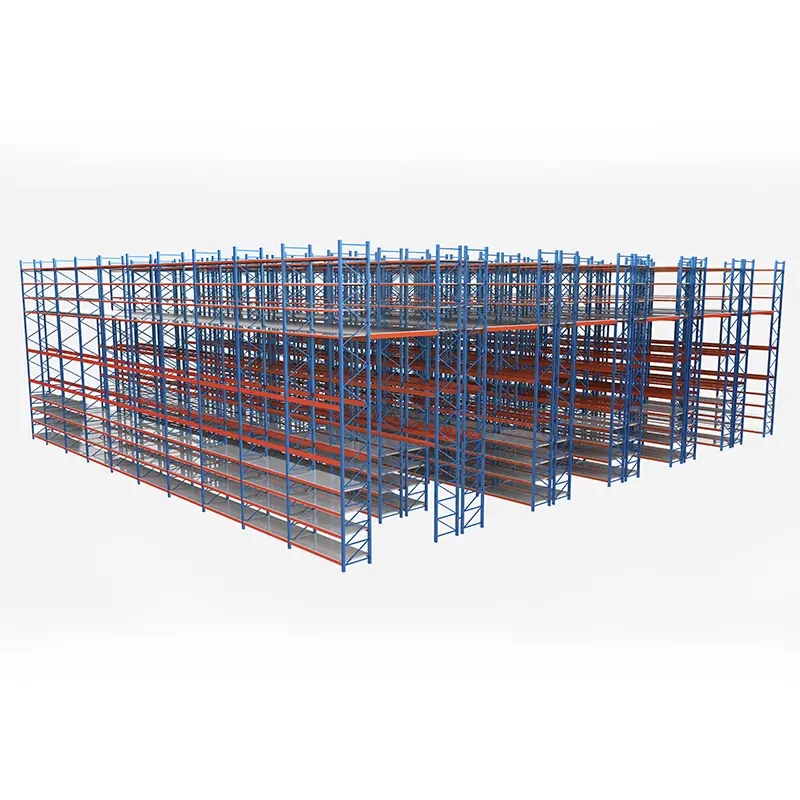
Complimentary Engineering & 3D CAD
Our in-house team of structural engineers delivers free customized CAD warehouse floor layouts, 3D digital architectural renderings, and structural dynamic load calculations within 24 hours of technical brief receipt.
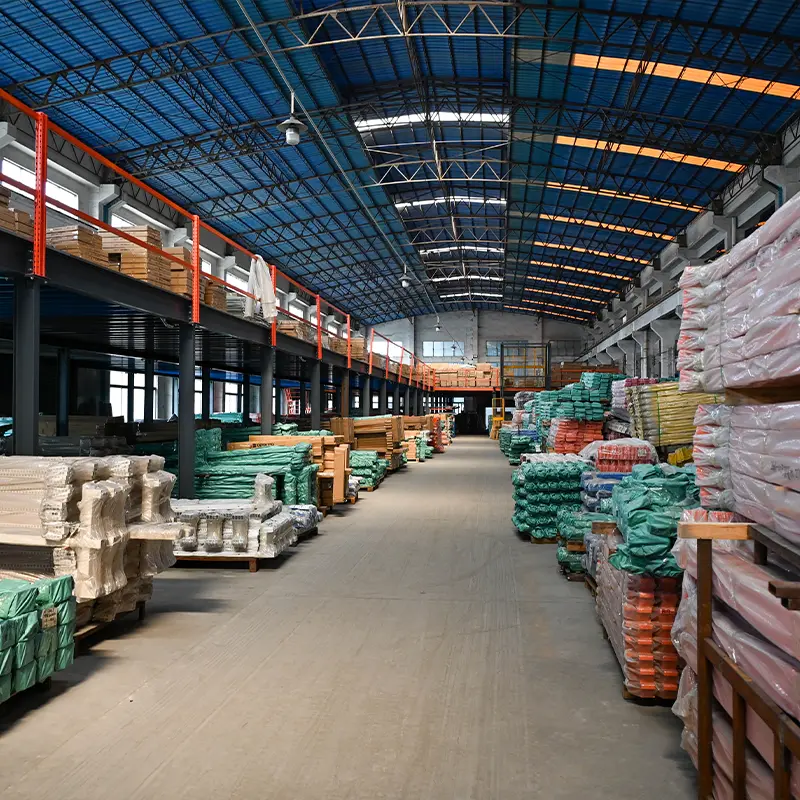
International Certifications
Rigorous quality controls certified under CE (2435-CPR-8605159), ISO 9001:2015 Quality Management Systems (No. 18624Q00169R0M), and comprehensive RoHS environmental non-toxicity compliance.
Standardized 10-Stage Precision Fabrication Workflow
Every steel beam and column undergoes a rigorous continuous metallurgical transformation cycle:
Certified Steel Coils
Precision CNC Slitting
Automated Punching
Roll Cold Forming
Profile Calibration
Laser Weld Seaming
Robotic End-Welding
Acid Pickling/Phosphate
Electrostatic Powder Coat
QC Lab & Container Pack
Future Procurement & Technological Trends in Intralogistics
How automation convergence, cold-chain expansion, and environmental durability requirements are fundamentally reshaping double deep racking procurement over the 2025–2030 horizon.
AGV & AMR Deep Integration
Traditional manually operated pantograph forklifts are steadily yielding ground to autonomous deep-reach guided vehicles (AMRs). Modern double-deep rack procurement increasingly mandates laser target reflectors, millimeter-tolerance beam level consistency, and ground-level visual guide tracks to interface seamlessly with robotic navigation sensors.
Cold-Chain Logistics Surge
Refrigerated and frozen distribution centers face soaring electricity operating costs. Double deep racking maximizes cubic refrigeration efficiency, storing more pallets per cubic meter than selective systems. Advanced hot-dip galvanized uprights and cryogenic-resistant powder coatings prevent thermal-shock embrittlement down to -30°C.
Modular Pre-Engineered Systems
Global logistics operators now demand relocatable, modular designs. Knock-down boltless upright structures that optimize 40HQ container packing volume significantly slash international landed freight costs while permitting rapid warehouse reconfiguration or vertical beam height adjustments as product portfolios pivot.
Frequently Asked Questions for Warehouse Procurement Directors
Essential technical, operational, and structural considerations addressed by HEDA Shelves' lead application engineers.
What is the exact aisle width required for Double Deep Racking systems?
How does a Double Deep system impact daily pallet throughput velocity?
What building floor slab load-bearing capacities are required?
How does HEDA protect steel racking components against coastal humidity and cold storage condensation?
Can an existing Single-Selective racking installation be retrofitted into a Double Deep system?
What container packaging and ocean shipping methods are used for export orders?
Ready to Elevate Your Warehouse Volumetric Capacity by Up to 45%?
Submit your building dimensions, clear roof heights, pallet weight profiles, and forklift models. HEDA Shelves' structural design department will generate a comprehensive CAD floor plan, 3D architectural rendering, and structural load analysis free of charge within 24 hours.