Featured High Bay & Industrial Warehouse Racking Systems
Explore our precision-rolled, heavy-duty racking portfolio. Engineered from high-tensile Q235B structural steel, every system is customized to maximize vertical cubic volume, forklift duty cycles, and strict safety load tolerances.
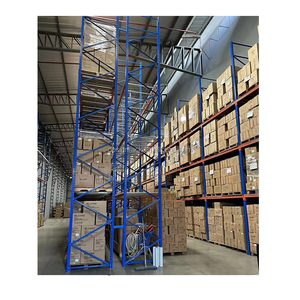
Logistics Center Pallet Rack Warehouse Rack Manufacturer Q235B Steel Heavy Duty Storage Rack
Technical Specifications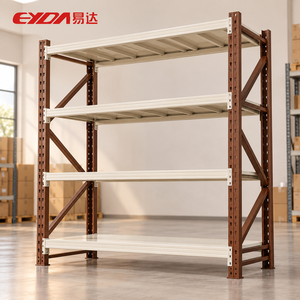
Industrial Steel Selective Pallet Rack 5 Layer Gray White Upright Heavy Load Corrosion Protection Storage Shelf
Technical Specifications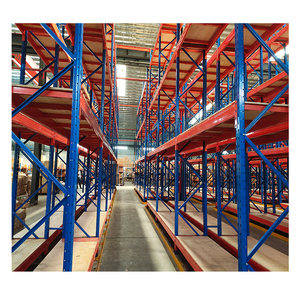
Warehouse Racking Solution Steel Storage System For Factory And Commercial Warehouse
Technical Specifications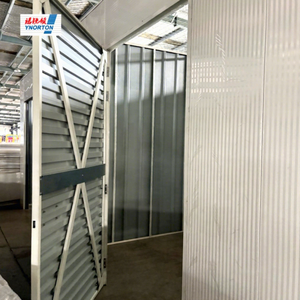
Top Manufacturer's Modern Galvanized Steel Self Storage Unit With Roll Up Door For Warehouse Use Key Lock
Technical Specifications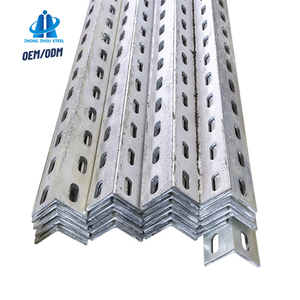
Customized Heavy-Duty Slotted Angle Rack Fast Delivery Steel and Carbon Metal Building Materials
Technical Specifications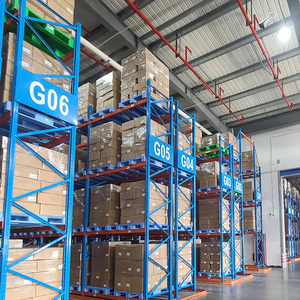
Steel Warehouse Metal Van Rack System Heavy Duty Stacking Pallet Shelves Single Deep Industrial Shelving
Technical Specifications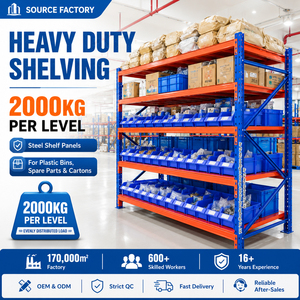
2000KG Adjustable 5 Storage Levels Heavy Duty Shelving System for Bins Spare Parts and Cartons
Technical Specifications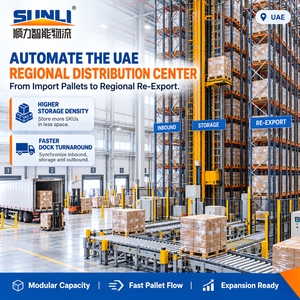
SHUNLI SL-AS004 China Factory Customized Heavy Duty Automated AS&RS Pallet Stacking Rack Alloy Steel
Technical SpecificationsThe High Bay Architectural Shift: Engineering Vertical Cubic Density
Modern distribution logistics, rising industrial land acquisition costs, and cold chain power consumption demands have forced a decisive evolution from traditional low-clearance storage (<8 meters) to high bay structural racking systems reaching 12 to over 40 meters.
Selecting the right high bay racking warehouse supplier is no longer merely a procurement exercise in price per metric ton of cold-rolled steel. It is a critical structural engineering engagement. At clearances above 12 meters, structural dynamics alter radically: the primary design challenges transition from simple static gravitational beam deflection to second-order P-Delta frame sway effects, dynamic harmonic resonant frequencies, and horizontal seismic shear forces.
When high bay systems interface with modern automated material handling equipment (such as Automated Storage and Retrieval System (AS/RS) cranes or narrow-aisle turret trucks), structural tolerance thresholds tighten exponentially. While standard industrial shelving tolerates deflection variance up to L/200, automated high-bay tolerances demand continuous deflection thresholds tighter than L/400 or L/500 under full load combinations, as mandated by FEM 9.831 and EN 15512 specifications. Failure to design around these precise tolerances leads to mast binding, crane positioning errors, beam impact damage, and cataclysmic rack failures.
Global suppliers must be evaluated by their calculation methodology. EN 15512 adopts limit state design and global second-order frame analysis considering geometric imperfections, column base semi-rigidity, and beam-end connector moment-rotation curves. In contrast, RMI MH16.1 balances effective length calculations with test-validated structural components. At Guangzhou Heda Shelves Co., Ltd., our engineering staff calculates finite element models validated against both standards to guarantee zero structural failure across global jurisdictions.
| Storage Typology | Clear Height Range | Floor Flatness Standard | Throughput Rate | Aisle Clearances | CAPEX Ratio |
|---|---|---|---|---|---|
| AS/RS Unit-Load High Bay | 15m – 42m | DIN 18202 / VDMA 41404 Class F | 60–120+ pallets/hr per crane | 1,400mm – 1,650mm | High (Automated) |
| Very Narrow Aisle (VNA) | 10m – 18m | EN 15620 Specification 300 | 25–40 pallets/hr per truck | 1,600mm – 1,900mm | Moderate |
| Rack-Clad Building (Clad-Rack) | 20m – 45m | Custom Geotechnical Slab Specs | Dependent on Stacker Unit | 1,450mm – 1,700mm | High Efficiency (Building Integrated) |
| High-Density Radio Shuttle | 8m – 16m | Standard Concrete Level (TR34 FM2) | 40–65 pallets/hr | 2,800mm – 3,200mm (Transfer Aisle) | Balanced / Scalable |
Emerging Procurement Trends in Global High Bay Warehousing
Procurement leaders across Fortune 500 logistics, 3PL aggregators, and manufacturing conglomerates are fundamentally revising their warehouse supply agreements around automation readiness, freight cubing optimization, and structural lifecycle resiliency.
1. Clad-Rack Civil Integration
Rather than erecting a concrete and structural steel building envelope and subsequently installing standalone interior racking, future procurement prioritizes "Rack-Supported Buildings". In this model, the racking vertical columns carry the exterior roof truss and wall sandwich panels, drastically slashing overall project CAPEX and build schedules by 20–35%.
2. Precision Cold-Formed High-Tensile Steel
Traditional structural hot-rolled I-beams are yielding to sophisticated multi-fold, cold-rolled profiles using high-tensile Q355B and micro-alloyed structural coils. These multi-faceted roll-formed column designs maximize structural radius of gyration, reducing total system weight without sacrificing dynamic moment capacity.
3. Zero-Carbon Pretreatment & Finishing
Supply chain ESG mandates increasingly scrutinize supplier surface treatment chemistries. Traditional heavy zinc phosphate bathtubs are being upgraded with zirconium nanotechnology and non-toxic powder coating processes, achieving salt-spray resistances exceeding 500 hours while eliminating volatile organic compounds (VOCs).
Guangzhou Heda Shelves Co., Ltd.: 25 Years of Precision Engineering
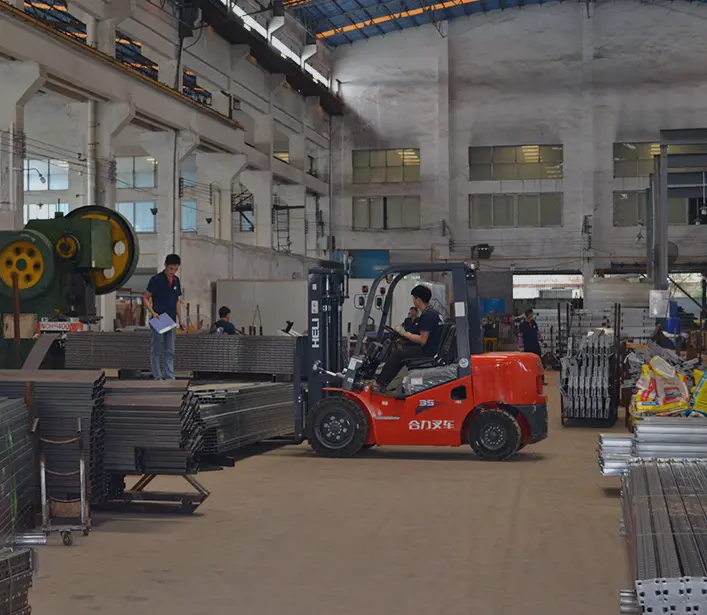
Operating from our comprehensive 30,000 square meter intelligent manufacturing facility in Guangzhou, China, HEDA Shelves stands as a premier direct-to-enterprise manufacturer. From coil slit to final container loading, every step is rigorously controlled under one roof.
Total Control Over the High Bay Manufacturing Lifecycle
High bay racking systems do not permit tolerances for component variance. An error of 1.0 mm in an upright punch pitch accumulates into significant out-of-plumb verticality over a 24-meter upright frame. HEDA Shelves enforces continuous robotic roll-forming and CNC continuous piercing to keep tolerances within ±0.3 mm across entire component spans.
-
Certified Engineering Compliance Official CE Certification No. 2435-CPR-8605159 and ISO 9001:2015 Quality Management System Certificate No. 18624Q00169R0M (valid through June 2027).
-
Chemical Pretreatment Protocol Full automated pickling, degreasing, and phosphating bath stages before electrostatic dry powder thermosetting, eliminating internal rust formation.
-
Container-Optimized Engineering Packaging Modular knock-down packaging engineered using advanced volumetric algorithms to maximize 40HQ sea freight loading densities, reducing ocean transport costs per pallet by up to 22%.
Our 10-Stage Precision Production Matrix
Raw Materials
Certified mill-test certified Q235B & Q355B coils checked for yield strength.
Precision Slitting
High-speed laser and rotary shear dimensional slitting with micrometer control.
Automated Punch
Multi-ton high-speed progressive mechanical presses ensuring accurate pitch.
Cold Roll-Forming
Continuous 22-station automated cold bending creating multi-ribbed uprights.
Profile Calibration
Post-forming straightening stages eliminating torsional distortion.
Robotic Welding
Automated multi-axis MIG welding stations fusing beam connector plates.
Surface Polishing
Automated shot-blasting and mechanical surface cleaning to Sa 2.5 profile.
Pickling & Phosphating
Submersion tanks applying micro-crystalline chemical corrosion barriers.
Powder Coating
GEMA electrostatic powder application cured at 200°C for wear durability.
CMM QC & Pack
Full dimensional inspection, container cubing bundle, and barcoding.
Frequently Asked Questions: High Bay Racking Procurement
Essential technical and commercial insights for facility engineers, logistics directors, and general procurement managers planning vertical storage installations.
What concrete slab specifications and floor flatness tolerances are required for high bay racking? +
How do high bay racking suppliers address NFPA 13 in-rack fire suppression sprinkler regulations? +
What is the structural difference between Q235B and Q355B steel in heavy-duty upright frames? +
How do you verify seismic load safety for high bay racking installed in active earthquake zones? +
What are the best corrosion-protection strategies for high bay racking in cold chain and coastal regions? +
Can HEDA Shelves provide turnkey installation, site supervision, and export logistics globally? +
Plan Your High Bay Warehouse with Structural Racking Engineers
Bypass intermediary trading companies and work directly with a 25-year manufacturing authority. Send us your architectural building dimensions, slab specifications, pallet profiles, and throughput targets to receive a complimentary 3D layout, CAD structural blueprint, and detailed loading calculation within 24 hours.
Contact Us