Precision-Engineered Industrial Shelving & Racking Solutions
Explore our primary storage matrices manufactured under cold-formed Q235B/Q355B structural steel certifications. Tailored for heavy-pallet logistics, modular picking, high-throughput gravity flow, and automated end-of-line integration.
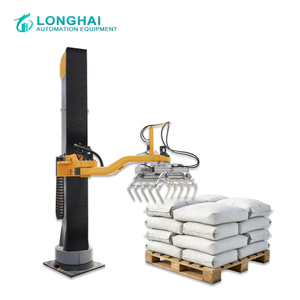
25kg 50kg Bag Column Arm Palletizing Machine Full Automatic Robotic Rotary Bag Palletizer Single Column Bags Palletizer Machine
High-speed robotic rotary arm palletizer engineered for high-density agricultural, cement, and chemical packaging lines requiring continuous 24/7 stacking cycles.
- Payload Range: 25 kg to 50 kg / Bag
- Cycle Rate: Up to 600 Bags / Hour
- Integration: In-line Conveyor & Wrapping
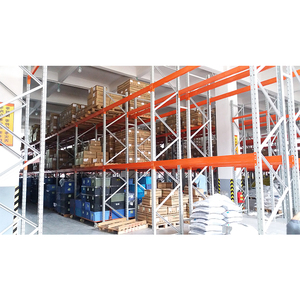
Heavy Duty Industrial Storage Rack Steel Pallet System For Logistics Warehouse
Industry-standard selective steel pallet racking providing unhindered 100% individual pallet selectivity, adjustable 50mm/75mm beam pitch, and robust seismic column frames.
- Bay Capacity: 1,000 kg – 4,500 kg / Level
- Steel Grade: Certified Q235B Cold-Rolled
- Standard: EN 15512 & RMI MH16.1
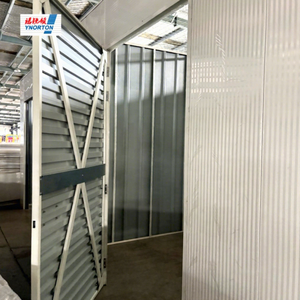
Top Manufacturer's Modern Galvanized Steel Self Storage Unit With Roll Up Door For Warehouse Use Key Lock 3-Year Warranty
Modular corrugated galvanized enclosure units configured with secure roll-up lock doors, ideal for urban self-storage facilities and secure parts partitioning.
- Surface: Hot-Dip Galvanized / Corrugated
- Security: Integrated Key-Locking Shield
- Warranty: 3-Year Structural Warranty
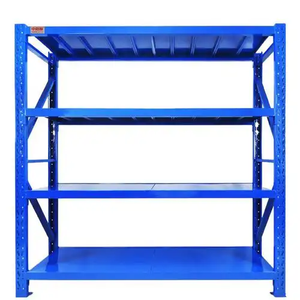
Light Duty Rack Steel Storage Racks Longspan Shelving for Garage and Warehouse Corrosion Protection Metal Shelving
Boltless longspan storage shelving designed for carton picking, maintenance workshops, and light-duty distribution centers demanding rapid, tool-free layout reconfiguration.
- Shelf Capacity: 200 kg – 800 kg / Shelf
- Decking: Steel Deck / Wire Mesh / Wood
- Assembly: Interlocking Boltless Keyhole
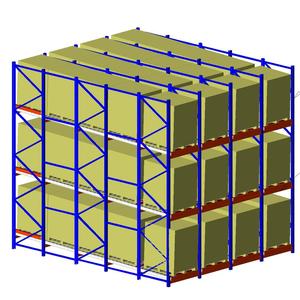
Heavy Duty Steel Roller Dynamic Gravity Pallet Rack 1000kg Capacity Collapsible ODM Industrial Warehouse Storage Cargo Equipment
Zero-electricity roller lane storage leveraging gravity-driven inclined tracks, dynamic brake rollers, and automatic speed controllers for strict FIFO perishables management.
- Lane Capacity: 1,000 kg / Pallet Position
- Rotation Principle: Strict FIFO (First-In, First-Out)
- Safety Brake: Centrifugal Speed Dampeners
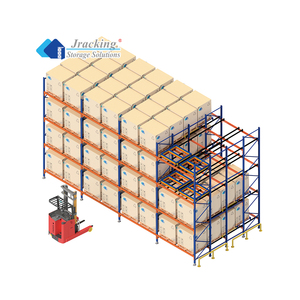
Jracking Push Back Racking Push-in Racking Pallet Racking Warehouse Storage System
Nested carriage push-back system accommodating 2 to 6 pallets deep per lane. Balances dense cubic storage with single-aisle operational simplicity on a LIFO basis.
- Storage Depth: 2 to 6 Pallets Deep
- Clearance Saving: Up to 65% Aisle Consolidation
- Mechanism: Heavy-Duty Bearing Carts
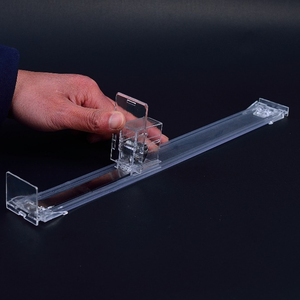
Display Drink Shelf Pusher for Supermarket
Spring-loaded automated front-facing shelf pusher systems engineered for micro-fulfillment centers, beverage distribution shelves, and high-frequency supermarket displays.
- Pusher Tension: Variable Spring Load (2N–12N)
- Track System: Modular Snap-In Acrylic Track
- Merchandising: Constant Automated Front Facing
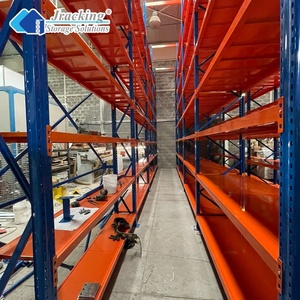
Jracking EURO Standard Warehouse Storage Racks Heavy Duty Steel Pallet Racking System for Distribution
Precision-manufactured European standard pallet racking systems certified for 800x1200mm Euro pallets and 1000x1200mm ISO industrial pallets across global supply chains.
- Frame Height: Up to 15,000 mm Structural
- Beam Connection: 5-Hook High-Moment Connectors
- Finish: Epoxy-Polyester Electrostatic Powder
Guangzhou HEDA Shelves: 25 Years of Factory Direct Excellence
Established in 2001, Guangzhou Heda Shelves Co., Ltd. operates a premier 30,000 square meter intelligent manufacturing facility. We engineer structural steel solutions directly for multinational logistics hubs, government infrastructure, and industrial distributors across 120+ countries.
Structural Integrity & Strict Metallurgy
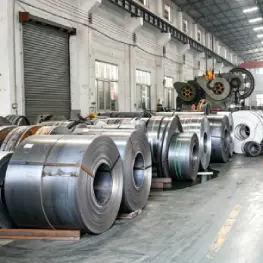
Every profile is cold-formed from authenticated Q235B and Q355B certified prime carbon steel coils from Baosteel. We execute automated yield tensile tests, chemical composition analyses, and weld bead ultrasonic testing to guarantee failure-free operation under maximum dynamic seismic and static loads.
Free Turnkey 3D CAD & Load Simulations
Our senior engineering department offers rapid, zero-cost 24-hour CAD space layout blueprints, 3D photorealistic renderings, and FEA (Finite Element Analysis) load calculations. We evaluate aisle clearances, forklift turning radiuses, building column envelopes, and local building codes before cutting a single beam.
Export Packaging & Ocean Freight Optimization
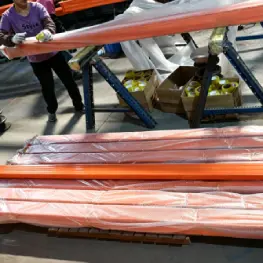
Components utilize precision knock-down modular fabrication engineered to pack dense bundles into 20GP and 40HQ ocean shipping containers. This minimizes ocean freight cost per pallet position, while multi-layer bubble wrap, edge protectors, and steel banding eliminate transit friction and ocean-spray corrosion.
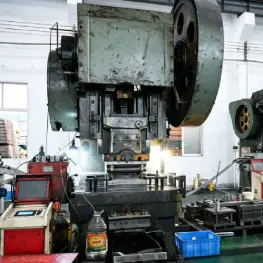
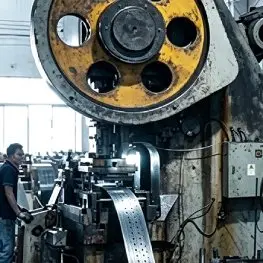
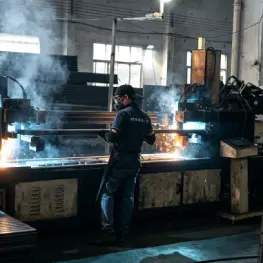
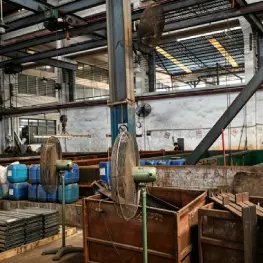
10-Stage In-House Quality Manufacturing Flow
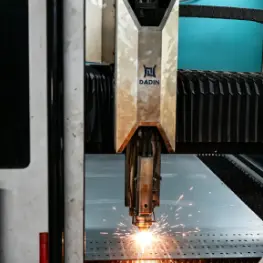
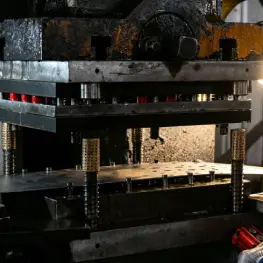
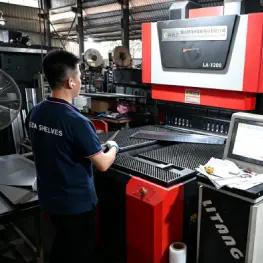
From raw coil decoiling to final export crating, every manufacturing stage is monitored under ISO 9001:2015 protocol.
Structural Mechanics, Deflection Formulas & Material Selection Criteria
Procuring industrial shelving is an engineering commitment involving static load limits, seismic resilience, and corrosion physics. This technical guide outlines the calculations, standards, and material specifications required to design a zero-failure intralogistics facility.
Yield Strength & Metallurgy
We specify Q235B (yield strength ≥ 235 MPa) for light-to-medium longspan racking and Q355B low-alloy high-strength steel (yield strength ≥ 355 MPa) for heavy-duty upright frames exceeding 12 meters clear height. Cold roll-forming introduces work-hardening along the section radii, increasing local moment carrying capacity by 8-12%.
Deflection Limits (L/200 vs L/300)
Under international EN 15512 and RMI MH16.1 codes, beam deflection under maximum Uniformly Distributed Load (UDL) must not exceed L/200 for standard applications, or L/300 where sensitive automated handling systems (such as ASRS or narrow aisle wire-guided turrets) operate to prevent mast binding.
Pretreatment & Anti-Corrosion
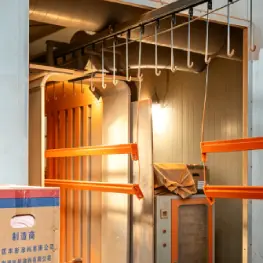
Raw steel carries rolling oils and mill scale that compromise paint bonding. Our 10-stage automated wash cycle includes hot alkaline degreasing, acid pickling, zinc phosphating, and deionized water rinsing prior to baking an 80-120 μm electrostatic thermoset epoxy-polyester coating, certified for 500+ hours of continuous salt-spray exposure (ASTM B117).
Seismic Factor & Uplift Anchoring
Baseplates are engineered with finite element analysis to resist combined vertical compression and seismic shear overturning moments. Heavy-duty expansion wedge anchors (M12 to M16) embed into minimum 25 MPa reinforced floor slabs, backed by beam connector safety pins resisting 5,000 N vertical dislodgement forces.
The Intralogistics Load Calculation Equation
When specifying warehouse racking frameworks, engineers calculate static load dynamics using the classic flexural bending stress formula: σ = M / W ≤ [f], where M represents the maximum bending moment induced by pallet weight, W represents the section modulus of the box beam profile, and [f] represents the allowable design stress of the cold-rolled steel. For dynamic impact loading—common when forklifts drop pallets unevenly—a dynamic load amplification coefficient (typically 1.15 to 1.25) must be factored into structural calculations.
Furthermore, upright frame buckling is mitigated by calculating the Euler critical buckling load: Pcr = (π² · E · I) / (K · L)², wherein the unsupported beam-to-beam height (L) dictates the column's load-bearing limit. By optimizing the pitch between shelf tiers and utilizing multi-bend Omega (Ω) upright profiles featuring 11 to 13 continuous cold-rolled stiffening folds, HEDA delivers structural capacities up to 30,000 kg per bay without excessive steel weight, directly lowering total project investment and container shipping freight.
Next-Gen Warehouse Architectures: Procurement Trends 2025–2035
Industrial warehousing is experiencing unprecedented transformation driven by autonomous robotics, urban micro-fulfillment density, and stringent carbon reduction mandates. Forward-looking procurement directors must anticipate these three emerging structural shifts.
AMR & AGV-Hybrid Racking Interfaces
Traditional forklift aisles (typically 3.2m to 3.8m wide) are rapidly being reconfigured into Narrow Aisle (VNA) or robot-exclusive grids operating Autonomous Mobile Robots (AMRs) and automated pallet runners. Industrial shelving designs now incorporate recessed baseplates, high-contrast floor optical navigation guides, and sensor-monitored end-of-aisle structural crash barriers capable of absorbing 10 kJ impact energies.
IoT Deflection & Overload Sensory Nodes
Smart intralogistics procurement increasingly mandates integrated wireless telemetry. Modern industrial racking installations incorporate strain-gauge micro-sensors within critical beam-connector joints. These low-power nodes broadcast real-time deflection and accidental collision alerts to warehouse management software (WMS), preventing catastrophic structural collapse before fatigue turns fatal.
Circular Steel & Zero-VOC Finishing
Multinational 3PLs and logistics real estate developers are targeting Scope 3 supply chain carbon neutrality. Future procurement protocols prioritize suppliers utilizing Electric Arc Furnace (EAF) low-carbon steel, modular knock-down assemblies that reduce shipping volume by 40%, and 100% heavy-metal-free, recyclable thermoset powder coatings that emit zero volatile organic compounds.
Optimizing Total Cost of Ownership (TCO) in Factory Direct Sourcing
B2B warehouse procurement directors often evaluate racking purely on unit purchase price. However, real profitability is governed by landed structural cost, installation velocity, space efficiency, and multi-decade lifecycle durability.
1. Ocean Container Cubing Optimization
By precision-nesting upright frames and bundle-stacking roll-formed box beams, HEDA reaches up to 26–27 metric tons per 40HQ container (subject to port weight regulations). Maximizing cubic efficiency slashes international maritime transport costs by $12 to $25 per pallet position compared to pre-assembled competitors.
2. Rapid Knock-Down Assembly Economics
Labor accounts for up to 30% of total facility commissioning costs. Our precision multi-hook connector beams and pre-punched upright keyhole matrices require zero site welding. Numbered component tracking and pre-assembled bracing frames cut field installation hours by over 35%.
3. Long-Term Asset Reconfigurability
Supply chains evolve rapidly. Fixed, welded systems become obsolete when pallet heights change. HEDA’s 50mm and 75mm beam adjustment increments allow warehouse operators to reconfigure beam levels without structural replacement, ensuring your racking asset depreciates across a 15–20 year operational lifespan.
Frequently Asked Questions on Industrial Shelving & Racking
Authoritative engineering answers covering structural safety, manufacturing tolerances, international standards, coastal corrosion, and international logistics.
What steel grades and mill certifications are utilized in your structural racking?
How do you verify structural compliance with international standards (CE, EN 15512, RMI)?
What warehouse parameters are required to receive a free 24-hour CAD design and quotation?
How is the racking protected against corrosion in coastal and high-humidity tropical climates?
What are the maximum vertical deflection tolerances permissible under full load?
δ = L / 200 (where L is the clear span of the horizontal beam). For narrow aisle installations with high-reach turret trucks or automated stacker cranes, deflection is engineered to a stricter standard of δ = L / 300 to prevent pallet tipping and mast friction.