Engineered Systems
Precision Storage Assemblies & Standard Configurations
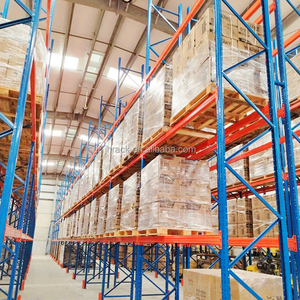
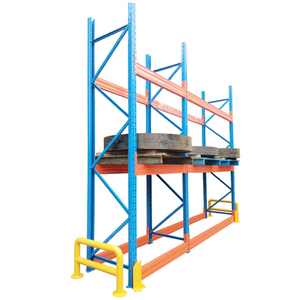
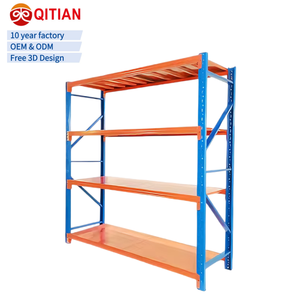
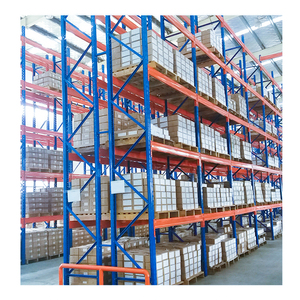
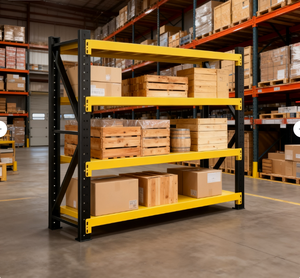
Industrial racking systems manufactured from certified prime structural steel (Q235B / Q355B), engineered for high selectivity, structural safety, and optimized cube utilization.
25+
Years Engineering Expertise
30,000㎡
Automated Manufacturing Base
30,000T
Monthly Structural Output
10,000+
Global Logistics Turnkey Projects
Procurement Intelligence
Emerging Trends Reshaping Industrial Storage Procurement
Supply chain infrastructure investments are shifting from transactional hardware buying toward high-density spatial optimization, environmental resiliency, and lifecycle engineering.
Vertical Volumetric Utilization (Cube Density)
Soaring industrial real estate rents in regional gateway hubs (such as Lagos, Mombasa, Durban, and Dubai) have triggered a decline in basic low-bay floor storage. Procurement teams are targeting high-bay configurations (10m to 18m clear-height) and rack-supported mezzanine floors that triple cubic volume without expanding building footprints.
Semi-Automated Hybrid Transitions
Rather than jumping directly to fully robotic AS/RS systems—which demand reliable electrical grids and intensive capital—enterprises in emerging markets are choosing radio shuttle racking. These systems deploy semi-autonomous, battery-powered shuttle vehicles running on pallet rails, preserving high throughput during localized grid interruptions.
Finite Element Seismic & Deflection Compliance
Global logistics operators now require structural qualification certificates that verify compliance with international racking standards (FEM 10.2.02, EN 15512, and ANSI/RMI MH16.1). Buyers increasingly reject non-certified suppliers in favor of manufacturers who provide stamped finite-element structural analysis.
Engineering Matrix
Structural Analysis & Storage Technology Comparison
Quantitative decision matrix for logistics directors, operations consultants, and industrial civil engineers selecting high-bay racking systems.
| Racking Topology | Floor Footprint Utilization | Direct Selectivity | Operational Methodology | Best Suited SKU Profiles |
|---|---|---|---|---|
| Selective Pallet Racking | 40% – 50% (Wide Aisle) | 100% Instantaneous | FIFO (First-In, First-Out) | FMCG, Multi-SKU Distribution, 3PL Warehousing |
| Drive-In / Drive-Through | 70% – 85% | 15% – 20% (Lane-Restricted) | LIFO / FIFO Configuration | Cold Storage, Homogeneous Seasonal Stock, Beverage |
| Radio Shuttle System | 80% – 90% | Lane Dependent (Selective Buffer) | FIFO or LIFO via Software | Food Production, Deep-Freeze Distribution, Chemicals |
| Rack-Supported Mezzanine | Up to 250% (Multi-Tier) | 100% on Manual Walkways | Batch Picking / Zone Routing | Automotive Spares, E-Commerce Fulfillment, Electronics |
| Cantilever Framework | Variable (Linear Continuous) | 100% Along Face | Open Access Load Crane/Forklift | Steel Pipe, Rebar, Timber Bundles, Sheet Metal |
Material Science
Future Developments in Racking Engineering & Metallurgy
How advanced metallurgy, surface treatment chemistry, and digital twinning are transforming rack performance and lifespan.
Advanced Micro-Alloy Steels
By transitioning from plain hot-rolled carbon steel to high-yield micro-alloyed cold-rolled coils (such as Q355B with niobium and vanadium trace additions), modern roll-formed uprights achieve 30% higher moment capacity with lower gross deadweight, cutting international freight costs per pallet location.
Nano-Ceramic Phosphate Conversion
Traditional zinc-phosphate dipping is giving way to automated 9-stage zirconium/nano-ceramic immersion pre-treatments. Coupled with electrostatic polyester powder baking at 200°C, this creates an inert cross-linked shield that resists blistering across coastal salt-spray and high-humidity environments.
IoT Structural Health Monitoring
Large fulfillment centers are beginning to deploy strain-gauge telemetry and impact sensors along bottom upright columns. Connected to warehouse management systems (WMS), these monitors flag dynamic forklift collisions in real time before minor deflection turns into a catastrophic progressive bay collapse.
Factory Direct Authority
Why International Buyers Trust HEDA Shelves
With an operational footprint founded in 2001, Guangzhou Heda Shelves Co., Ltd. operates as a dedicated original equipment manufacturer (OEM/ODM) delivering certified industrial racking worldwide.
Vertically Integrated Manufacturing
Every profile is cold-rolled, laser cut, punched, and finished across our 30,000 m² factory in Guangzhou. By managing the process from raw steel coil to containerized shipping without sub-contractors, we maintain structural consistency and tight dimensional tolerances.
Audited Quality Certifications
Our quality management systems maintain valid international certifications, including CE Certificate No. 2435-CPR-8605159 and ISO 9001:2015 Certificate No. 18624Q00169R0M (valid through June 2027), fully compliant with European EN standards and RoHS material declarations.
Export-Optimized Knock-Down Packing
International sea shipping requires optimized container nesting. Uprights, frame bracings, and step beams are bundled to maximize container payload in 20GP and 40HQ boxes—minimizing freight cost per pallet position to ports like Tema, Lagos, Durban, and Alexandria.
Technical Clearinghouse
Frequently Asked Questions on Industrial Racking Procurement
Essential guidance addressing load engineering, global logistics, installation, and field safety protocols.
What technical data is required to generate an engineered CAD layout and price quotation?
To prepare an accurate structural layout and load calculation, our engineering team requires: (1) Warehouse architectural drawings indicating clear ceiling height under trusses, internal column locations, dock doors, and slab floor load capacity (kN/m²); (2) Pallet specifications including overall dimensions (width, depth, overall height including cargo overhang) and gross weight per pallet; (3) Material handling equipment profiles, including forklift model, turning radius (Aisle AST requirement), and maximum lift mast height; (4) Required SKU inventory turn rates and preferred handling methodology (FIFO vs. LIFO).
How do you protect industrial racking from corrosion in coastal, tropical, or cold-chain facilities?
All HEDA structural steel components undergo a multi-step pre-treatment process: automated steel shot-blasting, acid pickling to eliminate scale, and conversion phosphating to establish an inert bonding layer. For standard dry warehouses, an electrostatic powder coat of high-durability epoxy-polyester resin is baked on at 180°C–200°C to an average dry-film thickness of 60–80 microns. For deep-freeze cold storage (-30°C) or open coastal loading yards, we offer continuous hot-dip galvanizing compliant with ISO 1461, providing zinc immersion protection that resists condensation and thermal cycling.
Can our local labor team handle installation, and what engineering support do you provide overseas?
Yes. Every export order is shipped with detailed, color-coded shop drawings, numbered part tags, and step-by-step assembly manuals. For standard selective pallet racking and shelving, local mechanical crews can easily erect the system using standard tools. For complex multi-tier rack-supported mezzanines or automated radio shuttle platforms, we provide remote video support with our bilingual structural engineers, or deploy on-site site installation supervisors to oversee alignment, plumb leveling, expansion anchoring, and torque testing.
How do your structural components prevent progressive collapse caused by forklift impact?
Our systems include built-in safety margins engineered around FEM 10.2.02 and EN 15512 safety codes. Upright columns feature cold-formed profile returns with multi-point contact beam connector pins. High-tensile spring steel safety locks prevent accidental upward dislodgement from mast misalignments. We also supply essential impact accessories, including wrap-around heavy-gauge column protectors, floor-anchored steel corner barriers filled with shock-absorbing polyurethane cores, and heavy-duty frame end protectors.
Which heavy storage systems operate reliably in regions with unstable electrical grids?
Mechanical storage systems operate completely independent of the electrical grid. Selective pallet racking, double-deep systems, drive-in systems, push-back gravity cart configurations, and pallet gravity flow lanes use mechanical gravity rollers and counterbalanced forklifts, ensuring non-stop operations during power outages. For dense storage projects that need automation, our radio shuttle carts run on high-capacity lithium iron phosphate (LiFePO4) batteries that can be charged during off-peak hours or via local solar and generator micro-grids.
What trade and delivery terms (Incoterms) do you support for international sea shipping?
We regularly ship under FOB (Guangzhou, Shenzhen, or Foshan ports), CFR, and CIF terms to major commercial container ports globally, including Lagos (Apapa/Tin Can), Mombasa, Tema, Durban, Alexandria, and Jeddah. Our export team coordinates all container booking, Fumigation Certification (ISPM 15 compliant for timber dunnage), Certificate of Origin preparation (Form E, CO, or SASO), and provides high-resolution photographic packing manifests to ensure smooth customs clearance.
Ready to Optimize Your Industrial Storage Footprint?
Connect directly with our engineering team for free CAD floor planning, dynamic seismic calculations, and a detailed containerized export quotation tailored to your operational parameters.
Get Catalog