Engineered Heavy-Duty Industrial Racking & Pallet Systems
Manufactured from high-grade Q235B and Q355B cold-rolled structural steel, our storage systems are statically verified via Finite Element Analysis (FEA) to comply with international FEM 10.2.02, EN 15512, and RMI MH16.1 specifications.
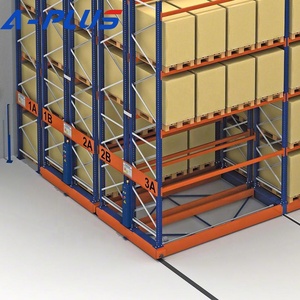
Electric Movable Heavy Duty Pallet Racking System
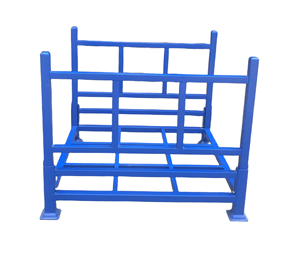
Customized Anti-Corrosion Heavy-Duty Folding Pallet Racks
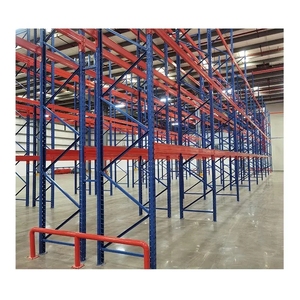
Industrial Heavy Duty Steel Warehouse Pallet Racks
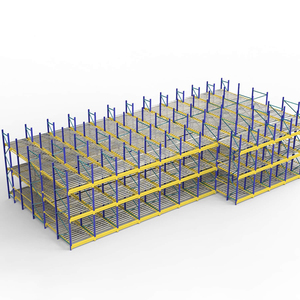
Customizable Heavy-Duty Metal Gravity Flow Racks
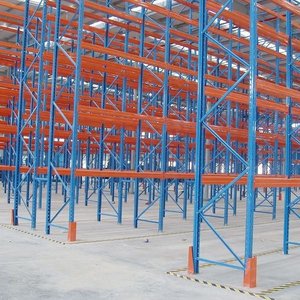
Cold-Rolled Steel 5-Layer Bolt-Free Industrial Pallet Rack
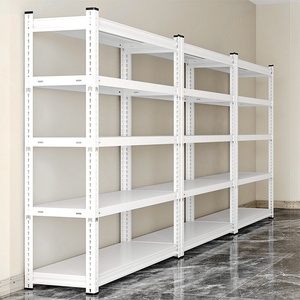
Adjustable Corrosion-Resistant Metal Storage Shelving
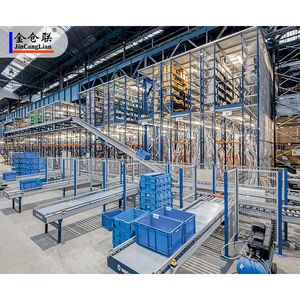
Intelligent Radio Shuttle Robot Pallet Racking System
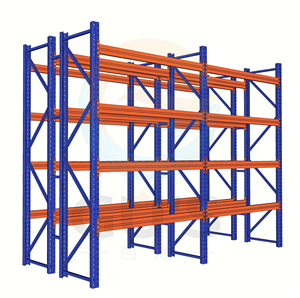
Modular Heavy-Duty Stacking Storage Rack Unit
Guangzhou Heda Shelves Co., Ltd. Global Manufacturing Prowess
Operating from our 30,000 m² heavy-manufacturing hub in Guangzhou, China, HEDA Shelves integrates precision sheet metal fabrication, continuous automated roll-forming, robotic welding, and specialized surface engineering under ISO 9001:2015 control.
In-House Roll Forming & Tooling
We operate automated 24-station continuous cold-rolling profiling lines producing upright columns with high sectional moment of inertia. Our proprietary 75mm and 50mm pitch punch tooling ensures flawless connector tooth locking, eliminating localized buckling under maximum design loads.
Full Material Traceability & CE Conformity
Every production heat from certified steel mills undergoes tensile and chemical composition audits. We hold CE Certification (No. 2435-CPR-8605159) and ISO 9001:2015 accreditation (No. 18624Q00169R0M), guaranteeing full metallurgical traceability from raw slit coil to delivered jobsite.
Container-Optimized Ocean Packaging
Structural steel freight can escalate quickly if improperly bundled. Our packaging engineers calculate precise nested bundles for 40ft HQ shipping containers, maximizing volumetric efficiency up to 96% and preventing transit distortion across long-haul maritime routes to Africa, the Middle East, and the Americas.
Industrial Racking Architectural Engineering & Structural Mechanics
A white paper examination of steel grades, connection rigidity, seismic ductility, and load safety factors in high-bay logistics facilities.
The operational longevity and life safety of modern high-bay industrial storage infrastructure depend on the rigorous application of structural steel design codes. Industrial pallet racking is not merely a shelving assembly; it is an unbraced or semi-braced, slender cold-formed steel structure subject to combined axial compression, bi-axial bending, and torsional-flexural buckling modes under static and dynamic operational loads.
1. Cold-Formed Steel Metallurgy: Q235B vs. Q355B Mechanical Properties
At Guangzhou Heda Shelves Co., Ltd., material selection is calibrated to the mechanical demands of the storage profile. Uprights and major load-bearing structural members are formed predominantly from prime continuous cold-rolled structural steel coils conforming to standards equivalent to EN 10025-2 and ASTM A36/A1011.
δ_max ≤ L / 200 (or L / 250 for automated crane/shuttle systems)
where L is the clear span distance between upright frames. This prevents load dislodgement, eliminates beam connector stress fatigue, and protects forklift mast operations.
Where high axial columns exceed 12 meters in height or operate under seismic zone requirements ($a_g \ge 0.15g$), HEDA utilizes high-strength low-alloy structural steel Q355B (yield strength $f_y \ge 355 \text{ N/mm}^2$, tensile strength $R_m = 470\text{–}630 \text{ N/mm}^2$). This increases load capacity per frame up to 25,000 kg while maintaining ductile energy dissipation during seismic excitation.
2. Upright Frame Sectional Optimization & Perforation Geometry
Column profiles feature complex cross-sections with multiple stiffening ribs along the web and return flanges. Standard open-channel designs without adequate stiffening lips suffer premature local plate buckling. HEDA uprights incorporate 11 to 13 mechanical bends along the profile periphery, shifting the neutral axis inward and substantially boosting torsional-flexural buckling resistance.
Perforations are engineered along the center line in 50mm or 75mm increments. The shape of the punch—whether teardrop, diamond, or keyhole—is computer-optimized to prevent stress concentrations. Robotic punch tooling guarantees uniform hole pitches within a $\pm 0.1\text{ mm}$ tolerance along the entire 12,000mm maximum single-piece column length.
3. Beam-to-Column Interlocking Connector Rigidity
In unbraced selective pallet racking, down-aisle stability is provided exclusively by the rotational stiffness of the beam-to-column connector joint. HEDA beams utilize cold-formed box beams (twin reverse C-sections seam-welded automatically) welded to heavy-gauge 3-claw or 4-claw cold-stamped connectors. The high rotational rigidity ($K_b$) directly reduces the effective buckling length ($L_{cr}$) of the upright, ensuring high global frame stability without requiring rear diagonal bracing in selective rows.
| System Architecture | Volumetric Density | SKU Selectivity | Picking Cycle Velocity | Floor Utilization | Forklift Damage Risk |
|---|---|---|---|---|---|
| Selective Pallet Racking | Moderate (40–50%) | 100% Direct Access | Fastest (Direct) | 35–40% | Low (Wide Aisles) |
| Drive-In Racking | Very High (75–85%) | Low (LIFO Lane) | Moderate (Deep Bay Entry) | 65–75% | High (Internal Driving) |
| Radio Shuttle Automation | Extreme (80–90%) | Batch Selective (FIFO/LIFO) | High Automated Transmit | 75–85% | Zero In-Lane Impact |
| Pallet Gravity Flow | High (70–80%) | Strict FIFO Rotation | Rapid Separate Aisles | 60–70% | Low (Dedicated Faces) |
| Electric Mobile Racking | Maximum (85–95%) | 100% Direct On-Demand | Moderate (Aisle Shift Time) | 85–90% | Extremely Low (Protected) |
Industrial Storage Shelving Procurement & Technology Trends
How progressive supply chain executives, industrial developers, and logistics engineering teams are future-proofing warehouse racking investments against rising land costs, labor shortages, and climate volatility.
Rise of Hybrid Shuttle & AMR Integration
Full ASRS high-bay systems require enormous capital expenditure. The market is aggressively shifting toward hybrid modular automation: pairing heavy-duty mechanical rack frames with radio shuttle carriers and Autonomous Mobile Robots (AMRs), delivering 80% of automated throughput at 35% of the capital expenditure.
Tropical & Coastal Corrosion Defense
Supply chain hubs across West and East Africa, Southeast Asia, and coastal logistics nodes experience constant relative humidity exceeding 85%. Standard air-dry paint fails within 18 months. Modern procurement requires multi-stage pickling, zinc-phosphating pretreatment, and TGIC polyester electrostatic powder baking, or continuous hot-dip galvanizing per ISO 1461 for cold store condensation cycles.
Cold-Chain Energy Density Optimization
Refrigerated warehouse cubic space commands 3.5× higher operating energy costs than ambient storage. Procurement policies now prioritize volumetric cube efficiency. Drive-In and semi-automated Radio Shuttle installations dominate cold storage projects, maximizing thermal retention by slashing unused open aisle volume down to minimal levels.
Container Freight Efficiency Engineering
With maritime container rates sensitive to global geopolitical shocks, procurement officers evaluate structural steel systems on their knocked-down packing density. Factory-engineered boltless beams, nestable uprights, and componentized baseplates ensure full 26-metric-ton payload utilization in 40ft HQ containers, lowering the delivered landed cost per pallet position.
Industrial Storage Shelving Procurement FAQ
Direct technical answers to the most critical mechanical engineering, compliance, and logistical questions encountered by overseas warehouse developers.
Plan Your Storage Facility with Factory Structural Engineers
Eliminate middleman markups and structural design errors. Submit your facility drawings today to receive a comprehensive structural load calculation, 3D CAD visualization, and container-optimized export proposal directly from Guangzhou Heda Shelves Co., Ltd.