Engineered Dynamic & Heavy-Duty Storage Configurations
Explore our verified selection of industrial storage systems manufactured in accordance with strict international safety codes (EN 15512, FEM 10.2.02, and RMI standards).
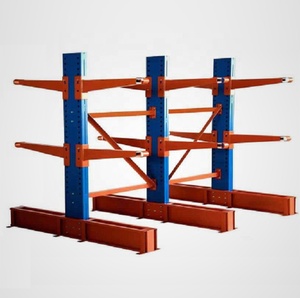
Heavy Duty Warehouse Cantilever Racking Stacking System
- Capacity: Up to 3,000 kg / Arm Level
- Application: Long Stock, Timber, Steel Pipe
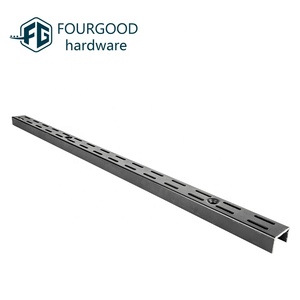
FOURGOOD Customized Racking Single Slot Wall Upright
- Material: Cold Rolled Q235B Profile Steel
- Feature: High-Precision Precision Slotted Post
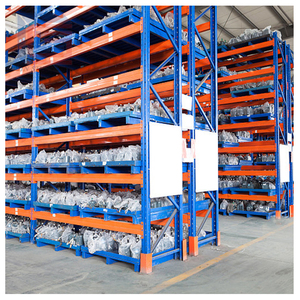
Industrial Adjustable Pallet Racking Warehouse Storage Shelving
- Pitch Adjustment: 50mm / 75mm Levels
- Compatibility: All Forklift & Stacker Fleets
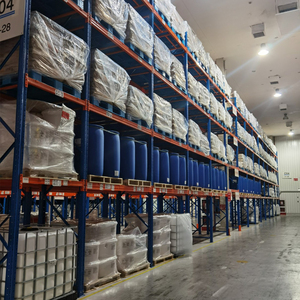
Adjustable Pallet Racks with Epoxy Powder Coating Finish
- Finish: Pickling & Phosphating Pre-treatment
- Load Rating: 1,000 – 4,500 kg / Bay
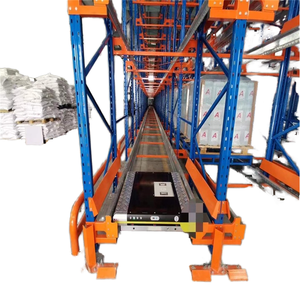
Automated Radio Shuttle High-Density Deep Lane Pallet System
- Operation: Semi-Automated 24V/48V Carrier
- Strategy: Dual Mode FIFO & LIFO Channel
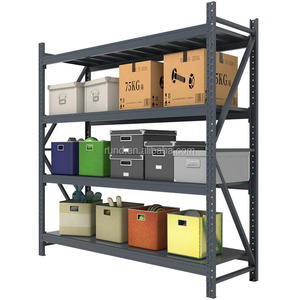
Node Floor Type Anti-Drop Metal Industrial Shelving
- Structure: Snap-In Locking Interlock Joints
- Safety: Raised Fall-Free Edge Protectors
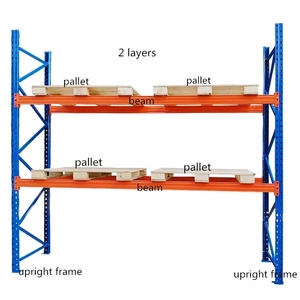
Specialty Metal Suspension & Roll Storage Pallet Racking
- Design: Heavy-Duty Axial Spindle Support
- Application: Carpet Roll, Textile, Wire Coil
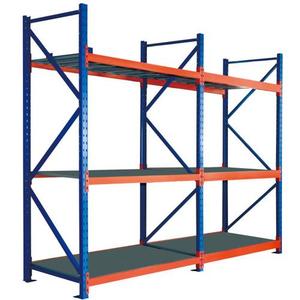
Industrial Medium-Duty Longspan Shelving System
- Capacity: 200 – 800 kg Uniform Distributed Load
- Decking: Galvanized Steel Plates or Wire Deck
The Mechanics of High-Density Live Storage Systems
An authoritative engineering analysis of gravity-fed pallet flow dynamics, centrifugal deceleration physics, and spatial footprint optimization in modern distribution facilities.
Incline Gradient Calibration
Live storage racking operates via gravity flow tracks set at a precise longitudinal gradient between 3.2% and 4.0% (approximately 1.8° to 2.3°). This precise angle balances static friction break-away for pallets weighing from 300 kg to 1,500 kg while preventing uncontrolled kinetic acceleration along extended lanes exceeding 20 meters.
Centrifugal Brake Roller Regulation
To safeguard cargo and structural framing, magnetic or mechanical centrifugal brake rollers are engineered at intervals of every one to two pallet positions. These governors dynamically engage when rotational velocity exceeds 0.25 m/s, dissipating excessive kinetic energy and enforcing a controlled descent speed across multi-tiered racking elevations.
Automatic Pallet Separator Technology
At the unloading face, intense line pressure from accumulating pallets creates hazardous forklift extraction conditions. Our systems integrate heavy-duty mechanical separator stops that lock downstream pallets in place until the front unit is lifted clear by the forklift operator, eliminating back-pressure wedging and mast jamming.
Comparative Analysis: Live Storage Racking vs. Alternative High-Density Systems
Parametric comparison across spatial density, rotational compliance, automation requirements, and operating expense.
| Evaluation Parameter | Gravity Live Storage (Pallet Flow) | Automated Radio Shuttle Racking | Drive-In Pallet Racking | Standard Selective Pallet Racking |
|---|---|---|---|---|
| Volumetric Floor Utilization | Up to 85% Efficiency | 80% – 85% Efficiency | 65% – 75% Efficiency | 35% – 45% Efficiency |
| Stock Turnover Logic | Strict FIFO (First-In, First-Out) | FIFO or LIFO Selectable | LIFO (Last-In, First-Out) | 100% Random Access (FIFO Capable) |
| Electrical Energy Consumption | Zero (100% Passive Gravity) | Medium (Lithium Battery Charging) | Zero (Forklift Dependent) | Zero (Forklift Dependent) |
| Operating Speed & Cycle Time | Immediate gravity positioning | Shuttle transit index (~0.8 m/s) | Slow (Deep mast driving) | High (Direct accessibility) |
| Structural Collision Risk | Minimal (Outer lane access only) | Low (Forklift stays in transfer aisle) | High (Repeated upright strikes) | Low to Moderate |
| Cold Storage Suitability | Superior (-30°C certified rollers) | Requires cold-store battery heaters | Good, but high thermal space loss | Poor volume density per kW cooling |
Emerging Procurement Trends in Live Storage Systems (2026–2030)
Key shifts observed by supply chain directors, procurement leads, and plant managers navigating modern logistics demands.
1. Hybrid AMR & AGV Pick-To-Light Flow Interfaces
Modern distribution centers increasingly procure live carton and pallet flow systems integrated with Autonomous Mobile Robots (AMRs). By aligning discharge face elevations with automated guided tuggers, enterprises establish continuous passive buffering without dedicating human labor to replenishment transitions.
2. Passive Cold-Chain Energy Decoupling
With escalating electrical refrigeration costs, cold storage developers are replacing low-density selective arrays with 15-to-25 deep gravity live storage. Maximizing the cubic volumetric density within blast freezers drastically reduces thermal footprint loss per pallet position, slashing cooling overhead by up to 35%.
3. Heavy-Duty Metallurgy & Structural Formings
Procurement managers are specifying certified Q235B and Q355B structural steel grades over inferior light-gauge alternatives. Cold-formed upright profiles featuring multiple rib-reinforcements withstand dynamic side loadings and severe seismic load factors (EN 1998-1 compliance), ensuring 15+ years of trouble-free duty.
4. Knock-Down Modular Design for Shipping Optimization
Global freight volatility has driven the demand for nested, boltless roller bed modularity. Our proprietary knocked-down engineering allows roller track modules to nest compactly inside standard 40-foot high-cube (40HQ) containers, dropping transoceanic freight costs per storage location by upwards of 40%.
5. Anti-Corrosive Hybrid Surface Engineering
Warehouses situated in coastal belts, high-humidity regions, or chemical plants increasingly mandate automated 8-stage pickling and phosphating pre-treatments followed by 80–120μm electrostatic epoxy-polyester coatings, preventing underfilm corrosion and structural embrittlement.
6. Certified Turnkey Structural Accountability
The transition away from fractured multi-vendor contracting has cemented the preference for single-source manufacturers. From digital finite element analysis (FEA) layout modeling to complete in-house roll-forming and on-site supervisor dispatch, buyers mitigate performance liability across turnkey project rollouts.
Engineered Sector Applications for Dynamic Live Storage
Review our standardized application matrices across demanding high-throughput global supply operations.
Fast-Moving Perishables
Strict First-In First-Out rotation prevents inventory aging in high-velocity dairy, beverage, and packaged food operations. Loading on one aisle while picking on another prevents forklift cross-traffic collisions.
Medical & Vaccine Storage
Integrated with certified galvanized roller bearings and stainless roller tracks, this configuration prevents microbial harboring and withstands constant deep-freeze sterilization cycles at -28°C.
JIT Component Staging
Multi-tier carton and pallet live tracks feed sub-assembly lines with sequenced component bins. Heavy steel brake rollers safely manage 1,200 kg engine and casting skids without line surging.
Why Global Logistics Leaders Partner with Guangzhou Heda Shelves Co., Ltd.
Combining over 25 years of structural fabrication mastery with advanced German roll-forming engineering and ISO 9001:2015 quality compliance.
25+ Years Experience
Founded in 2001, Guangzhou Heda Shelves Co., Ltd. operates a premier 30,000 m² factory equipped with CNC roll-forming lines, automated punching machines, and robotized welding cells delivering exceptional dimensional accuracy.
Verified Certifications
We hold verified international CE Certification (No. 2435-CPR-8605159), ISO 9001:2015 Quality Management (No. 18624Q00169R0M), and strict RoHS raw material compliance, fulfilling global regulatory mandates.
Free 3D & CAD Design
Our senior logistics engineers prepare full architectural CAD floor layouts, dynamic simulation calculations, and 3D visualization renderings within 24 hours of receiving your warehouse architectural drawings—at zero cost.
Optimized Sea Freight
All structural components feature knock-down bundling designed specifically for 20GP and 40HQ container cube-utilization, backed by clear numbered component labels, video guides, and on-site overseas installation supervision.
Frequently Asked Questions: Live Storage Racking Systems
Clear, engineering-grounded answers to assist procurement directors in system sizing, load calculations, and structural specifications.
Industrial pallet flow live storage racking is typically manufactured with a pitch of 3.2% to 4.0% (approximately 32mm to 40mm of fall per meter of lane run). Light loads (300–500 kg) or wooden pallets with bottom runners perpendicular to the rollers may require an incline closer to 4.0%, whereas heavy loads (1,000–1,500 kg) run reliably at 3.2% to 3.5%.
During the design phase, HEDA Shelves conducts physical roll-testing with your specific pallet type and load profile to calculate the optimal gradient before line fabrication.
Centrifugal speed controllers contain internal spring-loaded brake pads or eddy-current magnetic resistance drums. When a rolling pallet reaches a linear velocity above 0.25 m/s, the centrifugal force expands the internal brake elements against the stationary casing, converting excessive kinetic energy into friction or heat.
This governing mechanism ensures that pallets descend at a controlled, uniform walking speed of 0.15–0.25 m/s regardless of lane depth, protecting structural uprights, pallets, and operators at the pick face.
Live storage systems require solid, structurally sound pallets with continuous bottom skids or full base coverage (such as Euro wooden pallets 1200x800mm, Industrial pallets 1200x1000mm, or heavy-duty smooth plastic pallets). Broken runners, protruding nails, or severe underside deflections (>10mm under full load) can cause hang-ups on roller beds.
For operations using non-standard skids or cardboard cartons, HEDA manufactures full-width steel rollers or carton flow track beds with smaller wheel spacings (28mm–50mm pitch) to ensure uniform surface contact.
Unlike automated ASRS or electric shuttle racking systems, mechanical gravity live storage racking requires 0% electrical power. Pallets transfer entirely by kinetic gravity forces, and pallet indexing is governed mechanically by counterweight separators and centrifugal brakes.
This 100% passive design makes live storage ideal for distribution centers in emerging markets, regional supply depots with unpredictable grid power, or energy-sensitive cold storage freezers.
All HEDA structural steel members undergo an intensive 8-stage industrial pre-treatment process: alkaline degreasing, twin water rinses, acid pickling to eliminate mill scale, phosphate surface passivation, and sealed neutralization before automated powder application. Uprights and beams receive 80–120μm electrostatic epoxy-polyester powder coating cured at 200°C.
For blast freezers (-30°C) or open-air coastal docks, we provide hot-dip galvanized structural profiles (conforming to ISO 1461) and zinc-plated roller assemblies that prevent rust and ice bonding.
Yes. Our engineering division manufactures universal bracket adapters and intermediate drop-in track beds engineered to hook securely onto major global racking upright designs (including teardrop, diamond, 50mm pitch Euro profiles, and 75mm slotted styles).
Our engineering team verifies load ratings using finite element structural modeling (FEA) to confirm that your existing frame uprights and slab anchors can support the added dynamic live pallet load.
Optimize Your Warehouse Density with HEDA Engineering
Send us your warehouse dimensions, ceiling clear height, pallet specifications, and daily throughput target. Our senior structural engineers will return a complete 3D layout rendering, static load calculation sheet, and factory-direct quotation within 24 hours.