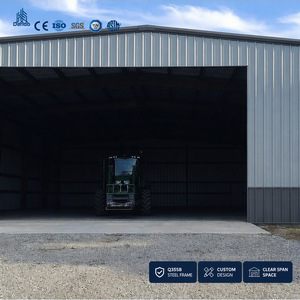
Large Span Clear Height Pallet Racking System
High Clearance
Details →
Certified steel structures tailored for selective distribution, high-density bulk storage, and specialized industrial payloads.
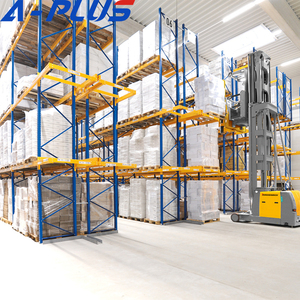
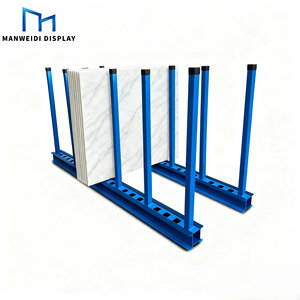
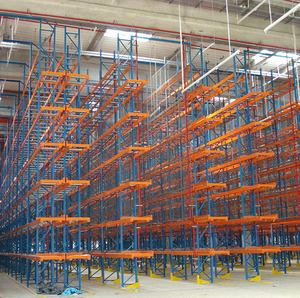
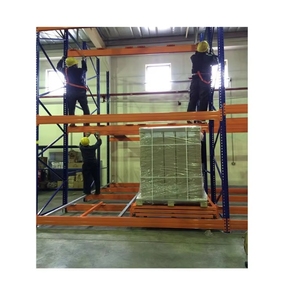
A structural and operational assessment methodology to align storage density, throughput dynamics, and capital expenditure.
Modern supply chain resilience begins at the structural foundation of the storage facility. Operating as a certified enterprise manufacturer since 2001, Guangzhou Heda Shelves Co., Ltd. builds industrial racking systems engineered under stringent international tolerances. Selecting an optimal pallet racking infrastructure is not simply a procurement purchase of cold-rolled steel; it is an integrated engineering calculation balancing volumetric cube utilization, floor load-bearing capacity, SKU rotation cycles, and mechanical material handling parameters.
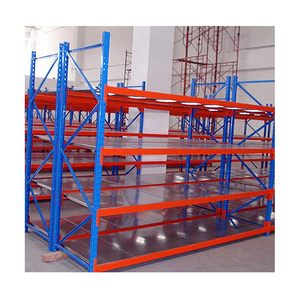
The global benchmark for multi-SKU operational models. Delivers unrestricted 100% immediate access to every pallet position. Well suited for FMCG distributors, retail fulfillment centers, and third-party logistics (3PL) operations requiring variable bay heights and rapid access via standard counterbalanced or reach trucks.
Engineered for footprints where footprint acquisition is cost-prohibitive. Compresses operating aisle widths down to 1.6–1.8 meters while utilizing vertical vertical clearance up to 15 meters or higher. Requires wire-guidance or mechanical guide rails paired with specialized articulated or man-up turret trucks for high density.
Dynamic storage utilizing inclined rail channels. Push Back systems rely on nested carts to accommodate 2 to 6 pallets deep per lane on a Last-In, First-Out (LIFO) method. Gravity Flow racks enforce strict First-In, First-Out (FIFO) batch tracking with integrated brake rollers for perishables and temperature-controlled cold rooms.
| Storage Architecture | Volumetric Efficiency | Pallet Accessibility | Inventory Rotation | Recommended Industrial Applications |
|---|---|---|---|---|
| Selective Pallet Racking | 40% – 50% Floor Utilized | 100% Direct Selectivity | FIFO / LIFO Flexible | General Warehousing, 3PL Providers, High-Mix Low-Volume SKUs |
| Very Narrow Aisle (VNA) | 60% – 75% Floor Utilized | 100% Direct Selectivity | FIFO / LIFO Flexible | High-Value Distribution, Pharmaceutical Depots, Urban Logistics Hubs |
| Drive-In / Drive-Through | 70% – 80% Floor Utilized | Limited Access (Lane-based) | LIFO (Drive-In) / FIFO (Drive-Thru) | Cold Storage Facilities, Beverage Distributors, Uniform Raw Materials |
| Push Back Racking Systems | 65% – 75% Floor Utilized | Medium Selectivity (Per Lane) | Strict LIFO Rotation | Food Manufacturing, Chemical Storage, Medium SKU Consolidation |
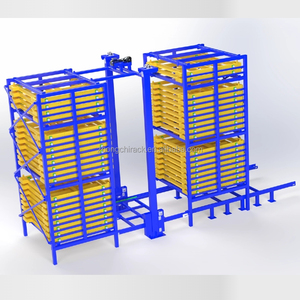
| Radio Shuttle Cart Racking | 80% – 88% Floor Utilized | Automated Lane-Level Access | Configurable FIFO / LIFO | High-Volume Cold Chains, FMCG Megahubs, Agricultural Processing |
Market transformation driven by cubic space constraints, automation integration, and localized regional manufacturing demands.
Global procurement teams are moving away from treating industrial shelving and racking as modular steel hardware. Instead, enterprise procurement evaluates structural racking systems as a capital infrastructure investment directly correlated with equipment uptime, facility lifecycle, and supply chain continuity. Research across international material handling operations indicates three defining trends:
Warehouses are standardizing component tolerances to accommodate autonomous mobile robots (AMRs) and automated storage and retrieval systems (AS/RS). Frame deflections, floor anchoring depths, and beam span rigidity must meet tight deflection limits (e.g., L/200 under maximal safe working loads) to guarantee optical sensor alignment.
Accelerating demand across coastal supply hubs, tropical territories (such as West and East Africa, Southeast Asia), and freezing environments requires advanced surface metallurgy. Advanced continuous pickling, multi-stage zinc phosphating, and electrostatically cured polyester powders ensure anti-corrosion life cycles exceeding 15 years.
Cross-border logistics costs remain a central procurement variable. Buyers increasingly favor manufacturers providing knocked-down, nested beam and frame profiles designed specifically for high-cube (40HQ) ocean container utilization, reducing landed shipping costs per pallet position by up to 22%.
How progressive manufacturing methods deliver improved structural stability, cold-form accuracy, and worker safety.
The structural reliability of pallet racking rests on steel formulation and continuous roll-forming tolerances. HEDA Shelves utilizes cold-rolled structural steel grades matching high tensile strengths (Q235B and Q355B equivalents), formed across automated multi-station profiling lines. From interlocking hook connections to continuous weld runs, modern racking engineering reduces micro-stress fractures and prevents localized metal buckling under seismic or dynamic forklift contact.
Uprights are punched on high-speed automated CNC lines with pitch configurations (such as 50mm or 75mm increments), guaranteeing exact beam level adjustability and uniform load transfer down the vertical column profile.
Closed box beams and interlocking step profiles are roll-formed and automatically welded via robotic lines. This ensures zero weld spatter, consistent penetration, and exceptional moment resistance under sustained maximum uniform distributed loads (UDL).
Ten-stage automated chemical finishing sequences incorporate chemical degreasing, ultrasonic rust removal, acid pickling, surface passivating, and phosphate coating prior to electrostatic curing for industrial-grade adherence.
Every bay accommodates built-in engineering accessories: cold-formed baseplates, heavy duty column wrap guards, steel frame end barriers, pallet back-stops, drop-over wire decking, and high-visibility spring safety lock pins.
A unified Chinese manufacturing base supplying certified heavy storage projects to over 120 countries worldwide.
Founded in 2001, Guangzhou Heda Shelves Co., Ltd. operates a self-owned 30,000 square meter modernized manufacturing complex based in Guangzhou, Guangdong. Controlling the entire fabrication pipeline—from the uncoiling of prime carbon steel down to robotic welding, automated phosphating, and electrostatic powder finishing—HEDA eliminates subcontracting risks. For project engineers and overseas logistics directors, this single-source manufacturing model delivers structural predictability, material certification traceability, and uncompromised quality assurance.
Year Established
Production Facility
Monthly Metal Capacity
Projects Delivered Worldwide
Our dedicated structural calculation teams, logistics space planners, and technical production staff supply turn-key structural layout design, static load modeling, and complete shop drawing generation.
Direct compliance verified under European CE Certification (Certificate No. 2435-CPR-8605159), ISO 9001:2015 Quality Management (No. 18624Q00169R0M), and strict environmental RoHS standards.
Bespoke column hole shapes, beam connection configurations, corporate powder colors, custom-stamped load plaques, and structural mezzanine integration customized precisely for your local building codes.
Comprehensive engineering and commercial answers to simplify cross-border racking procurement.
To produce an engineered CAD layout and precise quotation, our technical engineering office requires: (1) Architectural building drawings showing clear ceiling heights, column locations, dock doors, and slab expansion joints; (2) Pallet specifications including overall width, depth, height, and maximum gross weight per pallet; (3) Material handling equipment specifications, specifically forklift model, overall collapsed mast height, maximum lift height, and minimum turning aisle width requirement; and (4) Facility environmental metrics such as seismic classification, ambient operating temperatures, and subfloor concrete slab compressive strength.
Every production batch starts with mill test certificates (MTC) for steel yield strength and chemistry. Our factory adheres strictly to FEM 10.2.02 and RMI standards. During manufacturing, inline optical cameras monitor punch center distances, roll-forming beam sections undergo destructive weld-shear testing, and dry film thickness (DFT) gauges confirm an average powder coating thickness of 60 to 90 microns. Final structural calculation sheets include simulated safety factors of 1.5 to 1.8 over calculated static loads.
For standard temperature-controlled warehouses, our automated ten-stage pickling, phosphating, and polyester powder coating offers exceptional corrosion resistance. In coastal distribution centers characterized by high relative humidity, high salinity marine air, or sub-zero blast freezer conditions down to -30°C, we specify hot-dip galvanization (HDG) for frames and zinc-passivated drop-in wire decking to prevent internal moisture condensation and structural oxidation.
Yes. Over 80% of our international shipments are successfully assembled by local contractor teams. Every completed order includes comprehensive 3D isometric installation drawings, piece-by-piece numbered bundle packing lists, and detailed assembly manuals indicating critical torque specs for anchor bolts and beam security pins. In addition, our senior engineering team provides real-time video call supervision, and on-site factory-certified installation managers can be deployed for multi-tier mezzanine and large-scale industrial projects.
Standard fabrication cycles average 15 to 25 working days from approved engineering drawings. Upright frames and roll-formed box beams are bundled with steel strapping, corrugated corner protection, and high-density PE shrink wrap on custom transport skids to avoid transit abrasion. We support global commercial Incoterms including FOB (Guangzhou / Shenzhen / Foshan), CFR, CIF, and DDP to major international seaports and inland logistics hubs worldwide.
Consult with our senior warehouse engineers to receive a certified structural load analysis, free 2D/3D CAD layout, and factory-direct project quotation within 24 hours.
Contact Us