Engineered Industrial Slotted Angle & Heavy-Duty Storage Systems
Precision-formed structural shelving configurations designed for rapid mechanical assembly, maximum floor-area yield, and dynamic load adaptability across demanding supply environments.
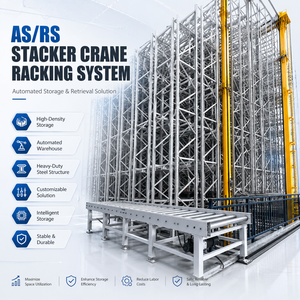
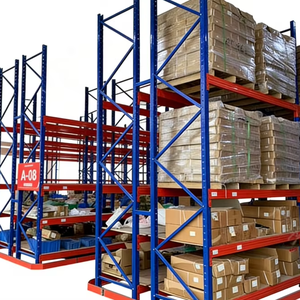
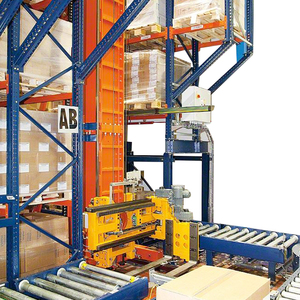
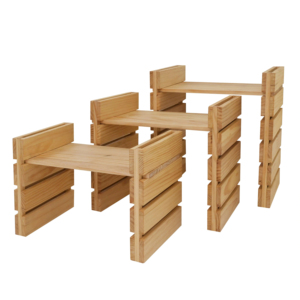
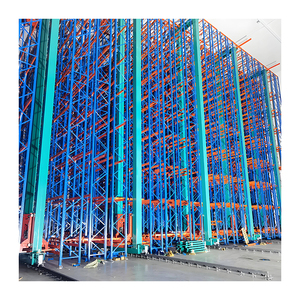
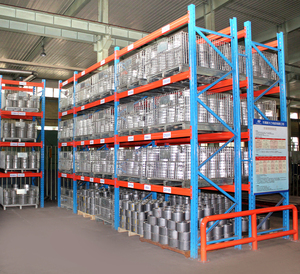
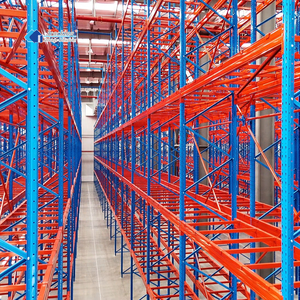
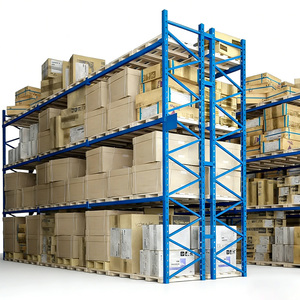
Slotted Angle Racking: Structural Mechanics & Industrial Utility
In modern industrial storage planning, the slotted angle rack serves as the fundamental bedrock of manual and semi-automated material handling. Manufactured from precision cold-rolled mild steel coils (predominantly Q235B or equivalent structural steel grades), slotted angle systems offer unmatched flexibility through mathematically standardized punching matrices. These perforations allow structural framing, vertical struts, and horizontal cross-members to lock together rigidly via corner gussets and high-tensile bolted fasteners or rivet friction joints.
Technical Anatomy & Load Integrity
The structural rigidity of an angle upright is fundamentally tied to its cross-sectional geometry. Typical profiles feature standard dimensions such as 40mm x 40mm, 50mm x 50mm, or asymmetric configurations like 60mm x 40mm, with steel sheet thicknesses ranging from 1.5mm to 3.0mm. Roll-forming cold steel induces work hardening at the 90-degree corner apex, generating elevated yield strength precisely where compressive loading and bending moments concentrate.
Corrosion mitigation remains paramount for industrial installations across tropical, coastal, and unconditioned warehouse spaces. Top-tier manufacturers employ a multi-phase pre-treatment protocol featuring hot chemical pickling, surface degreasing, and zinc phosphating before applying high-density electrostatic epoxy-polyester powder coats. This thermal curing cycle ensures complete micro-encapsulation, providing over 500 hours of continuous salt-spray resistance compliant with ASTM B117 standards and safeguarding structural integrity in high-humidity regional microclimates.
Strategic Procurement Trends: How Modern Enterprises Source Storage
Shifts in global supply chain risk management, total landed cost calculations, and floor optimization metrics are reshaping industrial shelving procurement worldwide.
High-Density Consolidation & Space Multipliers
Industrial real estate values have driven buyers toward multi-tier slotted angle installations. Rather than expanding building footprints, facilities integrate two-tier and three-tier catwalk mezzanine decks directly supported by reinforced angle uprights, tripling pick-face accessibility without structural building modifications.
Knock-Down Flat-Pack Logistics
Ocean freight container optimization dictates procurement decisions. B2B buyers mandate strictly engineered, knock-down modular components that pack nested into 20GP and 40HQ maritime containers, maximizing cube utilization and driving down landed unit costs to regional ports.
Total Traceability & Material Certification
Global procurement teams now require mill test certificates, ISO 9001:2015 traceability, and EN 15512 or CE execution compliance. Specifiers avoid unbranded re-rolled steel scraps, demanding certified virgin coils with guaranteed yield strengths (≥235 MPa) to satisfy strict workplace safety audits.
Future Development Trends in Storage Rack Architecture
The convergence of Industry 4.0 automation, hybrid picking hubs, and circular economy lifecycles is transforming conventional steel angle shelving.
1. AMR & Cobot Synergy
Modern slotted angle racks are being redesigned with wider clear spans, customized pick-to-light LED channels, and bottom-clearance recesses engineered specifically for autonomous mobile robots (AMRs). The racking serves as a modular matrix that interacts seamlessly with automated guided shuttles and robotic picking arms.
2. Pre-Galvanized High-Tensile Micro-Alloys
To reduce chemical exposure in powder-coating plants while bolstering durability, advanced mills are transitioning to continuously hot-dipped pre-galvanized high-yield steels (such as DX51D+Z and S280GD). These deliver self-healing cathodic edge protection along punched matrix holes without adding excessive dead weight.
3. Circular Economy Modular Disassembly
Facility agility demands 100% reusable hardware. Future slotted angle frameworks prioritize boltless snap-in wedge locks, zero-weld structural gussets, and standardized pitch intervals (50mm or 75mm) that allow infinite structural repurposing without generating scrap metal during facility layout shifts.
Enterprise Advantages: Why Partner with Guangzhou Heda Shelves Co., Ltd.
Founded in 2001, Guangzhou Heda Shelves brings 25 years of specialized storage manufacturing, structural engineering authority, and complete turnkey execution to your supply chain.
30,000 m² Production Base
Equipped with fully automated high-precision roll forming lines, robotic laser cutting, continuous automated stamping presses, and environmental powder coating booths.
30,000 Tons Monthly Capacity
High-volume processing capacity ensures reliable fulfillment of large commercial tenders, complex logistics distribution centers, and high-cube ASRS warehouse contracts.
Free 3D Layout & Static FEA
Our in-house design engineers produce comprehensive CAD floor layouts, photorealistic 3D visual renders, and structural finite element load calculations free of charge prior to contract confirmation.
International Certifications
All operations comply with CE Certification (No. 2435-CPR-8605159), ISO 9001:2015 Quality Management standards (Certificate No. 18624Q00169R0M), and RoHS environmental standards.
B2B Procurement & Engineering FAQ
Direct technical and operational answers to support engineering consultations, tender preparation, and container logistics.