Industrial Portfolio
Precision Storage Systems & Racking Infrastructure
Engineered for structural resilience, variable SKU geometries, and automated logistics compatibility across international warehousing operations.
Technical Whitepaper
Cantilever Racking Mechanics: Load Physics, Structural Optimization, & Deflection Control
Modern industrial storage facilities require robust material handling systems capable of storing non-standard, long-span, and variable-geometry goods—such as structural steel beams, extruded aluminum profiles, timber packs, PVC piping, and gypsum board. Traditional pallet racking frameworks introduce vertical front-column obstructions that fundamentally restrict access, create severe dead-aisle volume, and introduce fork-impact hazards when loading items exceeding 2.4 meters in continuous length.
Industrial cantilever racking overcomes these geometric limitations through an open-span design consisting of heavy vertical upright columns, solid horizontal load-bearing bases, bolted cross-bracing frameworks, and cantilevered arms extending forward without front uprights. However, because loads are held on projecting cantilever arms rather than supported on twin-beam spans, the mechanical engineering of cantilever systems is governed primarily by overturning moment calculations, eccentric vertical loading, and elastic deflection limits defined under ANSI MH16.2 and European standard EN 15512 / FEM 10.2.09.
Arm Incline & Deflection Tolerances
Cantilever arms must be manufactured with a built-in positive vertical camber (typically between 1.5° and 2.5° upward pitch relative to horizontal). Under full uniformly distributed load (UDL), structural deflection occurs based on the classic cantilever deflection formula:
δmax = (q × L4) / (8 × E × I)
Where q is load per linear millimeter, L is arm projection length, E is Young's Modulus of Steel (210 GPa), and I is the cross-sectional moment of inertia. The engineered incline ensures that under permissible load, the arm tip does not sag below the horizontal line (δ ≤ L/250), preventing cylindrical inventory from rolling forward off the rack.
Column Overturning & Anchor Shear
In single-sided cantilever configurations, the entire stored dead-weight acts eccentrically against the vertical upright column, generating tremendous base bending moments that must be resisted by base-plate welds, foot extension anchors, and floor slabs:
- Hot-Rolled Structural IPE/HEA Sections: Selected for ultra-heavy duty installations (>1,500 kg per arm) to provide superior resistance against torsional twisting and forklift impact.
- Cold-Formed Roll-Formed Profiles: Utilized for medium-duty applications (250–800 kg per arm) balancing weight-to-strength ratios and reduced ocean freight costs.
- Chemical Anchor Embedment: Calculated based on concrete slab compressive strength (≥ C25/30) to resist tension pull-out and cyclic shear.
| Structural Parameter | Roll-Formed Cantilever Systems | Hot-Rolled Structural Steel Systems | Standard Compliance & Limits |
|---|---|---|---|
| Steel Grade Selection | Q235B / Cold-rolled high tensile strip | Q355B / Hot-rolled IPE, HEA, UB beams | EN 10025 / ASTM A36 / GB/T 700 |
| Arm Load Range (UDL) | 150 kg – 900 kg per individual arm | 1,000 kg – 4,500 kg per individual arm | Deflection limited to ≤ L/250 under UDL |
| Column Height Reach | Up to 6,500 mm (Standard reach trucks) | Up to 12,500 mm (AS/RS & Combilift) | ANSI MH16.2 / FEM 10.2.09 |
| Impact Resistance | Moderate; requires column base guards | High; superior energy absorption | Forklift dynamic load factor 1.25 to 1.40 |
| Recommended Applications | Pipes, conduits, moulding, light timber | Heavy steel rebar, coil plates, solid billets | Seismic zone site-specific engineering |
Proper engineering involves evaluating both static gravity loads and dynamic seismic loads. In seismic-prone distribution centers, vertical columns experience amplified overturning forces. Our engineering department conducts full Finite Element Analysis (FEA) simulations to evaluate column stress concentrations, base weld joint fatigue, and arm connector bracket deformation prior to manufacturing sign-off.
Future Insights
Global Procurement & Engineering Trends (2026–2030)
How supply chain executives, warehouse developers, and EPC contractors are future-proofing long-material storage systems.
Autonomous Stacker Cranes & AS/RS Cantilever
Manual forklift handling of 6-meter steel packs presents substantial health, safety, and labor productivity challenges. Automated Storage and Retrieval Systems (AS/RS) integrated directly with structural cantilever racks are replacing standard reach trucks. These systems incorporate automated twin-mast cranes with telescopic forks, demanding manufacturing tolerances as tight as ±1.5 mm across arm deflection planes.
Dual-Layer Powder Coating & Galvanized Yards
Procurement orders are transitioning from standard indoor paint finishes to specialized outdoor and harsh-environment protection. Hot-dip galvanizing conforming to ISO 1461 (minimum 85 μm zinc layer thickness) and dual-layer zinc-rich thermoset epoxy primers with UV-stabilized polyester topcoats ensure structural longevity against coastal sea spray, chemical vapors, and open-yard precipitation.
High-Density Mobile Base Racking
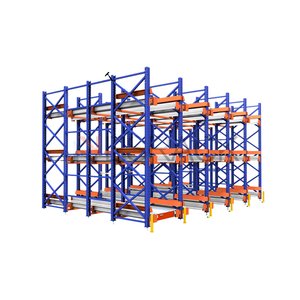
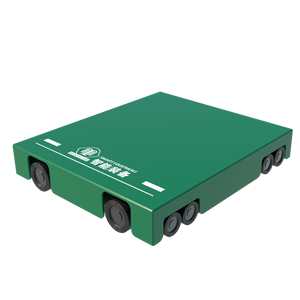
With industrial land costs rising rapidly in logistics gateways, static cantilever aisles consume substantial real estate. Motorized mobile cantilever systems mount heavy structural columns onto electronically guided steel carriages set directly into recessed floor rails. Operating with a single floating aisle, this technology increases footprint capacity by up to 85% for cold stores and raw material buffers.
Manufacturing Authority
Guangzhou Heda Shelves Co., Ltd. — Integrated Production & Global Supply Chain
Founded in 2001, Guangzhou Heda Shelves Co., Ltd. (HEDA Shelves) operates a modernized 30,000 square meter automated manufacturing headquarters in Guangzhou, China. Producing over 30,000 tons of certified warehouse racking systems every month, we provide turnkey engineering, structural design, manufacturing, and export execution for multi-national distributors, 3PL logistics hubs, and industrial contractors worldwide.
Full-Chain In-House Manufacturing Process
Unlike trade intermediaries, every component of HEDA storage systems is engineered under strict ISO 9001:2015 certified protocols through ten dedicated production stations:
- 01. Certified Raw Coil Sourcing: High-purity structural steel with verified chemical mill test certificates (MTC).
- 02. Laser & Precision CNC Cutting: Exact tolerances preventing arm-connection play and frame twisting.
- 03. Automated Column Multi-Punching: Continuous pitch-controlled indexing for adjustable arm connectors.
- 04. Advanced Roll-Forming Lines: Multiple cold-rolling roll stands for uniform profile stress relief.
- 05. High-Penetration Robotic Welding: CO₂ gas-shielded automated seam welding for high shear joints.
- 06. Acid Pickling & Phosphating: Ultrasonic degreasing and conversion pre-treatment ensuring powder adhesion.
- 07. Electrostatic Powder Coating: Automated Swiss Gema powder application followed by 200°C curing ovens.
- 08. Comprehensive QA & Load Verification: Weld micro-structure testing, dry film thickness gauges, and load deflection tests.
Third-Party Verified Accreditations
To ensure complete compliance with municipal building codes, industrial safety regulations, and project tenders, our systems carry full international certifications:
CE Certification: Certificate No. 2435-CPR-8605159 (Conforms to EN 1090-1 execution of steel structures).
ISO 9001:2015 Management: Certificate No. 18624Q00169R0M, registered and valid through June 2027.
RoHS & REACH Compliance: Non-toxic, lead-free powder coating chemistries safe for sensitive environments.
Our dedicated project engineering bureau provides clients with complimentary AutoCAD floor plans, 3D structural visual renders, load calculation books, and container load optimization plans within 24 hours of receiving warehouse blueprints.
Procurement Clarity
Frequently Asked Questions: Technical Engineering & Global Shipping
Authoritative answers for procurement managers, structural engineers, and warehouse logistics directors.
How do you determine the required number of cantilever arms for flexible long items?
The spacing between cantilever arms must prevent product sagging between support points. To test your product, place two wooden blocks on the floor and position a test load across them. If excessive deflection occurs, add an intermediate arm. As a baseline rule, the product overhang at both ends should not exceed half the distance between adjacent arms (Overhang ≤ Span / 2), preventing unbalanced tip loads.
What are the differences between roll-formed and structural I-beam cantilever racks?
Roll-formed cantilever racks are fabricated from cold-rolled sheet steel, featuring adjustable pin-and-wedge or clip connectors. They represent an economical solution for light to medium-duty loads (up to 800 kg per arm). Structural cantilever racks are built from heavy hot-rolled I-beams (IPE or HEA sections) with bolted arm connections, engineered for heavy industrial materials, metal service centers, and outdoor timber yards where forklift impacts are frequent.
What concrete floor slab specifications are necessary to anchor cantilever racking safely?
Because single-sided cantilever racks create heavy overturning moment forces at the base, floor slab integrity is critical. A minimum reinforced concrete slab thickness of 150 mm to 250 mm with a compressive strength of at least 25 to 30 N/mm² (C20/25 or C25/30) is typically required. Dynamic seismic calculations or high-height columns (>6 meters) may necessitate localized foundation pads or heavy chemical capsule anchors.
How do you optimize ocean freight cubing for high-volume overseas export?
Long upright columns and protruding bases consume considerable container volume if improperly packed. HEDA utilizes a knock-down (KD) modular architecture where columns and base sections are connected by high-tensile grade 8.8 structural bolts rather than fixed factory welding. Columns, bases, and arms are steel-banded with protective corrugated corners and bundled into compact nested bundles, maximizing the weight utilization of 40ft High Cube (40HQ) containers up to 26–28 metric tons.
Can cantilever racking be fitted with decking to store non-standard or varied-length pallets?
Yes. Cantilever arms can be fitted with steel shelf decking panels, heavy galvanized wire mesh decking, or structural saddle support beams. This transforms the open cantilever rack into a continuous unobstructed storage shelf, allowing you to store variable-length timber, crates, and standard EUR/ISO pallets on the same run without loss of vertical space.
How does HEDA guarantee corrosion resistance for outdoor or high-humidity installations?
For outdoor open-yard yards or coastal distribution hubs, we provide components finished with hot-dip galvanization according to ISO 1461, achieving a minimum zinc coating thickness of 85 microns. For indoor tropical facilities, our automated multi-stage pre-treatment line includes chemical acid pickling, zinc phosphating, and electrostatic polyester powder coating cured at 200°C, passing 500-hour neutral salt spray (NSS) testing without blistering.
Request Your Custom Warehouse Layout & Load Calculation
Send your building dimensions, clear ceiling heights, and inventory parameters. Our certified structural engineers will deliver a full AutoCAD layout, 3D engineering render, and transparent container-optimized FOB/CIF quotation within 24 hours.