[email protected] Serving West, East, Southern & North Africa
ISO 9001:2015 & CE Certified Heavy Industry Manufacturer

Top Trusted Warehouse Pallet Storage Manufacturer & Exporter

Global Engineering White Paper & B2B Procurement Guide: Optimizing Volumetric Footprint, High-Density Automation, Seismic Reliability, and Knock-Down Ocean Logistics for High-Velocity Modern Supply Chains.

25+
Years Engineering Expertise
30,000m²
Direct Manufacturing Base
30,000
Tons Monthly Output Capacity
120+
Countries & Regions Exported
Industrial Heavy Storage Inventory

Certified Warehouse Pallet Racking Systems

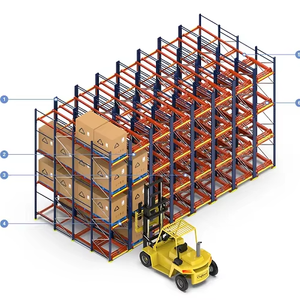
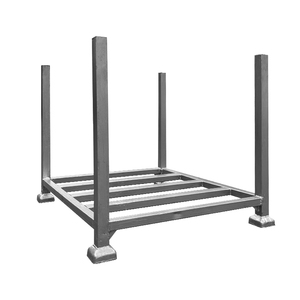
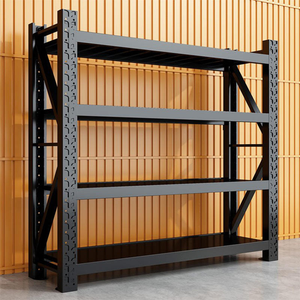
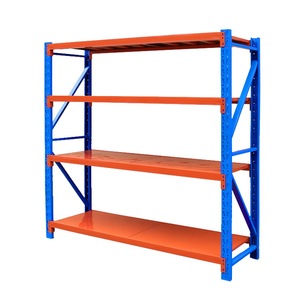
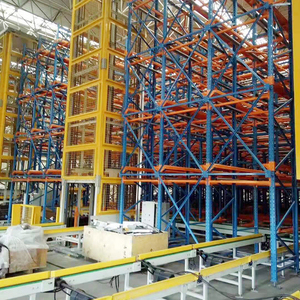
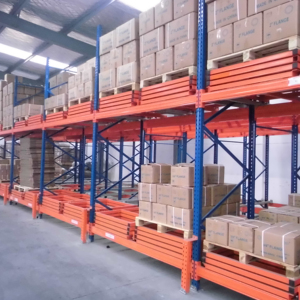
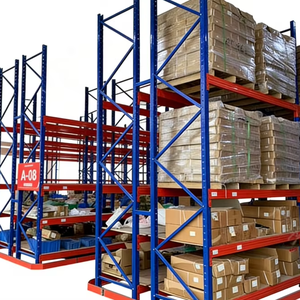
Engineered to international structural standards (FEM 10.2.02, EN 15512, RMI MH16.1). Explore our prime selection of industrial stacking racks, dynamic push-back channels, four-way radio shuttles, and corrosive-resistant cold storage assemblies.

Future Procurement Horizons (2025–2030)

Macro Trends Transforming Global Racking Procurement

Industrial logistics infrastructure is moving away from static square-meter thinking toward cubic volumetric engineering. B2B procurement heads and logistics engineers must navigate emerging paradigm shifts in capital expenditure, modularity, and operational resilience.

1. CAPEX Shift: Semi-Automation Outpacing Fully Automated AS/RS

While fully autonomous stacker-crane AS/RS facilities require astronomical upfront capital ($5M–$20M+) and multi-year construction cycles, procurement executives are heavily prioritizing semi-automated Radio Shuttle systems. Pallet runners maximize cubic floor space (up to 85% volumetric utilization) without locking warehouses into rigid, unalterable architectures or massive software licensing dependencies.

  • Payback timeline compressed to 14–22 months
  • Operates seamlessly during municipal power outages with generator backing
  • Scalable fleet deployment: add shuttles as pallet throughput increases

2. Ocean Logistics & Landed-Cost Engineering

Global ocean freight rates and volatile container handling charges demand that warehouse storage systems be designed from the factory floor for maximum nesting density. Racking manufacturers who engineer beam profiles, upright geometries, and knock-down column splices around 40HQ container interior dimensions reduce freight cost per pallet position by 28% to 35% compared to pre-welded frameworks.

  • Nested upright columns achieving 24–26 tons payload per 40HQ
  • Palletized accessory kits bundled to accelerate local port stripping
  • Pre-labeled structural packages corresponding to CAD bay markers

3. Multi-Tier Micro-Fulfillment & Mezzanines

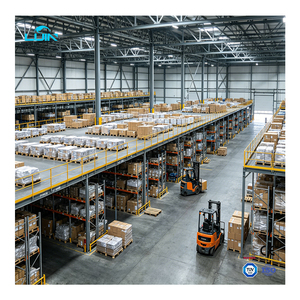
Accelerating e-commerce delivery guarantees are spurring massive conversions of legacy industrial buildings into multi-tier picking towers. Instead of paying premium lease rates for horizontal land expansion, operators are stacking rack-supported platforms up to 3 to 4 tiers high, dividing lower levels for heavy bulk pallet storage and upper platforms for fast manual item sorting.

  • Floor payload capacities engineered from 300 kg/m² to 1,200 kg/m²
  • Integrated fire sprinkler pass-through openings and smoke exhaust
  • Boltless staircase and pallet drop safety gates matching OSHA/EN rules
Material Science & Structural Safety

Technological Frontiers in Pallet Storage Racking

A structural failure in a 12-meter-high pallet rack bay can cause millions of dollars in lost inventory, structural collapse, and catastrophic personnel liability. Our engineering division integrates high-grade metallurgical and surface treatment standards to survive severe environmental and operational stressors.

Sub-Zero Steel Ductility

Standard mild steel exhibits severe embrittlement and notch sensitivity when operated in cold storage environments below -20°C. We utilize Q355D and Q355E high-strength micro-alloyed steel tested for Charpy V-notch impact energy at -40°C, preventing brittle fracture under sudden dynamic forklift impacts.

Pickling & Phosphating

Direct electrostatic powder coating on unconditioned raw mill scale leads to premature flaking and subsurface blistering in coastal tropical facilities. We run an automated 8-stage chemical immersion pretreatment (degreasing, acid pickling, zinc phosphating) guaranteeing 1,000+ hours ASTM B117 salt spray endurance.

Seismic Dynamic Dissipation

Compliant with FEM 10.2.08 and RMI seismic provisions, our engineering designs compute ground acceleration coefficients (Ss, S1), baseplate plastic hinge deformation, and beam-to-column connector moment rotations to ensure racks absorb seismic kinetic loads without column buckle or dislodgement.

Laser Deflection Profiling

Every roll-formed beam section is tested to adhere strictly to the L/200 deflection limit under maximum working capacity. Continuous roll-forming lines feature automated in-line servo punching and optical sensors that ensure dimensional tolerances of +/- 0.5mm across 12-meter column sections.

Comparative Engineering Matrix

Racking System Selection: Operational Trade-Offs

Selecting the optimal storage configuration requires balancing floor footprint, capital investment, pallet accessibility, and forklift kinematics. Use this matrix to evaluate project suitability.

Racking Architecture Floor Space Density Direct Selectivity Stock Rotation Forklift Compatibility Relative Cost / Position
Selective Pallet Racking Standard (40-50%) 100% Immediate Direct Access FIFO / LIFO Flexible Counterbalance, Reach Trucks Baseline ($)
Push Back Racking (2-6 Deep) High (70-75%) Lane Front Pallet (LIFO) Strict LIFO (Last-In, First-Out) Standard Counterbalance / Reach Moderate ($$)
Drive-In / Drive-Through Very High (75-80%) Channel Level (Low) LIFO (Drive-In) / FIFO (Drive-Thru) Specialized Narrow Counterbalance Low-Moderate ($$)
Radio Shuttle Automation Ultra High (85%+) Semi-Automated Channel Access Programmed FIFO or LIFO Standard Forklifts (Outer Aisle Only) Advanced ($$$)
Rack-Supported Mezzanine 200-300% Cubic Gain Tier Specific (Bulk & Bin) Segmented Process Flow Pallet Jacks, VRC, Man-Up Pickers Structural ($$$)
Need our engineering team to calculate structural deflection and slotting density for your specific building? Inquire Now
Enterprise Manufacturing Competencies

Guangzhou Heda Shelves Co., Ltd.

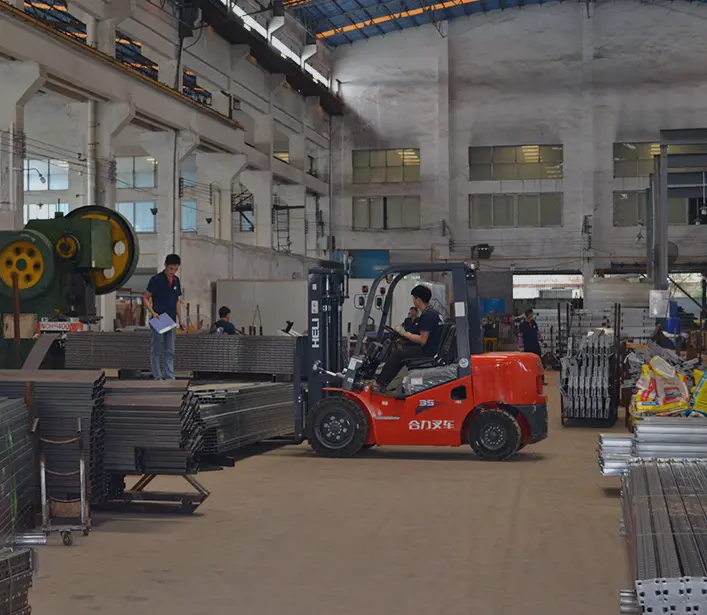
Founded in 2001, Guangzhou Heda Shelves Co., Ltd. operates a premier 30,000 square meter integrated manufacturing facility in Guangzhou, China. With an engineering and technical workforce of over 300 skilled specialists and an aggregate production output surpassing 30,000 metric tons per month, we serve as the direct OEM/ODM structural backbone for over 10,000 logistics and warehouse facilities across 120+ countries.

By controlling the complete vertical lifecycle under one roof—from raw slit coil uncoiling, automatic cold roll-forming, and computer-controlled multi-station punching to automated robotic GMAW welding and continuous electrostatic curing—we eliminate trading intermediaries and provide verifiable material mill test certs with full lot traceability.

  • 30,000 m² Integrated Factory Cutting, punching, roll-forming, robotic welding, and powder coating in one facility.
  • Certified Rigor (CE & ISO) CE No. 2435-CPR-8605159, ISO 9001:2015 No. 18624Q00169R0M, and RoHS compliant.
  • Complimentary 3D CAD Engineering Structural load calculations, static deflection stress models, and 24h drawing turnaround.
  • Specialized Tropical & Export Packing Steel-banded nested bundles engineered for 40HQ maritime containers to prevent transit chafing.
Inquire Now Speak directly with a Senior Structural Storage Engineer
Guangzhou Heda Shelves modern racking manufacturing line
Procurement Due Diligence

Frequently Asked Questions: Warehouse Racking Procurement

Comprehensive engineering and international shipping answers designed to assist project engineers, warehouse developers, and supply chain managers in evaluating imported storage systems.

Q How do you verify structural safety and load certifications for international building code compliance?
Every storage project engineered by HEDA Shelves undergoes finite element structural analysis adhering to European FEM 10.2.02 / EN 15512 specifications and American RMI (Rack Manufacturers Institute) MH16.1 guidelines. We specify structural steel grades conforming to Q235B and Q355B with mill-certified yield strengths ($f_y \ge 235 \text{ MPa}$ to $355 \text{ MPa}$). Each beam profile is engineered with a safety factor of 1.5 to 1.65 against yield and a maximum vertical deflection limit of $L/200$ under uniform distributed loading (UDL). Comprehensive calculations, anchor pull-out ratings, and third-party CE structural certificates (Certificate No. 2435-CPR-8605159) are submitted prior to production.
Q What concrete floor slab specifications are required before anchoring industrial heavy-duty pallet racks?
For standard selective and drive-in racks with bay heights up to 9 meters and upright loads under 12,000 kg per frame, an uncracked, reinforced concrete slab with a minimum compressive strength of 20 to 25 MPa (C20/25 or 3,000 PSI) and a thickness of at least 150mm to 200mm is required. In VNA (Very Narrow Aisle) or high-bay installations exceeding 10 meters, floor flatness must comply strictly with DIN 18202 Table 3 Line 4 or ASTM E1155 F-min numbers ($F_F \ge 50, F_L \ge 45$) to avoid static mast deflection and mast sway during high-elevation pallet picks.
Q How does your export packaging mitigate ocean condensation and salt-spray corrosion during transit?
Ocean transit from Guangzhou to major ports in Africa (Lagos, Tema, Mombasa, Durban), the Middle East, or the Americas involves crossing severe oceanic temperature and humidity gradients. We treat all components with an 8-stage pickling, phosphating, and electrostatic powder coating baked at 200°C. For packaging, upright frames and beams are nested with protective corrugated separator cushions, wrapped in UV-stabilized heavy-gauge polyethylene stretch film, and bound with heavy steel strapping. Galvanized or hot-dip zinc finishes (80+ microns) are supplied for outdoor lumber yards, coastal port sheds, and sub-zero blast freezers.
Q Can your engineering team support local installation teams in overseas destinations?
Yes. Over 90% of our export clients utilize local labor for assembly to minimize project costs. To facilitate seamless, error-free assembly, our engineering department provides 3D-color CAD elevation layouts, piece-marked assembly blueprints, and video walkthroughs of connector lock pins, frame bracing assemblies, and anchor bolt torquing specifications. Every shipping bundle is tagged with alphanumeric barcodes matching the master project layout. On large-scale projects exceeding 5,000 pallet positions or complex multi-tier mezzanine builds, we can dispatch senior structural installation supervisors on-site.
Q Which warehouse storage systems are best suited for erratic power grids or sub-zero environments?
Where regional electricity grids suffer from frequent outages or high kilowatt charges, fully motorized AS/RS cranes can present severe downtime risks. In these contexts, purely mechanical high-density systems—such as Push Back Racking (using nested gravity carts), Gravity Pallet Flow Racks (using centrifugal brake rollers), or Drive-In Racks—operate 100% reliably with zero electric grid draw. If automation is required, our Radio Shuttle Racking utilizes swappable lithium-iron-phosphate (LiFePO4) battery packs that charge during scheduled generator or solar windows, ensuring uninterrupted warehouse operations.
Q What essential warehouse dimensions and data must buyers provide to receive a free 24-hour CAD design?
To generate a structurally verified CAD layout, 3D rendering, and BOM quotation, we require: (1) Architectural floor plan indicating building length, width, clear height under beam/sprinkler, and column grid centers; (2) Pallet specifications (width, depth, overall height including cargo overhang, and gross maximum weight); (3) Forklift fleet details (truck type, turning radius $A_{st}$, and maximum mast lift elevation); (4) Inventory dynamics (total SKU count, turnover frequency, and FIFO vs. LIFO logistics protocol).
Engineering Consultation Checklist

Ready to Engineer Your High-Yield Warehouse Facility?

Prior to finalizing equipment procurement, submit your facility data to our engineering department. Our senior structural designers will compute your volumetric storage density, prepare free 2D/3D CAD layout schematics, and recommend the lowest landed-cost racking profile tailored to your operational budget.

1. Building Geometry Clear ceiling height, sprinkler drops, column locations, dock door clearances.
2. Unit Load Parameters Pallet dimensions (W x D x H), bottom runner orientation, maximum gross payload.
3. Material Handling Fleet Forklift model, mast collapsed/extended height, aisle turning radius ($A_{st}$).
4. Environmental Stressors Cold storage ambient temperatures, seismic zone rating, humidity exposure.
5. Rotation Strategy FIFO vs. LIFO requirements, pick face configuration, SKU batch sizes.
6. Destination Port & Terms FOB, CFR, or CIF delivery terms with optimized 20GP/40HQ container packing plans.