High-Yield Industrial Storage Systems Configured for GTA Facilities
Engineered to maximize vertical cubic volume in high-density distribution corridors across Peel, York, Halton, and Toronto Metro.
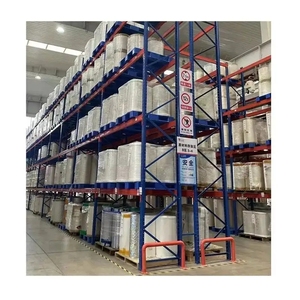 Heavy Duty Selective
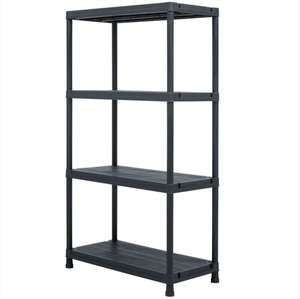 Modular Longspan
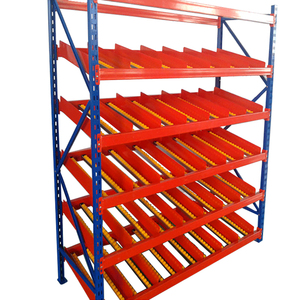 Dynamic FIFO Flow
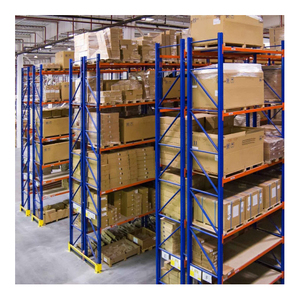 CE Certified Standard
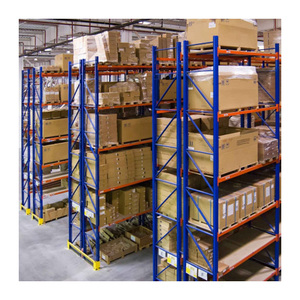 Custom OEM Bulk
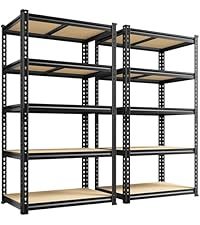 Boltless Rivet Rack
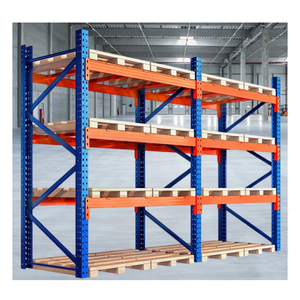 Radio Pallet Shuttle
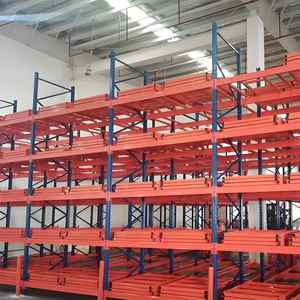
Macroeconomic Drivers & Storage Densification in the Greater Toronto Area (GTA)
The Greater Toronto Area remains Canada's undisputed logistics capital, housing nearly 40% of the nation's total industrial square footage across key submarkets such as Mississauga, Brampton, Vaughan, Markham, Milton, and Oakville. Over recent fiscal cycles, rising prime industrial net asking rents and acute land availability constraints have reshaped warehouse development. Operations that previously operated in conventional 24-foot clear height facilities now systematically occupy newly commissioned Class-A properties boasting 36-foot to 40-foot clear heights in corridors along Highways 401, 407, 410, and 427.
Within this capital-intensive environment, square-foot leasing rates demand unprecedented vertical cube utilization. Facilities can no longer afford wide, under-utilized aisles or generic light-duty racking prone to structural deformation. The purchasing mandate for supply chain leaders in Peel and York Region has pivoted sharply toward custom OEM bulk storage shelving, structural steel mezzanines, and high-density deep-lane configurations capable of supporting high dynamic cycling, heavy concentrated point loads, and strict inventory turnover rhythms.
The Structural Shift: Hand-Loaded Bulk Shelving vs. Mechanized Heavy Racking
A persistent operational friction point in multi-channel fulfillment centers across Ontario is the intersection between full-pallet reserve storage and high-frequency, broken-case pick operations. Traditional pallet racks often fail to address SKU proliferation at the ground picking level, resulting in wasted cubic space between the pallet floor and the first structural load beam. Conversely, standard light-duty utility shelving lacks the structural rigidity and upright load transfer necessary for multi-tier industrial integration.
Our custom OEM bulk storage shelving bridges this engineering gap. Utilizing high-yield cold-rolled steel profiles with bespoke beam connection fingers and heavy-gauge step beams, our systems permit wide clear spans up to 96 inches without mid-span deflection exceeding 1/180th of the span length. By providing hybrid bays—where lower tiers house custom boltless wide-span bulk shelving for manual sorting while upper levels carry structural pallet loads—distribution centers achieve seamless order replenishment directly from overhead inventory reserves.
Navigating Ontario Building Code (OBC), Section 7 PSR, and CSA S16 Standards
Procuring storage infrastructure for installations across Ontario requires navigating rigorous structural engineering and occupational safety mandates. Racking systems are classified under provincial law not merely as furniture, but as building-integrated structural frameworks that exert substantial concentrated baseplate loads on the building's cast-in-place concrete floor slab.
Section 7 OHSA (PSR)
Mandatory Pre-Start Health and Safety Review under Regulation 851 of Ontario's Occupational Health and Safety Act. We supply full structural calculations, beam capacities, and baseplate anchor sizing for stamping by a licensed Ontario P.Eng.
CSA A344 & CSA S16
Components engineered to CSA A344.1/A344.2 (User and Design Guide for Steel Storage Racks) and CSA S16 (Design of Steel Structures). Upright profiles are cold-formed from certified high-tensile hot-rolled strip steel with verified minimum yield strengths.
OBC Seismic & Wind Action
Seismic design spectra vary across Eastern Canada. Installations in Southern Ontario must address site-specific spectral acceleration coefficients (Sa values under OBC Div B Part 4), frame ductilities, and floor slab anchoring depths.
Fire Safety & Flue Space Dynamics (NFPA 13 & Ontario Fire Code)
A critical consideration during municipal building inspections in cities like Mississauga and Brampton is adherence to high-piled combustible storage guidelines under NFPA 13 and the Ontario Fire Code (OFC). When storing solid corrugated cartons on bulk shelving deeper than 24 inches, fire sprinkler water penetration can become obstructed without engineered flue spaces.
Our OEM factory manufactures specialized solutions to address OFC clearance requirements without compromising dynamic load ratings:
- Heavy-Gauge Wire Mesh Decking: Welded wire deck panels (typically 4-gauge steel wire configured in a 2" x 4" pattern) featuring cascade channels that sit squarely over step beams, providing greater than 70% open area for ESFR (Early Suppression Fast Response) sprinkler penetration.
- Integral Transverse and Longitudinal Flue Spacers: Rigid structural steel spacer brackets bolted between back-to-back rack rows, ensuring a permanent 6-inch or 8-inch vertical flue channel that cannot be blocked during routine pallet or tote placement.
- Perforated Steel Panels: For cleanroom and automotive parts storage where wire decks are unsuitable, our cold-stamped sheet steel shelf panels feature precision-punched oblong openings calculated precisely to maintain OFC water distribution ratios while sustaining uniform distributed loads (UDL) up to 800 kg per panel.
Comparative Performance Matrix: Industrial Bulk Storage Systems
Select the optimal storage geometry based on floor utilization efficiency, selectivity index, and weight load thresholds for Greater Toronto distribution facilities.
| Storage Architecture | Typical Level Capacity (UDL) | Max Bay Height | Selectivity Index | Floor Footprint Efficiency | Primary GTA Application Sector |
|---|---|---|---|---|---|
| Custom Heavy-Duty Selective Racking | 1,000 kg – 4,500 kg / beam pair | Up to 16,000 mm | 100% (Direct Pick) | Moderate (Requires 10-12' Aisle) | Mississauga 3PLs, Multi-SKU E-commerce |
| Industrial Wide-Span Boltless Shelving | 300 kg – 850 kg / shelf layer | Up to 4,500 mm | 100% (Hand Loaded) | High for Loose Pieces/Cartons | Vaughan Auto Parts, Hardware Wholesalers |
| Rack-Supported Structural Mezzanine | 350 kg – 1,200 kg / m² deck | Multi-Tier (2-4 Levels) | Variable by Tier Design | Maximum (Doubles/Triples Footprint) | Brampton Parcel Sortation, Garment Fulfillment |
| Semi-Automated Radio Shuttle Racking | 500 kg – 1,500 kg / pallet | Up to 18,000 mm | Deep Lane FIFO / LIFO | Ultra-High (Aisles Reduced by 60%) | Halton Food Processing, Cold Storage Facilities |
| Dynamic Pallet Flow Gravity Racking | 800 kg – 1,200 kg / lane | Up to 12,000 mm | Enforced FIFO Batching | High (Separate Load/Unload Aisles) | High-Turnover Dairy, Beverage, Pharmaceuticals |
End-to-End OEM Production: From Raw Steel Coils to Intermodal Containers
Operating a vertically integrated 30,000 square meter modern manufacturing plant in Guangzhou, China, Guangzhou Heda Shelves Co., Ltd. controls every metallurgical and mechanical transformation required to manufacture world-class storage frameworks. We eliminate intermediaries, offering Toronto distributors, general contractors, and plant engineers direct factory pricing, proprietary engineering adaptations, and certified production workflows.
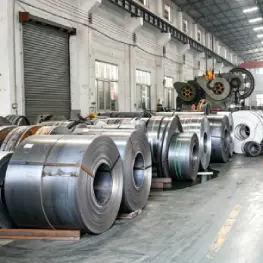
Certified Prime Steel Coil Selection
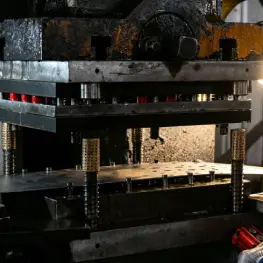
CNC Precision Continuous Punching
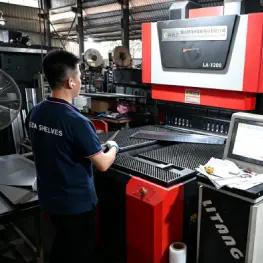
Cold Roll Forming & Calibrated Sizing
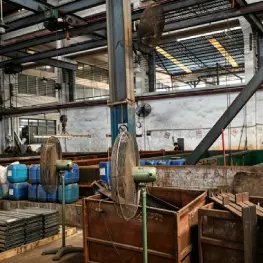
10-Stage Chemical Pre-Treatment
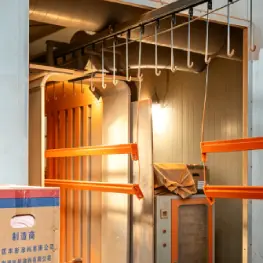
Thermoset Epoxy Powder Coating
Metallurgical Pretreatment and Corrosion Protection for Winter Ingress
A critical engineering failure in commercial racking deployed across Canadian facilities is premature corrosion along the upright baseplates. Transport trucks entering distribution docks during Southern Ontario winters track substantial amounts of melting snow laden with sodium chloride, calcium chloride, and magnesium chloride road de-icers. When saline moisture settles around baseplates, inferior paint coatings blister and promote rapid sub-surface steel oxidation.
To eliminate this failure mode, our automated surface preparation line features an extensive immersion pickling and phosphating process that removes all micro-scale mill scale, oil, and oxides. The steel is then treated with an electrostatic amorphous zinc phosphate layer prior to entering the automated powder application booths. We utilize architectural-grade thermoset polyester and epoxy powders, electrostatic-sprayed and cured at 200°C for a dry film thickness of 80–120 microns. This finish passes 500-hour ASTM B117 salt spray exposure without blistering, providing superior structural protection for loading docks in Mississauga and Etobicoke.
Container Stowage Optimization: Direct Rail Delivery to CN / CP Intermodal Yards
International ocean freight efficiency directly governs landed costs per storage position. Generic shipping methods often waste 25% to 40% of container cube due to awkward post dimensions and loose nesting. Our specialized engineering division creates detailed CAD 3D container stowage diagrams for every 40-foot High Cube (40'HQ) container leaving our plant.
Uprights are nested in high-density steel bundles banded with edge protectors, while step beams are mechanically palletized on custom timber skids with zero transit movement. Shipments entering the Port of Vancouver or Port of Montreal/Halifax travel via high-priority intermodal rail direct to the CN Brampton Intermodal Terminal (BIT) or CP Vaughan Intermodal Terminal, minimizing inland drayage charges and delivering direct to job sites across the GTA ready for offloading and immediate assembly.
Tailored Engineering for Greater Toronto Submarket Facilities
Each municipal logistics cluster within the Greater Golden Horseshoe operates under distinct supply chain pressures. We adapt structural specifications to align with specific regional operational profiles:
Mississauga & Airport Cargo
Focus: Fast-Moving Cross-Dock & Air Freight
Features high-impact column guards, heavy structural floor-level rub rails, and dynamic push-back carts designed to absorb high-velocity reach-truck operations near Pearson International Airport.
Brampton Mega 3PL Centers
Focus: Multi-Tier E-Commerce Pick Towers
Rack-supported multi-tier mezzanine floors utilizing integrated cold-rolled Omega-profile joists, B-decking, and resin board walkways for ultra-dense hand-picking of fashion, electronics, and consumer retail.
Vaughan & Markham Auto Hubs
Focus: Heavy Tiered Component Shelving
Hybrid cantilever frameworks integrated with wide-span longspan shelving for automotive exhaust components, body panels, crated powertrain assemblies, and high-density plastic tote bins.
Frequently Asked Questions: Sourcing OEM Bulk Shelving for Toronto
Clear, technical, and regulatory clarity for operations directors, procurement teams, and facility engineers.
How do you support Section 7 Pre-Start Health and Safety Reviews (PSR) in Ontario?
Under Section 7 of Ontario Regulation 851 (Industrial Establishments) pursuant to the Occupational Health and Safety Act (OHSA), any newly erected or modified pallet racking system requires an engineering review by a licensed Professional Engineer (P.Eng.) before operation. We support this process from end to end: our engineering division generates comprehensive AutoCAD structural layout plans, elevation drawings, cold-formed cross-section properties, and certified structural calculation books (detailing dead load, live load, impact allowance, seismic base shear, and anchor bolt pull-out loads under OBC standards). This documentation allows local Ontario structural consulting engineers to review, approve, and stamp the PSR certification efficiently.
What are the Canadian customs classifications and tariffs for importing steel racking into Toronto?
Industrial steel racking and shelving units generally enter Canada under HS Tariff Classification Code 9403.20.00.00 ("Other metal furniture"). Depending on bilateral trade provisions and ongoing Canada Border Services Agency (CBSA) steel trade remedy determinations, special import measures or countervailing duties may apply to specific product categories from foreign jurisdictions. Our export documentation team manages all standard shipping documentation, including Commercial Invoices, Packing Lists, Certificates of Origin, and Canada Customs Invoices (CCI). We collaborate directly with your appointed Canadian customs broker to ensure accurate classification, clear tariff compliance, and smooth CBSA release at the Port of Entry.
Can your OEM engineering adjust hole pitch patterns to match our existing racking inventory?
Yes. As a true custom OEM manufacturing plant, we are not limited to a single proprietary stamping punch. We routinely manufacture upright columns featuring standard North American teardrop configurations (compatible with common industrial profiles), 50mm metric European pitch, or 75mm heavy industrial box-column slotted punch configurations. We also fabricate custom beam end connectors (3-claw, 4-claw, or 5-claw hooks) with integrated safety locking pins, ensuring new bays connect seamlessly into your facility's existing storage infrastructure.
What concrete floor slab specifications are required for your heavy-duty bulk storage systems?
Standard heavy-duty industrial bulk shelving and selective racking systems require a sound concrete floor slab with a minimum compressive strength of 20 to 30 MPa (3,000 to 4,350 psi) and a thickness of at least 5 to 6 inches (125mm to 150mm) for standard single-tier applications. For tall, narrow-aisle or multi-tier mezzanine installations exceeding 8 meters in height, we specify larger baseplates (e.g., 200mm x 200mm x 10mm or custom sizes) to distribute concentrated point loads and remain within safe soil and slab bearing capacities. We supply precise point-load footprint diagrams so your structural engineering team can verify slab load-bearing capacities.
How does your packaging prevent shipping abrasion and rust during transatlantic intermodal transit?
Maritime export shipments encounter high humidity, salt-laden ocean air, and dynamic shock vibrations during marine transport and subsequent rail haulage across Canada. We package all uprights and beams using rigid corner-angle protectors, multi-layer stretch film wraps, and heavy-duty polyester strapping. Desiccant packs are inserted within enclosed bundle cavities, and all direct timber-to-steel contact points utilize heat-treated, fumigated ISPM-15 compliant softwood blocking to prevent condensation corrosion and surface scratching during transport to the Toronto terminal.
What is the production and delivery lead time from your factory to a GTA warehouse?
Standard custom OEM production cycles typically range between 20 to 30 calendar days from formal CAD layout approval and color sign-off. Ocean transit from Guangzhou or Shenzhen ports to Canadian gateway terminals (Vancouver, Prince Rupert, or Montreal) averages 18 to 26 days, followed by 5 to 7 days for intermodal rail transit and final container chassis delivery to your facility in Mississauga, Brampton, Vaughan, or surrounding GTA municipalities. Total project timelines typically fall within a predictable 6 to 9 week window.
Can your factory provide custom RAL corporate colors to align with our branding?
Yes. Our automated electrostatic powder coating line incorporates rapid-switch powder feed systems. While our standard configurations feature industrial safety orange (RAL 2004) for beams and deep corporate navy (RAL 5015/5017) for upright columns, we formulate coatings to any international RAL or Pantone specification upon request. We also offer textured, anti-static (ESD), or high-reflectance white finishes, which are popular in e-commerce fulfillment hubs seeking to reduce facility lighting energy demands.
How do you handle warranty claims and ongoing component replacements?
All structural steel racking and bulk shelving manufactured by HEDA Shelves carries a comprehensive 5-year structural warranty against manufacturing defects, weld failures, and premature coating breakdown under rated static loading conditions. Detailed manufacturing traceability records and batch punch coordinates are archived for every project, allowing us to supply exact-match replacement beams, upright splices, or additional shelving tiers as your business and facility operations expand.
Plan Your Toronto Facility Layout with Factory-Direct Engineering Support
Send us your building layout, target storage footprint, or CAD architectural plans. Our engineering team will supply a customized 2D/3D storage configuration, complete weight load calculations, and a transparent FOB or CIF Toronto landed cost breakdown within 24 business hours.