Engineered Warehouse Racking & Storage Catalog
Direct manufacturer supply of precision roll-formed racking, heavy-duty shelving, and structural mezzanine architectures engineered for American pallet dimensions and local building guidelines.
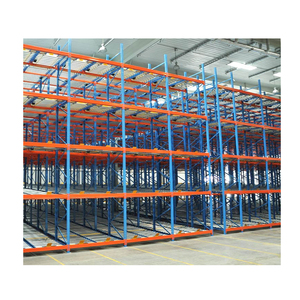
Automated Carton Flow Gravity Racking FIFO Steel Roller Warehouse Storage System Heavy Duty Pallet Live Rack
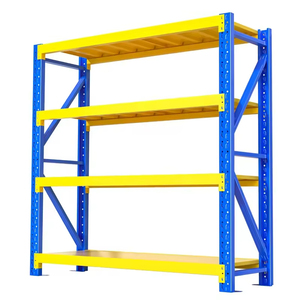
Garage Shelves Industrial Metal Shelving Stack Rack Medium Duty Steel Shelving Boltless Racking Shelves Warehouse Storage Rack
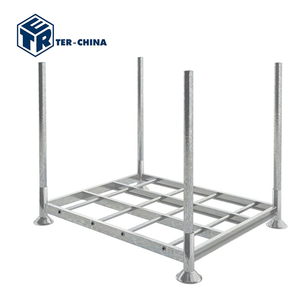
Post Pallet Rack Heavy Duty Stackable Removable Warehouse Hot-dip Galvanized Mild Steel Structure Rack Cargo & Storage Equipment
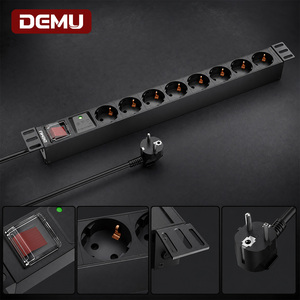
Industrial 1U Rack PDU 8 Way Schuko Outlets Double Pole SPD Surge T5 Aluminum Server Cabinet
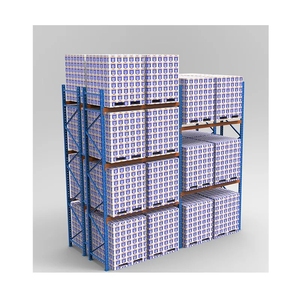
Heavy Duty Industrial Shelving Certificated Stacking Pallet Racking System Racks for Warehouse
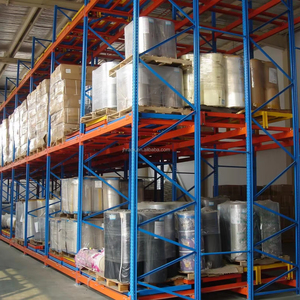
Steel Structures Heavy Duty Industrial Shelves Push Pallet Rack Shelf Warehouse Racking System Shelving Storage System
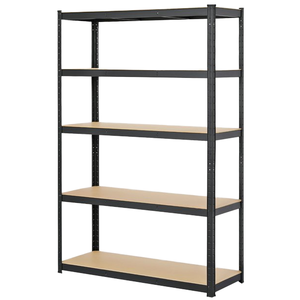
Electronic Commercial 5 Layer Steel Storage Shelving Racks Heavy Duty Warehouse Shelves Boltless Rivet Rack Easy Assemble
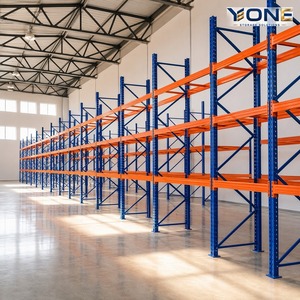
Steel Storage Rack Heavy Duty Pallet Racking Q235B Steel Selective Racking For Racks Industriales Warehouse Storage
The Greater Boston Industrial Landscape: High-Density Verticals & Micro-Fulfillment
The industrial real estate market across Greater Boston—stretching from the urban core through the Route 128 tech belt and along Interstate 495—presents distinctive structural and economic challenges. Industrial land availability remains constrained, while lease rates per square foot rank among the highest along the eastern seaboard. For operators managing logistics, biotechnology distribution, high-tech manufacturing, and retail warehousing in cities such as Waltham, Framingham, Worcester, and Wilmington, horizontal expansion is seldom an option. Maximum cubic utilization via engineered structural mezzanines and multi-level racking systems has transitioned from an optimization strategy to a fundamental financial requirement.
Modern Massachusetts warehouses require storage configurations engineered to handle fast-moving SKUs alongside heavy palletized assets. Selective pallet racking systems constructed with premium structural steel provide direct accessibility for third-party logistics (3PL) operations, while automated carton flow gravity racking accelerates order dispatch in high-throughput fulfillment centers. In contrast, older brick-and-beam industrial facilities often feature variable column spacing, restrictive ceiling heights, and historical structural nuances. OEM/ODM manufacturing capability ensures that uprights, beams, cantilever arms, and mezzanine framing are roll-formed to precise building coordinates rather than forced into generic catalogue configurations.
Moreover, local compliance demands stringent engineering review. Massachusetts updates its building codes in alignment with the International Building Code (IBC) and the Rack Manufacturers Institute (RMI) MH16.1 specifications. Industrial storage structures must account for concrete slab load capacities, anchorage depths, fire sprinkler penetration clearances according to NFPA 13 standards, and specific seismic design categories (SDC B and C). Sourcing directly from an established OEM/ODM factory guarantees that structural calculations, baseplate dimensions, weld integrities, and gauge thicknesses are engineered specifically to pass municipal review boards across Middlesex, Suffolk, and Essex counties.
Strategic Localization Scenarios in Massachusetts
Tailored intralogistics architecture matching the operational profiles of New England's specialized commercial sectors.
Life Sciences & Biotech Cleanrooms
Boston's world-leading life sciences ecosystem along Route 128 and Cambridge demands contamination-free storage. Galvanized steel post pallet racks and multi-tier shelving ensure cleanroom compliance, chemical resilience, and sterile handling for cold-chain biologicals and reagents.
Route 495 Corridor 3PL Logistics
High-cube distribution centers operating across Taunton, Worcester, and Marlborough rely on heavy-duty selective and push-back racking. These systems maximize vertical clear heights up to 40 feet while withstanding the non-stop cycle wear of Class II and III electric lift fleets.
Urban Infill & Last-Mile Hubs
Inner-metro distribution hubs in South Boston, Everett, and Chelsea occupy low-clearance historical structures. Structural steel and rack-supported mezzanines double effective square footage, converting underutilized overhead headroom into active pick, pack, and sortation platforms.
New England Supply Chain Evolution: Automation Readiness & Sustainability
The supply chain infrastructure across the northeastern United States is undergoing a transformation driven by rapid micro-fulfillment adoption and strict building efficiency mandates. In Massachusetts, warehouse operations face rising utility rates and rigorous regional carbon reduction frameworks. Facility managers are prioritizing high-density storage formats that minimize refrigerated or heated air volume per stored unit. Gravity flow racks, radio shuttle integrations, and carton live racking reduce reliance on fossil-fuel lift trucks by leveraging controlled gravity declination, allowing warehouses to optimize energy consumption while raising picking rates.
Simultaneously, warehouse management systems (WMS) require flawless physical integration with storage hardware. Modern facilities across Boston are integrating industrial server cabinets equipped with specialized double-pole surge-protected PDUs within operational pick zones to run localized scanning arrays, automated conveyor controllers, and automated guided vehicles (AGVs). Physical racking must provide millimeter-precise beam level tolerances, zero deflection variance, and rigid plumb lines to ensure automated shuttles and picking sensors navigate racking bays without beam collision or indexing failure.
Factory-Direct OEM/ODM Engineering Advantages
Full manufacturing control from raw steel coil to finished, certified installations worldwide.
30,000 m² Integrated Manufacturing Base
Operating a dedicated 30,000 square meter production facility housing automated roll-forming lines, computerized column-punching matrices, and automatic welding robots, producing over 30,000 tons of structural steel components monthly.
Pretreatment & Anti-Corrosion Coating
High-grade Q235B and structural steels undergo rigorous acid pickling, phosphating, and electrostatic powder coating. This multi-stage finish prevents oxidation and flaking under coastal New England humidity and freezing cold storage cycles.
Global Certifications & Traceability
Certified under CE (Certificate No. 2435-CPR-8605159) and ISO 9001:2015 standards. Every batch ships with verifiable mill certificates, physical deflection test reports, and component numbering for rapid installation verification.
Complimentary 3D CAD & Load Calculation
Prior to steel cutting, our structural engineers model complete 3D warehouse layouts, calculating moment forces, seismic zone anchoring, and optimal container pack-out schemes without charge to accelerate engineering approval.
Procurement & Engineering FAQ for Boston Buyers
Direct technical answers addressing structural codes, logistics timelines, and installation procedures.
Ready to Engineer Your Boston Facility Storage Layout?
Connect with our senior engineering team today for complete 2D/3D layout designs, seismic load calculations, and competitive factory-direct volume pricing.
Get a Quote