Engineered Pallet Storage Systems for Berlin’s Logistics Nodes
Explore our industrial-grade storage solutions, purpose-built for high-throughput fulfillment centers, automotive manufacturing hubs, and cold-chain facilities across Germany.
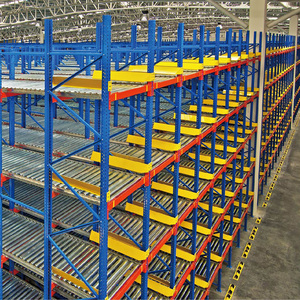
Steel Gravity Roller Racking Warehouse Gravity Flow Racks
- Strict FIFO rotation dynamics
- Heavy-duty brake roller control
- Zero power consumption
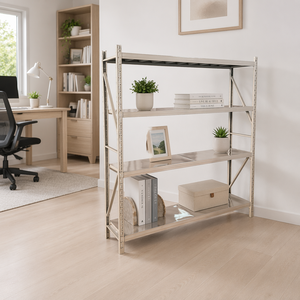
Tiered Display & Light Duty Small Warehouse Storage Rack
- Rapid urban last-mile micro-fulfillment
- Modular boltless configuration
- High visual inventory control
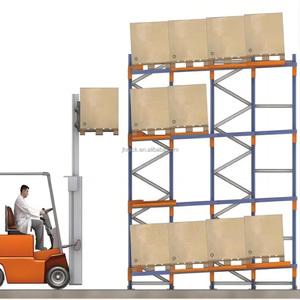
Industrial Push-Back Pallet Storage Racking System
- High-density LIFO rail cart storage
- 2 to 6 pallet depth optimization
- Reduced forklift operating aisles
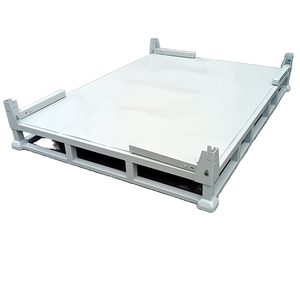
Q235 Portable Foldable Stackable Steel Storage Manurack
- 2000kg load capacity per tier
- Zinc galvanized weather protection
- Collapsible footprint when empty
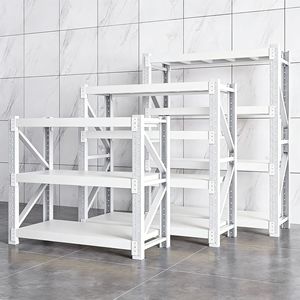
Three-Tier Cold-Rolled Steel Workshop Shelving Unit
- Precision cold-rolled SPCC steel
- Electrostatic epoxy surface coating
- Compact maintenance room profile
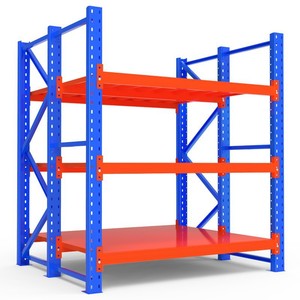
Adjustable Boltless 5-Layer Anti-Rust Stacking Racks
- Fast snap-in installation
- Multi-tier vertical height adaptability
- Industrial anti-corrosion finish
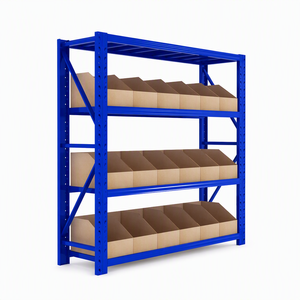
Modular Slanted Pick Rack for Small Parts Storage
- Ergonomic pick-face presentation
- Automotive assembly line integration
- Kanban replenishment ready
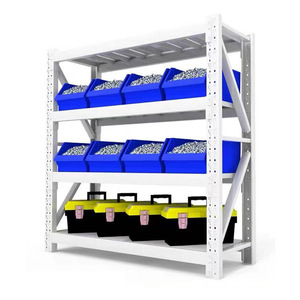
Medium Duty Stackable Overhead Pallet Storage Racking
- Intermediate industrial pallet staging
- Reinforced horizontal beam locks
- High flexibility for commercial depots
The Strategic Imperative for Scalable Pallet Systems in the Greater Berlin Region
The industrial and logistics landscape across Berlin and the surrounding State of Brandenburg has experienced a seismic paradigm shift. Driven by massive manufacturing expansions in the Grünheide automotive belt, the rapid maturation of the Berlin-Brandenburg freight villages (Güterverkehrszentren - GVZ Berlin South Großbeeren, GVZ Berlin West Wustermark, and GVZ Berlin East Freienbrink), and surging consumer demands for urban micro-fulfillment, square-meter real estate pricing has attained historic peaks. In this environment of premium floor space, low-density static storage is a structural liability.
Modern German enterprise logistics requires dynamic vertical cubic optimization, stringent structural load safety factors, and rapid adaptability. As a veteran manufacturer and global exporter, we supply high-precision, structural-grade racking systems designed to integrate natively into German intra-logistics workflows. Whether supporting standardized Euro-pallets (EPAL 1: 1200 x 800 mm) or industrial pallets (EPAL 3 / ISO 2: 1200 x 1000 mm), our structural framing calculates deflection under finite-element analysis (FEA) to exceed the rigorous requirements of DIN EN 15512, ensuring unwavering operational safety under intense material handling cycles.
Tailored Deployment Across Key Berlin-Brandenburg Sectors
Engineered to resolve sector-specific bottlenecks across Germany's central eastern European trade corridor.
GVZ High-Throughput 3PL
Logistics facilities in Großbeeren and Wustermark operating multi-client warehousing require flexible beam elevation adjustments and broad aisle clearances. Our selective and double-deep racking frameworks offer rapid reconfiguration, allowing 3PLs to switch between standard pallet loading and order-picking shelf levels without structural welding.
Automotive & Advanced Tech
Serving Berlin's advanced manufacturing and electric mobility supply chains, we supply high-capacity push-back systems and slanted pick racks that integrate with Just-In-Time (JIT) and Just-In-Sequence (JIS) line-feeding protocols, supporting heavy stamping dies, battery raw materials, and assembly modules.
Cold Chain & Perishables
Food distributors operating cold-storage facilities near the Berliner Großmarkt face extreme per-cubic-meter refrigeration costs. Our high-density gravity flow and shuttle-ready racking configurations maximize storage volume while preserving strict First-In, First-Out (FIFO) batch tracking for perishable goods.
Intralogistics Trends Reshaping the Berlin Racking Market
Logistics planners in the Berlin-Brandenburg area operate under evolving structural and regulatory benchmarks. Four primary vectors are dictating how modern racking is planned, procured, and maintained:
1. Strict Compliance with DGUV Regel 108-007 (BGR 234): German commercial insurance and statutory workplace safety auditors impose strict tolerances regarding upright uprightness, baseplate anchoring, and collision protection. Every system we manufacture is built with heavy cold-formed omega upright profiles, paired with high-durability wrap-around floor anchors and impact corner guards to ensure zero downtime during mandatory annual inspections by certified racking inspectors (Regalprüfer).
2. Brownfield Urban Micro-Hubs & Mezzanine Expansion: In inner-city Berlin districts such as Neukölln, Marzahn, and Spandau, last-mile logistics providers often repurpose older commercial structures with high ceilings but constrained footprints. We address this constraint by engineering multi-tier rack-supported platforms and structural mezzanines that expand usable picking floor space by up to 200% without expanding the building foundation.
3. Automation-Ready Hybrid Systems: As autonomous mobile robots (AMRs) and automated reach trucks penetrate German distribution hubs, racking structural tolerances must tighten. Beam deflections under static load must remain well within L/200 thresholds to prevent optical navigation sensor mismatches, a criterion built into our engineering calculations.
4. Decarbonization and Sustainable Lifecycle Cost: German industrial buyers prioritize environmental lifecycle impact. Our automated manufacturing utilizes closed-loop shot blasting, non-toxic phosphating pretreatment, and low-VOC electrostatic powder coatings that resist scratching and rust, extending operational lifespan beyond 20 years.
Why Berlin Enterprises Rely on Our Direct-From-Factory Solutions
Combining primary manufacturing control with certified structural integrity and global shipping capabilities.
30,000 m² Factory
Complete in-house control from high-strength Q235B/Q355B steel coil slitting to automated roll forming, punching, and welding under one roof.
Free 3D & Static Design
Experienced structural engineers generate detailed CAD layout plans, 3D spatial models, and finite element structural calculations free of charge.
Verified CE & ISO Standard
Fully compliant with CE Marking (EN 1090 / CPR) and certified under ISO 9001:2015, ensuring complete traceability and client-ready audit documentation.
Optimized Export Packaging
Custom steel strapping, shock-absorbing corner pads, and knock-down container optimization prevent maritime transit abrasion and lower landed freight cost.
End-to-End Precision Manufacturing Pipeline
How raw certified structural steel coil is transformed into millimeter-accurate racking assemblies.
Steel Slitting
Prime mill-certified steel coils sliced to precise profile widths.
CNC Punching
Automated punch presses deliver pitch-perfect teardrop and diamond connection holes.
Cold Roll Forming
Multi-stage rollers form stiff omega-shaped upright columns and stepped beams.
Automated Welding
Robotic MIG welding stations bond beam connectors with consistent structural penetration.
Pretreatment & Coat
Multi-bath pickling and phosphating followed by thermoset electrostatic powder curing.
Frequently Asked Questions for Warehouse Racking in Berlin
Practical answers to technical, regulatory, and logistics inquiries from regional facility operators.
Do your racking systems satisfy German DIN EN 15512 and DGUV safety regulations?
Yes. All structural racking is engineered to meet DIN EN 15512 tolerances, factoring in static dead loads, dynamic forklift placement loads, and European beam deflection limits (L/200). We supply comprehensive load capacity charts, structural computation reports, and compliant load warning signage (Belastungsschilder) designed for mandatory DGUV Regel 108-007 warehouse inspections.
How do you handle shipping and customs clearance into Berlin?
We routinely dispatch consolidated container shipments (20GP / 40HQ) directly to the major northern European deep-water ports (Hamburg, Bremerhaven, and Rotterdam). From there, intermodal freight rail or bonded truck lines transport your shipment directly to your logistics facility in Berlin-Brandenburg under standard Incoterms (FOB, CIF, or DDP).
Can your racking accommodate standard EPAL 1 and industrial pallet dimensions?
Absolutely. Our standard selective beams are designed in 2700 mm lengths to hold three EPAL 1 pallets (800 x 1200 mm) side-by-side with required safety clearances, or 2200 mm/3300 mm lengths for standard industrial ISO pallets (1000 x 1200 mm). Beam heights adjust along the uprights at standard 50 mm or 75 mm pitches.
What building and floor slab data is required for a turnkey layout design?
To produce an engineering CAD design and load calculation, we require: warehouse interior architectural drawings showing column grid locations, dock door clearances, and clear height under trusses; concrete floor slab compressive strength (e.g., C20/25, C25/30) and slab thickness; pallet load weights and maximum stack heights; and the mast lift reach and aisle turning radius of your forklift fleet.
Plan Your Berlin Warehouse Optimization with Our Senior Structural Engineers
Receive an engineered 2D CAD floor plan, high-resolution 3D spatial render, and an itemized static load calculation tailored to your facility—at zero cost and with no procurement obligation.
Contact Us