Deep Density
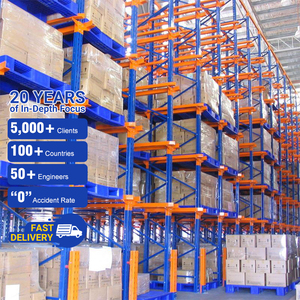
Heavy Duty Drive-in & Drive-Through Storage Racks
- Maximized LIFO/FIFO density
- Eliminates transit forklift aisles
- Up to 1,500 kg per pallet level
From Waltershof container terminal transit stations to Billbrook distribution parks, modern Hamburg warehousing demands high volumetric density, precision structural tolerances, and strict static load integrity.
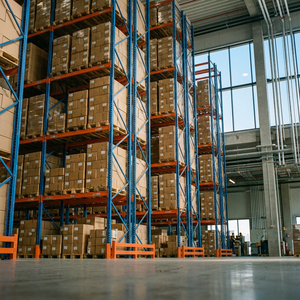
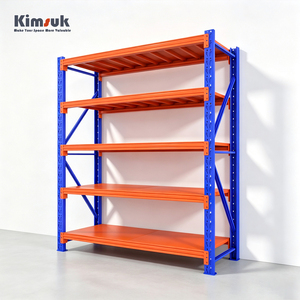
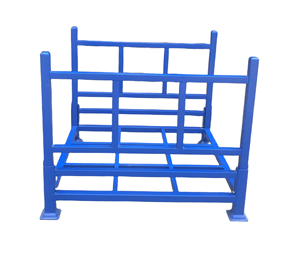
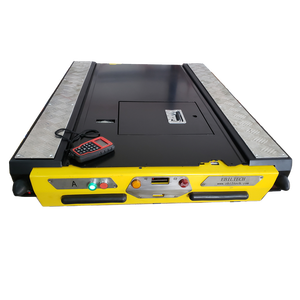
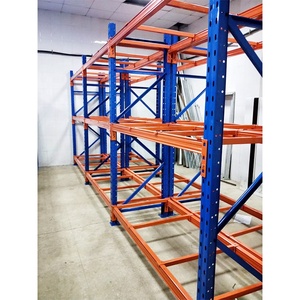
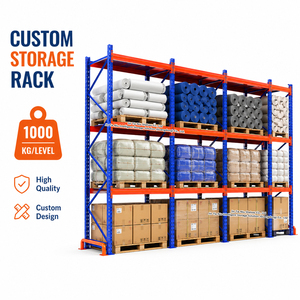
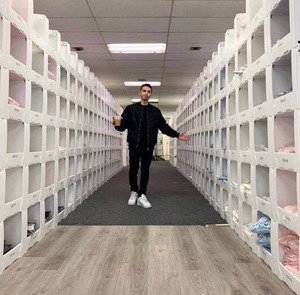
As Germany’s leading maritime trade conduit and the third-busiest container gateway in Europe, the Free and Hanseatic City of Hamburg processes upwards of 8.5 million TEU annually. The metropolitan logistics network—stretching from the automated quays of Burchardkai and Altenwerder through the high-density distribution clusters of Waltershof, Billbrook, and Allermöhe, onward to the southern corridor in Harburg and Winsen (Luhe)—operates under extreme industrial demand. With commercial land availability constrained by the Elbe geography and real estate leasing costs sustaining historical highs, warehouse facility managers are forced upward: maximizing clear building heights between 10.5 and 14.5 meters through advanced structural racking design.
Procuring industrial warehouse storage racks in this market is an intricate engineering process. It requires adherence not only to broad European Norms (EN 15512, EN 15620, EN 15635) and FEM calculations, but specifically to the rigorous structural safety mandates of Germany’s statutory accident insurance body (DGUV Regel 108-007, formerly BGR 234). Furthermore, Hamburg's humid maritime climate (bordering Brackish Water Zones with elevated airborne salt particulate levels) accelerates galvanic oxidation on standard thin-gauge steel, necessitating superior chemical surface pretreatment, strict electrostatic powder coat micron control, or specialized continuous hot-dip galvanizing (HDG) for extended operational lifespans.
An objective, engineering-focused evaluation of global manufacturing scale, DIN/EN certification, custom engineering support, and maritime logistics lead times for Northern Germany.
Founded in 2001, HEDA Shelves operates a centralized 30,000 m² advanced fabrication plant delivering 30,000 tons per month. Holding certified CE (2435-CPR-8605159) and ISO 9001:2015 accreditations, HEDA designs racking specifically tailored to European structural statics. For Hamburg buyers, HEDA delivers container-optimized shipping directly to Waltershof/CTA terminals, backed by complete 3D CAD stress analysis and comprehensive DGUV-compliant structural documentation at significant direct-from-manufacturer cost savings.
Headquartered in Neunkirchen, Germany, SSI Schaefer is an industry benchmark for automated warehousing, mini-load AS/RS systems, and high-bay clad rack structures. They maintain an active field presence across Hamburg and Lower Saxony, offering deep integration with specialized warehouse management software (WAMS) and turnkey system installations.
With its international headquarters rooted directly in Hamburg-Wandsbek, Jungheinrich pairs extensive industrial truck manufacturing with matched racking architectures. Their Narrow Aisle (VNA) and drive-in systems are built to sync with inductive wire guidance vehicles, providing local facilities with rapid maintenance and direct local technical audits.
BITO specializes in carton-flow, live pallet storage, and multi-tier picking structures. Based in Meisenheim, BITO maintains regional technical engineering distribution to Northern German logistics providers who manage fast-moving consumer goods (FMCG) requiring strict FIFO batch rotation.
Stow is among Europe's largest structural racking producers, supplying high-capacity beam designs, drive-in frames, and the proprietary Stow Atlas radio shuttle. They frequently serve 3PL contract logistics complexes situated around Hamburg's highway ring (A1, A7, and A24).
Mecalux provides broad-scale structural rack manufacturing with strong digital integration via their Easy WMS platform. Their structural engineering teams frequently tender for regional port logistics operations requiring massive vertical high-bay cladding along the lower Elbe region.
A venerable brand across European storage history, Dexion (operating under Gonvarri) supplies high-strength cantilever racking for Hamburg's timber and metal processing sectors, along with mobile powered racking (MOVO) that cuts floor footprint in cold storage facilities.
Situated in Doetinchem near the German border, Nedcon acts as a prime engineering supplier for complex automated warehousing. Their structural racking forms the core backbone for major multi-level micro-fulfillment and shuttle fulfillment projects throughout North-Western Europe.
Located in Arnsberg, META manufactures boltless shelving (META CLIP) and industrial pallet systems (META MULTIPAL). They focus on medium-sized industrial enterprises (Mittelstand), maintenance workshops, and parts depots common throughout the Hamburg metropolitan fringe.
AR Racking specializes in the automated manufacture of heavy-duty pallet racking utilizing certified high-yield pre-galvanized coils. Their robust upright finishes are well-regarded in maritime coastal conditions, preventing accelerated oxidation in damp port warehousing environments.
Warehouse safety compliance in Hamburg is enforced by the local trade associations (Berufsgenossenschaften) and the Hamburg Authority for Justice and Consumer Protection (Amt für Arbeitsschutz). Any racking imported or installed within the city must strictly conform to DIN EN 15635 (Steel static storage systems - Application and maintenance of storage equipment) and DGUV Regel 108-007.
Key technical mandates that engineering teams must calculate prior to commissioning include:
1. Deflection Limits (L/200 Criteria): Under maximal static working load, horizontal beam members must never exceed a vertical deflection ratio of 1/200th of the clear bay span (e.g., maximum 13.5 mm on standard 2,700 mm EUR-pallet crossbeams). Any permanent plastic deformation observed during annual safety inspections results in immediate operational shutdown.
2. Upright Collision Protection: DGUV mandates that every outer frame corner situated at aisle intersections and transfer lanes must feature anchored yellow/black collision protection at least 400 mm in height, capable of absorbing an impact energy of at least 400 Joules without transmitting dynamic stress to the vertical upright profile.
3. Soil and Floor Loading Statics: Much of Hamburg's port area (including the Hafencity, Altenwerder, and Peute districts) rests on alluvial clay and historic marine silt requiring pile foundation slabs. Racking upright footplates must be structurally sized (typically minimum 160 mm x 140 mm x 8 mm thickness) to distribute concentrated point loads without exceeding the concrete floor’s localized shear puncture threshold.
Standard off-the-shelf racking fails to meet the operational stresses of Northern Germany's specialized industrial sectors. Here is how custom racking solves specific local challenges.
For import bananas, meat, and North Sea fisheries operating in Waltershof deep-freeze facilities (-25°C), Radio Shuttle and Drive-in racking maximize cube utilization, lowering per-pallet refrigeration energy costs while preventing thermal frost-shatter via specialized low-temperature carbon steels.
Hamburg’s chemical import terminal hub requires storage aligned with TRGS 510. Heavy-duty pallet racks are integrated with galvanized catch basins (Auffangwannen), perforated galvanized decking, and sprinkler delivery clearances to prevent fluid chemical pooling and accidental fire escalation.
Servicing civil aviation maintenance corridors and regional OEM tiers, high-bay cantilever and multi-tier structural mezzanine shelving support odd-dimension airframe components, sheet tooling, and high-velocity micro-parts picking.
Massive omni-channel transit depots feeding the metropolitan region rely on wide-aisle adjustable pallet racking combined with dynamic carton flow tracks to achieve rapid dispatch turnaround and dynamic SKU reshuffling within constrained staging time windows.
Warehousing development across the Greater Hamburg Area (Großraum Hamburg) is experiencing an unprecedented structural transition driven by three core catalysts:
1. Dark High-Bay Automation (AS/RS & Autonomous Shuttles): Due to skilled labor shortages and high wage indices in Northern Germany, greenfield logistics developments in Altenwerder and Neuland are pivoting rapidly toward 24/7 unmanned operations. This requires rack fabricators to manufacture cold-rolled uprights with micro-tolerances (deviations < 1.0 mm per 10 vertical meters) to accommodate high-acceleration automated storage crane guides.
2. Eco-Pretreatment & Decarbonized Steel Procurement: With corporate ESG reporting mandated under EU CSRD directives, German enterprise buyers increasingly require verified Environmental Product Declarations (EPDs). Fabricators must provide low-carbon structural steel (EAF processing) and switch from toxic solvent baths to heavy chromate-free zirconium or pickling-phosphating pretreatment combined with 100% recyclable electrostatic thermosetting powder coatings.
3. Direct-from-Source Sea Freight Procurement: Escalating domestic production costs inside Germany have pushed facility operators to procure structural steel components directly from certified Tier-1 export manufacturers via Hamburg’s own port. By contracting directly with scalable producers like HEDA Shelves, logistics owners cut commercial intermediary markups by 25–40%, with components containerized to dock directly at Waltershof for short-haul drayage to the job site.
Guangzhou Heda Shelves Co., Ltd. combines 25 years of structural engineering expertise with direct containerized sea routes connecting our fabrication docks directly to Hamburg's harbor terminals.
Every beam, column connector, and base plate is manufactured under one roof. Automated roll-forming lines, computerized multi-punch CNC presses, and robotic welding ensure uncompromised dimensional consistency.
Certified under CE No. 2435-CPR-8605159 and ISO 9001:2015 (Valid through 2027). Our cold-formed structural sections strictly comply with Eurocode 3 (EN 1993-1-3) and European racking standards (FEM 10.2.02).
Our structural engineering department calculates precise localized floor point loadings, seismic dynamics, and wind load statics (for clad structures), providing full 3D models and structural sign-off data within 48 hours.
Components are precision bundle-packed with moisture-barrier wrapping and impact cushions, maximizing 40ft HQ cube utilization and eliminating transit scratching during the 28-day maritime passage to Hamburg.
Clear, definitive technical answers addressing German statutory regulations, customs clearance through Waltershof, structural static sign-offs, and corrosion prevention.
Provide your building dimensions, clear height, and pallet specifications. Our senior structural engineers will return a complete 3D CAD design, load static calculation, and CIF Hamburg price quotation within 48 hours.