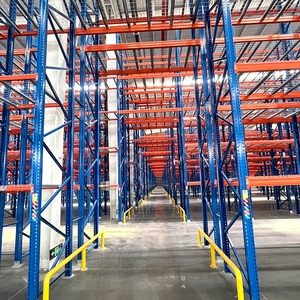
25+
Years Racking Expertise
30,000t
Monthly Steel Output
10,000+
Global Installations
120+
Export Destinations
Engineering Catalog
Industrial Pallet Racking Systems Qualified for Korea
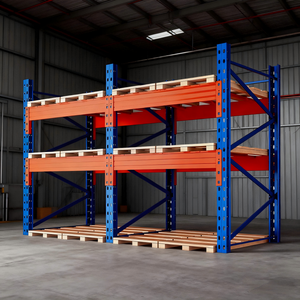
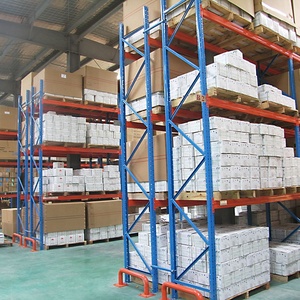
Optimized for high-density logistics fulfillment centers, cold storage terminals, and manufacturing supply hubs across Incheon Port, Gimpo, and Pyeongtaek.
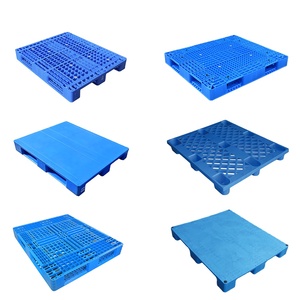
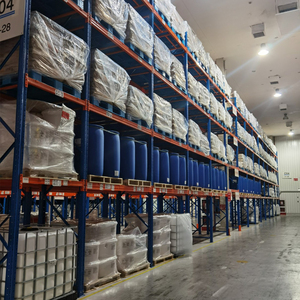
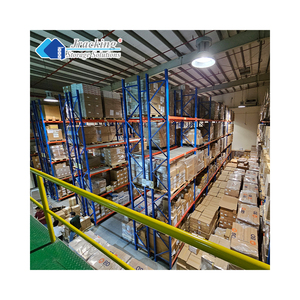
Strategic Localization
Tailored Intralogistics for Greater Seoul Capital Area (SMA)
The Seoul metropolitan logistics belt—stretching from Incheon Free Economic Zone (IFEZ) to Gimpo, Yongin, and Icheon—faces unique operational parameters: astronomical real estate valuation, rapid cold-chain turnaround, and aggressive fulfillment timelines.
Cold-Chain Mega Hubs in Yongin & Icheon
Driven by ubiquitous fresh-food dawn-delivery ('Saetbyeol Delivery'), sub-zero facilities demand high volumetric yield. Our multi-deep radio shuttle and drive-in configurations withstand -30°C conditions without cryogenic steel embrittlement, leveraging hot-dip galvanized structural profiles.
Incheon & Gimpo Port Cross-Docking Facilities
Import-export staging buffers require continuous turnover under Korean KFI standards. Selective heavy-duty beam racks with tear-drop adjustability allow rapid realignment between ISO standard shipping pallets and South Korean T11 (1,100×1,100mm) distribution units.
E-Commerce Urban Fulfillment Depots
Inside Seoul’s urban perimeter where ceiling heights exceed 12 meters yet floorplates are constrained, our multi-tier mezzanine and high-bay narrow-aisle (VNA) systems double cubic storage density, accelerating robotic picker picking paths and parcel sorting lines.
Industry Whitepaper
Future-Proofing Storage: South Korean Logistics Trends
Key market vectors shaping racking engineering requirements across South Korea through 2026 and beyond.
Seismic Building Codes (KDS 41)
South Korea’s updated Structural Design Criteria mandate rigorous seismic dampening, baseline baseplate anchor testing, and vertical displacement resistance to sustain regional seismic events.
T11 Standard Harmonization
The predominant KS T 1002 pallet format (1,100×1,100mm) commands exact clearance design. Precision-rolled beams minimize deflection while accommodating robotic handling arms.
AMR & AGV Floor Integration
Warehouses are rapidly transitioning from manual forklifts to Autonomous Mobile Robots. Racking uprights now incorporate optical sensor targets, reinforced corner guards, and flush ground profiles.
Fire Safety (KFI Regulations)
Strict Korean fire safety mandates demand structured flue space, heavy-duty wire mesh decking, and engineered flue conduits for warehouse ESFR in-rack sprinkler integration.
Manufacturing Excellence
Why Korean Logisticians Trust Guangzhou Heda Shelves Co., Ltd.
Operating since 2001 from a vertically integrated 30,000 m² state-of-the-art facility, HEDA Shelves eliminates intermediaries. By consolidating design, precision cold roll-forming, automatic punching, and in-house electrostatic powder coating under one roof, we guarantee exceptional dimensional accuracy and supply chain stability for our East Asian export pipelines.
- Certified Quality: CE (2435-CPR-8605159) & ISO 9001:2015 accredited.
- Pretreatment Durability: In-house pickling & phosphating coating.
- Engineering Agility: Free 3D CAD modeling, FEA stress & load analysis.
- Direct Export Logistics: Fast sea-freight lanes directly to Incheon and Busan.
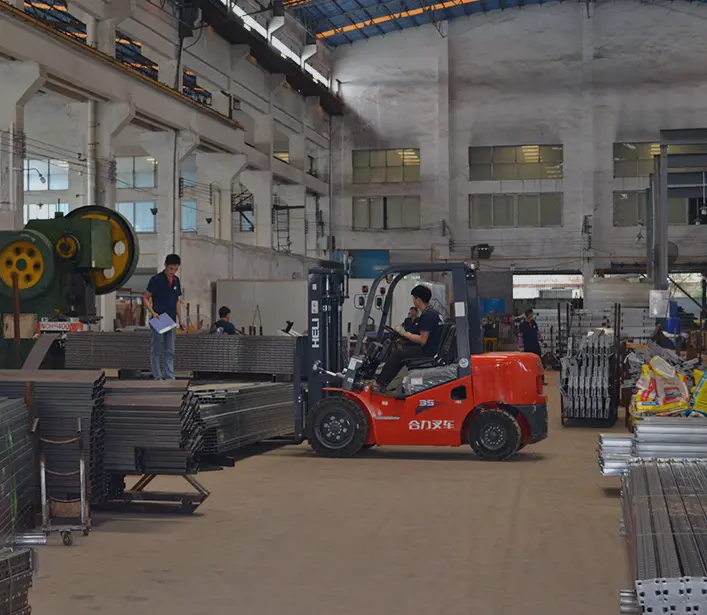
Quality Assurance
Precision Manufacturing Methodology
Every structural component destined for the Seoul metropolitan area undergoes ten controlled production gates to guarantee load resilience.
01
Raw Steel Sourcing
Q235B & Q355B certified structural coils subjected to tensile, elongation, and spectral chemical analysis.
02
Cold Roll-Forming
Continuous roll-forming lines shaping custom upright profiles with zero micro-fracturing along bend lines.
03
Automated Punching
High-speed CNC stamping ensures exact 50mm and 75mm beam adjustment pitch hole concentricity.
04
Pickling & Coating
Complete chemical descaling, phosphating, and electrostatic epoxy thermosetting to prevent corrosion.
05
Crated Containerization
Knock-down component strapping designed for optimized maritime transit and rapid destuffing at Korean ports.
Procurement Guide
Frequently Asked Questions for Korean Buyers
Addressing technical, regulatory, and maritime logistics questions commonly raised by facility directors in Seoul, Incheon, and Busan.
How does HEDA Shelves adapt racking systems for the Korean T11 (1,100×1,100mm) pallet standard?
Unlike European (1,200×800mm) or American (48×40 in) configurations, Korean supply chains rely primarily on the KS T 1002 (1,100×1,100mm) pallet standard. Our engineering team customizes beam lengths (typically 2,300mm or 2,500mm for two-pallet bays) and frame depths (usually 1,000mm) to guarantee the mandatory 50mm front/back overhang and 75–100mm safety clearance between pallets, preventing load shifts during handling.
Do your racking systems satisfy South Korea’s seismic building design regulations (KDS 41)?
Yes. South Korea's Ministry of Land, Infrastructure and Transport requires seismic performance validation under KDS 41. We perform FEA (Finite Element Analysis) stress simulations for each installation site, factoring in regional seismic coefficients (e.g., Gyeonggi vs. Gyeongsang seismic zones). We supply enlarged structural footplates, heavy-duty Hilti-equivalent anchor bolt schemes, and cross-bay seismic bracing to prevent collapse under lateral accelerations.
What are the sea freight lead times and destination port procedures for Incheon and Busan?
Shipping from our factory via Nansha/Shekou to Incheon Port typically takes only 4 to 6 days at sea; Busan takes 3 to 5 days. We prepare complete customs documentation under the RCEP (Regional Comprehensive Economic Partnership) agreement, allowing eligible Korean importers to benefit from reduced or preferential import tariff rates. All components are container-stowed with protective corner wrapping and timber Dunnage to avoid maritime transit damage.
Can HEDA Shelves accommodate automated guided vehicles (AGVs) and AMRs in our facility?
Absolutely. Korean warehouses lead in automation integration. We design bottom-level pallet clearances, aisle widths, and ground guide rails specifically calibrated for leading AGV and reach-truck navigation platforms. Furthermore, our heavy-duty column protectors and rack-end barriers prevent costly structural damage to both the automated vehicles and upright columns.
How do you support on-site installation within South Korea?
Every shipment includes precision-labeled 3D assembly shop drawings, component color-coding, and step-by-step structural fastening guides. We coordinate with local Korean millwright and installation crews, providing remote bilingual engineering video support. For high-bay, mezzanine, or shuttle projects, we can dispatch seasoned project supervisors to verify leveling, verticality tolerances, and torque specifications on-site.
What certifications and anti-corrosion guarantees come with cold storage systems?
All HEDA racking systems are certified under CE (Certificate No. 2435-CPR-8605159) and ISO 9001:2015 (Certificate No. 18624Q00169R0M). For sub-zero cold storage facilities in Gimpo or Yongin, we apply high-grade hot-dip galvanizing or specialized low-temperature epoxy powder formulations rated down to -30°C, preventing surface flaking, structural embrittlement, and moisture oxidation.