Engineered Heavy-Duty Racking Systems Available for Slovakia
Fully compatible with standard EUR-pallet (1200 x 800 mm) and industrial EUR-2 (1200 x 1000 mm) formats. Direct factory supply with precision roller tracks, integrated speed brake rollers, and anti-jam separators.
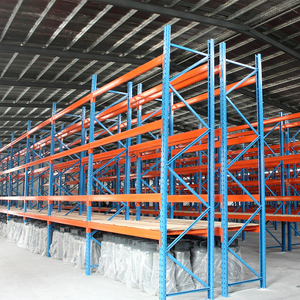
Industrial Rack Heavy Duty Adjustable Steel Garage Storage
Versatile multi-tier shelving system with modular upright beams, ideal for manual component buffer stations and maintenance storehouses.
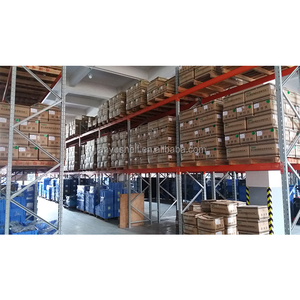
Commercial Industrial Heavy Duty Pallet Storage Rack
High-rigidity selective frame infrastructure engineered to bear dynamic pallet loads with minimal beam deflection across high bay facilities.
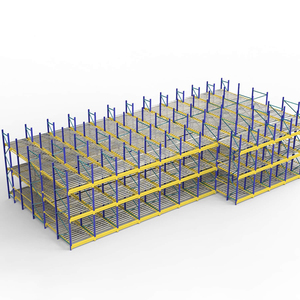
Customizable Heavy-Duty Metal Gravity Flow Racking
First-in, first-out gravity roller bed designed with 3.5% gradient, steel guide rollers, and load separators for fail-safe perishable handling.
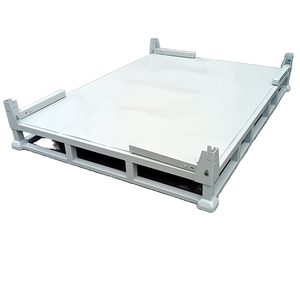
Foldable Stackable Heavy-Duty Steel Stacking Manurack
Flexible nestable post pallets offering 4-high dynamic stacking capability, designed for seasonal peak overflow in automotive marshalling areas.
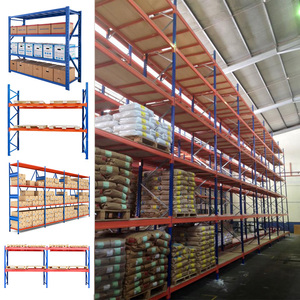
Certified Cargo Tile & Dense Material Storage Racking
Engineered for dense, fragile planar cargo such as architectural ceramics, sheet metals, and composite vehicle panels requiring zero sag.
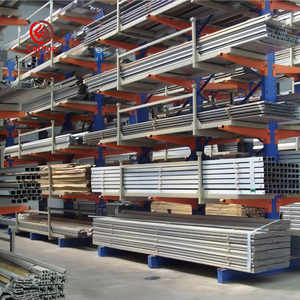
Low-Profile Cantilever Shelves for Linear Components
Specialized open-front storage architecture for automotive exhaust lines, copper tubing, structural aluminum profiles, and extended raw timber.
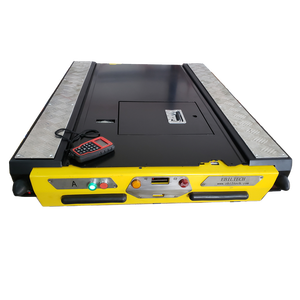
Semi-Automated Radio Shuttle Pallet Runner System
High-density remote-controlled carrier shuttling pallets along internal galvanized guidance rails without requiring lift trucks to enter storage bays.
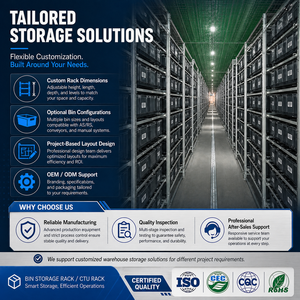
Mini-Load ASRS Automated Tote & Bin Flow Racking
Ultra-precise light-load vertical dynamic storage designed for automated crane or robot picking of small plastic totes, KLT bins, and cartons.
Slovakia's Intralogistics Pivot: The Critical Role of Gravity Roller Racking
The Slovak Republic has firmly established its position as the world's highest per-capita automotive manufacturing hub. Anchored by primary production facilities of Volkswagen in Bratislava, Stellantis in Trnava, Kia Motors in Žilina, Jaguar Land Rover in Nitra, and the emerging Volvo electric vehicle plant near Košice, the nation demands an ultra-efficient supply chain infrastructure. In this precision-timed industrial matrix, warehouse floor space along the D1 (Bratislava–Trnava–Žilina) and R1 (Trnava–Nitra–Banská Bystrica) expressways commands increasing rental premiums, exceeding €5.20 to €6.50 per square meter in Class A logistics parks such as Senec, Lozorno, and Sereď.
Roller racking systems—broadly categorized into heavy-duty pallet live flow racking and ergonomic carton live flow shelving—represent the pinnacle of energy-independent high-density storage. Operating entirely on gravitational potential energy, dynamic roller beds eliminate the substantial electrical overhead associated with continuous automated conveyor loops while guaranteeing 100% compliant First-In, First-Out (FIFO) stock sequencing. For Tier-1 automotive line-feed stations and cold chain hubs managing temperature-sensitive agricultural imports or pharmaceuticals, gravity roller systems reduce material handling transit times by up to 48% compared to standard static wide-aisle selective racking.
Automotive JIT/JIS Pacing
Enforces strict sequenced component supply to line-side picking zones without risk of picking an earlier batch or outdated part revision.
Zero Electric Power Dependency
Operates entirely through gravitational physics (3.5% inclination gradient), protecting operations from grid load spikes or outages in eastern Slovakia.
60% Floor Footprint Reduction
Consolidates multiple picking aisles into a single loading lane and an opposite extraction face, dramatically maximizing storage volume per square meter.
Comparative Analysis: Top 10 Roller Racking Suppliers & Exporters Serving Slovakia
To assist Slovak warehouse architects, industrial engineers, and corporate procurement panels in evaluating supply partners, the following matrix benchmarks leading European and international manufacturers based on steel grade integrity, roller brake design, local compliance (STN EN standards), factory-direct pricing, and engineering support.
| Supplier / Exporter | Manufacturing Base | Roller Track Engineering | Standards Compliance | Lead Times (Bratislava/Košice) | Custom Engineering (CAD/FEA) |
|---|---|---|---|---|---|
| Guangzhou Heda Shelves Co., Ltd. | Guangzhou, China (Direct Export) | Heavy-duty steel rollers, centrifugal speed controllers, automatic separation mechanisms | ✓ CE, ISO 9001:2015, EN 15512 | Container direct (4-6 weeks) | |
| Bito-Lagertechnik Bittmann | Meisenheim, Germany | Continuous multi-roller beds, plastic & steel rollers | ✓ DIN, EN 15512, FEM | 6-9 weeks | Available via European office |
| Mecalux Slovakia | Poland / Spain | Dual-flanged rollers with integrated braking | ✓ CE, EN 15620, ISO 14001 | 8-10 weeks | Project-based engineering fees |
| SSI Schaefer | Neunkirchen, Germany | Modular carton flow tracks, high-speed pallet lanes | ✓ EN standards, TÜV Nord | 10-12 weeks | Standard corporate engineering |
| Stow Group (Averys) | Spišská Nová Ves (Local Unit) / Belgium | Pallet live storage tracks, zinc-plated frames | ✓ EN 15512, ISO 9001 | 5-8 weeks local dispatch | Local site survey available |
| Nedcon B.V. | Doetinchem, Netherlands | Custom structural live storage beams | ✓ CE, EN 15512 | 9-11 weeks | Full integration engineering |
| Dexion (Kasten Group) | Germany / Romania | Universal roller tracks with entry funnels | ✓ ISO 9001, EN 15629 | 7-9 weeks | Catalog module configuration |
| Jungheinrich AG | Norderstedt, Germany | Live storage systems optimized for automated reach trucks | ✓ CE, EN, FEM | 10-14 weeks | Comprehensive intralogistics consulting |
| Constructor Group | Norway / Germany | Carton live and heavy pallet gravity chutes | ✓ EN 15512, ISO 9001 | 8-10 weeks | Standard technical drawings |
| PROVOST Distribution | Neuville-en-Ferrain, France | Modular dynamic FIFO rails for manual picking | ✓ European Directives | 6-8 weeks | Modular layout design |
Note: Assessment based on publicly verified technical datasheets, regional delivery metrics into Central and Eastern European (CEE) freight corridors, and verified manufacturing capability credentials.
Mechanical Engineering & Kinematic Control of Pallet Flow Racks
The design of industrial roller racking systems transcends traditional static beam calculations. Because units in motion introduce dynamic kinetic energy into the structural frame, warehouse designers must address precise physical variables:
1. Track Inclination Gradient (α)
For standard Euro-pallets (EUR-1: 800 x 1200 mm with wooden runners oriented parallel or perpendicular to flow), the industry standard inclination angle is set between 3.0% and 3.8% (approx. 1.7° to 2.2°). An insufficient incline risks pallet stall mid-lane, requiring operator intervention. An excessive incline produces uncontrolled acceleration, leading to dangerous impact forces at the unloading face.
2. Centrifugal Speed Regulators (Brake Rollers)
To ensure steady descent velocity (< 0.3 m/s), heavy-duty gravity lanes incorporate internal gear-driven centrifugal brake rollers. Positioned at regular intervals—typically one brake roller per pallet position along the flow channel—these units exert resistance proportional to pallet speed. A 1,200 kg pallet encounters higher braking torque than a 400 kg pallet, maintaining uniform motion regardless of payload weight disparities.
3. Pallet Separation Mechanisms
A primary failure mode in unengineered dynamic flow systems is line pressure buildup. When five or ten 1,000 kg pallets rest directly against one another, cumulative horizontal thrust makes safe forklift extraction impossible and poses severe risks of structural rack rupture. High-spec gravity roller tracks utilize mechanical end-separators. When the lead pallet reaches the front stop, a trip lever automatically engages a mechanical latch holding the second pallet 150 mm behind it. Only after the lead pallet is cleanly lifted by a forklift does the mechanism release the queued lane.
4. Roller Diameter and Track Selection
Rollers are manufactured from precision cold-drawn steel tubes (commonly 50 mm, 60 mm, or 89 mm diameter) with wall thicknesses ranging from 1.5 mm to 3.0 mm, fitted with double-shielded, grease-packed precision ball bearings. For wet food distribution and deep-freeze logistics (-25°C), galvanized or stainless-steel roller sleeves prevent surface oxidation and lubricant seizure.
Localized Application Scenarios across Slovak Industrial Hubs
Different industrial regions within Slovakia present distinct operational environments for roller racking deployments:
Bratislava & Trnava (Automotive OEM & Tier-1)
Assembly line side-feeding requires high-density Carton Live Storage (flow tracks integrated with tubular framing) handling standardized KLT plastic containers. Gravity tracks provide continuous parts feeding, eliminating empty container dead-time.
Senec & Sereď (3PL & FMCG Logistics Hubs)
Large-scale distribution facilities serving major retail chains (Tesco, Billa, Lidl, Kaufland) require multi-lane pallet flow racks for fast-moving items, ensuring zero batch contamination and direct replenishment from receiving to shipping docks.
Žilina, Martin & Košice (Industrial Equipment & Cold Chain)
Demands heavy galvanized gravity lanes for heavy industrial parts buffers, alongside multi-tier shuttle-to-roller transfers in temperature-controlled agro-food warehouses where cubic cooling efficiency is paramount.
Future Trends: Transforming Slovakian Logistics (2025–2030)
Slovakia’s supply chain infrastructure is undergoing a rapid technological evolution, influenced by EU ESG directives, domestic labor shortages, and regional industrial realignment:
1. Integration with Autonomous Mobile Robots (AMRs) & AGVs: Modern factories in Western Slovakia are transitioning toward unmanned forklift fleets. Roller flow racking faces are now engineered with optical sensor pockets and precise docking bevels, enabling automated guided vehicles to deposit and retrieve pallets without manual alignment.
2. ESG & Passive Energy Decarbonization: As European energy prices stabilize at structurally higher plateaus, corporate warehouse operators face strict corporate carbon balance audits under the EU Corporate Sustainability Due Diligence Directive (CSDDD). Gravity dynamic systems require zero kilowatt-hours to convey tons of material internally, making them a primary investment for logistics parks striving for BREEAM ‘Outstanding’ or LEED Gold certifications.
3. Eurocode 8 Seismic Adaptations in High-Bay Installations: Although Central Europe is generally viewed as having low-to-moderate seismic activity, specific regions in Central and Eastern Slovakia (such as the Komárno fault line and areas near Žilina) require strict engineering adherence to STN EN 1998-1 (Eurocode 8). Racking frames must incorporate heavy baseplates, anchored diagonal bracing, and oversized dynamic roller bracket couplings to absorb horizontal ground accelerations.
Frequently Asked Questions: Technical Procurement in Slovakia
Clear, engineering-focused answers to the common operational questions encountered by Slovak procurement teams when sourcing roller racking systems internationally.
Are roller racking systems compliant with Slovak fire safety code (Vyhláška 94/2004 Z.z.)?
Yes. Heavy dynamic roller racking lanes can be configured with in-rack ESFR sprinkler clearance corridors. Open roller tracks permit water drainage without creating impermeable horizontal barriers, ensuring compliance with Slovak technical fire regulations.
What floor slab tolerance is needed under STN EN 15620 for pallet flow racks?
Pallet flow racks generally require Class 300 or Class 400 floor flatness tolerances. Because the rack beams already introduce an engineered 3.5% incline, floor level deviations in the cross-aisle direction must not exceed ±2.5 mm to avoid pallets skewing off the roller track guides.
How do roller racks handle defective or low-grade wooden pallets?
Standard flow beds require EUR-1 pallets with intact bottom skids. For cracked runners, irregular plastic pallets, or soft slip-sheets, we engineer three-rail tracks with high-density full-width cylindrical steel rollers or utilize slave dynamic carrier pallets.
What import customs clearance procedures apply to Slovak shipments?
Steel storage racks entering the EU from China fall under HS Code 7308.90. Shipments direct to Port of Koper (Slovenia) or Hamburg/Gdańsk clear under EU single-window customs, followed by bonded rail or truck transit directly to your industrial site in Slovakia.
Can roller lanes function reliably in unheated Slovak winter conditions (-15°C)?
Yes. In unheated buffer warehouses, we specify low-temperature synthetic grease in all roller bearings and calibrate centrifugal brake rollers to prevent fluid viscosities from altering descent speeds under negative ambient temperatures.
What is the expected service life and maintenance protocol for roller beds?
High-grade cold-rolled steel roller tracks feature a 15+ year operational design life. Routine maintenance is minimal, consisting of bi-annual debris vacuuming of roller beds, visual inspection of return springs on end-separators, and torque checks on beam connector safety lock pins.
Enterprise Manufacturing Capabilities: Guangzhou Heda Shelves Co., Ltd.
Operating since 2001, Guangzhou Heda Shelves Co., Ltd. provides direct manufacturing and engineering support for complex storage projects across 120+ countries, with specialized logistics delivery across the European Union.
30,000 m² Plant
Comprehensive in-house manufacturing from raw steel coil slitting, automated CNC punching, cold-roll forming to electrostatic coating.
Verified Quality
CE Certification (No. 2435-CPR-8605159) and ISO 9001:2015 accredited production meeting strict European warehouse safety guidelines.
Free 3D & Static FEA
Every proposal includes structural calculation reports, static beam deflection models, and complete 2D/3D DWG drawings prepared within 24 hours.
Factory-Direct Export
Save 30-40% compared to local distributor markups with knock-down container packaging optimized for trans-European shipping.
10-Stage Precision Production Architecture
Every structural upright, load beam, and roller chassis undergoes a rigorous 10-phase production sequence: (1) Prime Certified Steel Coil Inspection, (2) High-Precision Slitting, (3) Automated 50mm Pitch Column Punching, (4) Heavy Cold Roll Forming, (5) Robotic Structural Welding, (6) Mechanical Shot Blasting, (7) Multi-Stage Pickling & Phosphating Pre-treatment, (8) Anti-Corrosion Electrostatic Powder Coating, (9) High-Temp Oven Curing (200°C), and (10) Comprehensive Pre-Shipment QC Deflection Testing.
Request an Engineered Layout & Static Load Calculation
Planning a new warehouse in Bratislava, Senec, Trnava, or Košice? Send us your building dimensions, clear ceiling height, pallet specifications, and throughput targets. Our engineering team provides detailed CAD drawings, dynamic flow simulations, and landed price estimates within 24 hours.