2001
Established Engineering
30,000 m²
Production Footprint
30,000 T
Monthly Cold-Form Output
10,000+
Deployments Worldwide
Engineered Product Portfolios
Industrial Storage Systems for High-Density Operations
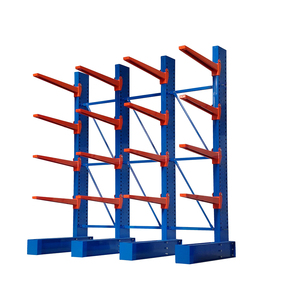
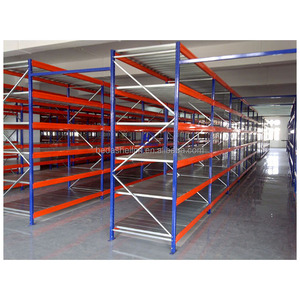
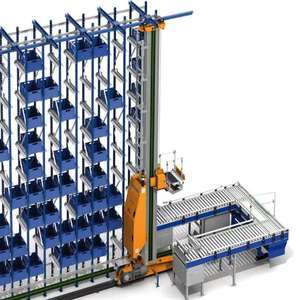
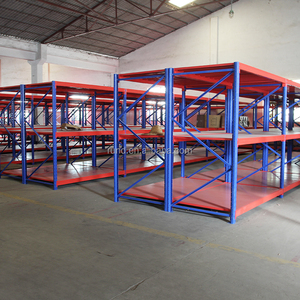
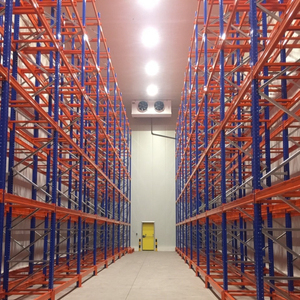
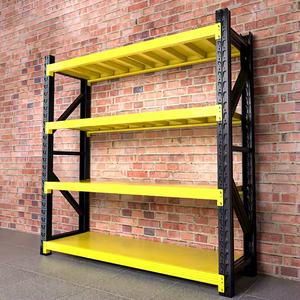
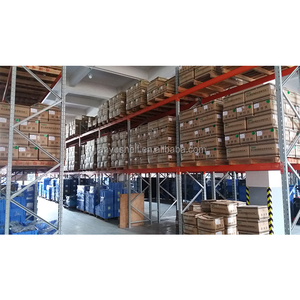
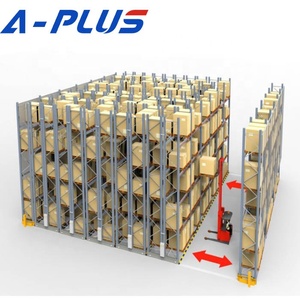
From standard wide-aisle configurations to precision-guided VNA and high-throughput dynamic storage, explore our industrial-grade components optimized for overseas freight and rapid field assembly.
Whitepaper & Strategic Procurement Analysis
The New York Logistics Paradox: Maximizing Urban Cubic Density via VNA Racking
The logistics infrastructure across the New York Metropolitan Area—spanning the outer boroughs of Queens, Brooklyn, Staten Island, and the Bronx, out through Long Island and the hyper-dense New Jersey Meadowlands corridor—presents the highest industrial land acquisition and leasing rates in North America. With commercial Class-A warehouse rents often exceeding $25 to $40 per square foot NNN, supply chain directors face an unyielding mandate: extract maximum pallet throughput from constrained, high-clear-height footprints.
"In the New York market, spatial optimization is no longer a matter of basic shelf configuration; it is an aggressive exercise in vertical engineering. Converting a standard 12-foot wide aisle to a 5.5-foot Very Narrow Aisle (VNA) system immediately unlocks up to 45% additional storage density without adding a single square inch of building footprint."
Very Narrow Aisle (VNA) pallet racking resolves the historic conflict between direct selectivity and floor storage density. While traditional selective racking consumes roughly 60% of warehouse floor area in working aisles, a precision-engineered VNA system shrinks operating aisles down to 1.5–1.8 meters (60–72 inches). By utilizing specialized turret trucks (swing-reach forklifts) or man-up order pickers running on low-profile guide rails or inductive wire systems, facilities achieve 100% individual pallet selectivity at vertical operating reaches topping 15 meters (50 feet).
VNA vs. Conventional Storage Systems: Comparative Technical Analysis
For warehouse architects and supply chain operators balancing inventory velocities against land valuations, the following matrix models operational performance across core pallet racking frameworks:
| Performance Metrics | Standard Selective Racking | Drive-In Pallet Racking | Push-Back / Pallet Flow | Very Narrow Aisle (VNA) |
|---|---|---|---|---|
| Typical Aisle Width (mm) | 3,200 – 3,800 mm | 3,000 – 3,500 mm | 2,900 – 3,400 mm | 1,500 – 1,800 mm |
| Floor Area Utilization (%) | 35% – 40% | 60% – 70% | 55% – 65% | 55% – 65% |
| Vertical Height Ceiling | Up to 9 Meters | Up to 10 Meters | Up to 8 Meters | Up to 16+ Meters |
| Pallet Selectivity Index | 100% Direct Access | Poor (Last-In-First-Out) | Moderate (Lane Dependent) | 100% Direct Access |
| Picking Throughput Velocity | Standard | Low (Forklift Enters Rack) | Moderate to Fast | High (Simultaneous Travel/Hoist) |
| Guidance System Required | None | Floor Buffers Only | None | Mechanical Rails / Inductive Wire |
Engineering Challenges in the Greater NY Market: Slab Deflection & Seismic Integrity
Implementing a high-reach VNA system within New York and New Jersey facilities involves stringent compliance requirements. Foremost is Superflat Floor Specification (DIN 18202 / TR34 DM2 or ASTM E1155 F-min 75 to 100). Because turret trucks operate at mast heights of 40 to 50 feet, a micro-deviation of 1 millimeter at the floor slab translates into inches of structural sway at top beam levels, increasing rack-strike hazards.
Additionally, municipal building codes across New York City (including NYC Department of Buildings - DOB filings) and New Jersey reference updated International Building Code (IBC) and RMI (Rack Manufacturers Institute) standards. Storage installations must incorporate custom baseplate thicknesses, anchor-bolt pull-out calculations, and vertical seismic bracings that account for local geotechnical load spectra.
Targeted Market Applications
Tri-State Urban Applications for VNA Racking
How regional logistics managers across New York, Long Island, and Northern New Jersey deploy very narrow aisle racking systems to solve high-cost warehousing challenges.
Last-Mile E-Commerce Hubs (NYC Boroughs)
In multi-story distribution facilities located in Brooklyn, Queens, and Long Island City, every square foot is at a premium. VNA configurations allow fast-turn parcel hubs to stock thousands of distinct SKUs with immediate access for pickers, cutting order consolidation time while doubling cubic rack capacity.
Pharmaceutical & Healthcare Cold Chains
Operating temperature-controlled facilities in the NJ Meadowlands and Upstate NY involves substantial energy costs. VNA pallet systems eliminate non-productive refrigeration overhead by clustering maximum pallet positions into dense chilled vaults, reducing cold dissipation per pallet stored.
FMCG & Specialty Food Importers
Port Newark and Elizabeth maritime container terminals process massive volumes of imported foods, beverages, and industrial hardware. Importers use high-bay VNA racks with structural load protection to house heavy container breakdown loads with 100% individual access for cross-dock dispatches.
Direct Factory Manufacturing Credibility
Engineered by Guangzhou Heda Shelves Co., Ltd.
Founded in 2001, Guangzhou Heda Shelves Co., Ltd. has established itself as an international manufacturing standard for warehouse storage solutions. Operating from an integrated 30,000 square-meter production facility, our factory delivers over 30,000 metric tons of certified structural and cold-formed racking profiles every month, servicing enterprise warehousing clients across North America, Europe, Africa, and Australasia.
25 Years of Technical R&D
Over two decades dedicated solely to cold-roll engineering, automated punch-forming, and structural load physics for heavy-load applications.
Certified Compliance
Independently verified with CE Certification (No. 2435-CPR-8605159), ISO 9001:2015 accreditation (No. 18624Q00169R0M), and strict RoHS adherence.
Container Freight Efficiency
Factory-direct KD (knock-down) nested bundling engineered to maximize 40ft High Cube containers, minimizing landed freight costs to Port NY/NJ.
Full Structural OEM/ODM
End-to-end design flexibility: customized profile gauges (up to 3.0mm+ cold-rolled steel), upright punch patterns, high-durability finishes, and CAD/3D plans.
Controlled 10-Stage Precision Production Line
Precision is essential in VNA systems: an upright column that deviates by even 1.5mm per 10 meters can misalign an entire aisle. Our fully mechanized production lines control every stage from high-tensile steel coils to sea-freight packing:
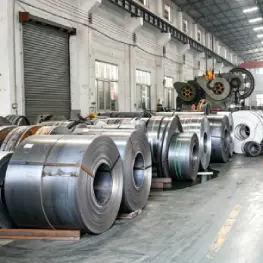
01
Raw Materials
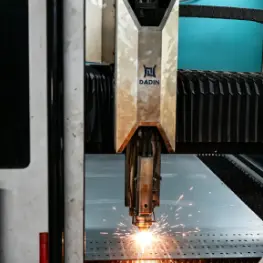
02
Precision Cutting
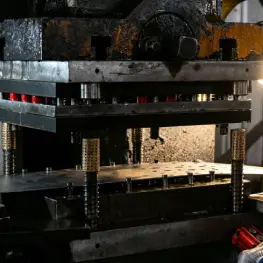
03
CNC Punching
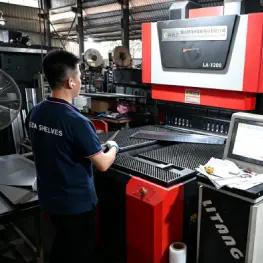
04
Cold Bending
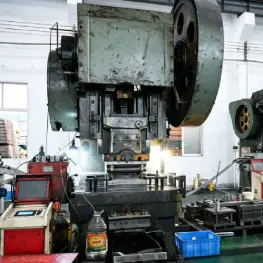
05
Roll Forming
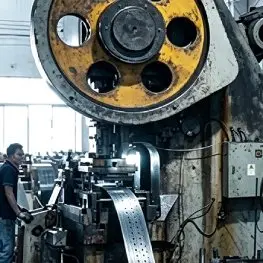
06
Surface Polishing
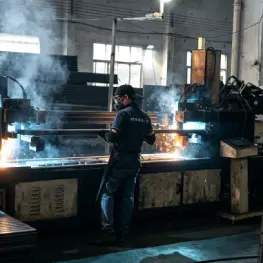
07
Robotic Welding
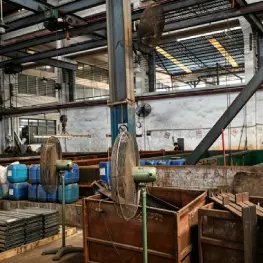
08
Pickling/Phosphate
09
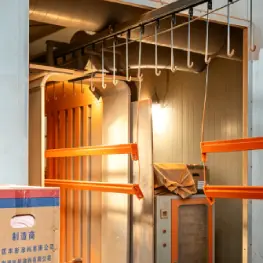
Electrostatic Coat
10
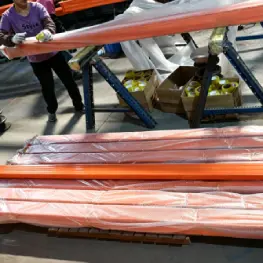
QC & Sea Packing
Market Forecast & Architecture Insights
Regional Engineering Trends in NY & Tri-State Material Handling
As logistics real estate across Long Island, upstate New York, and Central New Jersey faces land scarcity, distinct engineering trends are reshaping warehouse storage design:
1. Automated Guided Vehicle (AGV) & Turret Autonomous Integration
To mitigate persistent regional warehouse labor shortages, modern VNA facilities are migrating from manual operator-guided turret trucks toward wire-guided semi-autonomous and fully autonomous reach machines. These vehicles demand strict vertical tolerances (+/- 1.5mm plumbness across tall runs) and seamless aisle entry transitions, shifting procurement preference to precision-welded, CNC-punched steel uprights.
2. Hybrid High-Bay Mezzanine & Pick-Tower Synergies
Facilities handling both wholesale pallet distributions and direct-to-consumer carton picking are pairing high-bay VNA racks with multi-tier, rack-supported picking mezzanines. By dedicating upper vertical strata to reserve pallet storage and lower levels to manual picking tunnels, operations maximize clear heights of 36 to 48 feet without building secondary mezzanine foundations.
3. Seismic Safety & Slab Anchoring Rigor
While New York is not classically considered a severe earthquake zone, seismic risk categories B and C across the Northeastern tectonic corridor dictate rigorous lateral stability verifications under IBC Section 1613. Industrial permit filings require stamped calculations certifying that VNA upright columns with high slenderness ratios maintain anchor integrity under load deflection and micro-subsidence conditions.
Procurement & Technical Inquiries
Frequently Asked Questions for NY Warehouse Operators
Clear, engineering-focused answers covering floor specifications, municipal permits, lead times, and guidance systems.
What floor flatness specification is required for a VNA racking installation?
Because turret trucks reach operating heights of 30 to 50 feet with minimal mast clearance, floor flatness is critical. The Concrete Society Technical Report 34 (TR34) category DM2 (defined movement) or American ACI F-min 75 to F-min 100 specifications are standard. If an older building in Queens or Brooklyn does not meet these tolerances, specialized floor grinding in the wheel paths or low-profile floor rails are required to prevent mast oscillation and structural rack strikes.
Do we need a NYC DOB permit or special filing to install VNA racks in New York City?
Yes. In the five boroughs, industrial pallet racks exceeding 8 feet in height typically require an architectural plan filing with the NYC Department of Buildings (DOB), along with seismic and structural load verifications stamped by a New York State licensed Professional Engineer (PE). HEDA Shelves provides complete structural CAD documentation, component steel gauge certifications, and connection drawings to help your engineering consultants obtain city permits smoothly.
What is the difference between mechanical guide rails and wire guidance in VNA aisles?
Mechanical guidance involves heavy structural angle iron (typically 100x75x10mm or custom c-channel) anchored to the concrete slab along both sides of the aisle. The turret truck runs against these steel curbs using side guide rollers, creating an immediate physical safeguard. Wire guidance utilizes a low-frequency energized wire embedded in a narrow 3mm saw-cut in the center of the concrete aisle, tracked by sensors on the forklift. Wire guidance reduces trip hazards and facilitates pallet floor drops, but demands a well-maintained slab.
How does HEDA Shelves manage ocean shipping, tariffs, and logistics to Port NY/NJ?
HEDA Shelves manages containerized shipments under standard Incoterms (FOB, CFR, CIF, or DDP through our freight network). Racking beams and upright frames are bundled in high-density knock-down forms with steel strapping, anti-abrasion edge protectors, and waterproof plastic film wrapping. Containers discharge directly at Port Newark, Port Elizabeth, or Red Hook Container Terminal (Brooklyn), moving by drayage chassis straight to your local dock.
What turnaround time should NY project planners budget from design approval to delivery?
Following final CAD layout confirmation and load approval, custom factory manufacturing runs typically require 15 to 25 working days, depending on overall steel tonnage and powder coat finishes. Ocean transit from Guangzhou to Port NY/NJ generally requires 28 to 35 days. We recommend initiating technical planning and PE review approximately 8 to 12 weeks ahead of your planned rack installation target.
Can standard sit-down counterbalanced forklifts work inside a VNA system?
No. Standard counterbalanced forklifts need aisle widths of 11 to 13 feet (3.4 to 4.0 meters) to turn and place a pallet. VNA systems operate at 5 to 6-foot aisles (1.5 to 1.8 meters). Only specialized turret trucks (swing-reach trucks) or articulated forklifts (such as Bendi or Flexi units) can operate within these narrow paths. Standard forklifts are typically utilized only at the aisle entry points (P&D stations) for general transit.
Plan Your High-Density VNA Warehouse Project Today
Connect with our structural engineering team for a free CAD layout, seismic load calculation, and factory-direct quotation tailored to the New York, New Jersey, and regional market.
Get a Quote