Specialized Racking Systems Engineered for High-Throughput Yards & Facilities
From custom structural cantilever solutions for heavy timber and extruded aluminum to high-density pallet storage configurations, our export division delivers factory-certified material handling racks directly to Japanese industrial distributors and general contractors.
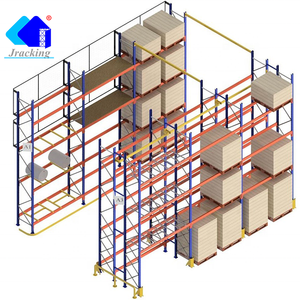
Heavy Duty Metal Storage Shelving & Pallet Rack
Reinforced Q235B/Q355B cold-rolled steel profile designed for high-density heavy goods, compatible with heavy cantilever yard integration.
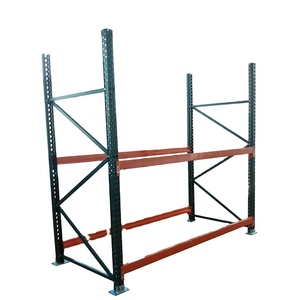
Modular TearDrop Heavy Duty Pallet Racking
Precision-punched boltless upright configuration offering seamless interchangeability, versatile beam placement, and seismic tie-back options.
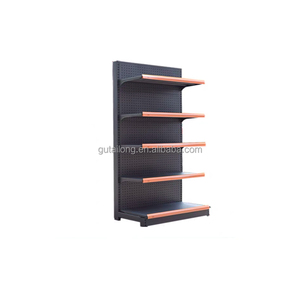
Freestanding Double-Sided Heavy-Duty Solid Shelving
Electrostatically powder-coated freestanding display and medium-load storage setup engineered for industrial distribution warehouses.
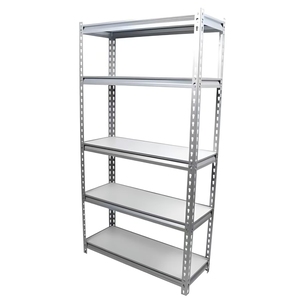
Adjustable Boltless Medium-Duty Shelving Units
Rapid assembly modular shelving system featuring anti-sway bracing, optimal for picking lines, hand-loaded cartons, and long profiles.
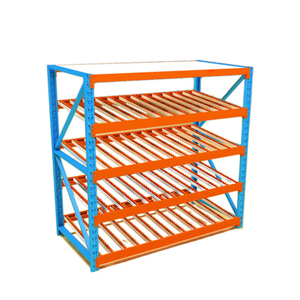
5-Layer High-Density FIFO Gravity Flow Racking
Gravity-driven roller system ensuring rapid stock turnover, precise FIFO sequence rotation, and unassisted mechanical performance.
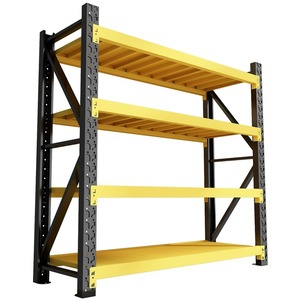
4-Layer Heavy Duty 300kg/Layer Boltless Storage System
Structural cold-rolled iron framework with electro-deposition protective coats, providing flexible vertical clearance adjustments.
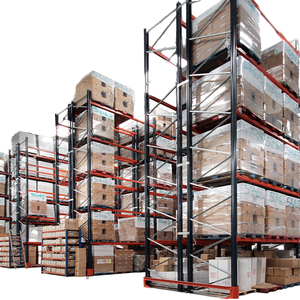
Very Narrow Aisle (VNA) High-Density Pallet Racking
Maximizes vertical space utilization up to 90% while retaining continuous 100% selective accessibility for high-bay operations.
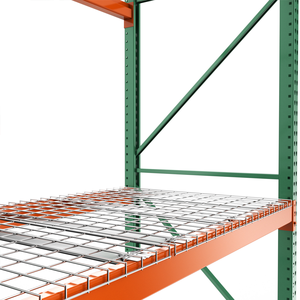
Teardrop Racking With Industrial Wire Mesh Decking
Fire-safety compliant design allowing unhindered overhead sprinkler water penetration, ideal for container freight stations and logistics hubs.
Direct-from-Source Industrial Manufacturing Capability
Operating a modernized 30,000 m² heavy steel production facility, Guangzhou Heda Shelves Co., Ltd. controls the complete supply chain from raw coil handling to structural welding, pickling, phosphating, and automated powder coating.
Japanese Seismic Engineering
Every cantilever rack exported to Japan accounts for local seismic lateral coefficients (K-values). Using FEA structural modeling, base-plates, anchor configurations, and diagonal sway-bracing grids are calculated to resist lateral seismic forces without joint deflection.
High-Yield Raw Steel & Finishing
We source heavy hot-rolled I-beams and high-yield cold-rolled steel coils matching JIS G3101 SS400 and equivalent standards. Pre-treatment features automated multi-stage shot-blasting, pickling, and phosphating, topped with 80-120μm electrostatic epoxy-polyester powder baking.
Optimized Container Stowage for JP Ports
To reduce ocean freight costs across the East China Sea to Tokyo, Yokohama, Osaka, and Kobe, structural columns and cantilever arms are bundled with modular steel cradles, preventing transit deformation and allowing direct unloading via crane or heavy counterbalance forklift.
Engineering Cantilever Storage for the Modern Japanese Logistics Landscape
A comprehensive examination of space optimization, structural dynamics under seismic acceleration, and compliance with the Japanese Building Standard Law (BSL).
1. The Structural Architecture of Heavy-Duty Cantilever Racks
Cantilever racking represents the premier mechanical storage configuration for materials characterized by non-standard length, varied profiles, or excessive horizontal spans that obstruct conventional pallet rack uprights. Unlike standardized selective pallet systems bounded by front columns, cantilever racks utilize unhindered frontal access supported by robust vertical center-masts anchored to heavy-duty base extensions.
In our factory manufacturing cycle, columns are fabricated using heavy structural I-beams (such as IPE or HEA profiles) or roll-formed tapered C-channels continuously welded to structural baseplates. The load-bearing arms are attached via high-tensile Grade 8.8 or 10.9 structural bolt pins or proprietary taper-wedge connectors. This ensures that when a dynamic point or distributed load is applied to the cantilever arm, torsional deflection is transferred cleanly down the spine of the upright into the concrete slab rather than creating localized shear failure at the arm joint.
2. Seismic Resilience: Integrating Japanese Safety Regulations
Designing and shipping storage racks to Japanese prefectures requires rigorous attention to ground acceleration risks. Japan's Building Standard Law (Kenchiku Kijun-hō) mandates precise engineering against horizontal seismic load coefficients. When a seismic event strikes, storage systems act as dynamic inverted pendulums. Because cantilever racks store long, heavy loads (such as steel tubing, structural timber, or sheet stock), load shedding can trigger catastrophic imbalance.
To eliminate this failure mode, our engineers integrate custom Japanese-spec accessories: dynamic arm end-stops (removable or hydraulic drop-pins), pipe retainers, cross-aisle structural bridge portal bracings, and longitudinal X-bracing sets that stiffen adjoining towers into a continuous rigid matrix. Slab anchorage depth is meticulously calculated, specifying high-performance mechanical wedge anchors or chemical capsule anchors capable of absorbing significant uplift tension and shear forces.
| Structural Parameter | Roll-Formed Light/Medium Cantilever | Heavy-Duty Structural Beam Cantilever | Compliance / Verification Metric |
|---|---|---|---|
| Column Height (H) | Up to 6,000 mm | Up to 12,000+ mm | Laser alignment within 1/1000 plumb |
| Arm Reach Length (L) | 500 mm – 1,200 mm | 600 mm – 2,500 mm | Tested for L/250 deflection criteria |
| Load Capacity / Arm | 150 kg – 600 kg per arm | 700 kg – 3,500 kg+ per arm | Safety Factor = 1.65 to 2.0 under static load |
| Material Specification | Cold-Rolled Coil (Q235B / JIS SS400) | Hot-Rolled Structural Steel (Q355B / JIS SM490) | Mill Test Certificates (MTC) supplied |
| Surface Finishing | Electrostatic Powder Coat (80-100μm) | Epoxy Powder Coat or Hot-Dip Galvanized (HDG) | Salt Spray Test ASTM B117 > 500 hrs |
| Seismic Bracing Options | Standard Diagonal Rod Bracing | Structural Channel X-Brace + Top Portal Ties | Custom K-Factor Dynamic FEA Simulation |
Localized Application Scenarios in the Japanese Industrial Sector
How our heavy-duty cantilever racks solve spatial bottlenecks in key Japanese manufacturing and distribution corridors.
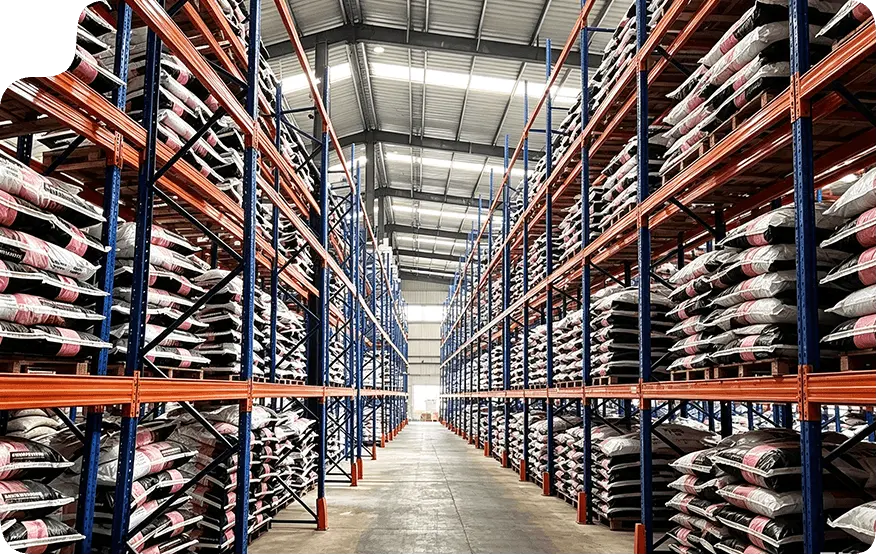
Timber & Precut Housing Yards
Japan's high adoption of timber frame construction (Wagoya and 2x4 systems) demands damage-free storage for long cedar, cypress, and engineered glulam beams. Our cantilever systems feature smooth, rounded arm saddles and timber deck inserts that prevent indentation while maximizing vertical storage inside tight lumber processing facilities in Shizuoka and Gunma.
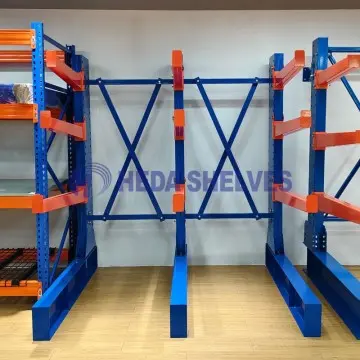
Steel Service Centers & Metal Fabrication
In high-density industrial hubs like Aichi, Osaka, and Kanagawa, precision steel tubing, rebar bundles, and extruded aluminum profiles require orderly tiered storage. Hot-dip galvanized outdoor cantilever racks withstand maritime climate humidity, keeping stock organized for immediate overhead hoist or side-loader picking.
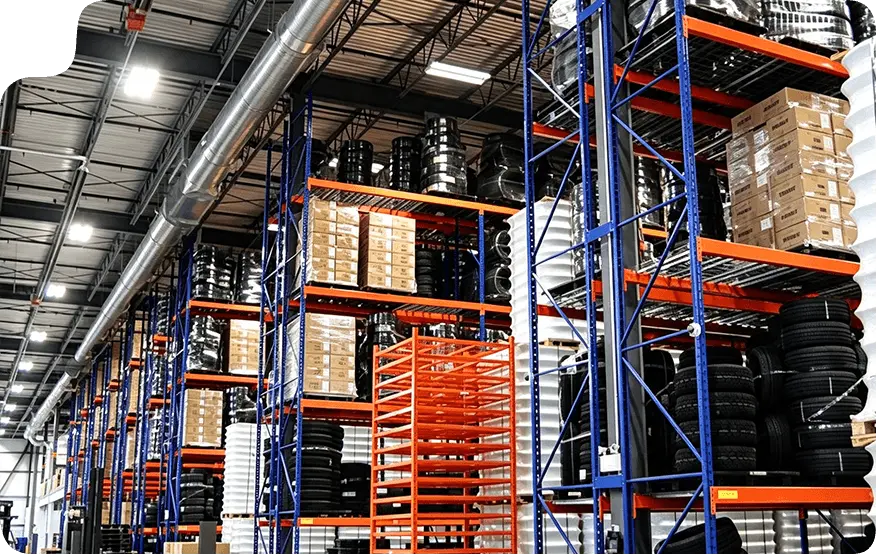
Automotive Tooling & Heavy Parts
Serving tier-1 and tier-2 automotive suppliers surrounding Toyota and Nagoya, our reinforced cantilever racks handle long stamping dies, exhaust assembly manifolds, and oversized body molding packs. Solid wire-mesh decking or solid steel panel inserts can bridge adjacent cantilever arms to accommodate variable-length goods safely.
Emerging Trends in Japan’s Warehouse Infrastructure
Key economic and regulatory transformations shaping material handling procurement across the Japanese archipelago.
The "2024 Problem" & Throughput Velocity
With Japan's revised overtime limits for commercial truck drivers taking effect, loading turnaround times have become critical. Open-faced cantilever storage allows side-loading forklifts and multi-directional trucks to retrieve long loads in under 90 seconds, dramatically cutting driver dwell times at loading docks.
Skyrocketing Bay Area Land Costs
Industrial warehousing rents across Tokyo Bay (Koto-ku, Shinagawa) and Osaka Port continue to appreciate. Storing long products horizontally on floor skids is no longer economically viable. Multi-tier cantilever racking transforms wasted overhead vertical space into productive capacity, doubling or tripling storage density per tsubo.
Adoption of Side-Loaders & AGV Integration
Modern Japanese distribution centers are pairing narrow-aisle cantilever configurations with guided side-loading AGVs and electric reach trucks. Our factory provides laser-aligned, tightly toleranced base guides to ensure robotic vehicles navigate cantilever aisles safely without manual intervention.
Frequently Asked Questions by Japanese Racking Buyers
Direct technical and logistical answers regarding importing warehouse racks from our manufacturing plant to Japan.
Q1: How does HEDA Shelves ensure seismic compliance for Japanese installations?
Every engineering layout destined for Japan undergoes static and dynamic structural modeling. We calculate moment-resisting base joints, anchoring tensile loads, and inter-story drift values based on the project's specific prefecture and local soil condition. We provide full structural calculation sheets and 3D CAD drawings for review by Japanese building inspectors or GC engineering teams.
Q2: Can your cantilever systems be integrated into outdoor stockyards exposed to coastal salt air?
Yes. For outdoor installations near Tokyo Bay, Nagoya Port, or Fukuoka, we offer full Hot-Dip Galvanization (HDG) in accordance with ISO 1461 / JIS H8641 standards. The zinc coating thickness exceeds 65-85μm, preventing rust formation from salt spray, torrential rain, and extreme seasonal humidity for over 20 years.
Q3: What is the typical production and ocean shipping lead time to Japanese ports?
Standard fabrication takes 15 to 25 days depending on tonnage. Ocean freight from Guangzhou/Shenzhen to major Japanese ports (Tokyo, Yokohama, Nagoya, Osaka, Kobe) requires only 4 to 7 days transit. We provide container packing plans that optimize space in 40HQ containers, complete with bilingual shipping documentation for customs clearance.
Q4: How are installation and leveling handled on uneven concrete slabs?
Our heavy cantilever base assemblies feature precision laser-cut shimming slots and high-strength galvanized leveling shims (2mm to 10mm). Every order ships with numbered components, comprehensive CAD erection blueprints, and step-by-step video manuals. On larger projects, our bilingual project engineers offer real-time remote supervision to assist local Japanese assembly crews.
Q5: Can you manufacture custom arm inclinations to prevent round pipes from rolling off?
Yes. Cantilever arms can be manufactured with a built-in upward pitch (typically 2° to 4°) and equipped with socketed end-stop drop pins (fixed, removable, or adjustable heights). We also produce continuous pipe saddles, rubber-cushioned arm caps, and roll-stop cradles to prevent delicate copper or stainless steel pipes from surface marring.
Q6: What mill certificates and quality management credentials are supplied?
Guangzhou Heda Shelves Co., Ltd. is certified under ISO 9001:2015 (Certificate No. 18624Q00169R0M) and holds CE certification (No. 2435-CPR-8605159). With every export shipment, we supply Mill Test Certificates (MTC) certifying the chemical composition, yield strength, and elongation properties of the raw steel coil and structural beams.
Plan Your Warehouse Storage Layout with HEDA Engineers
Send us your building dimensions, clear ceiling heights, and load profiles. Our engineering team will supply a full 2D CAD floor plan, 3D structural model, and container load optimization calculation within 24 hours.
Get Catalog