Precision-Engineered Heavy Duty Storage Solutions
Direct sourcing from a 30,000 m² smart manufacturing plant. Designed to exceed SANS structural building codes and ISO 9001:2015 engineering standards.
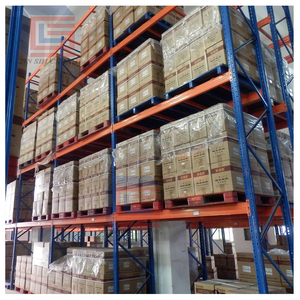
Industrial Heavy Duty Steel Pallet Rack Warehouse Shelving System
Technical Specs →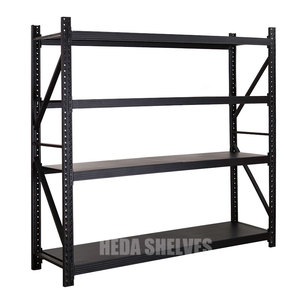
Customizable Black Medium Duty Steel Storage Racks
Technical Specs →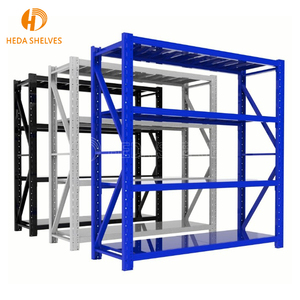
Wholesale Multi-Layer Thickened Industrial Steel Shelves
Technical Specs →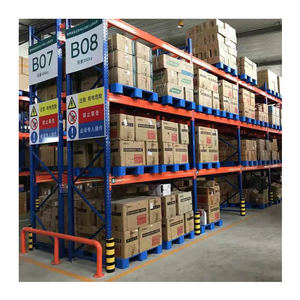
Heavy Duty Selective Pallet Rack (Up to 5-Ton Capacity)
Technical Specs →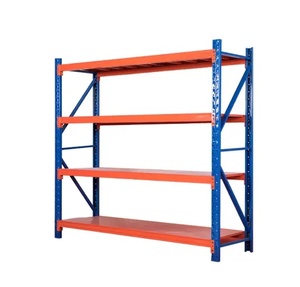
Boltless Corrosion-Resistant 4-Tier Industrial Shelving
Technical Specs →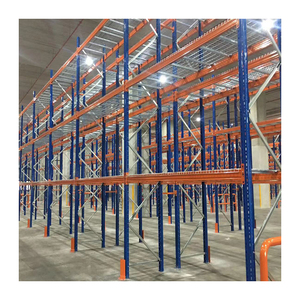
Warehouse Selective Pallet Racking & Multi-Tier Systems
Technical Specs →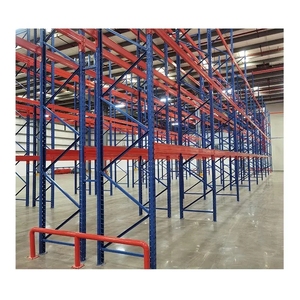
High-Density Heavy Duty Warehouse Pallet Racks
Technical Specs →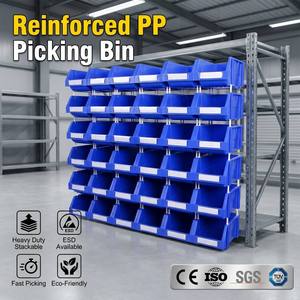
INORDER Parts Picking & Heavy-Duty Bin Sorting Systems
Technical Specs →Engineered for South Africa’s Industrial Nodes
From deep-sea marine corridors to heavy inland mining distribution, discover how our shelving topologies adapt to distinct provincial economic drivers.
Gauteng Mega Inland Hubs (City Deep, Midrand)
In the high-velocity logistics belts connecting Johannesburg and Pretoria, land optimization is imperative. Operators rely on our Narrow Aisle (VNA) and Double-Deep Selective Pallet Racks to maximize vertical headroom up to 14 meters.
These cold-rolled Q235B steel structures support intense 24/7 pallet transit cycles for fast-moving consumer goods (FMCG) and cross-border distribution toward the SADC trade block.
Durban Port & Coastal Corrosive Zones
Operating near Africa's busiest maritime container terminal requires specialized surface defense. Warehousing near Durban's South Basin faces persistent marine salinity and atmospheric humidity that accelerates ferric corrosion.
We deploy our 10-Stage Pickling & Phosphating Pretreatment coupled with hot-dip galvanized or high-thickness electrostatic epoxy powder coatings to ensure multi-decade structural integrity without peeling or oxidative beam decay.
Cape Town Cold Chain & Viticulture
Western Cape's agro-processing, fruit exporting, and wine industries require rigid temperature compliance. Every cubic meter of refrigerated atmosphere incurs heavy energy expenses.
Our automated Radio Shuttle Racking and Drive-In Cold Storage Systems deliver dense volumetric packing, operating smoothly down to -30°C without lubrication freezing or structural embrittlement, protecting inventory during transit windows.
Mining Consumables & Heavy Engineering (Polokwane, Rustenburg)
Storing heavy drills, mining core samples, heavy casting molds, and raw steel calls for high load ratings. Standard retail-grade shelving buckles under these dynamic point-loads.
Our heavy-duty Industrial Cantilever and 5-Ton Selective Racks provide reinforced vertical I-beam columns and heavy roll-formed box beams, offering point-load stability for irregular and high-density industrial cargo.
Automotive Assembly & Spares (Gqeberha, East London)
Eastern Cape's automotive assembly corridors require just-in-time (JIT) parts picking and inventory segregation. Thousands of distinct auto components must remain accessible to picking teams.
We supply Multi-Tier Rack Supported Mezzanines coupled with INORDER modular bins, transforming clear vertical height into multi-floor picking systems without breaking ground on facility extensions.
South African Warehousing: Strategic Technological Evolution
Emerging structural trends dictating supply chain efficiency, capital expenditures, and resilience across the African continent.
Eskom Load Curtailment & Mechanical Resilience
Unstable national power grids present severe logistical disruption risks for automated AS/RS facilities. Unplanned downtime freezes warehouse operations if systems rely completely on powered conveyors.
South African engineers are prioritizing Gravity Pallet Flow and Mechanical Push-Back Systems. These systems operate via gravity kinematics, functioning through outages without diesel generator dependency.
AfCFTA Regional Freight Corridor Optimization
With the African Continental Free Trade Area (AfCFTA) advancing, South Africa serves as the primary distribution springboard into Botswana, Zimbabwe, Zambia, and Mozambique.
Logistics operators are converting traditional flat floor warehouses into High-Density Multi-Tier Distribution Hubs. This minimizes container de-stuffing turnarounds and accelerates cross-docking speeds across borders.
Surging Industrial Land Costs in Urban Gauteng
Industrial ground rents across Linbro Park, Waterfall City, and Pomona continue to appreciate. Expanding building footprint outwards is frequently cost-prohibitive for enterprise logistics providers.
The solution is vertical airspace capitalization via Free-Standing Structural Steel Mezzanines. Warehouses double their effective square meterage within existing footprints, minimizing leasing overheads.
Guangzhou Heda Shelves: Turnkey Industrial Manufacturing
Why procurement managers, supply chain directors, and structural consultants partner directly with our specialized production facilities.
End-to-End Vertical Manufacturing (Coil to Container)
Unlike trading intermediaries or local distributors assembling fragmented parts, HEDA controls 100% of fabrication within our 30,000 m² factory.
Our infrastructure includes automatic CNC cold-roll lines, multi-station column punch presses, automated robotic beam welding cells, and continuous powder-coating bake lines, securing tight dimensional tolerances.
Rigorous Engineering & Verified International Standards
We design according to SEMA, RMI, and FEM structural racking calculations. Structural designs carry documented certification:
CE Certification (2435-CPR-8605159) and ISO 9001:2015 (18624Q00169R0M) valid through June 2027, backed by strict raw steel tension assays and deflection analysis for verified load compliance.
Container-Optimized Logistics (FOB / CIF Durban & Cape Town)
Freight inefficiencies inflate total landed costs. Our logistics engineering team uses spatial nesting simulations for every order.
We maximize 40ft HQ container cubic utilization, bundle knock-down structural members to protect surface coatings, and supply pre-drilled members for straightforward assembly by local technical teams.
Frequently Asked Questions by South African Buyers
Direct technical and commercial answers addressing common engineering, logistics, and site challenges across South Africa.
1. How do your racking systems comply with South African National Standards (SANS)?
Our storage installations follow SANS 10160 structural guidelines and FEM 10.2.02 European racking norms. We select high-tensile cold-rolled steel coils, running structural analysis on upright frame loading, seismic tolerances, and beam deflection ratios (1/200th span under full load conditions). Full structural calculations and plate certifications are provided with every industrial order.
2. What is the typical freight transit lead time to Durban or Cape Town ports?
Standard fabrication runs take 15 to 22 business days based on customization scope and steel thickness. Direct maritime transit from our facilities to the Port of Durban averages 22 to 28 days, and approximately 30 days to Cape Town. We accommodate FOB Chinese loading ports or full CIF and CFR container delivery, coordinating with your preferred customs agent.
3. Can our local technical teams install HEDA racking safely?
Yes. Every shipment includes step-by-step CAD installation layouts, complete component schedules, numbered steel markings, and clear bolt torque specifications. For standard selective racking or boltless shelving, local riggers complete installations smoothly with our remote technical video support. For large-scale mezzanines, we can arrange dedicated on-site installation supervisors.
4. How do you protect structural components against coastal corrosion along the South African coastline?
For operations in Durban, East London, Gqeberha, or Cape Town, we utilize our continuous 10-stage immersion pickling, surface degreasing, and zinc phosphating pretreatment line. This establishes an anti-corrosion barrier prior to curing our industrial electrostatic epoxy powder at 200°C. For extreme exposure or washdown cold stores, hot-dip galvanizing is applied.
5. What details are needed to generate an engineered 3D layout and quote?
To produce an optimized CAD proposal, our engineering team requires: facility dimensions (length, width, apex clear height), column positions, floor slab concrete specifications, pallet parameters (length, width, height, maximum gross weight), forklift turning radius and maximum mast reach, along with target SKU throughput requirements.
Transform Your Warehouse Volumetric Efficiency Today
Connect with our technical design team for a complimentary structural warehouse audit, CAD floorplan, and precise load calculation tailored to your facility.
Contact Us