Featured Heavy-Duty Warehouse Storage Series
Factory-direct industrial pallet rack configurations engineered according to CE Directive 2001/95/EC, EN 15512 static calculation standards, and rigorous ISO 9001:2015 quality control benchmarks.
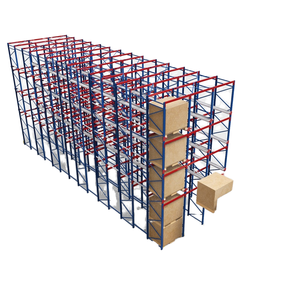
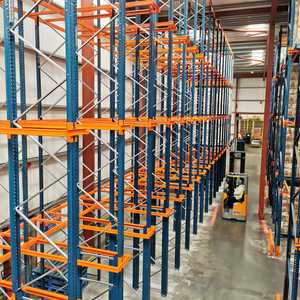
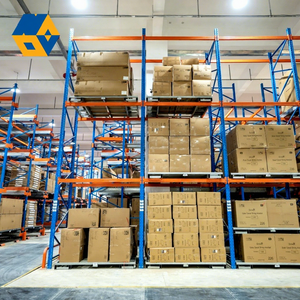
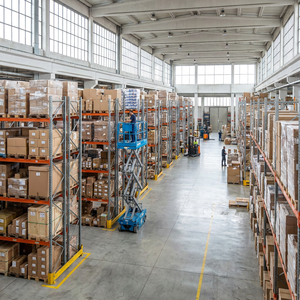
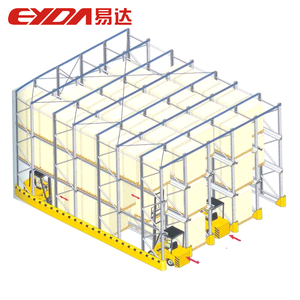
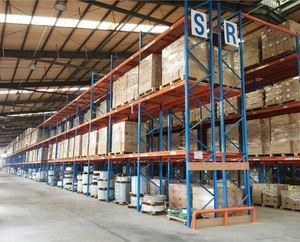
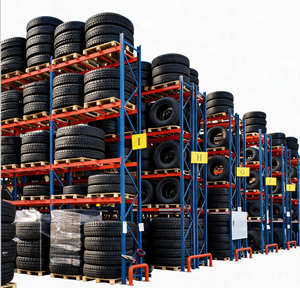
Structural Physics and Volumetric Density of Drive-In Racking
In modern industrial intralogistics, commercial warehouse floor space represents one of the most capital-intensive ongoing operating costs. Traditional selective pallet racking arrangements allocate between 60% and 68% of the floor footprint purely to forklift access aisles, leaving only 32% to 40% of the cubic volume dedicated to revenue-generating storage. CE Certified Drive-In Pallet Racking eliminates intermediate operating aisles by allowing counterbalanced or reach trucks to drive directly into multi-deep structural lanes, driving storage density upward by up to 75% to 80% compared to standard selective layouts.
Unlike standard cross-beam selective systems where pallet weights are distributed along dual longitudinal load beams supported at both ends by vertical upright frames, Drive-In pallet systems operate on cantilevered support principles. Pallets rest on continuous structural steel guide rails (formed in heavy-gauge asymmetric Z-profiles or cold-rolled angles) attached to the upright columns via heavy formed brackets. Because forklifts must enter the lane interior, transverse structural beam ties are removed at the lower and intermediate loading tiers. Consequently, structural stability requires rigid top tie beams, horizontal cross-bracing trusses, and vertical spine portal frames calculated in compliance with European Standard EN 15512 and FEM 10.2.07 specifications.
The system is predominantly utilized under the FILO (First-In, Last-Out) inventory methodology, where loading and unloading occur from the same entry face. Alternatively, when configured as a continuous open corridor with separate entry and exit access faces, it functions as a Drive-Through Rack under FIFO (First-In, First-Out) mechanics, making it suitable for high-volume, low-SKU inventory with synchronized expiration batches, such as cold-chain perishable groceries, beverage bottling, bulk agricultural processing, and specialized chemical distribution.
Comparative Specification Matrix: Industrial High-Density Systems
Comprehensive engineering comparison illustrating volumetric space efficiency, equipment clearance tolerances, and CAPEX metrics across mainstream pallet storage methodologies.
| Storage Methodology | Space Utilization | Stock Rotation | Pallet Depth Limit | Forklift Compatibility | Relative CAPEX / Position |
|---|---|---|---|---|---|
| Selective Pallet Racking | 35% – 42% | 100% Direct (FIFO) | Single (1-Deep) | Counterbalance, Reach, VNA | Baseline (1.0x) |
| Drive-In Racking System | 75% – 82% | FILO (Last-In, First-Out) | 4 to 12 Pallets Deep | Reach Truck, Counterbalance | Cost-Effective (1.25x – 1.4x) |
| Drive-Through Pallet Rack | 70% – 78% | Strict FIFO | 4 to 10 Pallets Deep | Dual Access Counterbalance | Moderate (1.35x – 1.5x) |
| Push-Back Gravity Cart Rack | 65% – 72% | FILO | 2 to 6 Pallets Deep | Standard Counterbalance | Higher (2.1x – 2.6x) |
| Radio Shuttle Automation | 80% – 88% | FIFO / FILO Flexible | Up to 40 Pallets Deep | Shuttle Carrier + Forklift | Capital Intensive (2.8x – 3.8x) |
Future Procurement Trends in Industrial Pallet Racking (2025–2030)
How global supply chain volatility, decarbonization mandates, and hybrid automation are reshaping large-scale warehouse storage procurement.
Stringent CE / EN 15512 Audit Enforcements
Global warehouse insurers and institutional real-estate owners (REITs) increasingly require factory-stamped CE markings (CE 2435-CPR-8605159) with certified static calculations. Procurement officers are bypassing uncertified fabricators to eliminate structural liability risks and regulatory non-compliance during tenant lease handovers.
Total Cost of Ownership (TCO) Prioritization
Buyers are looking past initial FOB purchase rates to evaluate freight volume optimization, localized assembly times, and corrosion maintenance costs. Knock-down modular components engineered to pack tightly into 40ft High Cube containers yield freight savings of up to $22 per pallet position on transoceanic routes.
Cold Chain & Energy Densification
With industrial refrigeration energy tariffs surging internationally, maximizing frozen storage density is paramount. Drive-In racking stores more pallets per cubic meter than any non-automated alternative, directly reducing electricity consumption per refrigerated pallet by 30% to 45%.
Engineering and Design Trends in Drive-In Systems
Next-generation materials science, collision mitigation physics, and automation-ready modular hybrid designs.
High-Yield Cold-Formed Steel Uprights
Utilizing high-tensile hot-rolled steel coils processed through cold-roll forming lines creates upright omega-profiles with 10 to 14 multi-bend structural folds. This geometry enhances the radius of gyration, increasing resistance to torsional twisting and lateral buckling without unnecessary deadweight.
Integrated Floor Guide Rails & Entry Bumpers
Because lift trucks operate inside narrow clearance envelopes (typically 75mm to 100mm between pallet and upright), modern installations incorporate structural steel floor guide tracks (C-channel or angle profiles) and wrap-around entry column protectors anchored with Hilti/Fischer M12 expansion studs.
Pretreatment & Anti-Corrosion Finishing
Industrial racking exposed to tropical coastal ambient humidity or sub-zero condensation in blast freezers requires pre-treatment. Components undergo automated acid pickling and zinc phosphating prior to 80–120μm electrostatic epoxy-polyester powder thermosetting, resisting salt-spray and peeling.
End-to-End Manufacturing Capabilities & Quality Control
A look inside Guangzhou Heda Shelves Co., Ltd.'s 30,000 square meter integrated manufacturing facility.
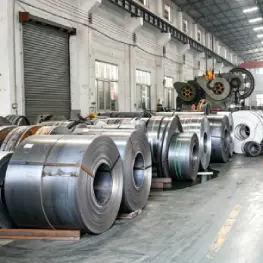
01. Prime Raw Materials
Direct supply from Tier-1 steel mills with mill test certificates (MTC) verifying chemical yield strength and elongation properties.
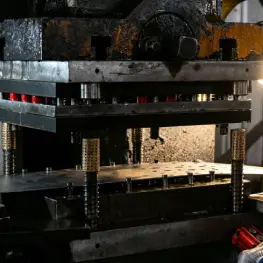
02. Automated CNC Punching
High-precision progressive die punching lines producing 50mm and 75mm pitch teardrop, diamond, and butterfly slot patterns within ±0.1mm tolerance.
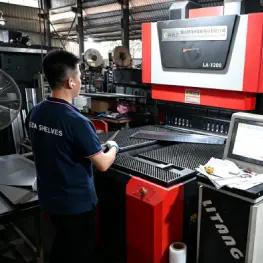
03. Precision Cold-Roll Forming
Multi-stand continuous roll-forming lines shaping high-rigidity upright omega sections and custom continuous drive-in support pallet rails.
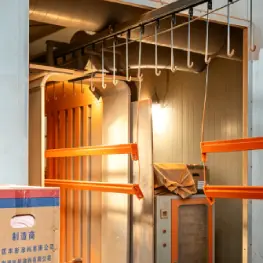
04. Electrostatic Powder Coating
Automatic 9-stage pickling, phosphating, and deionized water rinsing followed by electrostatic powder deposition cured at 200°C for wear durability.
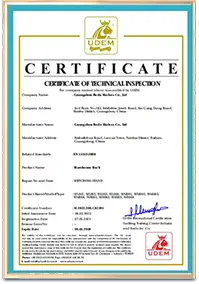
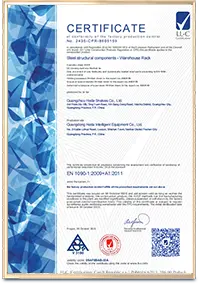 CE CPR Certified
No. 2435-CPR-8605159
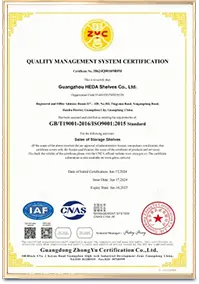
 ISO 9001:2015
No. 18624Q00169R0M
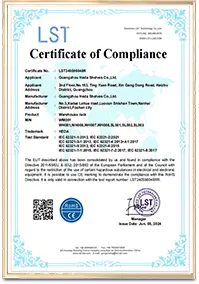 RoHS Compliant
Eco-Friendly Heavy Metals Control
 Factory Audited
SGS & TÜV Rheinland Verified
Frequently Asked Questions by Industrial Warehouse Buyers
Detailed technical, shipping, and engineering clarifications prepared by senior structural racking specialists.
What engineering parameters are required to calculate a safe Drive-In layout?
1. Architectural Building Data: Length, width, clear height under trusses/sprinklers, slab thickness and concrete compressive strength (typically 20–30 MPa), and locations of building columns, expansion joints, and overhead doors.
2. Pallet & Unit Load Profile: Pallet dimension (W × D × H), overall height including goods, pallet overhang, total mass per unit load (kg), and pallet bottom configuration (two-way or four-way entry, perimeter base, or skid).
3. Material Handling Equipment (MHE): Forklift model, overall mast height collapsed and extended, maximum lift reach, chassis overall width, and turning radius (Ast).
How does Drive-In racking maintain seismic and lateral stability without standard horizontal beams?
• Top Structural Grid: Heavy-gauge boxed beams interconnect the frame tops along both the cross-aisle and down-aisle directions.
• Horizontal Plan Bracing: Diagonal tension-rod or angle bracing trusses fixed atop the structure transmit lateral wind and seismic sway forces to the floor slab.
• Back Spine Portal Towers: In single-entry FILO drive-in racks, the back frame is rigidly triangulated with vertical cross-braces, anchoring the entire lane against longitudinal drift.
What are the primary differences between Drive-In and Drive-Through pallet racks?
Drive-Through Racking provides open access from both ends of the storage lane, enabling a First-In, First-Out (FIFO) material flow. Because both ends are open for forklift entry and exit, the system cannot utilize back cross-bracing. Instead, lateral stability must be achieved through reinforced overhead portal frames and heavy ground-anchored column footings.
How are components protected against rust and corrosion during ocean transport and in humid warehouses?
• Degreasing, Pickling & Phosphating: Strips mill scale, oils, and surface oxidation, creating a microscopic crystalline zinc-phosphate profile that chemically bonds to subsequent coats.
• Electrostatic Powder Coating: Application of heavy-duty thermosetting polyester-epoxy powder cured at 180°C–200°C, producing an 80–120 micron non-porous shell resistant to salt-spray, abrasion, and chipping.
• Hot-Dip Galvanizing (Optional): For blast-freezers, cold storage with high condensation, or outdoor staging areas, components can be specified with EN ISO 1461 hot-dip galvanizing with 60–85 micron zinc layer thickness.
How does Guangzhou Heda Shelves optimize container shipping to minimize landed freight costs?
• Uprights are nested together and banded with protective wooden dunnage blocks and heavy steel strapping to prevent in-transit scratching.
• Support rails, pallet arms, and baseplates are sorted, shrink-wrapped, and strapped to heavy-duty skids for straightforward unloading via standard yard forklifts.
• Component packing density achieves up to 24–26 metric tons per 40HQ container, lowering oceanic freight costs per pallet position.