High-Efficiency Warehouse Racking & Dynamic Systems
Explore our industrial-grade storage configurations engineered to maximize volumetric utilization. From standard selective frames to heavy-duty live dynamic beds, all components comply with international CE testing protocols.
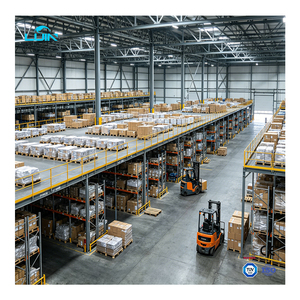
Stacking Pallet Rack Heavy Duty Warehouse Storage Rack Industrial Metal Racking
- Payload: 1,000–3,000 kg/tier
- Material: Q235B Cold Rolled Steel
- Finish: Electrostatic Powder Coat
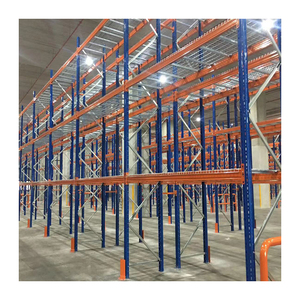
Heavy Duty Industrial Storage Warehouse Rack Selective Pallet Racking Shelves
- Access: 100% Direct Selective
- Upright Pitch: 50mm / 75mm Adjustable
- Standard: CE / ISO 9001:2015
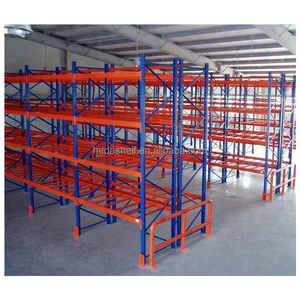
Wide Aisle Pallet Racking Heavy Duty Metal Rack Double Deep Clothes Racking System for Warehouse
- Density: +35% vs Wide Aisle
- Beam Section: Box / Step Beam 80–160mm
- Application: Garments & FMCG Logistics
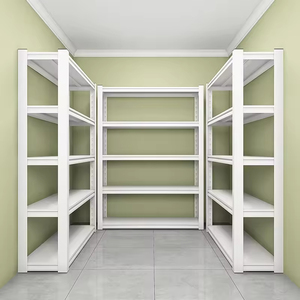
2000*500*2000mm Warehouse Racking Lightweight 100kg/layer Load Metal Assembled Storage Racking
- Load Rating: 100–200 kg/tier
- Assembly: Boltless Rivet Lock
- Dimensions: 2000 x 500 x 2000mm
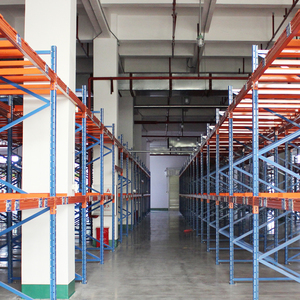
Heavy Duty Shelf Warehouse Stacking Storage Equipment Steel Warehouse Rack Storage Selective Pallet Rack
- Safety Factor: 1.5 (FEM Standard)
- Coating: Anti-Corrosion Phosphating
- Integration: Wire Decking / Pallet Support
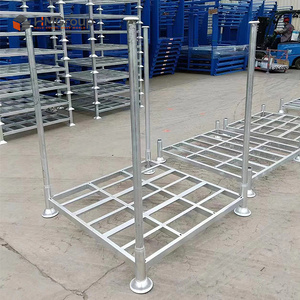
Heavy Duty Industrial Galvanized Metal Steel Storage Stacking Pipe Pallet Stillages Racks
- Protection: Hot-Dip Galvanized Zinc
- Design: Nestable / Stackable Posts
- Target Stock: Pipes, Profiles & Tubes
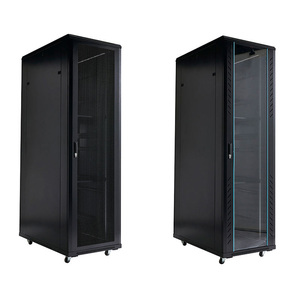
19 Inch 42U Floor-Standing Network Server Cabinet, 600x600mm/600x800mm/800x1000mm SPCC Steel Rack
- Capacity: 42U Standard Rack Units
- Structure: SPCC Cold Rolled Steel
- Protection: IP20 Dust / Vented Mesh
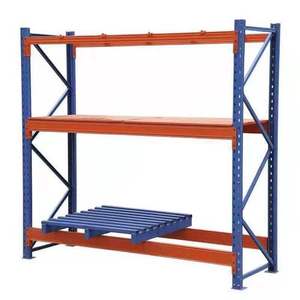
Adjustable Pallet Rack Warehouse Storage Heavy Duty Shelving Pallets Racking for Warehouse Storage
- Modularity: Rapid Clip-in Assembly
- Customization: Multi-Depth Beam Spans
- Certification: CE 2435-CPR-8605159
Structural Mechanics, Kinetic Dissipation & CE Compliance in Dynamic Roller Racks
A rigorous B2B technical exploration into why certified gravity roller flow systems outperform static configurations, reducing labor handling travel distances by up to 65% while providing flawless First-In, First-Out (FIFO) stock turnover.
The Physics of Controlled Gravity Flow: Declination, Pitch & Centrifugal Retarders
Dynamic roller racks (also categorized as carton flow beds, gravity roller lanes, and live pallet storage) rely fundamentally on gravity as an unpowered kinetic driver. The operational stability of these systems depends on an exacting calculation: establishing an optimal slope angle—typically between 1.5° and 3.5° (equivalent to a 2.5% to 6% declination)—calibrated directly against pallet or tote bottom rigidity, roller diameter, bearing friction coefficients, and unit mass.
Under CE Directive standards (such as EN 15512 for structural steel racking and EN 15620 for operational tolerances), unchecked gravitational acceleration presents severe impact hazards. To mitigate kinetic inertia in deep-lane pallet flow systems (often spanning 10 to 30 pallets in depth), our engineering integrates centrifugal brake rollers spaced at calculated intervals. These mechanical retarding rollers engage internally geared flyweights that produce dynamic rotational friction proportional to passing velocity, governing cargo speed to a safe terminal velocity below 0.3 meters per second.
CE Mark Verification & Certification Protocol
In international engineering procurement, a CE certification is not an ornamental label; it represents rigorous third-party accredited proof that the structural design resists catastrophic buckling under maximum payload with dynamic live shock-load multipliers.
- CE Certification Number: 2435-CPR-8605159 (Construction Products Regulation)
- Quality System Standard: ISO 9001:2015 Cert. No. 18624Q00169R0M
- Finite Element Analysis (FEA): ANSYS Stress and Buckling Sim Modeled
- Material Composition: Certified Tensile Yield Grade Q235B / Q355B Steel
Heavy-Gauge Formed Roller Tracks
Fabricated from galvanized or cold-rolled sheet steel formed into rigid C-profiles with CNC-punched hex-hole matrices on a 25mm to 33mm pitch. This allows granular repositioning of polymer or electro-galvanized steel rollers to accommodate changing carton footprints without tools.
Dynamic Pallet Separators
Mechanical pallet separators situated at the picking front absorb upstream line pressure. By disengaging the lead pallet from succeeding pallets, warehouse operators safely extract loads with forklifts without drag resistance, preventing premature hydraulic motor wear.
Ergonomic Tilting Presentation Trays
For piece picking and split-case operations, roller tracks feed into adjustable drop-down tilt shelves (angles from 5° to 20°). This presents the open product directly toward the picker’s natural biomechanical zone, reducing lumbar musculoskeletal fatigue and accelerating order selection.
Industrial Roller Rack Engineering Specifications
Compare operational tolerances, component materials, braking integrations, and permissible load envelopes across our core dynamic storage configurations.
| System Classification | Target Payload / Level | Roller Track Substrate | Declination Slope | Kinetic Speed Governor | Stock Rotation Logic |
|---|---|---|---|---|---|
| Light Carton Flow (Split-Case) | 50 – 150 kg / lane | High-Impact Polymer Wheels (PP) | 2.0° – 3.5° | Inherent Rolling Friction | Strict FIFO |
| Medium-Duty Box Flow Racks | 150 – 500 kg / lane | Galvanized Steel Axle Rollers (Ø28mm) | 1.8° – 2.8° | End-Stop Damping Springs | Strict FIFO |
| Heavy Pallet Flow (Full Pallets) | 500 – 1,800 kg / pallet | Precision Steel Rollers (Ø50–Ø60mm) | 1.5° – 2.2° | Centrifugal Brake Rollers | FIFO / Deep Lane |
| Push-Back Roller Beds | 500 – 1,500 kg / pallet | Twin-Flanged Steel Track Rollers | 0.8° – 1.2° | Controlled Gravity Return | LIFO High Density |
| Cold-Storage Dynamic Flow | 300 – 1,200 kg / pallet | Low-Temp Lubricated Bearings (-30°C) | 2.2° – 3.0° | Synthetic Low-Viscosity Retarders | Cold Chain FIFO |
Guangzhou Heda Shelves Co., Ltd.: Integrated Industrial Dominance
Operating continuously since 2001, Guangzhou Heda Shelves Co., Ltd. controls over 30,000 square meters of specialized production footprint in Guangzhou. Controlling every manufacturing phase internally guarantees dimensional fidelity and direct OEM/ODM supply chain savings.
30,000m² Plant Infrastructure
Housing continuous CNC roll-forming lines, 630-ton automated punching stations, and dedicated structural welding cells capable of outputting 30,000 metric tons monthly.
Full OEM & ODM Engineering
Custom beam profiles, bespoke roller brackets, customized color matching (RAL gamut), and specialized column pitch configurations customized to precise site conditions.
Rigorous Chemical Pretreatment
Continuous automated 8-stage pickling and phosphating pre-treatment guarantees supreme surface bonding before electrostatic powder coating, eliminating corrosion risks.
Container-Optimized Logistics
Engineered nesting bundles, structural packaging protection, and modular knockdown assembly allow 98% space utilization in 40ft High Cube containers, minimizing freight.
Inside Our 10-Stage Precision Production Architecture
Every structural roller rack component passes through our integrated QA process before global export packaging.
Raw Material QA
Certified prime hot/cold coiled steel inspection (Q235B/Q355B).
Precision Slitting
High-speed laser cutting & CNC slitting to sub-millimeter tolerances.
CNC Hole Punching
Automated synchronized continuous punching for 50mm/75mm pitches.
Cold Roll Forming
Multi-stand roller forming dies producing structural omega profiles.
Profile Calibration
Optical straightness check and stress-relieving adjustments.
Robotic Welding
Multi-axis automated MIG/TIG welding for beam connector lugs.
Surface Pickling
Acid bath de-scaling and rust elimination dipping sequence.
Phosphating Passivation
Micro-crystalline conversion coating creating anti-rust anchor barrier.
Powder Coating
Electrostatic curing at 200°C producing durable epoxy-polyester shell.
Load Testing & Pack
Batch tensile proof testing, pallet banding, and container loading.
Future Procurement Trends in Industrial Roller Racks (2026–2030)
Logistics directors, EPC contractors, and procurement managers are adjusting their capital equipment criteria. Discover the top structural trends shaping dynamic material handling investments.
1. Zero-Energy Passive Logistics vs. Escalating Grid Tariffs
With rising commercial electricity costs, automated dynamic roller racks have emerged as the premier zero-power alternative to motor-driven conveyors. Gravity-operated live beds consume zero kilowatt-hours during continuous 24/7 pallet transfer, offering an ROI period often under 14 months while insulating facilities against grid brownouts.
2. Hybrid Interfacing with Autonomous Mobile Robots (AMR/AGV)
The modernization of dynamic flow racks involves pairing them with automated guided vehicles. In modern warehouses, roller rack discharge fronts are fitted with optical pallet stop-sensors and robotic pick-tunnels, allowing AMRs to autonomously clear finished pallets while gravity automatically queues the subsequent SKU.
3. Modular Cassette Retrofitting of Existing Static Racks
Procurement teams are shifting away from complete frame replacements. Instead, capital allocations favor drop-in roller track cassettes that clamp directly onto existing standard step-beams. This transforms dormant selective pallet racks into active dynamic carton flow systems over a single weekend with minimal operational downtime.
Technological Developments Shaping Next-Generation Roller Racks
From advanced metallurgy to composite materials and IoT sensor tracking, roller racking technology is evolving to handle diverse warehouse automation requirements.
Magnetic Eddy-Current Retarder Brakes
Replacing traditional friction-plate centrifugal brakes, contactless eddy-current rollers eliminate internal mechanical friction and fluid leakage. Rare-earth permanent magnets generate braking forces proportional to passing speed, offering maintenance-free durability exceeding 10 years even in freezing environments down to -35°C.
Thermoplastic Polyurethane Noise-Damping Rollers
In high-throughput picking mezzanines, the acoustic resonance of hard plastic or steel wheels rolling under steel drums can exceed 80 decibels. New dual-durometer TPU-jacketed rollers absorb micro-vibrations, reducing operational noise below 58 dB to satisfy strict EU worker safety and ergonomics mandates.
IoT-Enabled Digital Twin Gravity Lanes
Embedded strain-gauge load cells and RFID tracking gates placed on roller tracks provide real-time updates to Warehouse Management Systems (WMS). The system automatically tracks lane depths, identifies jammed cartons, and alerts supervisors when a lane requires restocking.
Frequently Asked Questions on CE Certified Roller Racks
Detailed technical answers addressing engineering verification, safety standards, declination calculations, and international shipping protocols.
What specific testing standards are required for CE Certification of roller racks?
CE Certification under the Construction Products Regulation (CPR 305/2011/EU) verifies compliance with EN 15512 (Steel static storage systems - Adjustable pallet racking systems - Principles for structural design) and EN 15620 (Tolerances, deformations and clearances). Our systems undergo dynamic payload stress tests, structural weld ultrasonic inspections, and column base-plate anchorage shear simulations to ensure maximum safety under full rated loads.
How do you calculate the optimal slope angle for varying pallet weights?
The declination angle is calculated using the coefficient of rolling resistance between the roller surface and the pallet base runners. For typical wooden Euro pallets (800x1200mm) or industrial pallets (1000x1200mm) weighing 500–1000 kg, an inclination of 1.8° to 2.2° is standard. For lightweight plastic totes on carton flow beds, the slope is adjusted to 2.5° to 3.5°. Brake rollers are added to manage speeds when weights exceed 300 kg per position.
How do centrifugal brake rollers function without external electrical wiring?
Centrifugal brake rollers are fully self-powered mechanical units. As a pallet rolls over the brake roller, its linear motion rotates the roller shell. This rotation engages internal planetary gears that spin centrifugal brake shoes outward against an internal housing. The higher the pallet speed, the greater the counteracting resistance applied, capping downhill pallet travel at a controlled velocity of 0.2 to 0.3 m/s.
What protections are applied to prevent corrosion in high-humidity or cold environments?
Components undergo an 8-stage pre-treatment process including chemical pickling and iron phosphating, followed by electrostatic epoxy-polyester powder coating cured at 200°C. For deep-freeze warehouses (-30°C) or coastal environments, components receive hot-dip galvanization with a minimum zinc coating thickness of 60 to 85 microns. This prevents corrosion and flaking during thermal expansion cycles.
What information is required to receive an engineering CAD drawing and 3D layout?
To produce an accurate CAD layout, load calculation, and quote, our engineering team requires: (1) Warehouse clear height and column grid drawings, (2) Pallet dimensions including overhang and bottom runner orientations, (3) Minimum and maximum unit load weights, (4) Operating temperature ranges, and (5) Material handling equipment models with mast lift limits and turning radii.
Can damaged rollers or lanes be replaced without disassembling the racking system?
Yes. Our roller tracks feature quick-release spring-loaded hexagonal steel axles that fit securely into CNC-punched frame side-channels. A single roller or track section can be removed and replaced within minutes by one technician without unbolting structural uprights or removing adjacent upright load beams.
How are roller tracks packaged to avoid transit damage during ocean freight?
Roller tracks are bundled back-to-back with custom protective corrugated layers and wrapped in heavy-gauge stretch film with reinforced steel strapping. Axles and polymer components are protected inside nested structural steel channels. This prevents bending during sea freight and optimizes container volume utilization to reduce landed freight costs.
What structural warranties are provided on HEDA roller rack installations?
We provide a comprehensive 5-year structural warranty on all steel frames, load beams, and upright profiles, along with a 2-year warranty on mechanical components including rollers, bearings, and centrifugal brake systems. All shipments include certified material test reports and CE compliance verification documents.
Request an Engineered Layout & Factory Quote
Submit your warehouse floor plans, product weights, and throughput requirements. Our structural engineering team provides complete 2D/3D CAD layouts, structural load calculations, and competitive factory-direct pricing within 24 hours.