Certified Warehouse Storage & Material Handling Systems
Constructed from certified Q235B/Q355B structural steel, our modular stack racks and material storage equipment undergo strict pickling, phosphating, and powder coating to guarantee load safety under EN 15512 and CE standard compliance.
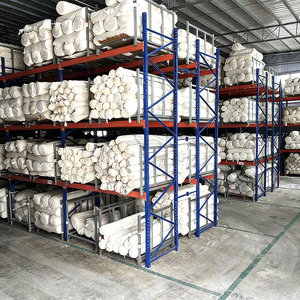
Factory Multi Layer Heavy Duty Warehouse Storage Stack Racks 1000kg Corrosion Protection Steel Wire Mesh Decking
- Load: 1000kg - 1500kg / Tier
- CE & ISO 9001:2015 Approved
- Hot-Dip Zinc or Powder Finish
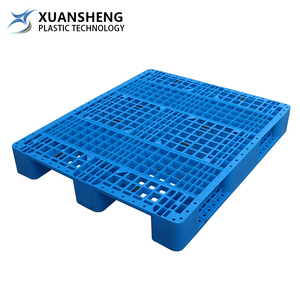
NEXARA High Load Capacity Euro Pallets Single-Sided Grid Automatic ASRS Warehouse Shelving System 4-Way Entry
- 4-Way Forklift & Crane Entry
- Automated Stacker Crane Ready
- Euro Standard Specification
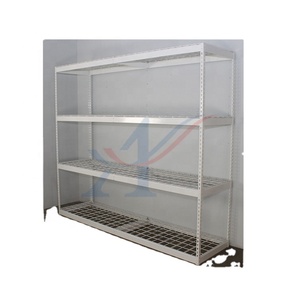
Wire Mesh Shelving & Slotted Angle Rack Metallic Light Duty Display Stand with Powder Coated Finish
- Quick-Assembly Angle Design
- High-Ventilation Wire Decking
- Anti-Abrasion Powder Coating
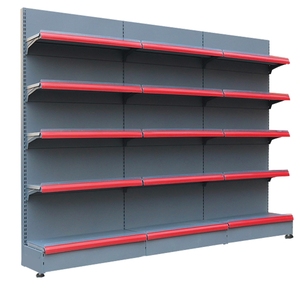
Guichang Estantes Light Heavy Duty Iron Supermarket Shelves Grocery Retail Store Gondola Display Rack
- Reinforced Solid Base Bracket
- Adjustable Pitch Tier Height
- High Impact Powder Shield
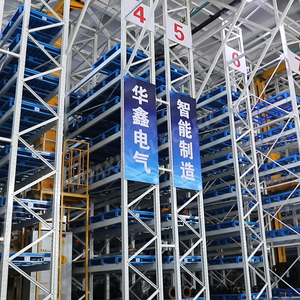
Smart Warehouse Robot Picking Systems Automated Storage Retrieval System Tool Storage System ASRS Rack
- AGV / AMR Guided Trajectory
- High-Density Vertical Stacking
- Real-Time WMS Interfacing
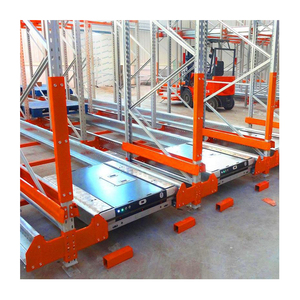
Good Price Heavy Duty Shuttle Racking System Industrial FIFO Pallet Shuttle Racking Storage System
- Deep-Lane Radio Shuttle Cart
- Optimal Cold Store Operations
- Strict FIFO / LIFO Rotation
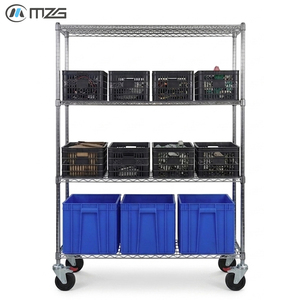
MZG ODM Factory Industrial Warehouse Parts Metal Heavy Duty Storage Organizer Wire Shelving Systems with Wheel
- Industrial Polyurethane Wheels
- Workshop Floor Agility
- Anti-Corrosion Chrome / Powder
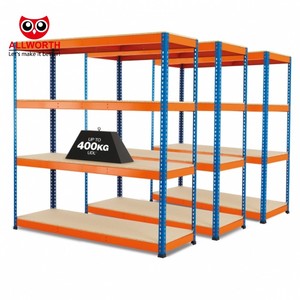
Heavy Duty Efficiency Flexibility Large Load Capacity Pallet Style Metal Rack for Industrial Warehouses
- Up to 4,000kg Beam Capacity
- Certified Heavy Cold-Formed Steel
- High-Clearance Forklift Fit
Structural Physics, Dynamic Deflection & CE Certification Standards of Industrial Stack Racks
In modern industrial logistics and high-throughput distribution environments, selecting the optimal material handling structure requires an intricate balance between structural mechanical integrity, vertical space utilization, capital expenditure elasticity, and occupational safety. Certified under European Standard CE 2435-CPR-8605159 and manufactured strictly following ISO 9001:2015 quality management parameters, heavy-duty industrial stack racks (often termed modular post pallets or nesting racks) serve as a dynamic storage alternative to permanently anchored selective pallet racking.
Unlike stationary rack frames anchored into the warehouse slab with mechanical expansion bolts or chemical anchors, stack racks rely on a self-supporting, interlocking vertical column mechanism. Each tier transfers vertical dead loads and dynamic product forces downward through cold-formed tubular uprights into reinforced steel nesting target cups. This fundamental design offers critical operational flexibility: it enables facilities to transition from floor block-stacking to vertical density up to 4 to 6 tiers high, eliminating the risk of crushed packaging and collapsed lower product tiers while eliminating the irreversible floor footprint of permanent structural systems.
Critical Structural Standard Compliance: EN 15512 & CE Conformity
Under European standard EN 15512 (Steel static storage systems - Adjustable pallet racking systems - Principles for structural design) and CE machinery/construction product guidelines, stack racks manufactured by Guangzhou Heda Shelves Co., Ltd. are engineered with a minimum static safety factor of 1.50 and a dynamic impact factor of 1.25. The structural deflection under rated Uniformly Distributed Load (UDL) is constrained within strict tolerances not exceeding L/200, preventing dangerous plastic deformation during high-tier vertical stacking.From a metallurgical perspective, structural failure in stack racking systems predominantly originates from micro-cracking at base weldments, column buckling under uncalculated eccentric loads, or target cup dislodgement during forklift maneuvering. To counter these failure modes, HEDA Shelves utilizes premium-grade Q235B and Q355B low-carbon structural steel coils. Upright post profiles undergo computerized cold roll-forming with continuous high-frequency induction welding, ensuring unyielding dimensional accuracy (tolerance within ±0.5mm across vertical axes). The nesting target cups are drop-forged and robotically fillet-welded to the rectangular steel base framing, providing full shear resistance against oblique impacts common during forklift positioning.
FEA Load Stress Simulation
Every post pallet chassis is analyzed via 3D Finite Element Analysis (FEA) software. Stress concentration maps simulate worst-case asymmetric loading, ensuring maximum Von Mises stress remains safely below steel yield strength (σy = 235-355 MPa).
Interlocking Cup Geometry
Tapered conical target sockets engineered with self-centering geometry provide positive mechanical interlock. This design absorbs secondary lateral horizontal forces generated by seismic oscillations or warehouse air currents at 4-high elevations.
Demountable Post Utility
Removable structural pipe uprights allow warehouse operators to collapse racks to 20% of their deployed volume when unladen. This dramatically optimizes dead freight space during return reverse logistics and seasonal storage contraction.
Stack Racks vs. Traditional Selective Racking vs. Block Stacking
A direct engineering and economic evaluation across operational safety, space footprint utilization, and total cost of warehouse ownership (TCO).
| Evaluation Parameter | CE Certified Modular Stack Racks | Stationary Selective Pallet Racks | Direct Floor Block Stacking |
|---|---|---|---|
| Civil Foundation / Floor Bolting | Zero bolting required; preserves warehouse slab vapor barrier. | Mandatory anchor bolts drilled into concrete floor slab. | None; products sit directly on the floor slab. |
| Layout Reconfigurability | 100% dynamic; reconfigure or relocate via forklift in minutes. | Rigid; requires unbolting, engineering recertification, and downtime. | Dynamic, but limited by load-bearing packaging capacity. |
| Vertical Density & Tiers | Up to 4-6 tiers stacked safely with zero lower product crush. | Multi-tier (up to 12m+), limited only by forklift reach. | Strictly limited to 1-2 tiers; high risk of carton collapse. |
| Aisle Width Requirements | Minimal aisle requirement; can be nested block-style. | Requires dedicated 3.0m - 3.8m forklift operational aisles. | Variable, but severely wastes overhead vertical cube space. |
| Demountable Return Ratio | Up to 5:1 condensed volume when nested or disassembled. | Non-demountable; permanent footprint even when empty. | Not applicable; zero hardware utilized. |
| Irregular & Cylindrical Goods | Exceptional; custom side retainers handle coils, pipes, tires. | Difficult; requires expensive specialty decking and saddle stops. | Extremely unsafe; high hazard of rolling and product damage. |
| Landed Cost per Pallet Position | Low-to-Medium Capex with minimal structural installation labor. | High Capex (uprights, beams, anchors, row spacers, install labor). | Lowest initial Capex, highest ongoing damaged product loss. |
Key Procurement Trends Transforming Industrial Stack Racks (2026–2030)
As global distribution operations grapple with fluctuating commercial lease rates, dynamic e-commerce SKU velocity, and regional supply chain volatility, enterprise procurement directors are fundamentally re-evaluating storage assets. The era of static, rigid warehouse architecture is making way for modular, liquid logistics infrastructure. Procurement data from across North America, Europe, Africa, and Southeast Asia confirms a deliberate pivot toward flexible storage assets capable of adjusting to seasonal surges and evolving warehouse management software (WMS) workflows.
1. Resilience Against Volatile Warehouse Leases
With industrial square-meter rental costs showing continuous volatility, enterprise 3PLs and logistics operators avoid permanent fixtures in leased facilities. Modular stack racks allow operators to scale capacity instantly, dismantle systems when leases terminate, and relocate 100% of the asset base without civil restoration fees.
2. Cold-Chain & Humidity Specialization
Rapid growth in fresh agricultural, pharmaceutical, and meat cold chains requires racking steel capable of enduring sub-zero temperatures down to -30°C without brittle steel fracture. Hot-dip galvanization and zinc-phosphated electrostatic coatings have become non-negotiable procurement prerequisites over standard single-coat wet paints.
3. Autonomous Mobile Robot (AMR) Interoperability
The convergence of robotic material transport and manual post pallets is accelerating. Modern stack rack bases are increasingly customized with under-chassis optical guidance channels, reflective target strips, and precise fork clearances tailored to heavy-payload automated guided vehicles (AGVs) and AMRs.
Technological Evolution: From Passive Post Pallets to Intelligent Storage Modules
The industrial stack rack is no longer merely a welded assembly of structural steel pipes; it has evolved into a precision-engineered logistical node. Decades of field data have driven technological enhancements across three primary disciplines: metallurgy, surface passivation chemistry, and tracking sensor integration.
Historically, post pallets utilized standard mild steel tubing with thick wall profiles to compensate for low tensile strength, driving up dead freight weights. Contemporary manufacturing relies on micro-alloyed, high-yield cold-rolled steel profiles that decrease unit tare weight by up to 18% while simultaneously increasing yield threshold to σy ≥ 355 N/mm². This weight reduction directly translates into improved freight payload capacity when shipping nested units internationally via 40HQ high-cube shipping containers.
Furthermore, the physical tracking of stack racks inside expansive 50,000m² fulfillment hubs has transitioned from manual barcode scanning to embedded Industrial Internet of Things (IIoT) sensors. Heavy-duty passive UHF RFID transponders and Bluetooth Low Energy (BLE) asset beacons are now routinely recessed within protective steel enclosures inside the base channels. This enables automated WMS location mapping, dynamic inventory reconciliation, and immediate identification of post-pallet fatigue cycles based on operating hours and load history.
Micro-Alloy Metallurgy
Integration of fine-grain manganese and niobium alloying elements provides enhanced impact notch toughness, preventing brittle fracture in extreme sub-zero blast freezer operations.
Multi-Stage Passivation
Continuous pickling, degreasing, and zinc phosphating baths establish an impermeable micro-crystalline zinc-phosphate conversion layer prior to powder application, resisting tropical maritime corrosion.
Robotic CNC Weld Integrity
Automated multi-axis robotic welding cells deliver 100% continuous penetrating fillet welds around all structural target cups, completely eliminating manual welding porosity and micro-voids.
Modular Decking Versatility
Chassis accepts hot-dip galvanized wire mesh decking, solid steel plating, or high-density timber panels to accommodate uneven raw pallets, loose automotive castings, or bagged commodities.
Enterprise Manufacturing Prowess: Guangzhou Heda Shelves Co., Ltd.
Established in 2001, Guangzhou Heda Shelves Co., Ltd. operates a premier 30,000 square meter integrated production complex in Guangzhou, China. With an output capacity exceeding 30,000 tons per month, we combine comprehensive in-house manufacturing with internationally certified quality systems.
For international supply chain managers, warehouse directors, and industrial distributors, outsourcing material handling assets to overseas suppliers requires uncompromising verification of factory capacity, structural engineering expertise, and quality management transparency. HEDA Shelves eliminates procurement vulnerability by keeping every manufacturing process under one roof—from raw steel coil slitting and automated CNC punching to robotic MIG welding, computerized surface pretreatment, and high-efficiency container packing.
HEDA Shelves holds official CE Certificate 2435-CPR-8605159, certifying that our structural steel fabrications satisfy strict European construction product regulations. Furthermore, our ISO 9001:2015 quality certification (Registration No. 18624Q00169R0M, verified through June 2027) guarantees batch-to-batch traceability. Over the past 25 years, our engineering department has completed more than 10,000 warehouse projects across 120+ countries, delivering complimentary 3D CAD modeling, FEA deflection verification, and comprehensive container-loading calculations to ensure clients receive maximum value per metric cube of ocean freight.
Frequently Asked Questions: Industrial Stack Racking Procurement
Clear, technically rigorous answers compiled by HEDA Shelves senior structural and export logistics engineers.
What structural safety factor is calculated into HEDA CE-certified stack racks? +
How do stack racks perform during seismic activity or minor ground settlement? +
What surface treatment is best suited for humid, coastal, or cold-storage environments? +
How does container loading optimization minimize landed freight costs per pallet position? +
Can HEDA custom-engineer stack racks for non-standard commodities like carpet rolls, tires, or heavy steel coils? +
What documentation and certifications are provided for commercial and customs clearance? +
Accelerate Your Warehouse Capacity with CE-Certified Racking
Connect directly with HEDA Shelves structural engineers. Provide your facility footprint, pallet load requirements, and target throughput—our technical department will generate a full 3D CAD layout, load deflection report, and competitive factory-direct quote within 24 hours.