Precision Warehouse Storage & Roller Conveyance Systems
Explore industrial-grade gravity pallet flow beds, structural selective racking, dynamic shuttle assemblies, and modular hardware units engineered for rigorous international logistics hubs.
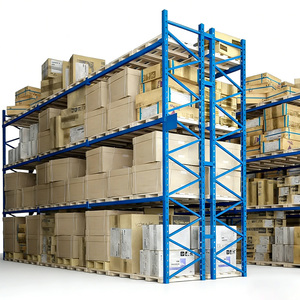
Customized 3-Layer Card Slot Assembly Stable Structure Cold Rolled Steel Epoxy Powder Coated Heavy Duty Pallet Shelving Rack
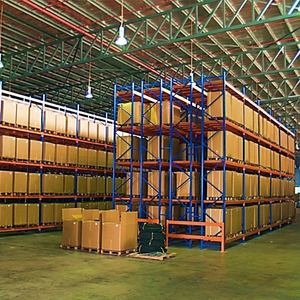
Factory Direct Sale Warehouse Shelves Pallet Steel Taiwan Heavy Duty Storage Industrial Shelving
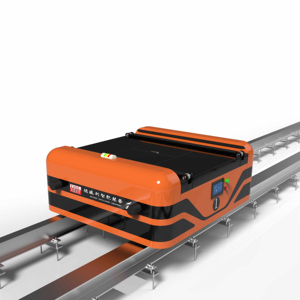
RGV For Automated Warehouse Racking System RGV Shuttle Rack System
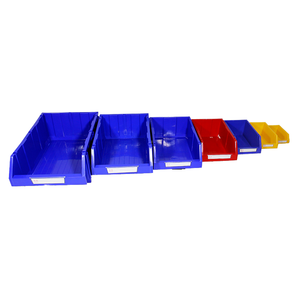
Warehouse Tool Hardware Storage Box Square Plastic PP Injection Stackable Hanging Shelf Storage Bin Rectangle Part Bin
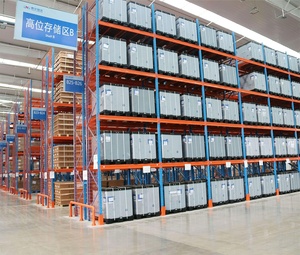
China Manufacturer Adjustable Storage Shelf Racking Warehouse Storage Steel Selective Pallet Rack
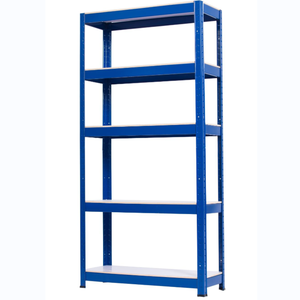
Industrial 5-Layer Corrosion Protected Steel Warehouse Rack Boltless Assembly Storage Shelf
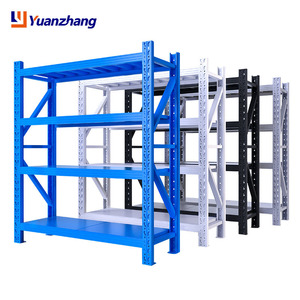
Warehouse Rack Shelf Medium Duty Industrial Racking Shelves Spare Auto Parts Longspan Shelving Heavy Duty Storage Shelves
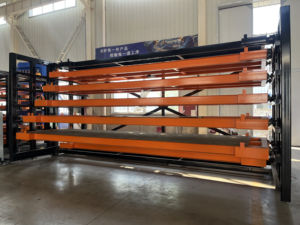
Multi-Tier Carbon Steel Powder Coated Anti-Rust Heavy Duty Warehouse Racking System 2000mm Height Storage Rack for Industrial
Engineering Principles of CE-Certified Gravity Roller & Pallet Flow Racking
Modern warehouse logistics face compounding pressures: escalating per-square-meter real estate acquisition costs, strict cold-chain energy expenditures, and the operational necessity for non-powered, fail-safe intralogistics throughput. Dynamic warehouse roller racking systems—frequently designated in engineering literature as live pallet flow racks—function on gravitational kinetics. These systems merge maximum volumetric compaction with systematic First-In, First-Out (FIFO) stock turnover by utilizing inclined roller tracks configured at a precise pitch angle, typically between 2.5% and 4.0% depending on pallet base composition and load mass.
“Structural reliability in dynamic roller racking is not merely a function of steel thickness; it is an integrated equilibrium between gravitational velocity damping, friction coefficients of the pallet bottom runner, and the torsional rigidity of the cold-formed structural frame under dynamic cycling.”
1. Kinematic Velocity Damping and Centrifugal Brake Mechanics
A persistent vulnerability in substandard roller racking systems is pallet acceleration runaway. Over deep lanes spanning 10 to 30 pallet positions, unregulated pallet momentum introduces critical risks of product slippage, structural beam deformation, and catastrophic end-stop impact. To counteract this, certified systems incorporate inline speed controller braking rollers equipped with internal centrifugal brake shoes. As the roller accelerates past a calibrated rotational velocity (typically corresponding to pallet speeds over 0.25 to 0.3 meters per second), internal mechanical weights expand radially against an outer drum, producing continuous kinetic resistance proportional to the load mass. This guarantees that a 1,200 kg chemical container and a 350 kg dry-goods pallet glide along identical gradient lanes at uniform, safe velocity thresholds.
2. Structural Integrity Under Harmonized Standard EN 15512:2020
For industrial exporters serving European, Middle Eastern, and Pan-African logistics corridors, CE marking under the Construction Products Regulation (CPR 305/2011/EU) is legally mandatory. The structural substructure must comply with EN 15512 (Steel static storage systems – Adjustable pallet racking systems – Principles for structural design) alongside EN 15620 for dimensional tolerances and clearance safety. Upright column punchings, beam-connector card slots, and diagonal bracing geometries must undergo rigorous limit-state analysis evaluating both ultimate limit state (ULS) for buckling resistance and serviceability limit state (SLS) for vertical beam deflection, held stringently below L/200 under maximal design loads.
| Performance Variable | Standard Industrial Racking | CE Certified Dynamic Roller Racking |
|---|---|---|
| Steel Substrate Grade | Commercial Q195 / Q215 | Certified Structural Cold-Rolled Q235B / Q355B |
| Velocity Regulation | Unregulated or basic mechanical friction | Centrifugal speed-damping brake rollers every pallet interval |
| Safety Separation | Manual stop pin / none | Automatic time-delay pallet separator mechanisms |
| Surface Pretreatment | Simple solvent wipe, basic spray | 9-Stage pickling & phosphating + electrostatic epoxy cure |
| Regulatory Compliance | Unverified factory declarations | CE Certified (No. 2435-CPR-8605159), ISO 9001:2015 |
3. Pallet Separation and Extraction Ergonomics
At the discharge face of a dynamic roller channel, line pressure exerted by accumulating trailing pallets can generate hundreds of kilograms of compressive forward thrust. Without mechanical mitigation, fork-truck operators cannot safely elevate and extract the lead pallet without snagging the load or damaging the mast. Engineered roller systems integrate foot-activated or automated mechanical pallet separation locks. When the leading pallet glides onto the extraction station, it trips a spring-tensioned rocker arm that locks the second pallet 150mm upstream. Only after the lead unit is completely clear of the bay does the separator mechanism reset, allowing downstream indexing with zero operator manual intervention.
Future Procurement & Technological Trends in Roller Racking Systems
Strategic purchasing leaders are evaluating storage infrastructure through long-term lifecycle metrics. Here is how dynamic roller systems are evolving through 2026 and beyond.
Zero-Carbon "Passive" Intralogistics
With electrical power costs and intermittent grid stability impacting distribution centers globally, passive gravity flow storage has seen rapid adoption over fully mechanized stacker cranes. Operating entirely without continuous kilowatt consumption, heavy-duty roller racking reduces operational utility costs by up to 65% in refrigerated cold-chain environments while continuing full operation during brownouts.
Hybrid AGV/AMR Interface Integration
Procurement models are actively ditching manual fork-truck interfaces in favor of autonomous mobile robot (AMR) and automated guided vehicle (AGV) precision docking. Modern roller beds incorporate optical sensor cutouts, pneumatic end-retarders, and ultra-flat floor tolerance alignment (defined by DIN 18202 standards) allowing uncrewed vehicles to pick and place pallets seamlessly at millimetric precision.
Container-Optimized Modular Export Packaging
International sea-freight volatility requires overseas exporters to maximize volumetric cubic efficiency inside standard 40-foot High Cube (40HQ) maritime containers. Modern roller racking is completely knock-down flat-packed (KD), with pre-nested upright frames and modular roll-tracks bundled to achieve zero wasted dead space, cutting landed freight cost per pallet position by 28% across intercontinental routes.
Why Tier-1 Importers Partner with Guangzhou Heda Shelves
From primary steel coil slitters to precision roll-forming lines and automated electrostatic curing tunnels, every phase of production is consolidated within our 30,000 square-meter facility in Guangzhou.
Raw Material Sourcing
Premium hot-rolled structural steel coils inspected for chemical composition, yield strength, and zero surface laminations.
CNC Cold Roll-Forming
Continuous multi-station roll-forming lines shape upright posts and step beams with tight dimensional fidelity and zero structural stress fracture.
Multi-Axis Automated Punching
High-speed hydraulic press lines punch precision teardrop or card slot pitches at accurate 50mm/75mm intervals for beam adjustability.
Precision Robotic Welding
Shielded gas robotic arc welding ensures complete penetration on connector brackets, upright footplates, and roller track supports.
9-Stage Surface Pretreatment
Exhaustive chemical degreasing, acid pickling, and iron phosphating wash cycle creates an impervious crystalline bonding layer.
Electrostatic Powder Coating
Automated reciprocator spray booths apply thermosetting polyester-epoxy powders, ensuring 60–80 micron uniform coverage.
High-Temperature Oven Curing
200°C continuous curing tunnel polymerizes the powder into an ultra-tough, chip-resistant, and anti-corrosive industrial finish.
Full-Batch QC & Pre-Assembly
Weld radiographic checks, coating impact testing, and mock bay assembly before palletized container packing and sea export dispatch.
Frequently Asked Questions on Roller Racking Sourcing
Clear, direct, and technically thorough engineering answers addressing the critical parameters of international procurement, customs compliance, and structural performance.