2001
Established Engineering Base
30,000 m²
Automated Factory Footprint
30,000 T
Monthly Cold-Formed Capacity
10,000+
Global Industrial Deliveries
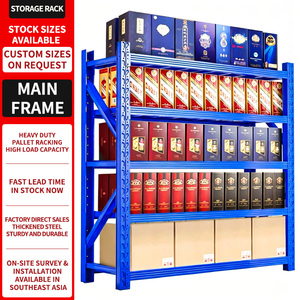
Engineered Modular Boltless & Pallet Storage Architectures
Manufactured using cold-rolled high-tensile steel, CNC-punched interlock uprights, and automated surface passivation designed for extreme operational duty cycles.
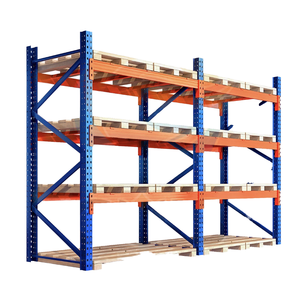
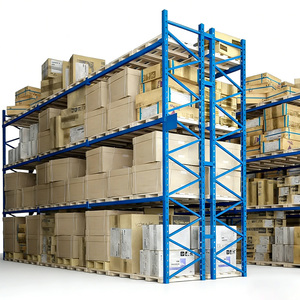
Production Metallurgy & Assembly
The Structural Superiority of Boltless Interlocking Systems
Boltless industrial shelving represents an engineering paradigm shift over conventional nut-and-bolt hardware. Designed with precision cold-formed keyhole, butterfly, or teardrop punched uprights, these structures leverage mechanical gravitational locking. Under load, the beam connectors wedge deeper into the tapered slots, increasing structural rigidity while eliminating fasteners prone to shear stress, loosening, and thread fatigue under dynamic load vibrations.
By removing mechanical fastener points across primary bay segments, industrial installations cut initial site erection labor hours by upwards of 60%. Maintenance overhead falls drastically as ongoing torquing inspections are replaced with visual bay locks and integrated safety pins.
- Automated Cold-Roll Forming: Q235B high-yield carbon steel structural profiles engineered under ISO 9001:2015 strict tolerance protocols.
- Ten-Stage Pretreatment: Chemical acid pickling, multi-stage phosphating, and deionized water rinsing to prevent micro-scale sub-film corrosion.
- Thermoset Polymer Coating: 60–80 micron electrostatic epoxy-polyester powder finish cured at 200°C for exceptional resistance to scratches and chemical attack.
Verified Plant Capacities
Guangzhou HEDA Shelves Co., Ltd. operates integrated end-to-end lines ensuring structural steel coils pass straight from high-speed continuous roll-forming mills to robotic welding stations and automated curing lines.
"Factory direct fabrication gives global buyers full control over mechanical safety factors, bay clearance tolerances, seismic bracing calculations, and container space utilization."
Technical Benchmark: Boltless vs. Bolted Industrial Systems
Performance matrix evaluating dynamic mechanical loads, turnaround efficiencies, and lifetime operational footprints.
| Mechanical Parameter | Modular Boltless Rivet / Slot | Medium-Duty Longspan Shelving | Heavy-Duty Teardrop / Pallet | Traditional Bolted Systems |
|---|---|---|---|---|
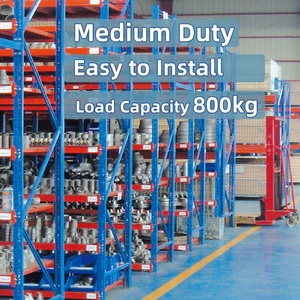
| Load Capacity Range | 150 – 400 kg / Level | 300 – 800 kg / Level | 1,000 – 5,000 kg / Level | 100 – 300 kg / Level |
| Assembly Labor (Hrs / 100 Bays) | ~18 Hours (Hammer/Mallet only) | ~24 Hours (Interlock Pins) | ~32 Hours (Forklift assisted) | ~75+ Hours (Torque wrench req.) |
| Beam Vertical Adjustability | 38mm / 50mm Pitch increments | 50mm Pitch continuous adjustment | 75mm / 76.2mm Modular pitch | Fixed hole distance; manual unbolting |
| Vibration Dynamic Loosening | Zero (Wedged slot gravity lock) | Zero (Safety clip secured) | Zero (Drop-in lock clip) | High (Nut vibration backing) |
| Freight Packaging Efficiency | Flat-Packed High Cube (95% vol.) | Knockdown Bundles (92% vol.) | Nesting profiles (88% vol.) | Bulky, low nesting (70% vol.) |
Future Sourcing & Procurement Trends in Industrial Storage (2026–2030)
How automation, micro-fulfillment centers, green logistics, and anti-corrosion engineering are redefining China's export manufacturing standard.
1. AMR & AS/RS Hybrid Adaptability
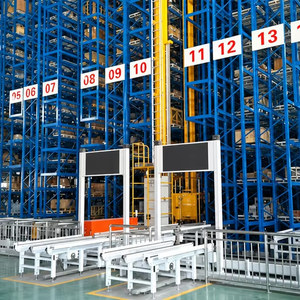
Industrial shelving is evolving from passive static bays into smart structural hubs for automated mobile robots (AMRs) and automated storage and retrieval systems (AS/RS). Modern boltless uprights are manufactured with high-precision dimensional tolerances (within ±0.5mm) to support automated shuttle guide rails, top-mounted pick-to-light LED arrays, and robotic docking sensors without deflection under sustained operation.
2. Advanced Passivation & FRP Materials
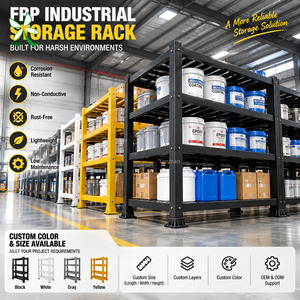
In response to corrosive chemical stores, fertilizer logistics, battery manufacturing environments, and coastal distribution facilities, Chinese factories are expanding their material range. Advanced fiber-reinforced polymer (FRP) and continuous hot-dip pre-galvanized cold-rolled coil platforms are replacing traditional electro-plating, delivering over 1,500 hours of continuous salt-spray resistance.
3. Direct-to-Container Cube Optimization
Ocean freight rates make packaging engineering a primary purchasing factor. Top Chinese manufacturers have replaced standard palletized bulk crating with algorithmic nesting profiles. Uprights, step beams, and interlocking deck panels are nested to occupy up to 98% of 40HQ container interior volumes, reducing landed ocean freight costs per cubic meter by up to 25%.
Why Global Supply Chains Partner Directly with Our Guangzhou Facility
Combining 25 years of engineering experience with rigorous European and North American industrial quality certifications.
Direct Manufacturer Control
We are a true OEM/ODM manufacturer with an expansive 30,000 m² plant in Guangzhou. Every profile is formed, stamped, punched, and finished under unified quality supervision without third-party contracting.
Audited International Credentials
Fully compliant with international structural codes. Certified under CE (2435-CPR-8605159), ISO 9001:2015 Quality Management (18624Q00169R0M), and environmental RoHS guidelines.
Engineering Design Services
Complete structural consulting at no cost: dynamic load calculations, warehouse CAD floor plans, and photo-realistic 3D BIM integration returned within 24 to 48 hours for fast-track tendering.
International Shipping Precision
Trusted export execution with over 10,000 successful projects delivered across 120+ countries. Knock-down packing configurations are optimized for standard 20GP, 40GP, and 40HQ ocean containers.
Frequently Asked Questions: Global Industrial Shelving Procurement
Direct answers from our senior warehouse engineering team covering materials, structural design, logistics, and site installation.
What steel grades and structural standards are used in your boltless shelving?
Our systems are roll-formed from certified Q235B high-grade cold-rolled carbon steel, chosen for its optimal balance of tensile strength, ductility, and cold-bend forming characteristics. For demanding automated or cold-chain installations, we supply high-tensile Q345B steel. Every raw coil undergoes ultrasonic and tensile testing to ensure full compliance with FEM 10.2.02 and EN 15512 structural design codes.
How does boltless shelving perform in high humidity or coastal logistics zones?
Unprotected steel corrodes quickly in tropical and maritime environments. Our factory employs a closed-loop 10-stage automated surface treatment: acid pickling, multi-stage cascade rinsing, zinc phosphating, and deionized neutralization before electrostatic powder coating. For cold rooms and maritime environments, we provide pre-galvanized, continuous hot-dip galvanized (HDG), or fiberglass-reinforced polymer (FRP) configurations tested to withstand over 1,000 hours in salt spray testing without blistering.
What engineering information is required to generate a custom CAD layout and quote?
To provide a production layout and structural load assessment, please share: (1) Warehouse architectural drawings indicating clear ceiling heights, building columns, floor slab ratings, and access doors; (2) Unit load parameters including length, depth, height, and gross weight per shelf or pallet; (3) Material handling equipment specs including forklift turning radius, mast lift height, and aisle clearance requirements; and (4) Throughput requirements and SKU turnover patterns (FIFO vs. LIFO).
Can boltless shelving integrate with automated handling equipment (AMR / AGV)?
Yes. Our medium-duty and heavy-duty boltless systems can be engineered with automated guided vehicle (AGV) docking channels, continuous bottom-level guided tracks, pick-to-light cabling races, and high-precision shelf level indexing. Deflection calculations conform to strict automated warehouse tolerances (typically L/200 or L/300 deflection limits under full load).
How are knocked-down components packed to prevent transit damage during ocean shipping?
All components are bundled to protect surfaces and maximize container cubing. Upright frames and beams are nested with protective corrugated foam spacers, strapped with high-tensile PET banding, and wrapped in water-resistant shrink film. Small components, safety pins, and footplates are boxed in double-walled corrugated cartons on solid timber export pallets, loaded cleanly into 20GP or 40HQ containers for damage-free ocean voyages.
What technical support and installation supervision do you provide for overseas projects?
Every shipment includes an itemized bill of materials, color-coded CAD installation blueprints, and 3D step-by-step assembly guides. For large-scale multi-tier mezzanines or automated high-bay systems, our engineering team offers remote video guidance as well as on-site project management to train your local teams and certify final structural installations.