Direct Industrial Manufacturing • ISO 9001:2015 • CE Certified
China Best High Density Pallet Racking System Factory & Suppliers
Comprehensive Engineering Whitepaper: Metallurgical Standards, Space Optimization Formulas, Automated Shuttles, and Direct Global Sourcing Architectures.
Engineered Storage Catalog
High-Density Pallet Racking Systems & Industrial Solutions
Precision-fabricated from certified Q235B and Q355B structural steel, our heavy-duty racking modules are custom-engineered for maximum cubic space utilization, rigorous dynamic forklift impacts, and automated intralogistics throughput.
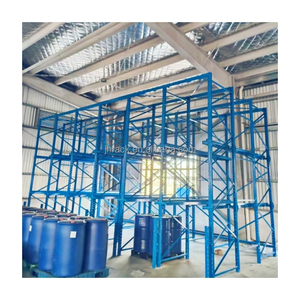
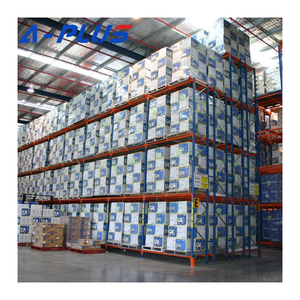
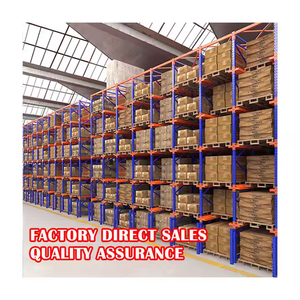
High Density LIFO
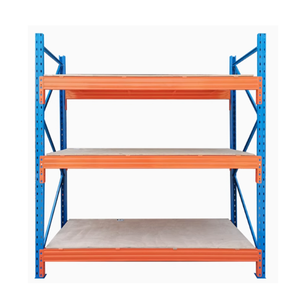
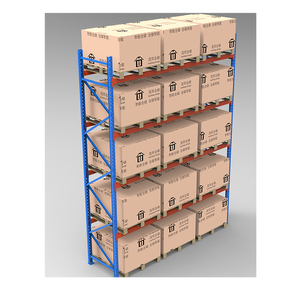
Hot Selling Q355B Steel Beam Heavy-Duty Metal Warehouse Storage Stacking Racks Drive-In Pallet Racking System For Industry
Continuous automated roll-forming lines with high-speed automated hydraulic punches ensure column perforation pitch tolerance within ±0.1mm.
10-Stage Surface Treatment
Pickling, alkaline degreasing, ultrasonic water rinsing, phosphating, and thermo-cured polymer powder coating prevent rust in 95% RH environments.
Container-Optimized Bundling
Advanced nested knock-down packaging maximizes cubic container utilization up to 98.4%, dramatically lowering per-pallet ocean freight rates.
Full Structural Compliance
Certified under CE (EN 15512, EN 15620, EN 15635), ISO 9001:2015, and ANSI/RMI MH16.1 specifications with complete factory inspection reports.
1. The Structural Physics & Mechanical Integrity of High-Density Pallet Racking
In modern high-velocity supply chains, warehouse real estate costs per square meter continue to climb across global hubs. Warehouse operators, logistics directors, and third-party logistics (3PL) providers face the dual challenge of maximizing storage density while preserving critical throughput rates. Guangzhou Heda Shelves Co., Ltd. addresses this equation through deep structural metallurgy, custom finite element analysis (FEA), and advanced continuous roll-forming engineering.
Unlike standard static selective racking—where dedicated operational aisles account for more than 60% of total floor surface—high-density systems (such as Drive-In, Double-Deep, Radio Shuttle, Gravity Flow, and Push-Back) compress the cube. By collapsing unnecessary access lanes into deep-lane storage matrices, cubic efficiency escalates from a typical 40% up to 85% or higher. However, condensing massive pallet weights into smaller footprints increases vertical upright point loads and horizontal sway forces dramatically.
"Engineering High Density Systems is not merely a matter of adding steel; it is a discipline of optimizing sectional modulus, resisting localized buckling, and calculating rotational beam-to-column connector stiffness according to EN 15512 and RMI standards."
At HEDA Shelves, our engineering team utilizes prime structural cold-rolled steel coils conforming strictly to Q235B and high-yield Q355B (with yield strengths of 235 MPa and 355 MPa respectively, equivalent to ASTM A36 and ASTM A572 Grade 50). Using high-yield Q355B allows us to engineer thinner, lighter profiles with superior load-bearing safety margins, reducing structural deadweight while enhancing torsional resistance against irregular seismic ground acceleration and dynamic forklift impacts.
Selecting the optimal pallet racking system requires balancing storage density, pallet selectivity, stock turnover mechanics (FIFO vs. LIFO), and capital expenditure per pallet location.
A critical metric of factory authority (E-E-A-T) lies in raw material traceability and metal finishing processes. Substandard suppliers often skip chemical baths or use flash phosphating, resulting in micro-cracking and rust blooms beneath the powder coat within months, particularly in coastal, sub-tropical, or cold-chain condensing environments.
Guangzhou Heda Shelves Co., Ltd. implements an uncompromising 10-stage automated pre-treatment and electrostatic finishing cycle:
Hot Alkaline Immersion Degreasing: Total eradication of mill lubricants, rolling grease, and rolling scale residues from cold-forming.
Deep Acid Pickling & Neutralization: Industrial chemical de-scaling ensuring microscopic steel profile cleanliness.
Zinc-Manganese Crystalline Phosphating: Generates an insoluble, nanometer-level crystalline conversion layer that guarantees adhesive molecular bonding between steel substrate and coating.
Triple Deionized Water Rinsing: Removes ionic salts and chemical carriers to prevent osmotic blistering.
Electrostatic Powder Deposition: Automated Swiss Gema electrostatic spray guns apply lead-free, RoHS-compliant thermosetting polyester-epoxy powders at a uniform 60–90 μm dry film thickness (DFT).
High-Temperature Polymerization: Curing at 180°C–200°C for 20 minutes creates an impact-proof, chemical-resistant, and UV-stabilized polymer matrix rated for cross-hatch adhesion Grade 0 (ISO 2409).
Strategic Forecasting
Future Procurement Trends in High-Density Pallet Racking
01
Hybrid Automation & Shuttle Integration
Procurement is rapidly shifting away from manual Drive-In racks toward semi-automated Radio Shuttle and 4-way ASRS systems. Buyers prioritize modular structures that allow initial manual reach-truck loading while preserving rail geometries compatible with future autonomous mobile robots (AMRs) and automated shuttles.
02
Cold-Chain Optimization & Green Warehousing
With cold storage facilities facing soaring electrical refrigeration tariffs, high-density compaction directly reduces cubic refrigeration volume per stored pallet. Next-generation tenders require low-temperature rated steels (impact tested to -30°C without brittle fracture) and hot-dip galvanized upright frames for non-stop condensing washdowns.
03
Direct Manufacturer Supply Chains
Global procurement teams are eliminating intermediary brokerage layers, contracting directly with vertically integrated Chinese tier-1 factories. Direct factory partnerships secure custom steel gauge rolling, mill-test certificates (MTC 3.1), bespoke CAD 3D layout simulation, and optimized containerized packing lists that lower landed FOB/CIF unit costs.
4. The Evolution of Pallet Racking: From Commodity Iron to Intralogistics Assets
Pallet racking has evolved beyond standard static steel uprights into an integrated element of modern warehouse automation. In the early 2000s, storage focused primarily on floor area utilization through simple welded structural frames. However, rapid growth in e-commerce fulfillment, cold chain logistics, and supply chain disruptions transformed storage racks into dynamic, load-bearing engineering assets.
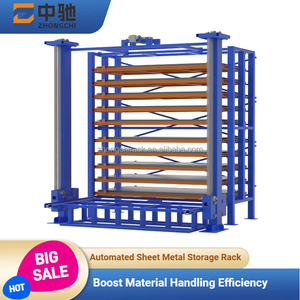
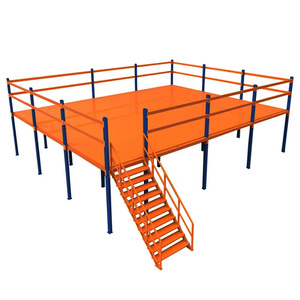
Today, our engineering designs account for operational logistics flows, automated guided vehicle (AGV) clearances, laser-guided counterbalances, and seismic dampening systems. Upright profiles feature complex multi-bend omega shapes that disperse vertical shear and torsional forces across multi-faceted flanges, maximizing weight-to-load ratios. In automated sheet metal racks and multi-tier mezzanine floors, structural racking forms the building's internal framework, streamlining material flows and reducing footprint requirements.
Technical Sourcing FAQ
Frequently Asked Questions for Industrial Pallet Racking Sourcing
What is the key structural difference between Q235B and Q355B steel in racking?
Q235B has a minimum yield strength of 235 MPa, while Q355B delivers 355 MPa (over 50% stronger). We specify Q355B for tall upright frames (over 8 meters), heavily loaded drive-in cantilever arms, and long-span shuttle beam lanes to prevent structural deflection and reduce overall steel tonnage without compromising safety coefficients.
How do you calculate warehouse floor slab load capacity before installation?
Our structural engineering department reviews your facility's geotechnical slab report, examining concrete compressive strength (typically C25/30 or C30/37) and slab thickness. We engineer oversized steel baseplates and calculate anchor bolt embedment depths to distribute point loads safely within local soil and concrete shear parameters.
What factors must be provided to obtain an engineered CAD layout within 24 hours?
We require the building's architectural boundary dimensions, clear ceiling height under beams/sprinklers, column locations and spacing, building door positions, pallet dimensions (W x D x H, including overhang), maximum gross pallet weight, and forklift model specifications (lift height, mast collapsed height, minimum turning radius, and aisle width requirements).
How do you protect racking shipments against moisture and damage in ocean transit?
All upright frames and beams are nested using protective corrugated interleaving, wrapped with UV-inhibited industrial stretch film, and bound with high-tensile polyester strapping. Contact points feature reinforced corner edge boards. We also provide customized 40HQ container loading diagrams to maximize container cubing and simplify forklift unloading at destination ports.
How does Drive-In racking compare with Radio Shuttle racking for cold storage?
While Drive-In has a lower initial capital cost, forklifts must physically drive inside the rack structure, increasing cycle times and rack impact risks in cold environments. Radio Shuttle racking keeps forklifts in the main access aisle while automated battery carriers move pallets inside deep lanes—speeding throughput by 200–300% and reducing rack damage in cold facilities.
What international certifications verify your factory's production quality?
Guangzhou Heda Shelves Co., Ltd. holds CE certification (No. 2435-CPR-8605159) for European structural steel conformity, ISO 9001:2015 Quality Management System certification (No. 18624Q00169R0M), and RoHS environmental compliance for powder coating finishes. Each batch undergoes rigorous weld penetration and tensile yield testing prior to shipping.
5. Why Sourcing Directly from Guangzhou Heda Shelves Protects Your TCO
Total Cost of Ownership (TCO) in industrial racking extends far beyond the initial purchase order invoice. Improperly engineered base plates, undersized steel gauges, or inconsistent welding can lead to premature structural failures, costly storage retrofits, or dangerous collapses under dynamic forklift impacts. With over 25 years of specialized racking manufacturing experience, HEDA Shelves provides comprehensive structural engineering assurance.
Our 30,000-square-meter Guangzhou production base operates continuous roll-forming lines, automated punching machines, robotized welding arms, and in-line powder coating lines under one roof. By controlling every stage from raw steel coil to finished pallet positions, we maintain complete traceability, certified yield strengths, and precise tolerances across every frame and beam. We provide project managers worldwide with full design documentation, dynamic finite-element calculations, certified installation manuals, and factory-direct pricing for rapid return on investment.
Plan Your High-Density Warehouse Storage Project Today
Connect directly with our structural engineering team for free 2D CAD spatial plans, 3D photorealistic renderings, structural load calculations, and container-optimized FOB/CIF cost breakdowns tailored to your facility.