[email protected] Serving West, East, Southern & North Africa
OEM/ODM Structural Engineering Authority

China Best Pallet Rack Equipment Factories & Exporters

An authoritative engineering white paper on high-density structural steel storage systems, automated shuttle integration, international compliance standards (EN 15512, RMI, AS4084), and containerized factory-direct global logistics.

2001
Established Origin
30,000m²
Factory Floor Area
30,000T
Monthly Steel Output
300+
Engineers & Technicians
10,000+
Global EPC Projects
120+
Export Sovereign Markets
Engineered Equipment Roster

High-Yield Storage Systems & Industrial Handling Equipment

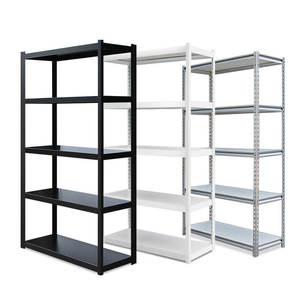
Direct-from-manufacturer structural storage platforms manufactured from Q235B/Q355B cold-rolled steel, engineered to European EN 15512, American RMI MH16.1, and Australian AS4084:2023 specifications.

Technical White Paper & Specification Benchmark

Structural Steel Metallurgy & Global Compliance Frameworks

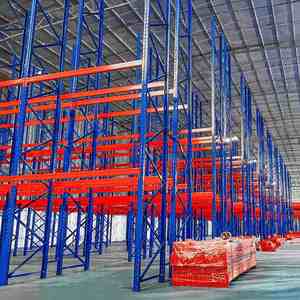
Evaluating pallet rack equipment factories in China requires a comprehensive understanding of structural metallurgy, roll-forming tolerance, and adherence to international load-testing standards. A superior warehouse rack is not merely fabricated steel; it is an engineered structural system designed to withstand cyclic dynamic stresses, seismic accelerations, and accidental forklift impact moments.

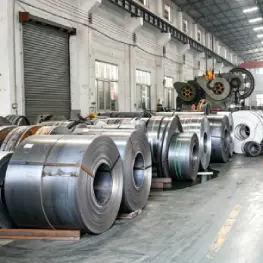
Chinese leading exporters utilize high-grade, hot-rolled carbon steel coils slitted and cold-formed into specialized multi-bend upright omega sections and step beams. The fundamental structural distinction between tier-one exporters and budget workshops rests within raw steel grade selection—predominantly Q235B versus high-yield Q355B (equivalent to ASTM A572 Grade 50 or European S355JR)—and the precision of continuous automated punching lines that maintain a hole-pitch deviation below ±0.1mm over a 12-meter single upright run.

Engineering Parameter Commercial Grade (Entry Level) Heda Engineered Standard (Export Spec) Applicable Test Standard
Primary Steel Grade Q195 / Q215 Q235B / Q355B Hot-Rolled Coils GB/T 700 / ASTM A36 / EN 10025
Yield Strength ($R_e$) $\approx 195 - 215 \text{ MPa}$ $\ge 355 \text{ MPa}$ (High Yield Range) ISO 6892-1 Tensile Testing
Tensile Strength ($R_m$) $315 - 430 \text{ MPa}$ $470 - 630 \text{ MPa}$ EN ISO 6892-1 Mechanical Stress Test
Upright Section Geometry Open C-Channel (Low torsional resistance) Closed-Omega 11-13 fold complex profile FEM 10.2.02 / EN 15512 Compression
Weld Penetration Standard Manual Spot Welding ($< 60\%$ penetration) Robotic Continuous MAG ($> 95\%$ penetration) AWS D1.1 / ISO 15614-1 Certified
Surface Pretreatment Manual solvent wipe down 8-Stage Immersion Pickling & Phosphating Qualicoat Class 1 / ASTM B117
Salt Spray Corrosion Life $120 - 240 \text{ Hours}$ before red rust $750 - 1,000 \text{ Hours}$ (Standard); Hot-Dip Galv $> 2000 \text{h}$ ASTM B117 / ISO 9227 Corrosion Test
Beam Deflection Limit $L/150$ or $L/180$ $L/200$ to $L/250$ under maximum static payload ANSI MH16.1 / AS4084:2023 Rules

In high-bay racking systems exceeding 12 meters in height, beam deflection and column slenderness ratios ($\lambda = KL/r$) dictate overall structural stability. When seismic dynamics are introduced (such as IBC Seismic Design Categories D, E, or F, or Eurocode 8 zone calculations), tier-one Chinese factories employ Finite Element Analysis (FEA) to simulate dynamic cyclic loading, base plate shear resistance, and second-order structural deformations ($P-\Delta$ and $P-\delta$ effects). Sourcing from top-tier exporters guarantees third-party certified mill certificates (MTRs), verified chemical composition (Carbon $< 0.20\%$, Manganese $\ge 1.20\%$, Silicon $\le 0.55\%$), and traceability from raw coil uncoiling to final packaging.
Factory Tour & Capability Audit

Guangzhou Heda Shelves Co., Ltd.: 25 Years of Manufacturing Leadership

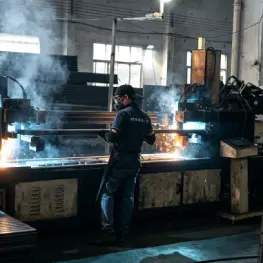
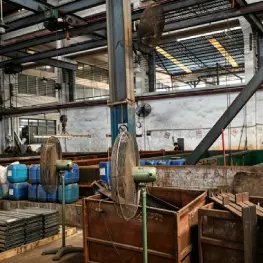
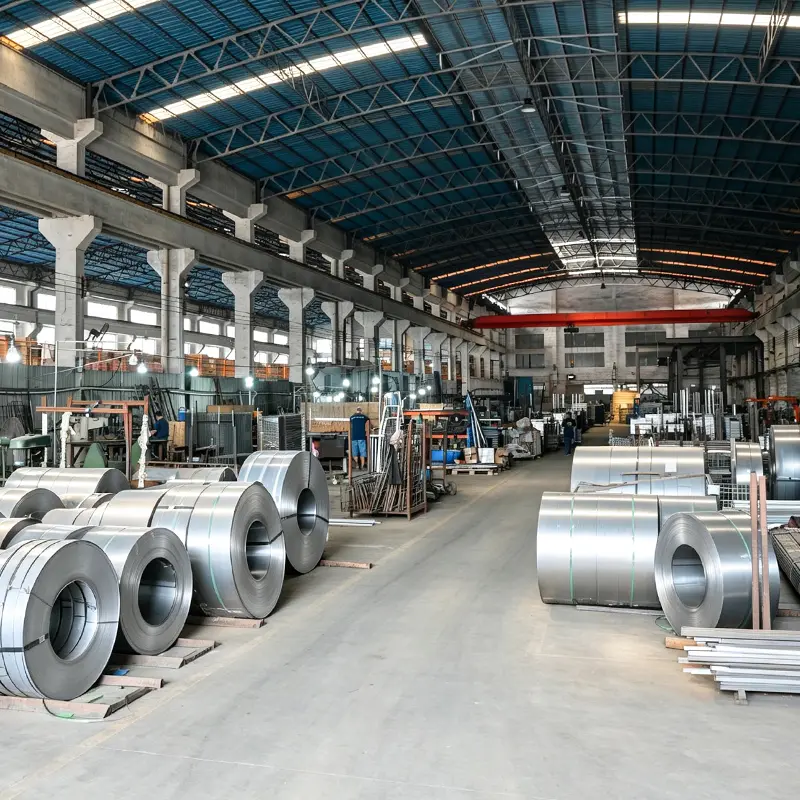
Since 2001, Guangzhou Heda Shelves Co., Ltd. has developed from a dedicated steel fabrication facility into an international racking design, engineering, and manufacturing enterprise operating a 30,000 m² heavy-machinery production base in Guangzhou, China.

30,000 m² Facility

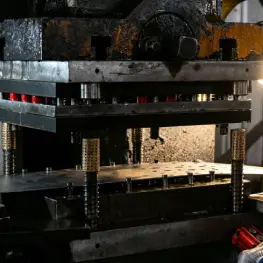
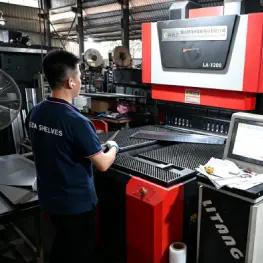
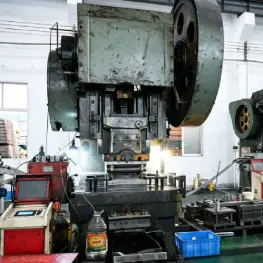
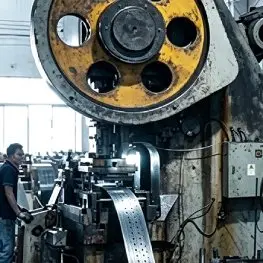
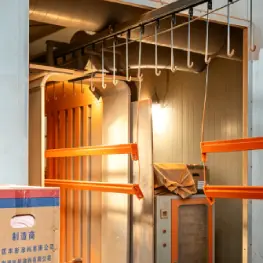
Fully vertically-integrated workshop housing continuous cold roll-forming lines, automated punching turrets, and proprietary powder-coating tunnels.

30,000 Ton/Mo Capacity

Massive monthly structural capacity guarantees accelerated lead-times, rapid multi-container output, and reliable schedule maintenance for mega-logistics hubs.

Free 3D CAD & FEA Layout

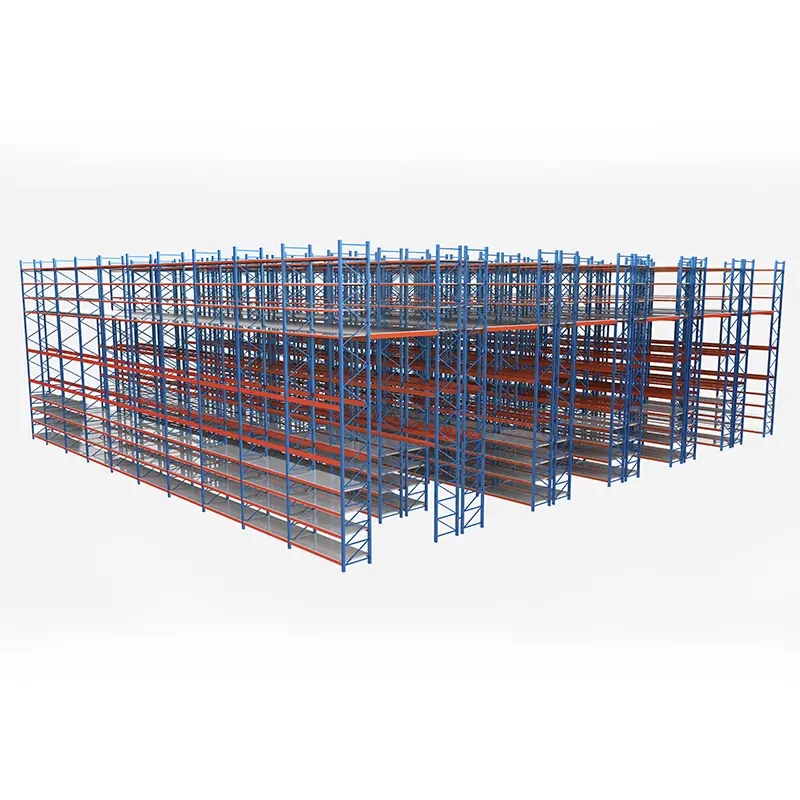
In-house structural engineering group delivering complete AutoCAD floor distributions, 3D visual mockups, and seismic load analyses within 24 to 48 hours.

CE & ISO 9001:2015

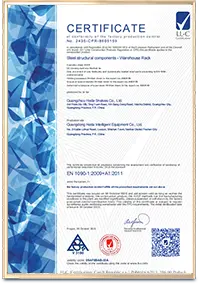
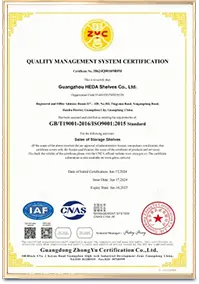
Full international credential portfolio: CE marking (No. 2435-CPR-8605159), ISO 9001:2015 accreditation (No. 18624Q00169R0M), and RoHS environmental compliance.

The 10 Stages of Controlled Precision Manufacturing

Quality failure in racking systems can cause catastrophic progressive collapses. Heda Shelves enforces strict stage-gate quality control through every transformation phase:

Raw steel material inspection
01 Raw Material Test
Precision steel slitting and cutting
02 Precision Slitting
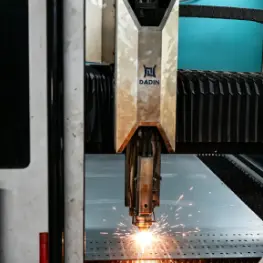
Automated CNC column punching
03 Automated Punching
Multi-roller cold bending and forming
04 Cold Roll-Forming
Profile roll forming quality control
05 Profile Calibration
Mechanical component polishing and deburring
06 Deburring & Polishing
Robotic beam and bracket welding
07 Robotic MAG Welding
Chemical pickling and phosphating tank line
08 Pickle & Phosphate
Electrostatic powder coating and curing oven
09 Electrostatic Curing
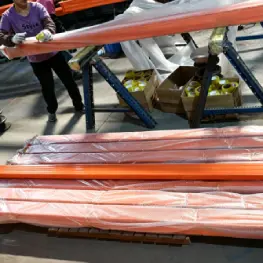
Containerized packing and load checking
10 Final QC & Pack
Third-Party Verification

Audited Manufacturing Credentials

Supply chain integrity requires documented compliance that can be independently validated by international engineering consultants and customs authorities. All Heda production runs follow documented standard operating procedures (SOPs) with full metallurgical traceability.

CE Certified Certificate No 2435-CPR-8605159
ISO 9001:2015 Quality Management Certificate
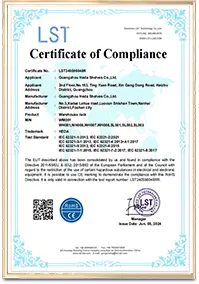
RoHS Environmental Compliance Inspection
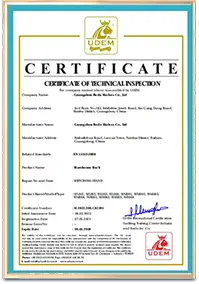
Structural Load Test Compliance Documentation
25 Years Racking Manufacturing Experience
AutoCAD and 3D Structural Warehouse Modeling
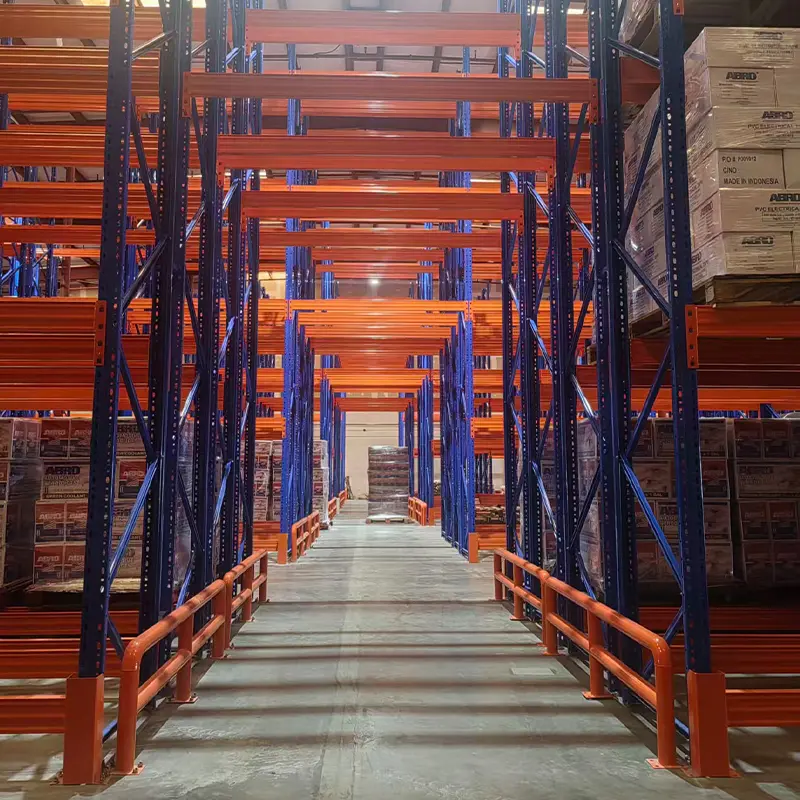
Robotic Welded Heavy Duty Racking Components
Custom Racking Engineering and Containerized Logistics
Strategic Sourcing Horizon

Future Procurement Trends in Industrial Storage Systems (2025–2030)

Industrial logistics infrastructure is evolving beyond static steel frames. Global warehouse directors and EPC contractors are reshaping procurement criteria around automation readiness, sustainability benchmarks, and total landed cost efficiency.

01

Convergence of Shuttle Automation & Standard Racking

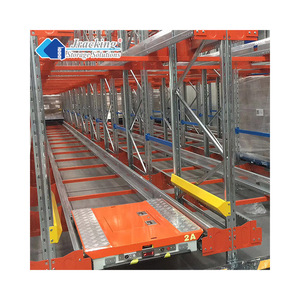
Procurement is rapidly pivoting from pure static selective racking to hybrid modular designs capable of accepting two-way and four-way radio pallet shuttles. Forward-looking buyers insist on upright punch geometry and guide-rail tolerance compatible with autonomous mobile robots (AMRs) and automated guided vehicles (AGVs), future-proofing facilities against rising labor costs.

02

Height Maximization & Vertical Cube Utilization

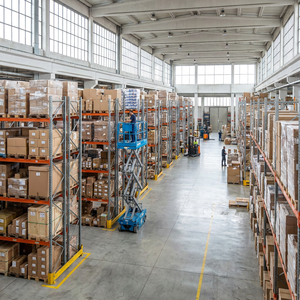
With industrial land premiums escalating globally, new distribution centers demand racking installations reaching 18 to 30 meters clear height. This trend elevates the procurement focus toward high-tensile Q355B micro-alloyed steel, which reduces total steel tonnage by up to 18% while delivering equal moment-carrying capacity and superior vertical plumbness tolerances.

03

Climate-Resilient Hybrid Surface Coatings

Warehouses constructed across coastal zones, humid tropical belts, and unconditioned chemical hubs demand superior anti-corrosion performance. Procurement specifications are transitioning from standard epoxy powders to hybrid thermosetting polymers and pre-galvanized high-yield strip components that exceed 1,000 hours of continuous ASTM B117 neutral salt spray testing.

04

Container-Optimized Demountable Engineering

International ocean freight volatility has made shipping density a primary design parameter. Advanced Chinese exporters now optimize beam length-to-upright nested ratios to ensure 98%+ volumetric container space utilization inside 40HQ containers, driving down the landed freight cost per individual pallet position by 15% to 25%.

05

Rack-Supported Mezzanine Floor Integration

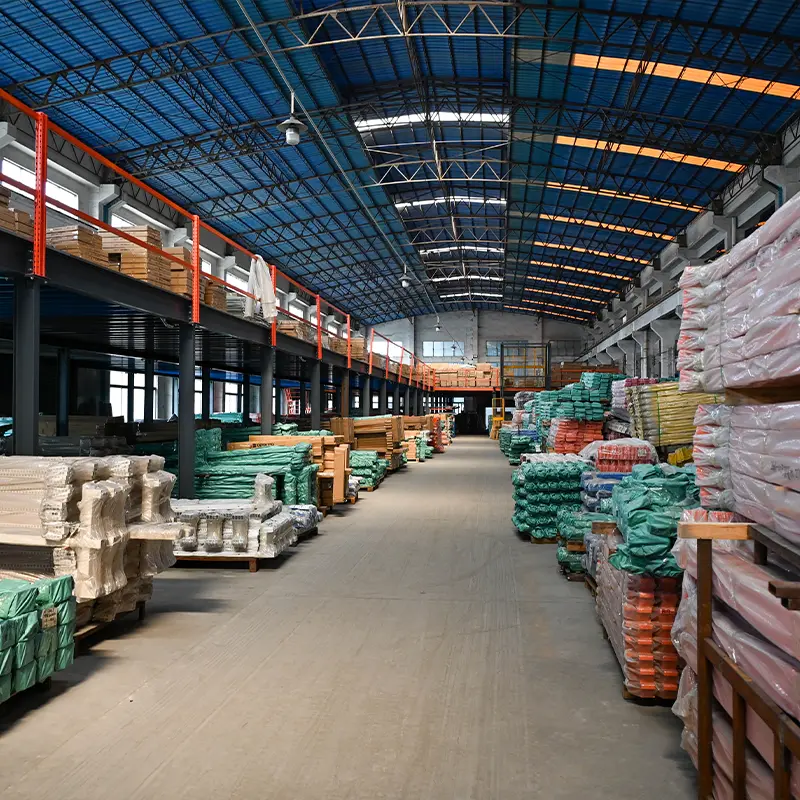
Rather than erecting standalone structural buildings, supply chain planners are deploying multi-tier rack-supported platforms that serve dual functions: heavy pallet storage on the lower level, and manual fulfillment or office operations on upper steel decking. This cuts warehouse civil construction cycles by up to 40%.

06

Digital Twin Modeling & Finite Element Traceability

Leading buyers now require digital twin structural models (.BIM / .STEP formats) prior to manufacturing sign-off. Full 3D finite element stress analyses allow real-time modeling of beam deflections under simulated non-uniform pallet placements, earthquake base shears, and forklift upright collision scenarios.

Product Evolution & Innovation

Technological Evolution: From Low-Tech Fabricators to Precision Robotics

Over the past two decades, China’s top tier racking manufacturers have transitioned away from manual cutting and welding workshops into highly automated, robotics-driven production lines matching or exceeding Western European manufacturing tolerances.

Interlocking Connector Geometry

Evolution from archaic 2-bolt connection plates to 3-, 4-, and 5-claw high-tensile stamped cold-formed connectors that wedge tightly into teardrop or diamond upright slots under static load, creating a rigid joint with high moment rotation resistance ($C_d$).

Continuous Closed-Omega Profiles

Replacement of simple channel irons with complex 11- to 13-bend cold roll-formed upright omega sections. This geometry shifts the shear center and dramatically boosts torsional rigidity ($J$) and lateral buckling strength ($M_b$) without increasing steel gauge.

High-Precision Step & Box Beams

Transitioning from unreinforced C-beams to continuous seam-welded dual-C interlocking step beams. The integrated top flange recess accommodates wire mesh decking, timber panels, or steel drop-in shelves flush with the beam edge, safeguarding cargo against snagging.

Sub-Millimeter CNC Punching

High-speed hydraulic and servo-driven punching presses synchronize with profile roll-forming mills to maintain center-to-center hole pitch repeatability within $\pm 0.1\text{mm}$, ensuring universal beam level adjustability in 50mm, 75mm, or 76.2mm increments across entire warehouse arrays.

Procurement Due Diligence

Frequently Asked Questions: Sourcing Pallet Racking from China

Essential answers compiled by senior structural project engineers to guide B2B importers, supply chain consultants, and facility owners through the procurement, testing, and shipping lifecycle.

What engineering data is required to generate an accurate warehouse racking quote and 3D CAD layout?
To deliver an optimal structural layout and competitive factory-direct quote within 24 hours, our engineering team requires:
  1. Building Architectural Drawings: Length, width, clear ceiling height under trusses, floor slab load rating ($\text{kN/m}^2$), column grid locations, dock door positions, and fire sprinkler/lighting clearance zones.
  2. Unit Load Parameters: Pallet dimension ($W \times D \times H$ including goods overhang), gross weight per pallet, and pallet type (Euro, standard industrial 1200×1000mm, plastic, or custom runners).
  3. Material Handling Equipment (MHE): Forklift type (counterbalance, reach truck, VNA, or articulated), minimum operating aisle width (AST), maximum lifting mast reach, and turning radius.
  4. Inventory Dynamics: Target SKU counts, desired storage density, and preferred stock rotation mode (FIFO vs. LIFO).
How do Chinese pallet racking standards (GB) compare with EN 15512, RMI, and AS4084?
Tier-one Chinese exporters like Guangzhou Heda Shelves design and manufacture strictly in compliance with the client’s regional standard. While China’s domestic standard (JB/T 5323 and GB/T 28576) provides robust safety margins, export production lines calibrate specifically to European standard EN 15512:2020 (which requires limit-state calculation principles and specific partial safety factors $\gamma_M$), American RMI MH16.1 specifications (incorporating AISI cold-formed steel provisions and dynamic seismic acceleration maps), or Australian standard AS4084:2023. Our testing jigs verify stub column compression, beam end-connector bending moments, and beam looseness characteristics per the target regulatory body.
What anti-corrosion protection is recommended for coastal or cold storage warehouse operations?
Surface treatment selection depends on ambient humidity, thermal fluctuations, and chemical exposure:
  • Standard Inland Warehouses: 8-stage pre-treatment (alkaline degreasing, pickling, phosphate film formation, DI water rinse) followed by electrostatic polyester powder coating (60-80 microns thickness), baked at 180°C–200°C. Delivers 500–700 hours ASTM B117 salt spray resistance.
  • Coastal & High-Humidity Zones: Enhanced thermosetting epoxy-polyester hybrid powder coating with primer undercoat, reaching 1,000+ hours salt spray durability.
  • Cold Storage & Sub-Zero Freezers (-30°C): Hot-dip galvanization (HDG per ISO 1461 / ASTM A123) with a minimum 65–85 micron zinc layer thickness. Zinc alloy metallurgically bonds with steel, eliminating paint peeling, micro-cracking, and rust creep caused by condensation.
How is ocean shipping optimized to minimize landed freight costs per pallet position?
Racking components are heavy and bulky, making container packing efficiency a decisive factor in total landed cost. Upright frames are typically shipped pre-assembled or knock-down (flat packed) depending on destination port labor costs versus ocean container volume. Beams are nested in bundles with protective corner edge-boards and steel strapping; horizontal and diagonal bracing bars are tightly packed in bundles; small hardware (bolts, safety pins, shims, anchor bolts) is packed in reinforced wooden pallets. A standard 40-foot High Cube (40HQ) container will safely transport 22 to 26 metric tons of steel racking, equating to 500 to 1,200 pallet locations depending on system height and configuration.
What installation support and structural documentation are provided for overseas projects?
Every export shipment includes a detailed technical project documentation packet:
  • Component assembly diagrams with color-coded part number matching.
  • Anchor bolt installation torque specifications and baseplate shimming guidelines.
  • Safe Working Load (SWL) load notices and maximum permissible deflection warnings to mount on aisle ends.
  • High-definition 3D video assembly sequences and step-by-step remote engineer guidance via video conference.
  • For mega-projects exceeding 20 containers, Heda can dispatch certified site installation supervisors to manage, align, anchor, and commission the system alongside your local contractor team.
How does Guangzhou Heda Shelves ensure quality control and raw material traceability?
Heda operates under an ISO 9001:2015 certified quality management system. Raw structural steel coils are procured directly from tier-one state-owned steel mills (e.g., Baosteel, Shougang) with accompanied Mill Test Certificates confirming chemical composition and mechanical elongation properties. Incoming coils undergo thickness micrometer testing and spectral composition checks. During manufacturing, automated coordinate measuring checks hole punch pitch, roll-formed beam profiles, and robotic weld penetration. Finished components undergo powder adhesion cross-hatch testing (ISO 2409) and dry film thickness (DFT) gauge verification prior to multi-layer protective packaging.
B2B Sourcing Playbook

Manufacturer Qualification: Sourcing Audit Checklist for EPC Contractors

Before executing international contracts for industrial storage racking, supply chain procurement groups must audit candidate Chinese factories against four critical structural and commercial pillars.

1. Steel Grade Verification

Always demand certified Mill Test Reports (MTRs) tracing to the raw master coils. Ensure minimum tensile strength and elongation metrics ($A_5 \ge 20\%$) meet the yield criteria required by structural beam deflection calculations.

2. Roll-Forming Precision

Verify whether the factory uses dedicated roll-forming toolsets with a minimum of 18 to 24 roll stations for omega uprights. Skimping on roll stations introduces residual stress and internal camber/bow defects along upright lengths.

3. Pretreatment Line Chemistry

Confirm that the powder-coating line integrates a true multi-stage immersion or power-spray chemical conversion line (pickling and phosphating or zirconium passivation), rather than simple manual solvent spraying.

4. Third-Party Load Testing

Require physical laboratory test reports for stub column compression, beam connection moment resistance, and floor anchor pull-out ratings conducted in accordance with EN 15512 or ANSI MH16.1 protocols.

Direct Factory Consultation

Ready to Engineer Your Optimized Warehouse Storage Layout?

Send your architectural floor plan, storage dimensions, and pallet weight specifications to our senior structural engineering department. We will deliver a comprehensive 3D layout rendering, structural load report, and factory-direct FOB/CIF quotation within 24 hours.

Inquire Now Instant Response · Free 3D Design · ISO 9001:2015