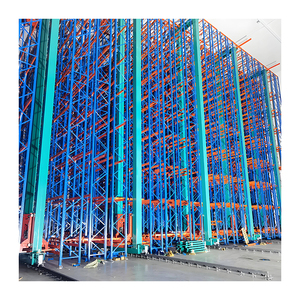
Semi-Automated Storage
Explore our certified structural storage solutions. Engineered using high-grade Q235B and Q355B cold-rolled steel, each system undergo strict pickling, phosphating, and powder-coating processes to guarantee load safety and operational longevity.
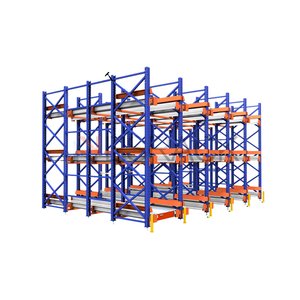
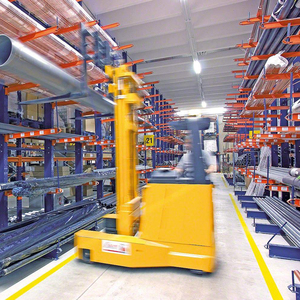
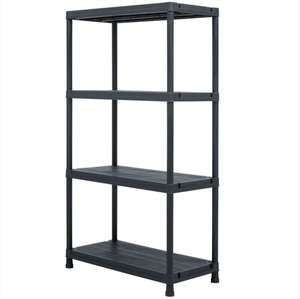
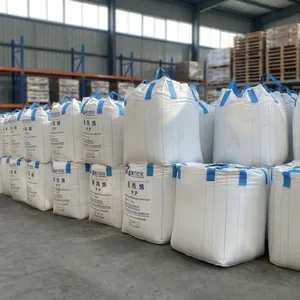
A rigorous evaluation of static loading capacity, structural mechanics, and supply chain throughput metrics for high-SKU distribution environments.
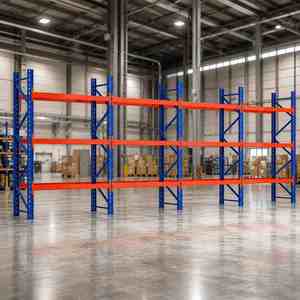
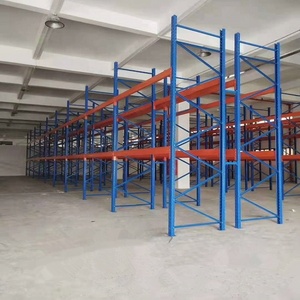
Single deep pallet racking, commonly referred to as selective pallet racking, remains the foundational benchmark across modern industrial material handling. By organizing storage rows exactly one pallet deep back-to-back, this configuration grants material handling equipment unrestricted 100% direct accessibility to every single pallet position without shifting adjacent loads. For operations managing high SKU velocity, strict First-In-First-Out (FIFO) inventory protocols, and variable cargo profiles, single deep architecture eliminates the staging delays and double-handling penalties inherent to push-back or drive-in systems.
| System Metric | Single Deep Selective Racking | Double Deep Pallet Racking | Radio Shuttle Racking |
|---|---|---|---|
| Pallet Selectivity | 100% Direct Immediate Access | 50% (Requires shifting outer pallet) | Lane-Dependent (LIFO/FIFO batches) |
| Floor Area Utilization | 35% – 45% (Aisle dependent) | 50% – 60% | 70% – 85% High Density |
| Handling Equipment Required | Standard Counterbalance / Reach Truck | Deep-Reach Pantograph Forklift | Standard Forklift + Automated Carrier |
| Throughput Velocity (Pallets/hr) | Maximum (No wait/re-shuffling) | Moderate (-20% vs Selective) | High for batch processing |
| Capital Expenditure (CapEx) | Lowest Initial Cost per Position | Low-Medium (+Specialized Mast Cost) | Higher Initial Technology Cost |
| Power Dependence | 100% Pure Mechanical Reliability | 100% Mechanical | Requires battery charging protocol |
Structural integrity is dictated by column perforation geometry and profile roll-forming fidelity. Premium single deep upright frames manufactured in our facility utilize continuous omega-profile cold roll-forming with multi-bend reinforcement ribs. This stiffens the column against torsional buckling under extreme deadweight. Beams feature precision robotically-welded 3-claw or 4-claw connector plates equipped with positive-locking safety pins, preventing accidental dislodgement during rapid vertical forklift operations.
Combining heavy-industry metallurgical expertise with advanced European testing protocols to deliver zero-defect storage systems globally.
Complete control over raw steel slit cutting, automated cold-roll forming lines, high-frequency continuous punching, robotic welding cells, and electrostatic powder curing lines under one roof.
Every beam profile and upright section conforms to EN 15512 and FEM 10.2.02 standards. Certified quality verification (CE No. 2435-CPR-8605159, ISO 9001 No. 18624Q00169R0M) guarantees international compliance.
Comprehensive 10-stage chemical pretreatment, including specialized industrial pickling and phosphating before electrostatic curing, ensuring superior durability even in hot, coastal, and high-humidity climates.
Experienced warehouse layout engineers create bespoke CAD plans, full 3D spatial renderings, structural simulation, and precise container-nesting optimization prior to commercial contract signing.
How automation compatibility, ESG compliance, and supply chain volatility are reshaping global procurement criteria through 2026 and beyond.
Warehouse operators are increasingly reconfiguring single deep selective footprints into Very Narrow Aisle (VNA) systems interfaced with Autonomous Mobile Robots (AMRs) and automated reach trucks. Modern procurement mandates rack upright baseplates and guidance rails that withstand dynamic automated steering forces while utilizing vertical clearances up to 15 meters.
Given international ocean freight volatility, multinational buyers evaluate racking suppliers based on knocked-down volumetric efficiency. Modern single deep systems feature boltless, modular diagonal bracings that pack flat in 40HQ containers, driving down maritime landed cost per pallet position by 18% to 27% compared to pre-assembled frames.
Environmental carbon accounting and steel commodity shifts are accelerating the transition from standard structural steel toward micro-alloyed, high-yield steels (Q355B / S355JR). These grades permit thinner cross-sections that match or exceed load ratings of thicker mild steel, reducing carbon tariffs and total installation tonnage.
Faced with soaring industrial land rents, procurement teams are specifying single deep racking structures engineered from day one to serve as upright supports for multi-tier picking mezzanines. This structural adaptability allows logistics centers to double square-meterage vertically as business volume scales without needing civil expansions.
Booming frozen pharmaceutical and perishable food logistics have elevated surface finish criteria. Single deep specifications now require dual-action galvanization or specialized antimicrobial powder formulations capable of resisting structural thermal shock down to -30°C without micro-cracking or moisture embrittlement.
Next-generation logistics operations are pairing selective upright columns with digital impact-sensing telemetry. Procurement tenders now favor rack uprights designed to house concealed smart sensors that alert safety supervisors in real-time to critical forklift collisions, mitigating progressive collapse risks.
In-depth responses covering international shipping, load testing, floor engineering, and structural customization.
Under international EN 15512 and FEM design codes, maximum beam vertical deflection under full uniform working load must not exceed L/200 (where L is the clear span distance between uprights). For automated reach trucks or specialized picking lines, HEDA engineering designs to an even stricter threshold of L/300 to guarantee seamless equipment clearance.
Our engineering team performs finite element analysis (FEA) and static load calculations based on the client's geographic seismic zone rating. We adjust footplate thickness (up to 10mm-12mm), increase anchor bolt diameter/depth, and incorporate horizontal and vertical back bracings to absorb seismic energy without frame dislodgement.
To produce an optimized CAD proposal within 24 hours, provide: building architectural drawings (length, width, clear height beneath roof trusses), column matrix and door positions, pallet dimensions (W x D x H) including overhang, maximum loaded weight per pallet, and the minimum aisle turn width specified by your forklift manufacturer.
All steel components undergo a multi-stage pretreatment including chemical pickling and phosphating, followed by high-adhesion thermoset electrostatic polyester powder coating. For ocean freight, parts are packed with moisture-resistant multi-layer plastic wrap, corrugated edge protectors, and steel-banded wood dunage inside sealed 40HQ dry containers.
Yes. Our single deep systems support an extensive range of engineered accessories: heavy-duty wire mesh decking with under-channel support, flared drop-in cross ties, welded drum cradles, pallet support bars, and heavy-duty steel shelf panels to safely store varied non-palletized or irregular industrial units.
Every overseas shipment includes 3D assembly models, numbered parts manifests corresponding to shipping packing lists, high-definition installation video tutorials, and floor anchoring torque specifications. For complex or large-scale projects, we provide remote video supervision or dispatch experienced on-site installation leads.
Consult with our structural engineering team today. Get a customized, free CAD floor plan layout, static load calculations, and a comprehensive factory-direct quotation tailored to your operational specifications.