Industrial Storage Systems & Engineered Warehouse Shelving
Factory-direct structural steel configurations designed to FEM 10.2.02, EN 15512, and RMI standards. Selected heavy-duty, boltless, cantilever, and prefabricated modular mezzanine assemblies.
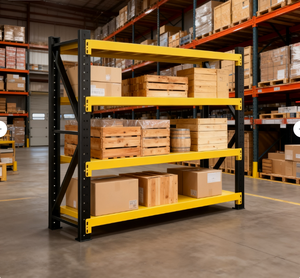
Estantes Metal Warehouse Adjustable Steel Display Stand Industrial Storage Racks Home Supermarket Iron Garage Storage Shelves
- Cold-rolled Q235B structural steel
- Modular beam pitch adjustment
- Thermoset electrostatic powder coat
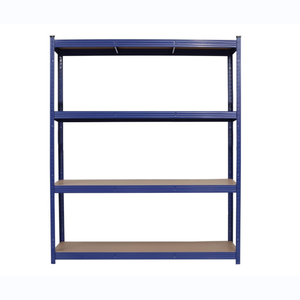
Industrial 4-Layer Slot Shelving Storage Racks Shelving Unit Home Use 4layer Boltless Display Storage Shelves Rack
- Interlocking keyhole boltless assembly
- 150kg – 350kg UDL rating per tier
- Knock-down high-cube carton packing
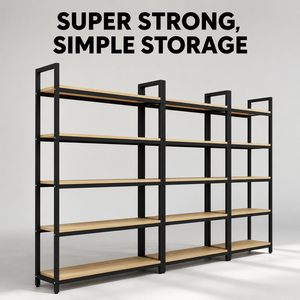
Industrial Steel Wood Storage Shelf Adjustable 5 Tier Display Rack Combined Metal Wooden Bookshelf for Shop Home Exhibition
- Hybrid carbon steel & composite core
- Anti-abrasion scratch-resistant finish
- Commercial & light-warehouse duty
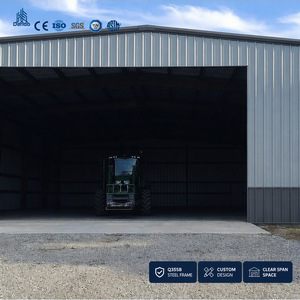
Large Span Warehouse Building Clear Height Storage Facility Pallet Racking System Logistics Space Optimization Design
- High-bay architectural clear integration
- Finite Element Analysis (FEA) verified
- Volumetric cube utilization > 92%
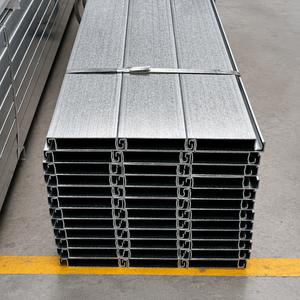
Warehouse Rack Platform Floor Deck | Dry-Lay Prefabricated Steel Panel For No-Concrete Storage Warehouse Building Construction
- Prefabricated dry-lay interlocking deck
- Eliminates wet-concrete cure downtime
- Up to 1,200 kg/m² uniform distributed load
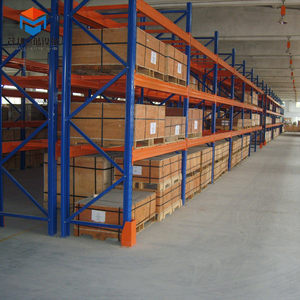
Warehouse Pallet Racking Selective Heavy Duty Industrial Storage Rack System Durable Q235 Steel Shelf Equipment
- Upright profile: Omega roll-formed cross
- Up to 4,500 kg per beam level
- 100% immediate individual pallet access
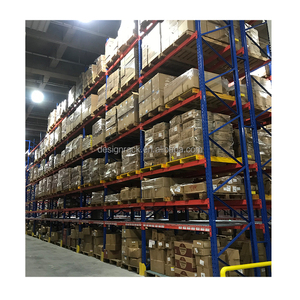
High Quality Warehouse Storage Heavy Duty Selective Pallet Rack Beam Shelf Custom Heavy Duty Warehouse Storage Beam Rack
- Twin-C welded box-beam profile
- 3-prong & 4-prong structural beam connectors
- Safety shear pins & seismic footplates
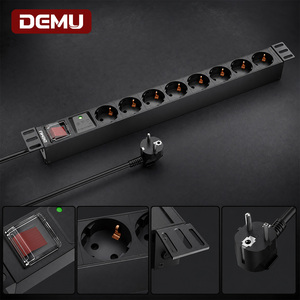
Industrial 1U Rack PDU 8 Way Schuko Outlets Double Pole SPD Surge T5 Aluminum Server Cabinet
- Industrial 19-inch rackmount standard
- Dual-pole SPD surge protection module
- Extruded anodized T5 aluminum housing
Executive Whitepaper: Strategic Sourcing of Industrial Racking & Shelving from China
In modern high-velocity global supply chains, warehouse storage systems are no longer treated as passive metal furniture. They are mission-critical, structural load-bearing capital investments that dictate floor throughput, volumetric spatial yield, occupational safety compliance, and long-term operating expenditures. For international supply chain directors, procurement officers, structural EPC contractors, and logistics hub developers, evaluating China best storage racks and shelving factories and exporters requires an uncompromising analysis spanning cold-formed steel metallurgy, automatic roll-forming tolerances, certified surface chemical pre-treatments, seismic joint ductility, and container-optimized logistics engineering.
The global intralogistics landscape has entered an era of spatial compression. Rapidly rising industrial land acquisition costs in primary shipping and transit hubs—from Europe, North America, and the Middle East to high-growth African logistical corridors such as Lagos, Mombasa, Tema, and Johannesburg—demand that clear heights be exploited up to 12 to 30 meters. This architectural shift exerts extreme vertical stress, moment loads, and deflection thresholds on vertical upright columns and horizontal beam connectors. Procuring directly from certified Chinese tier-one manufacturers like Guangzhou Heda Shelves Co., Ltd. (HEDA Shelves) bridges the gap between cost-engineered production scaling and rigorous compliance with international structural frameworks, including EN 15512:2020 (European standard for steel static storage systems), FEM 10.2.02, and the American ANSI/RMI MH16.1 specifications.
Enterprise Manufacturing Infrastructure: The HEDA Engineering Standard
Founded in 2001 and headquartered in Guangzhou, China, Guangzhou Heda Shelves Co., Ltd. has spent over two decades evolving from a regional heavy-duty steel shelving workshop into an international intralogistics equipment manufacturer. Spanning a 30,000 square meter standardized industrial facility supported by more than 300 experienced structural engineers, automated roll-forming line technicians, and certified welding specialists, HEDA Shelves maintains a verified monthly production capacity exceeding 30,000 metric tons.
Unlike trading intermediaries or fragmented assembly workshops that outsource raw material sourcing and metal treatment, HEDA Shelves integrates the entire value chain within a single closed-loop factory ecosystem. Every vertical upright, stepped beam, cantilever arm, and interlocking floor decking panel is tracked from raw hot-rolled and cold-rolled steel coils supplied by China's tier-one state-owned steel conglomerates (such as Baosteel and Shougang Group) through precision CNC punching, automated roll-forming, robotic metal inert gas (MIG) welding, and environmentally compliant electrostatic powder coating.
Steel Ingot & Slitting
Certified Q235B & Q355B steel coils verified for yield and tensile integrity.
Continuous Punching
High-speed CNC multi-stage punching with pitch accuracy within ±0.1mm.
Cold Roll-Forming
18-to-24 station roll-forming profiles maintaining cross-sectional geometry.
Automated Welding
Robotic pulse MIG seam welding for connectors with zero cold-lap defects.
10-Stage Finishing
Acid pickling, phosphating, pure water rinse & electrostatic powder curing.
Surface anti-corrosion chemistry is where HEDA Shelves differentiates itself in harsh operational environments. Warehouses constructed along marine coastlines or operating in tropical climates (such as West Africa, Southeast Asia, and Central America) routinely suffer from ambient humidity exceeding 85% RH and high salt atmospheric concentrations. To prevent premature oxidation, blistering, and structural corrosion beneath the paint film, HEDA components undergo an intensive 10-stage automatic pretreatment process, including hot alkaline degreasing, acid rust descaling, zinc-phosphate conversion coating, and passivation rinses, followed by thermosetting epoxy-polyester electrostatic powder application baked at 180°C–200°C. This achieves a uniform dry film thickness (DFT) of 60µm to 90µm, passing ASTM B117 salt-spray testing beyond 500 hours without red rust formation.


Comprehensive Product Selection Matrix: Matching Racking Architectures to Supply Chain Dynamics
Selecting the optimal storage framework requires balancing SKU velocity, storage density, equipment investment (forklift types), and accessibility. The engineering table below outlines the mechanical parameters, operating dynamics, and load envelopes across HEDA Shelves' core industrial product portfolio:
| Racking Architecture | Steel Grade & Profile | Standard Load Capacity | Selectivity | Aisle Width ($A_{st}$) | Best-Fit Industry Application |
|---|---|---|---|---|---|
| Selective Pallet Racking | Q235B Omega Upright (90×70 to 120×95mm), Welded C-Box Beams | 1,000 kg – 4,500 kg / level (UDL) | 100% Immediate Direct Access | 3.0m – 3.8m (Counterbalance) / 2.6m (Reach Truck) | FMCG, 3PL Distribution Centers, Retail E-commerce, General Import Hubs |
| Drive-In / Drive-Through | Heavy-Duty Structural Columns with Continuous Cantilever Support Rails | 1,000 kg – 1,800 kg / pallet position | Low (LIFO / FIFO by lane) | Integrated drive-through forklift corridors | Cold Storage, Beverage Bottling, Raw Grain Silos, Seasonal Agricultural Stock |
| Radio Shuttle Automation | Precision Roll-Formed Guide Rails, Reinforced Heavy Base Uprights | Up to 2,000 kg / pallet; shuttle speed 0.8–1.2 m/s | Medium-High (Automatic lane slotting) | No rack aisles; only transfer bay (2.8m – 3.2m) | Sub-Zero Cold Chain, Pharmaceutical Warehouses, Fast-Moving Edible Oils |
| Heavy-Duty Cantilever | Hot-Rolled H-Beams or Cold-Formed Double-C Welded Upright Columns | 500 kg – 3,000 kg / arm level (Cantilever span) | 100% Unobstructed Front Face | Aisle matched to load length + truck turning radius | Structural Rebar, PVC & Steel Tubing, Timber, Extruded Aluminum, Sheet Metal |
| Multi-Tier Mezzanine Platforms | Heavy Main H-Beams, Secondary Cold-Rolled Channels, Dry-Lay Steel Planks | 300 kg – 1,200 kg / m² uniform distributed floor load | 100% Hand-Picking Access per Tier | Internal human walkways (0.9m – 1.4m); integrated stair towers | Automotive Spare Parts, Apparel Warehouses, Modular Industrial Cleanrooms |
| Industrial Boltless Shelving | Slotted Angle / Keyhole Punch Q235 Posts with Embedded Steel Decking | 150 kg – 500 kg / shelf layer (Uniformly distributed) | 100% Manual Hand Access | 0.8m – 1.2m pedestrian picking aisles | Hardware Stores, Automotive Aftermarket, Maintenance Tool Cribs, Garages |
Procurement & Technological Trends: The 2026–2030 Intralogistics Horizon
Global logistics engineering is currently navigating transformative technological disruptions. When international procurement heads issue requests for proposals (RFPs) to Chinese storage factories, standard commodity specifications are rapidly being replaced by advanced structural engineering requirements:
1. Transition to High-Yield Q355B Steel Profiles
By migrating from traditional Q235B mild carbon steel (minimum yield strength 235 MPa) to low-alloy micro-alloyed Q355B steel (yield strength 355 MPa), structural uprights achieve equal or superior load-bearing moment capacities while reducing overall steel wall thickness by 12% to 18%. This dramatically reduces structural tare weight, significantly lowering ocean freight tonnages and shipping container requirements while improving building seismic flexibility.
2. Pre-Engineered Dry-Lay Steel Mezzanines
Traditional multi-level industrial warehouses relied on poured-in-place reinforced concrete floor slabs, causing weeks of chemical curing delays, moisture evaporation issues, and permanent structural immobility. Modern logistics projects have rapidly shifted to factory-slotted, interlocking dry-lay galvanized and powder-coated steel platform decks. These modular panels install instantaneously with flush mechanical fasteners, accept pallet jack traffic immediately, and permit structural dismantling and spatial relocation without building demolition.
3. Semi-Automated 4-Way Shuttle Hybridization
Full lights-out AS/RS crane automation remains cost-prohibitive for many mid-market third-party logistics (3PL) providers and African import distributors facing intermittent electrical grids. The preferred intermediate procurement trend is dense radio shuttle racking. Autonomous battery-powered shuttles operate on integrated galvanized rails inside storage lanes, managed via RF handheld controllers. Forklifts only handle staging at the outer picking face, quadrupling throughput while preventing forklift mast impacts inside the rack structure.
International Freight Engineering: Maximizing Container Stuffing & Port Landing Economics
A critical blind spot in overseas racking procurement is maritime logistics optimization. Heavy steel storage racks are dense, high-mass goods prone to cubic waste if unscientifically packed. Inexperienced exporters often load loose welded frames or poorly bundled uprights, causing standard 40-foot High Cube (40HQ) ocean containers to "cube out" with under 18 tons of payload, effectively doubling the landed freight cost per pallet position.
HEDA Shelves treats export packaging as a disciplined branch of mechanical engineering. Upright frames are precision knock-down (KD) engineered: vertical columns, horizontal braces, diagonal lacing, and baseplates are nested, bundled with steel strapping, protected by edge guards, and fitted with dedicated timber skid blocks that match forklift tine clearances. Stepped beams are stacked face-to-face in interlocked bundles to eliminate hollow voids. Using specialized container calculation algorithms, HEDA achieves over 88% volumetric stuffing efficiency, routinely packing 25 to 27 metric tons into each 40HQ container (subject to local port road weight regulations). For destinations such as Apapa (Nigeria), Tema (Ghana), Durban (South Africa), and Mombasa (Kenya), this precision loading yields a direct 15% to 22% reduction in landed structural cost per pallet position.
Strategic Chinese Factory Auditing Checklist for Overseas Procurement Directors
Prior to releasing initial purchase deposits or irrevocable Letters of Credit (L/C), international procurement committees should audit prospective Chinese manufacturers against four critical quality assurance criteria:
- Mill Test Certificates (MTC) & Primary Steel Verification: Confirm that the manufacturer sources primary hot/cold rolled coils directly from accredited tier-1 steel mills. Low-tier Chinese workshops occasionally substitute scrap-recycled non-standard steel strips containing erratic carbon, silicon, and sulfur ratios, which exhibit brittle crack propagation under seismic or dynamic forklift shock loads.
- Continuous CNC Column Punching Alignment: Inspect the upright punching line. Precision tooling must punch teardrop or butterfly slots continuously across cold coil lines prior to roll-forming. If slots are punched manually after roll bending, cumulative pitch drift will prevent horizontal beams from locking square, creating internal structural racking twists during vertical erection.
- Automated Pretreatment Chemical Dip Tank Maintenance: A physical audit must verify the presence and active titration monitoring of multi-stage chemical pretreatment immersion tanks (pickling, phosphating, de-ionized rinses). Skipping chemical phosphating and applying powder directly over oily or flash-rusted cold-rolled steel causes catastrophic paint delamination within 12 months in humid or unconditioned warehouses.
- Non-Destructive Weld Testing (NDT): Beam end connectors bear intense rotational and shear stresses. Ensure that the factory utilizes automated robotic welding arms with stable shielding gas mixtures ($80\%\text{ Ar} + 20\%\text{ CO}_2$) rather than erratic manual stick welding, and inspect periodic ultrasonic or dye-penetrant weld testing records.
Frequently Asked Questions (FAQ)
Clear technical, structural, and logistical guidance addressing common questions raised by warehouse developers, EPC contractors, and global supply chain planners.
What specific warehouse dimensions and data are required to generate an engineering CAD layout and structural quotation? +
How does HEDA Shelves ensure seismic and structural safety compliance for international project installations? +
What are the key structural and operational differences between Q235B and Q355B steel in racking fabrication? +
How are storage rack components protected against coastal atmospheric corrosion, industrial humidity, and sub-zero cold room condensation? +
Can a local warehouse crew install HEDA racking systems without specialized foreign factory technicians on site? +
What are typical manufacturing lead times, export incoterms, and maritime container shipping schedules from Guangzhou, China? +
What is the structural deflection tolerance allowed on horizontal beams when fully loaded to capacity? +
What structural accessories are essential to protect storage racks from daily forklift truck impacts? +
Request Custom Warehouse CAD Layout & Direct Factory Quotation
Send your warehouse dimensions, ceiling heights, and pallet specifications. Our senior structural intralogistics engineers will provide a complete 2D CAD layout, 3D rendering, and structural quotation within 24 hours.