Precision-Engineered Heavy Duty Racking Systems
Tested for dynamic load deflection, structural equilibrium, and extreme material handling environments. Each assembly optimizes pallet positions while maintaining standard-compliant structural integrity.
Engineering Architecture of Back-to-Back Pallet Racking
A deep structural review of design mechanics, seismic row-spacing stability, steel grade integrity, and logistics efficiency from China's leading heavy-duty manufacturing plants.
1. Geometric Configuration and Flue Space Thermodynamics
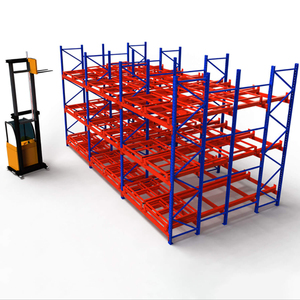
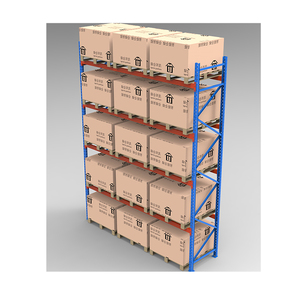
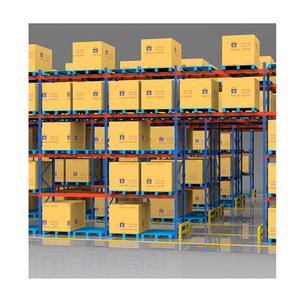
Back-to-back racking represents the most structurally consolidated and cost-effective layout pattern in modern high-bay material handling facilities. Configured by mechanically coupling two single-deep racking runs spine-to-spine through rigid row spacers, this layout eliminates unnecessary service aisles while substantially enhancing cross-aisle structural rigidity. The essential engineering pivot in back-to-back layouts is the precision spacing between parallel upright frames: the longitudinal flue space. According to strict NFPA 13 building fire safety regulations and international warehouse structural design manuals (such as EN 15512 and RMI MH16.1), maintaining an unobstructed vertical flue aperture of 150mm to 300mm is non-negotiable. This channel guarantees unobstructed vertical heat evacuation toward ceiling-mounted ESFR (Early Suppression Fast Response) fire sprinklers and prevents horizontal thermal bridging across storage bays during fire incidents.
Furthermore, China's Tier-1 industrial manufacturing plants utilize heavy cold-rolled Q235B and Q355B structural coil steel, roll-formed into multi-faceted Omega (Ω) profile uprights. The interconnected row spacers do not merely separate racks; they act as horizontal moment-resisting stabilizing links. Under forklift braking or lateral impact loading, the spine-to-spine tie assembly acts as a double-frame composite column, spreading shock-load energy across multiple upright vertical channels and grounding lateral deflection forces safely into the concrete foundation anchors.
2. Steel Cold-Forming Dynamics, Punching Tolerances & Beam Load Dynamics
In wholesale industrial export, dimensional uniformity determines the difference between rapid on-site assembly and disastrous bolt hole misalignment. Guangzhou Heda Shelves Co., Ltd. uses continuous automated production lines that punch upright column pitch apertures at exact 50mm or 75mm increments before cold-roll forming. Punching prior to progressive bending ensures zero tensile distortion inside the punch slots. Cross-sections are fabricated with up to 12 load-bearing bends, distributing vertical compression stress evenly and preventing torsional twisting under maximum pallet load limits.
Beams are engineered from continuous double-C interlocking box profiles (step beams or tube beams) robotic-welded to multi-tooth connector claws. These claw pieces incorporate precision high-tensile safety locking pins that resist accidental upward vertical dislodgement caused by forklift mast errors. Structural load calculations prioritize elastic limits: allowable deflection is strictly calculated under 1/200th of the span length (L/200) under full design loading capacity (ranging from 1,000 kg to 4,500 kg per beam level). This structural rigor ensures total stability during high-throughput daily operations across FMCG, chemical manufacturing, cold storage, and heavy machinery parts depots.
| Structural Parameter | HEDA Heavy Back-to-Back Systems | Standard Commercial Racks | Engineering Benefit & ROI Impact |
|---|---|---|---|
| Steel Grade Material | Certified Q235B / Q355B High-Yield Alloy | Recycled or Uncertified Scrap Steel | Eliminates structural fatigue; withstands dynamic forklift impacts |
| Upright Forming Geometry | 10-12 Fold Multi-Faceted Omega Profile | Simple 4-6 Fold Channel Profile | Higher resistance to torsional stress and localized compressive buckling |
| Surface Pre-Treatment | 9-Stage Pickling, Phosphating & Ultrasonic Degreasing | Basic Single Acid Wash or Manual Wipe | Prevents rust creep in coastal ports and high-humidity tropical sites |
| Powder Coating Adhesion | Electrostatic Epoxy-Polyester Resin (70-90μm) | Single-pass paint coating (<40μm) | Resistant to forklift abrasion, scuffing, chipping, and UV breakdown |
| Row Spacer Integration | Heavy-gauge bolted rigid tube channel links | Light folded strap or wire ties | Maintains certified seismic spine rigidity and precise NFPA flue space |
Future Procurement & Technological Trends (2026–2030)
How international B2B buyers, supply chain executives, and EPC contractors are future-proofing industrial storage layouts against automation, supply volatility, and climate shifts.
1. Hybrid AGV & AMR Integration
Traditional manual forklift aisles are rapidly shifting toward autonomous mobile robot (AMR) compatibility. Modern back-to-back designs feature precision guide rails, RFID-readable bay markers, and flush-mounted wire-mesh bottom levels that accommodate high-speed robotic picking cycles without human operator risk.
2. Climate-Resilient Surface Metallurgy
With massive supply chain expansions across high-humidity coastal zones in Southeast Asia, West and East Africa, and Latin America, standard paints are failing within 24 months. Procurement demand has swung decisively toward multi-stage chemical passivation, anti-corrosive zinc primers, and hot-dip galvanizing for harsh outdoor or refrigerated conditions.
3. Direct Factory Sourcing & Modular Scaling
Middlemen markups are being eliminated. Large logistics developers now bypass domestic trading brokers, contracting directly with vertically integrated Chinese manufacturers capable of supplying certified structural PE calculations, detailed bill-of-materials container packing, and on-demand modular frame expansions.
Seismic Resilience
Enhanced ductile steel formulations and thickened baseplates engineered to flex slightly under earth tremors, preserving structural integrity in earthquake-prone regions.
Integrated Sensor Telemetry
Fiber-optic and strain-gauge sensors embedded directly on main beams to monitor structural deflection, dynamic load stress, and accidental collision damage in real time.
Container-Optimized Bundling
Computer-optimized knock-down nesting of upright components and interlocking beams, guaranteeing maximum gross cargo weight per 40HQ ocean freight container.
Full Carbon Lifecycle Audits
Implementation of clean electric drying ovens and scrap steel closed-loop recycling during rolling phases to comply with evolving EU and international green building codes.
Factory Direct Manufacturing & Global Supply Capabilities
Headquartered in Guangzhou with over 20,000 square meters of precision fabrication workshops, we combine 25 years of engineering heritage with turnkey global export execution.
Prime Strip Slitting
CNC Pitch Punching
Multi-Pass Cold Forming
Automatic Robotic Welding
Chemical Pretreatment
Phosphating Passivation
Electrostatic Powder Spray
High-Temp Oven Curing
Dimensional & Weld QA
Export Container Packing
Internationally Certified Credentials
Every structural batch meets European CE Certification (No. 2435-CPR-8605159), ISO 9001:2015 Quality Management standards (No. 18624Q00169R0M), and stringent RoHS hazardous substance limits.
Complimentary 3D & CAD Layouts
Our senior structural engineers produce full CAD site plans, 3D renderings, and precise load calculation stress diagrams within 24 hours of receiving warehouse blueprints—at zero upfront charge.
Seamless Global Ocean Logistics
Specialized knock-down bundling profiles maximize shipping container density. We manage full export documentation, fumigation certificates, and maritime freight tracking to major international ports worldwide.
Frequently Asked Questions for B2B Importers
Clear, definitive engineering guidance covering customs clearances, seismic tolerances, fire code spacing, and container packing calculations.
What is the exact engineering difference between Single Deep and Back-to-Back Racking?
How do back-to-back row spacers satisfy NFPA sprinkler safety regulations?
How do you optimize ocean freight loading to minimize per-pallet landed costs?
What warehouse parameters do your engineers need to produce a free CAD design?
What quality control documentation is provided prior to factory dispatch?
Ready to Optimize Your Warehouse Layout & Secure Direct Factory Pricing?
Send your warehouse dimensions and material specifications to our engineering team. We deliver complete CAD drawings, load calculations, and competitive FOB/CIF quotations within 24 hours.