High-Efficiency Warehouse Storage & Industrial Racking Units
Explore our heavy-duty industrial storage racks and modular shelving systems engineered with cold-rolled Q235B/Q355B structural steel, precision roll-formed components, and electrostatic powder coating.
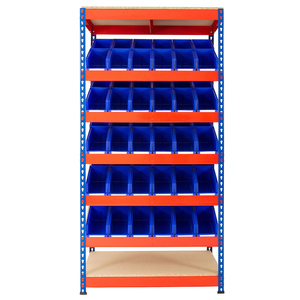 Rivet Series
Chinese Warehouse Boltless Medium Duty Small Storage Multi Layer Shelf Rack Unit
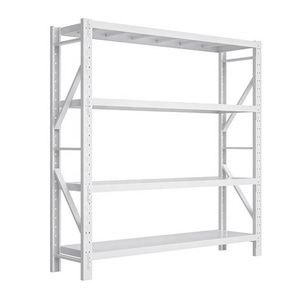 Medium Duty
 Storage Rack Steel Pallet Warehouse Medium Duty Rack System
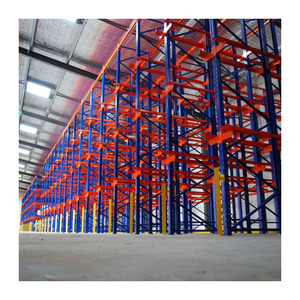 High Density FILO
Mracking Industrial Drive-In Racking System Corrosion Protected Shelves
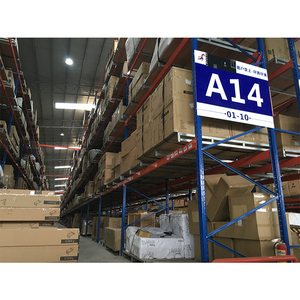 Heavy Duty
Industrial Storage Rack Heavy Duty Steel Pallet Rack System For Warehouses
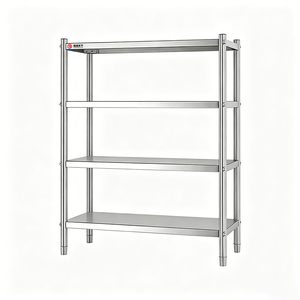 Sanitary Cleanroom
Stainless Steel Storage Shelf Heavy Duty Shelving Restaurant Hotel 4-Tier Rack
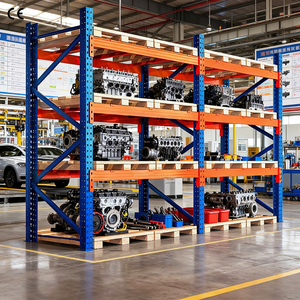 Warehouse Pro
Pallet Racking Shelves Heavy Duty Metal Pallet Storage Racking 1000kg
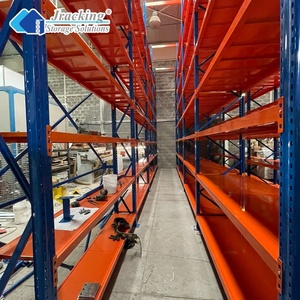 Euro Standard
Jracking EURO Standard Warehouse Storage Heavy Duty Steel Pallet Racking
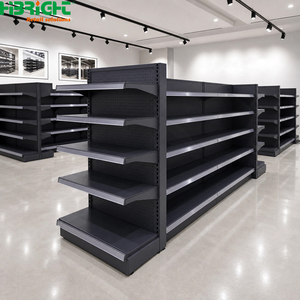 Commercial Display
Supermarket Shelving Heavy Duty Display Racks With Free 3D Design
Double Deep Pallet Racking: Mechanics, Physics & Volumetric Calculations
A rigorous structural analysis for procurement directors, logistics engineers, and warehouse operations managers seeking high-yield storage density without exceeding standard reach truck capital budgets.
1. Kinematic Mechanics & Volumetric Footprint Equilibrium
Double deep pallet racking represents an optimal engineering compromise between the 100% immediate selectivity of standard selective pallet racking and the high volumetric cube utilization of Drive-In or Automated Storage and Retrieval Systems (ASRS). By positioning two pallet positions back-to-back from a single operating aisle (yielding four pallet rows between any two access aisles), double deep configurations reduce the floor area dedicated to material handling equipment aisles by up to 50% to 55%.
The operational physics rely on specialized reach trucks equipped with either a pantograph scissor mechanism or dual-depth telescopic telescopic hydraulic forks. The front pallet position is accessed identically to standard selective racking, while accessing the rear position requires the pantograph reach mechanism to extend across the front bay. This requires structural engineers to factor in horizontal shear loads and dynamic deflection moments (typically calibrated to L/200 or L/250 limits according to FEM 10.2.02 and ANSI MH16.1 specifications).
| Storage System Architecture | Direct Pallet Accessibility | Floor Utilization Factor | Capital Expenditure / Pallet | MHE Forklift Requirement | Inventory Turnover Velocity |
|---|---|---|---|---|---|
| Standard Selective Racking | 100% (Instant FIFO) | 35% - 42% | Baseline ($) | Standard Counterbalance / Reach | Very High (Multi-SKU Velocity) |
| Double Deep Pallet Racking | 50% (Pair-Level FILO) | 58% - 66% | Moderate ($$) | Deep-Reach Pantograph Forklift | High (Batched SKUs / 2-4 Pallets) |
| Drive-In Racking System | <15% (Strict LIFO) | 70% - 78% | Moderate to High ($$$) | Standard Narrow Forklift | Medium-Low (Homogeneous Mass) |
| Push Back Racking (Nested Carts) | 20% - 33% (Lane LIFO) | 60% - 70% | High ($$$$) | Standard Counterbalance / Reach | Medium-High (Buffer Storage) |
| Radio Shuttle Automation | Semi-Automated (FIFO/LIFO) | 75% - 85% | Very High ($$$$$) | Standard Reach + Autonomous Shuttle | Very High (Automated Lane Density) |
From a logistics engineering standpoint, double deep storage is most mathematically effective when SKU variety follows a Pareto distribution where 2 to 4 pallets exist per unique SKU lot. When managed under warehouse execution software (WES) or advanced WMS algorithms, honeycombing loss (void space created when rear pallets cannot be accessed because front pallets are occupied) is suppressed to under 6.5% across active distribution nodes.
2. Structural Metallurgy, Profile Geometries & Deflection Calculations
Double deep racking frameworks experience heightened dynamic bending moments during rear pallet retrieval due to the extended load center distance ($LC$). Whereas a standard 1,200mm deep pallet handled on selective racking has an $LC$ of 600mm from the fork face, reaching to the double deep rear position shifts the effective load center past 1,800mm.
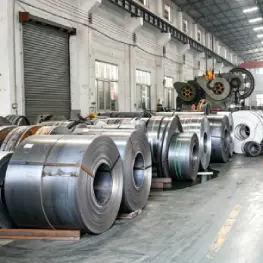
At our Guangzhou industrial manufacturing facility, structural integrity begins with verified prime steel coils:
- Upright Columns: Fabricated from cold-rolled high-tensile Q235B and Q355B steel grades with minimum yield strengths of 235 MPa and 355 MPa respectively. Profiles feature multi-bend cross-sections (up to 13 distinct mechanical bends per column) to drastically boost torsional stiffness, slenderness ratio resistance, and Euler buckling resistance under concentrated axial loads up to 28,000 kg per frame.
- Continuous Heavy Duty Beams: Available in double C-beam interlocking box weld profiles (e.g., 80x50, 100x50, 120x50, 140x50, and 160x50mm) configured with high-precision robotically welded 3-claw or 4-claw connector brackets. Connectors are cold-stamped from 3.5mm-4.0mm heavy gauge plate to guarantee negative moment transfer across upright-beam joints.
- Safety Locking Mechanisms: Each beam connection is anchored by positive-locking spring safety pins capable of withstanding accidental uplift forces exceeding 1,000 kg per hook connection without disengagement, in strict compliance with international EN 15512 safety directives.
- Anti-Deflection Lower Tie Beams: Due to the depth of the 4-pallet deep bay footprint (often measuring 2,300mm to 2,500mm frame depth, or two linked frames with rigid spine spacers), heavy gauge roll-formed pallet support bars and back-stop beam buffers are engineered into every picking level to provide absolute operator guidance.
Future Procurement Trends in Double Deep Racking Systems (2025–2035)
Global supply chain volatility, urban real estate costs, and technological convergence are reshaping how wholesale buyers, 3PL giants, and industrial developers procure and deploy double deep storage infrastructure.
1. Autonomous Mobile Reach Truck (AMR) Integration
Procurement specifications are pivoting toward "automation-ready" structural tolerances. Modern double deep racking now incorporates laser-guided alignment reflectors, high-contrast floor striping zones, and tighter millimeter-level beam leveling (tolerance within ±1.5mm) to accommodate driverless pantograph reach trucks and vision-guided AGVs without manual recalibration.
2. Decarbonized Steel & EPD Environmental Certification
Tier-1 multinational corporations and European/North American logistics buyers increasingly demand Environmental Product Declarations (EPD) and ISO 14064 carbon verification for imported steel racks. Leading Chinese manufacturers are transitioning from coal-fired blast furnace billet supplies to electric arc furnace (EAF) low-carbon recycled feedstocks and lead-free thermoset powder coatings.
3. High-Performance Hybrid Galvanization for Cold Chain
With the rapid proliferation of perishable cold chain hubs across Southeast Asia, the Middle East, and Africa, double deep procurement is prioritizing continuous pre-galvanized coils (Z275 coating weight) and hot-dip galvanized upright bases to prevent sub-zero condensation rust and structural embrittlement down to -30°C.
4. AI-Driven Dynamic Slotting & Mixed Double Deep Systems
Modern warehouse layouts rarely employ uniform double deep across 100% of the facility. High-velocity SKUs are deployed on perimeter selective racks, medium-velocity batched items occupy double deep central aisles, and slow-moving overflow utilizes drive-in bays. Factory OEM partners who supply modular, interchangeable components across these systems command dominant competitive value.
5. Strict Non-Linear Seismic Resistance Engineering
Earthquake-prone distribution zones (such as the Pacific Rim, Mediterranean belt, and Andean regions) now dictate high-ductility base plates with calibrated slotted holes and multi-directional sway bracing according to AS 4084 and RMI 2012 standards. Structural design requires finite element analysis (FEA) simulations to verify joint ductility under cyclic ground acceleration.
6. Knock-Down (KD) Container Logistics Optimization
Ocean container shipping rates demand absolute cubing efficiency. B2B buyers now refuse pre-welded upright frames if freight volume is inflated. Precision bolted upright trusses that assemble on-site in under 8 minutes per frame permit over 24,000 kg of racking to pack seamlessly into a standard 40HQ container, lowering per-pallet freight landing costs by 30%.
Guangzhou Heda Shelves Co., Ltd.: 25 Years of Precision Storage Manufacturing
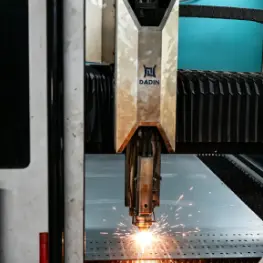
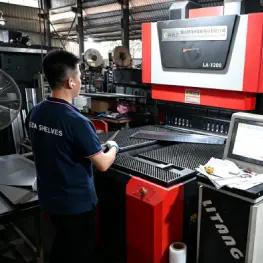
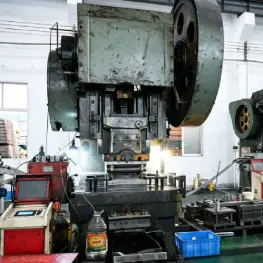
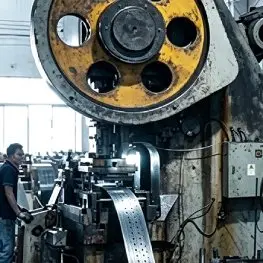
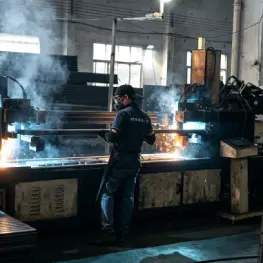
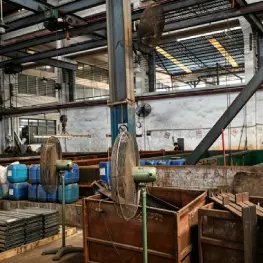
Established in 2001, Guangzhou Heda Shelves Co., Ltd. has grown from a regional structural fabricator into an internationally respected powerhouse in warehouse storage systems, heavy-duty pallet racking, and structural mezzanines. Our state-of-the-art 30,000 square meter manufacturing plant in Guangzhou operates with fully integrated rolling lines, high-precision automated punching, robotic welding, and industrial-grade surface treatment.
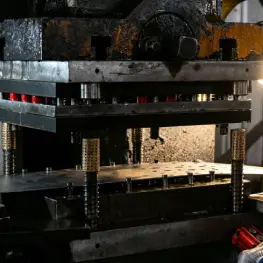
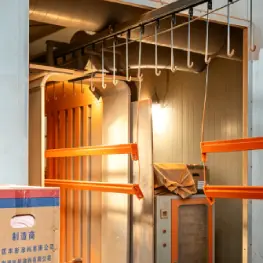
Unlike trading intermediaries, Heda Shelves maintains single-source ownership over every stage of product genesis: from slit steel coil inspection to CNC cold-roll profile forming, high-velocity multi-station stamping, multi-axis robotic arc welding, automated 9-stage phosphate pre-treatment, and high-durability electrostatic powder coating.
With an average monthly capacity reaching 30,000 tons of fabricated steel and over 10,000 successful warehouse projects delivered across 120+ countries, HEDA Shelves engineers customized storage layouts that combine maximum load safety, container-optimized freight economics, and swift field installation.
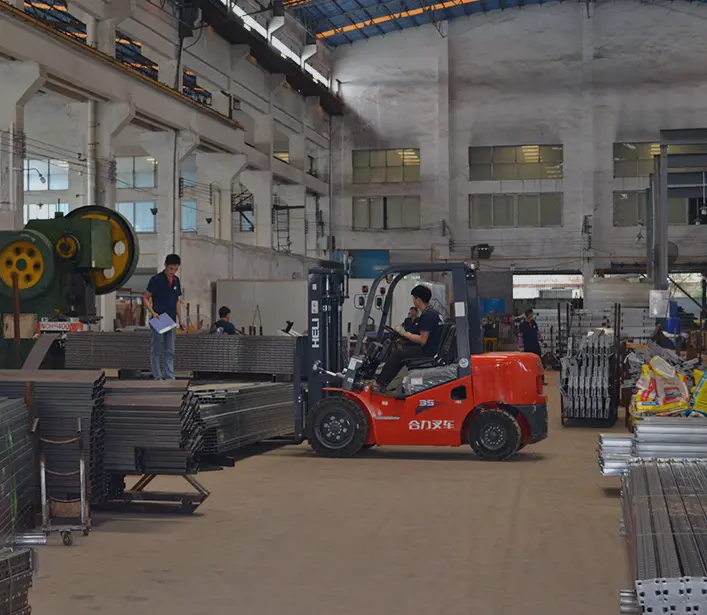
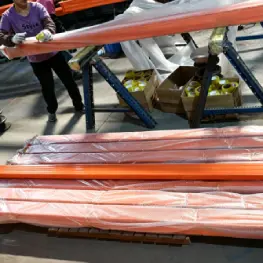
Precision Manufacturing Cycle: Coil to Container
Every component follows an uncompromising ten-stage quality assurance process ensuring structural predictability and corrosion resistance in demanding logistics climates.
Frequently Asked Questions: Sourcing Double Deep Racking from China
Direct, unvarnished technical and logistics answers written by senior structural racking engineers to help procurement teams evaluate parameters, freight, and compatibility.
What forklift equipment is required to operate a Double Deep Pallet Racking system? +
How does reaching to the second pallet position affect forklift lifting capacity? +
What are the standard beam clearances and bay dimension calculations? +
How does Heda Shelves calculate frame and beam structural deflection limits? +
How is Double Deep Racking packed to maximize container loading factors? +
What surface treatment ensures longevity in humid or coastal warehouse environments? +
Can Heda Shelves provide free 3D CAD design layouts before placing an order? +
Request Your Custom Double Deep Racking Layout & Wholesale Quotation
Partner directly with a CE & ISO 9001:2015 certified China manufacturer. Eliminate intermediate trading markups, secure precision Q235B/Q355B structural steel, and receive turnkey 3D layout designs and structural calculations tailored to your logistics facility.