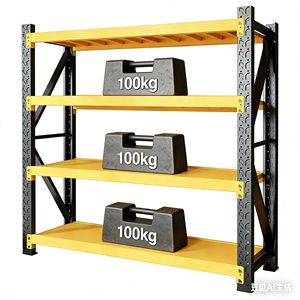
30,000 m²
Production Floor Facility
30,000 T
Monthly Steel Output
ISO & CE
Certified Structural Standards
10,000+
Global Racking Deliveries
Engineered Industrial Tire & Heavy Warehouse Rack Systems
Direct factory production of modular, high-density, and customizable steel tire storage solutions designed to maintain structural safety and maximize volumetric capacity.
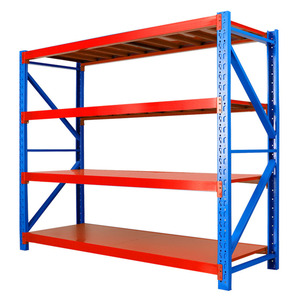
Medium/Heavy Duty Storage Equipment Warehouse Industrial Powder Coating Cargo Steel Iron Tool Supermarket Stacking Storage Racks
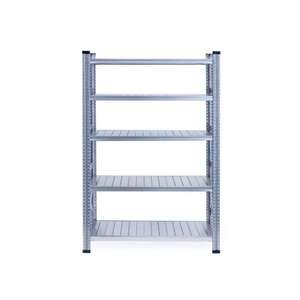
Best Quality 5-Tier Modular Galvanized Steel Adjustable Boltless Shelf Rack for Warehouse Storage
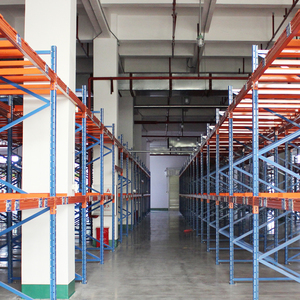
Heavy Duty Shelf Warehouse Stacking Storage Equipment Steel Warehouse Rack Storage Selective Pallet Rack
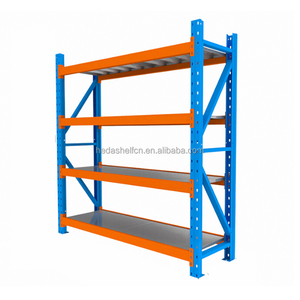
Heda Factory Metal Boltless Stacking Rack Industrial Warehouse Storage Racks Shelves for Racking System
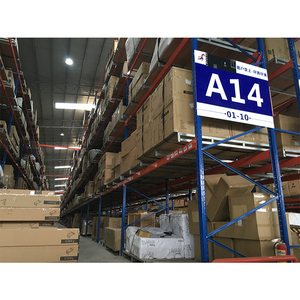
Industrial Storage Rack Heavy Duty Steel Pallet Rack System For Warehouse Organization
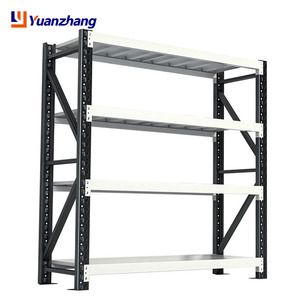
Light Duty Adjustable Metal Shelves, Bolted Structure for Parts & Carton Storage, Small Racks for Workshop & Warehouse
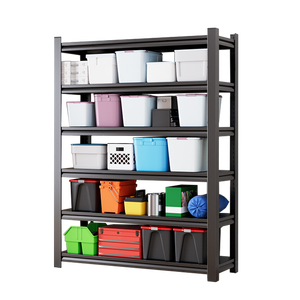
Diy Adjustable Angle Rack Clothes Warehouse Racks Display Stand Slotted Household Metal Storage Angle Steel Shelf Rack
Industrial Engineering Whitepaper: Industrial Tire Racking Architecture
A comprehensive examination of structural metallurgy, static versus dynamic loading parameters, and footprint utilization across global tire logistics facilities.
The industrial storage of passenger car radial (PCR), truck, bus, and radial (TBR), as well as off-the-road (OTR) tires presents mechanical, structural, and chemical challenges fundamentally distinct from standard palletized warehousing. Because elastomer compounds exhibit continuous viscoelastic creep under sustained line loading, conventional horizontal deck storage leads directly to irreversible tread deformation, casing bead damage, and localized flat spots. Sourcing from direct Chinese manufacturing facilities requires procurement executives to thoroughly audit beam profile metallurgy, deflection limits under dynamic forklift impact, and protective surface treatments that counteract carbon black vulcanization volatility.
A rigorous industrial tire rack installation relies upon Q235B or Q355B cold-rolled structural steel, manufactured with continuous automated roll-forming equipment to prevent internal micro-fissures along bend radii. Uprights and horizontal beams must adhere strictly to international deflection criteria, wherein maximum elastic deflection under peak capacity does not exceed 1/200th of the clear structural span (L/200). Failing to design for these thresholds risks systemic beam sag, structural connection fatigue, and catastrophic rack collapse under cyclic stacking procedures.
Key Engineering Finding: Implementing angular nested saddle beams or tubular barrel profiles distributes carcass contact stress across an arc greater than 45 degrees, drastically eliminating bead damage while accelerating SKU retrieval velocity by up to 34% compared to standard flat pallets.
Modular folding tire racks (stack racks) are widely favored in dynamic distribution facilities due to their modular versatility. In operational distribution scenarios, full vertical cube utilization is achieved by stacking loaded units up to 4 to 6 tiers high. When off-season consolidation is required, a certified 4:1 or 6:1 folding reduction ratio allows warehouses to reclaim up to 80% of valuable floor space. Achieving this operational flexibility requires high-integrity cup-and-cone alignment posts, precision-welded gusset plates, and heavy-gauge base frames capable of absorbing lateral seismic motion alongside cyclic forklift placement shocks.
Structural Metallurgy
Certified Q235B/Q355B cold-rolled high-tensile steel, offering optimized yield points, controlled deflection thresholds, and resilience against continuous static loads up to 1,500 kg per storage tier.
Corrosion Shielding
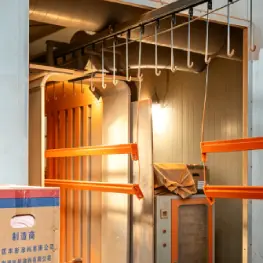
Automated multi-stage immersion: ultrasonic degreasing, acid pickling, and zirconium phosphating preceding a 60–80 micron electrostatic epoxy-polyester powder coat resilient to humidity and chemical fumes.
Intermodal Loading Density
Engineered knock-down structures configured to pack perfectly within 40ft High Cube containers, minimizing dead space and cutting transoceanic freight cost per pallet location.
Future Procurement & Manufacturing Development Trends
Navigating the convergence of autonomous warehousing, lifecycle sustainability, and next-generation automotive logistics.
The tire distribution landscape is shifting rapidly. As global supply chain managers look toward 2026–2030, procurement priorities are adapting to several key technological and regulatory transitions:
EV Tire Footprint Redesign
Electric vehicles require dedicated tires engineered with acoustic dampening foam inserts and reinforced side walls, making them 20% to 30% heavier than internal combustion counterparts. Procurement specifications now mandate higher load-bearing steel configurations and reinforced barrel profiles to handle this added weight safely.
ASRS & AGV Compatibility
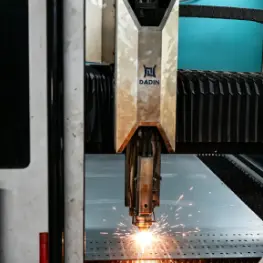
Automated guided vehicles and automated storage/retrieval cranes require manufacturing tolerances within ±1.0 mm. Industrial tire rack factories in China are transitioning to continuous automated laser-cutting stations and robotic weld lines to ensure complete dimensional precision across thousands of structural bays.
Decarbonized Powder Coating
International environmental mandates (ESG) demand verifiable reductions in volatile organic compounds (VOCs). Modern industrial facilities utilize ultra-low-energy curing powder polymers, fully closed-loop water treatment rinse systems, and recyclability passports for all heavy steel components.
Enterprise Advantages & Precision Manufacturing Capabilities
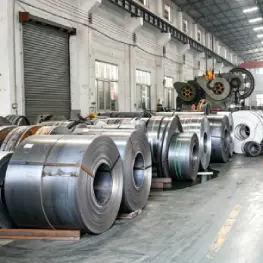
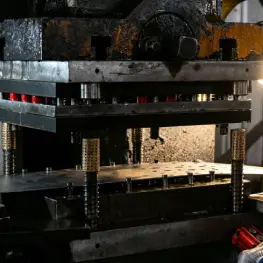
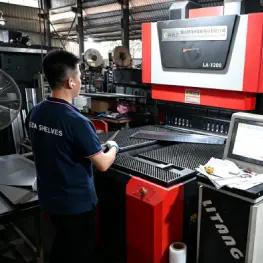
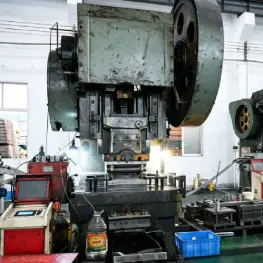
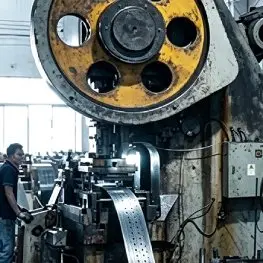
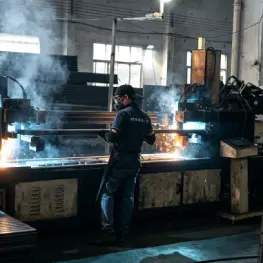
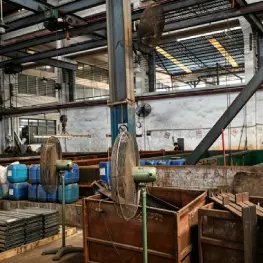
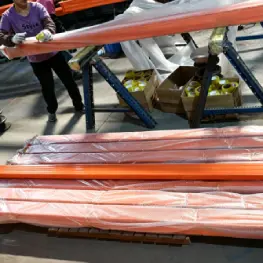
With 25 years of engineering heritage and a 30,000 m² automated production facility, Guangzhou Heda Shelves Co., Ltd. controls the end-to-end quality loop from hot-rolled raw coils to containerized sea shipments.
Deploying large-scale racking projects requires verified engineering capacity, consistent steel grain structure, and rigorous third-party certifications. Holding CE Certificate No. 2435-CPR-8605159, ISO 9001:2015 registration No. 18624Q00169R0M, and full RoHS compliance, our fabrication workflows prioritize total quality control and verified structural performance.
Industrial Tire Rack Procurement FAQ
Clear, practical answers addressing common engineering inquiries, logistics planning, and manufacturing verifications.
How do barrel beams prevent tire casing and bead deformation?
Standard pallet racking utilizes rectangular horizontal beams with a sharp 90-degree edge. When heavy tires sit directly on these beams, the narrow point of contact causes intense localized pressure, leading to casing deformation and bead strain. Purpose-engineered industrial tire racks feature cylindrical tubing or angled steel profiles that match the tire tread's natural curvature. This increases the contact area to distribute tire weight evenly, protecting internal belts and maintaining compound shape over extended storage periods.
What static and dynamic load safety margins are applied in production?
Our engineering team builds with an integrated structural safety factor ranging from 1.5 to 1.65, fully compliant with FEM 10.2.02, RMI, and EN 15512 safety protocols. For example, a heavy stacking rack rated for an operating capacity of 1,200 kg is engineered and validated to withstand ultimate static load testing of at least 1,800 kg without exceeding the elastic deflection limit (L/200) or experiencing structural deformation.
How do fold-down stack racks optimize shipping volume in sea containers?
Fixed non-collapsible welded tire stillages contain massive amounts of empty space, driving up transpacific and intercontinental ocean freight costs. Our modular stacking tire racks are engineered with heavy-duty fold-down posts or detachable corner pillars. This design achieves a 4:1 to 6:1 nesting ratio when collapsed, enabling up to 140–180 collapsed units to fit within a single 40ft High Cube container, dramatically lowering ocean freight cost per unit.
What surface treatment ensures durability in high-humidity regional logistics hubs?
To guard against tropical humidity, maritime salt spray, and sulfur compounds present in fresh rubber, all steel parts undergo a comprehensive 7-stage chemical pretreatment, including hot ultrasonic degreasing and zinc-phosphating. Components are then sealed with an electrostatically applied epoxy-polyester architectural powder coat baked at 180°C–200°C. For severe coastal environments, cold rooms, or outdoor yards, hot-dip galvanizing per ASTM A123 is available to ensure 20+ years of rust protection.
Ready to Optimize Your Industrial Tire Storage Facility?
Send your warehouse floor plan, clear ceiling height, tire dimensions, and handling machinery specifications. Our dedicated structural engineering team provides complete 2D/3D CAD layouts, dynamic structural load calculations, and factory-direct price estimates within 24 hours.