Precision Storage Systems & Heavy-Duty Structural Equipment
Explore our heavy-load warehouse solutions, multi-tier platforms, and high-density industrial systems configured for global supply chains, cold storage facilities, and high-throughput distribution hubs.
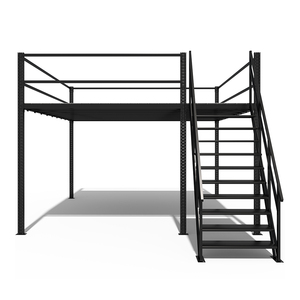
Heavy Duty Industrial Mezzanine Floor Rack Attic System
- Load: 300 - 1,000 kg/m²
- Steel Grade: Certified Q235B
- Modular Interlocking Structural Deck
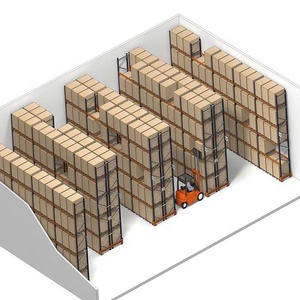
Heavy Duty Pallet Beam Industrial Warehouse Storage Rack
- Load: 1,000 - 4,500 kg/level
- Section: Box Beam / Step Beam
- 100% Selective Direct Access
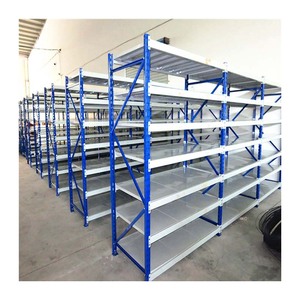
Mracking Light Duty Boltless Warehouse Storage Rack
- Load: 150 - 300 kg/tier
- Interlocking Clip Connection
- Cold Rolled Surface Protection
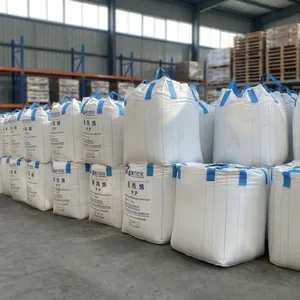
Polypropylene Resin High Melt Flow Rate Injection Grade
- MFI: 25g/10min Precision
- High Tensile & Impact Resistant
- Industrial Bins & Pallet Molding
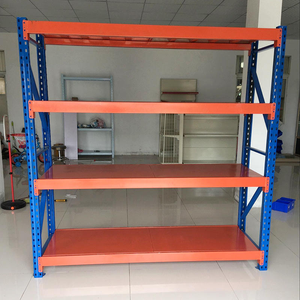
Sunjoy Heavy Duty 4-Tier Metal Industrial Storage Rack
- Reinforced Steel Deck Supports
- Anti-Scratch Epoxy Powder Coat
- Fast Assembly Pin Lock
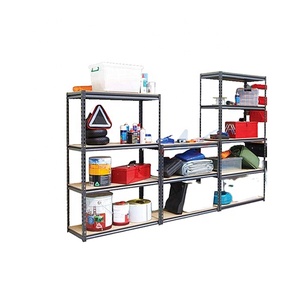
Folding Steel Slotted Angle 5-Layer Rack Multi-Level
- Anti-Corrosion Multi-Dip Finish
- Pre-Punched Pitch Adjustment
- Space-Saving Flat-Pack Export
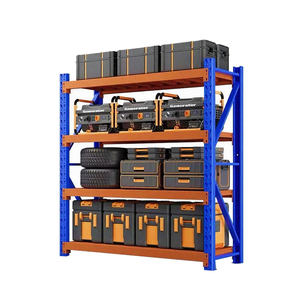
Q235 Steel Anti-Rust Adjustable 4-Layer Medium Duty Rack
- Size: 2000 x 600 x 2000 mm
- Butterfly Lock-In Wedge Design
- Load: 200 - 500 kg/tier
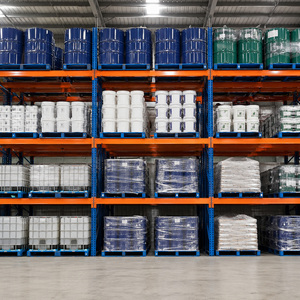
Industrial Heavy Duty Pallet Racks for Auto Logistics
- High Tensile Q235B Profile
- Heavy Stamping Footplates
- Automotive Component Rated
Structural Mechanics & Kinematics: Understanding Pallet Racks on Tracks
In modern industrial logistics, static storage architectures inherently suffer from a fundamental spatial paradox: the excessive footprint consumed by passive forklift operating aisles. Traditional selective pallet racking layouts dedicate between 55% and 65% of total warehouse floor surface area strictly to access corridors, leaving only a fraction of the cubic volume for revenue-generating goods. As real estate development expenses, land acquisition costs, and temperature-controlled refrigeration utility tariffs escalate globally, international supply chain directors are turning to Pallet Racks on Tracks—widely classified as Powered Mobile Pallet Racking (PMR) or Rail-Guided High-Density Mobile Base Systems.
As a leading Chinese supplier and exporter of heavy-duty storage racks on embedded floor tracks, our engineering team manufactures motorized wheel bogies beneath heavy superstructure columns. By mounting continuous heavy-duty selective rack bays onto rigid, electro-mechanically driven steel mobile chassis that glide along precision-embedded floor rails, a single dynamic operating aisle replaces up to ten static aisles. When an operator commands an aisle opening via radio-frequency control, PLC touchscreen, or warehouse management software (WMS), synchronized multi-motor gearboxes smoothly displace entire multi-bay blocks of racking weighing upwards of 800 metric tons, presenting immediate 100% direct selectivity to any designated pallet location.
Volumetric Density & Spatial Efficiency Benchmark
The operational imperative of installing rail-guided mobile pallet racks lies in maximizing footprint capacity without compromising individual pallet selectivity. Unlike deep-lane static systems such as Drive-In or Push-Back racks—which enforce strict Last-In, First-Out (LIFO) inventory constraints and risk structural damage from forklifts entering narrow racking upright bays—mobile racks on tracks preserve individual SKU accessibility while doubling overall storage capacity.
| Storage System Type | Floor Area Utilization | Volumetric Storage Gain | SKU Selectivity | Forklift Impact Risk | Typical Payback Period |
|---|---|---|---|---|---|
| Pallet Racks on Tracks (Mobile) | 85% - 90% | +80% to +110% | 100% Direct (Any SKU) | Virtually Zero (Aisle-Only Travel) | 1.8 - 2.5 Years |
| Standard Selective Racks | 35% - 45% | Baseline (0%) | 100% Direct | Moderate to High | Baseline |
| Drive-In Racking System | 65% - 75% | +50% to +65% | Low (LIFO Dedicated) | Severe (Internal Driving) | 3.0 - 4.0 Years |
| Radio Shuttle System | 70% - 80% | +70% to +85% | Batch-Selective (FIFO/LIFO) | Very Low | 2.5 - 3.5 Years |
Precision Track Engineering: Floor Rail Embedded Tolerances
The structural integrity of mobile pallet racks on tracks hinges entirely upon foundation civil engineering and precision track embedment. Unlike static racks where upright baseplates are simply anchored into standard industrial concrete slabs, track-mounted mobile racks transmit massive dynamic and static point wheel loads through high-tensile steel rails (such as S18, P24, or custom crane-profile dual-flanged guide rails). Floor embedment follows strict international flatness standards such as DIN 18202 Table 3 Group 4 and EN 15620.
Our export engineering kits provide two primary track variants: Embedded Guide Tracks with vertical side flanges to direct the motorized wheel assemblies and eliminate horizontal racking drift, and Flat Reaction Load Tracks to disperse deadweight and live payload stresses directly into the secondary reinforced slab. Utilizing laser-leveled non-shrink cementitious grouting along every rail run ensures track deflection tolerances remain within ±1.0 mm across a 50-meter mobile run, completely precluding rack crabbing, motor strain, and uneven wheel wear.
Future Procurement Trends for Mobile Pallet Racking
Industrial procurement is shifting from localized transactional component buying to strategic, lifecycle-optimized storage infrastructure. Here are the macro trends shaping wholesale mobile racking procurement through 2030.
Cold Chain Thermal Energy Density
Refrigerated and blast freezer facilities (-25°C to -30°C) account for the highest operating expenditure per cubic meter in supply chain management. Sourcing high-density mobile pallet racks on tracks reduces the cooled air volume required by up to 50% for identical pallet quantities, drastically shrinking refrigeration electricity bills and carbon taxation footprints.
WCS/WMS Automated Interoperability
Modern B2B buyers no longer accept manual push-button mobile racking. Contemporary specifications mandate bidirectional API integrations where the Warehouse Management System (WMS) pre-opens dynamic aisles automatically as reaching automated guided vehicles (AGVs) or forklifts approach, cutting truck idle times to zero and orchestrating optimized order batch picking.
Modular Pre-Grout Track Kits
Global procurement teams prioritize rapid, non-destructive deployment. Factory-engineered pre-assembled rail cassettes featuring adjustable leveling bolts, expansion grouting cavities, and pre-wired track proximity sensors slash on-site civil commissioning windows from weeks to mere days, minimizing disruption to operating logistics hubs.
Engineering Advancements in Rail-Guided Dynamic Racks
Discover how breakthroughs in metallurgical forming, smart sensors, and synchronous drive automation ensure structural safety, longevity, and high-performance continuous operation.
Multi-Tier Optical Safety Envelopes
Modern powered mobile racks integrate multi-redundant safety protocols conforming to EN 15095 standards. Frontal optical light curtains cast full horizontal safety barriers across active access aisles. If a pedestrian, loose carton, or forklift crosses the beam during rack travel, power cuts immediately within 120 milliseconds. Emergency foot tripwires and radar floor sweeps prevent lower-leg entrapment.
Inverter Soft-Start & Dynamic Braking
Sudden jerks or abrupt stops destabilize high-bay pallet stacks. Advanced variable frequency drive (VFD) motor controllers deliver micro-smooth acceleration ramps, synchronized dual-wheel traction, and anti-slip dynamic braking. Even when carrying sensitive chemical drums, fragile glass bottles, or high-center-of-gravity palletized loads up to 12 meters high, load stability remains rock solid.
High-Tensile Cold Roll-Formed Uprights
By leveraging certified Baosteel Q235B and high-yield Q355B cold-rolled steel coils, our continuous automated roll-forming lines stamp 50mm and 75mm teardrop/diamond pitch column profiles with high torsional resistance. This micro-alloy structural design resists buckling and allows taller mobile uprights, pushing vertical warehouse utilization to maximum ceiling clearances.
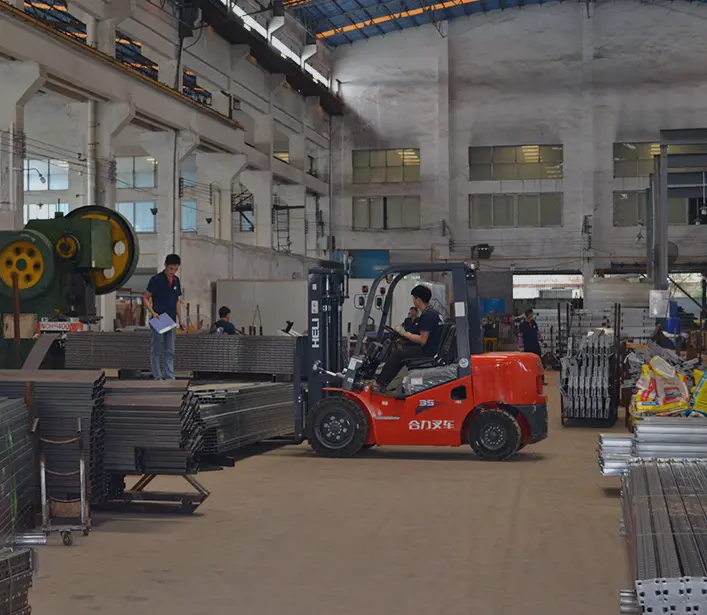
Guangzhou Heda Shelves Co., Ltd. Manufacturing Might
Founded in 2001, Heda Shelves has grown into a world-class manufacturing powerhouse for heavy-duty pallet racking, industrial shelving, and track-mounted mobile storage solutions.
Uncompromising Factory Direct Export Execution
Unlike sourcing intermediaries or domestic trading brokers, Guangzhou Heda Shelves Co., Ltd. executes all manufacturing operations in-house: from automated CNC steel coil decoiling, continuous precision roll-punching, and robotic welding to non-destructive ultrasonic beam testing and automated powder coating lines.
Every dynamic chassis, track component, upright frame, and load beam undergoes stringent structural load verification using finite element analysis (FEA) software. We simulate seismic resistance, dynamic pallet load cycling, and wheel stress fatigue, ensuring your systems deliver decades of continuous service life in mission-critical logistics hubs.
- CE Certified (2435-CPR-8605159)
- ISO 9001:2015 Quality Management
- RoHS Eco-Compliant Surface Finish
- Free 3D Layout & Structural FEA
Integrated 10-Stage Manufacturing & Quality Control
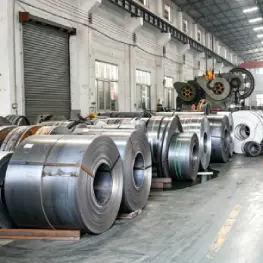
Certified Steel Coils
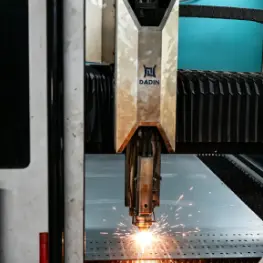
Laser & Shearing Cut
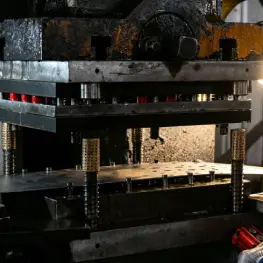
CNC Column Punching
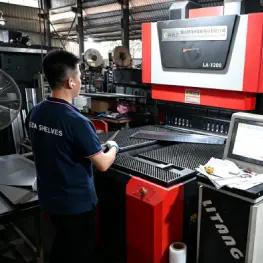
Cold Roll-Forming
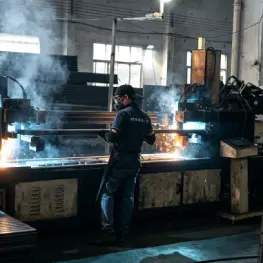
Robotic Beam Welding
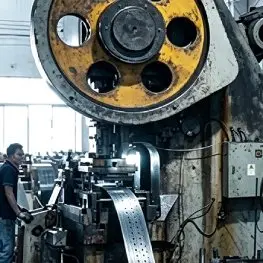
Shot Blast & Polishing
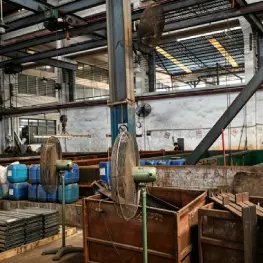
Pickling & Phosphating
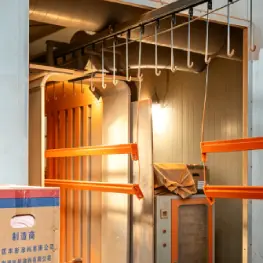
Gema Powder Coating

Deflection Load Testing

Container Knock-Down Pack
Frequently Asked Questions: Sourcing Pallet Racks on Tracks
Expert engineering answers to critical inquiries regarding slab tolerances, electrical emergency fail-safes, ocean freight optimization, and site commissioning.