Manual Picking
Direct factory fabrication, automated CNC punching, custom gauge roll-forming, and anti-corrosive powder coating engineered for heavy loads, high cycle rates, and harsh warehouse environments.
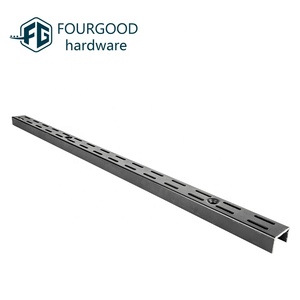
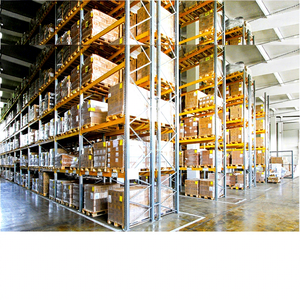
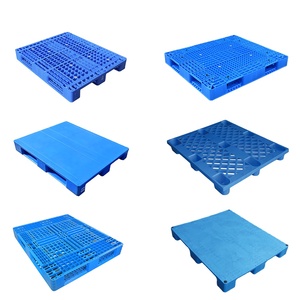
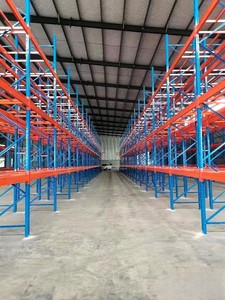
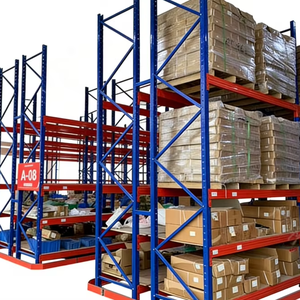
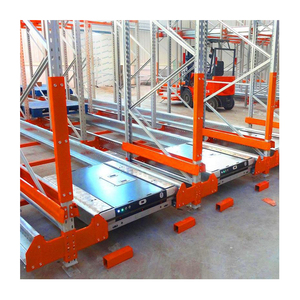
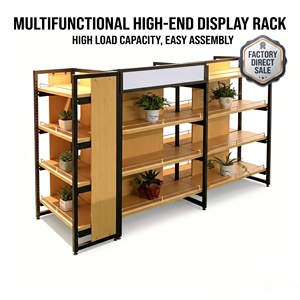
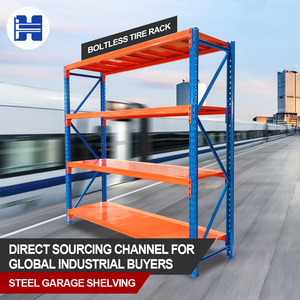
Industrial storage systems are not passive furniture; they are complex, dynamic skeletal load-bearing steel structures subject to severe static loads, operational forklift dynamic impacts, structural fatigue, and seismic acceleration. As global third-party logistics (3PL) providers, e-commerce fulfillment hubs, and heavy manufacturing facilities increase building clear heights to 12–30 meters, the technical specifications governing custom OEM industrial racks for storage manufacturers & suppliers have shifted toward sophisticated cold-formed thin-walled structural steel engineering.
High-bay storage stability depends entirely on the metallurgical yield strength and tensile consistency of raw coil steel. Tier-1 manufacturers utilize structural carbon steel grades conforming to Q235B and Q355B (equivalent to EN 10025 S235JR and S355JR, or ASTM A1011 Grade 50). Cold-roll-forming profiles introduce strain hardening at the bend radii, which increases local yield strength while demanding stringent ductile elongation guarantees (≥20%) to prevent micro-cracking along punched column apertures. Deflection limits under European EN 15512 and American RMI ANSI MH16.1 specifications mandate maximum beam deflection ratios not exceeding L/200 for standard pallets or L/300 for automated crane interfaces, ensuring operating clearances and preventing dislodgment risks.
Critical Engineering Principle: Under finite element analysis (FEA) and full-scale stub column testing, the load-bearing capacity of an industrial rack upright is primarily limited by torsional-flexural buckling and distortional buckling modes, rather than pure compressive yield. Precision roll-forming geometry, flange stiffener returns, and multi-clamping beam connector pins dictate total frame capacity.
When engineering custom OEM solutions, selecting the proper section modulus and profile geometry defines steel efficiency and container cube utilization during transoceanic shipping. The technical matrix below contrasts industry standard selective pallet racking components against advanced high-bay installations:
| Structural Component | Standard Specification | Heavy-Duty OEM Specification | Cold Chain / Seismic Grade | Applicable Design Code |
|---|---|---|---|---|
| Upright Column Profile | 80 × 60 × 1.8mm (Q235B) | 100 × 70 × 2.0–2.5mm (Q355B) | 120 × 95 × 2.5–3.0mm (High-Yield Low Alloy) | EN 15512 / RMI MH16.1 |
| Load Beam Profile | Twin-C Interlocking Box 80×50mm | Welded Double-C Box 120×50 to 160×50mm | Reinforced Box Beam with Drop-in Locking Pins | ISO 9001 / CE Certified |
| Pretreatment & Coating | Standard degreasing + 45μm coat | Pickling + Phosphating + 75μm Epoxy | Continuous Pre-Galvanized or Hot-Dip Galvanized ≥65μm | ASTM B117 Salt Spray ≥500h |
| Connection Locking | 3-Claw Hook Connector + Safety Pin | 4-Claw or 5-Claw Cold-Forged Lug End | Bolted Integral Clamping with Anti-Dislodgment Latch | AS 4084 / FEM 10.2.02 |
| Safety Deflection Standard | Span L/200 under static UDL | Span L/250 to L/300 under dynamic loading | Span L/400 (Automated Shuttle / ASRS Tolerances) | EN 15620 Tolerance Classes |
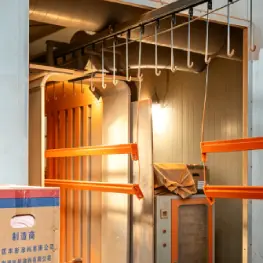
Long-term durability in high-humidity littoral environments, equatorial transshipment depots, and sub-zero blast freezers demands comprehensive surface preparation. Raw cold-rolled coil inevitably carries residual rolling oils, surface oxides, and micro-scale mill scale. Industrial rack systems manufactured under certified quality control protocols undergo an automated 10-stage immersion or spray pretreatment process, incorporating hot alkaline degreasing, twin water rinses, acid pickling to de-scale bare metal, zinc or iron phosphating to build an inorganic crystalline conversion layer, and a deionized water passivating seal.
Electrostatic powder coating utilizes thermosetting epoxy-polyester hybrid formulations cured at 180°C to 200°C metal temperature. This cross-linking thermal reaction yields an impact-resistant, chemical-proof shell with pencil hardness ≥2H, cross-hatch adhesion meeting Class 0 (ISO 2409), and cyclic salt spray endurance exceeding 500 hours without blistering along beam-to-column connector interfaces.
How global enterprise procurement managers, EPC contractors, and warehouse supply chain directors are shifting purchasing models from transactional commodity buying to integrated engineering partnerships.
Procurement teams are transitioning away from raw cost-per-ton metrics toward 15-year lifecycle evaluations. Freight optimization via knockdown modular nesting, lower insurance premiums driven by verified CE/RMI certifications, and zero-downtime structural deflection performance outweigh minor initial FOB discounts.
TCO OptimizationWith industrial labor shortages accelerating automation investments, forward-looking facilities procure conventional selective and drive-in racks with tight dimensional tolerances (±1.0mm) and factory-prepunched guide rail holes to allow immediate field-conversion into 2D radio shuttle or autonomous mobile robot (AMR) high-density bays.
Automation ScalabilityRegional racking distributors and material handling system integrators increasingly contract Tier-1 OEM manufacturers for turnkey private labeling. Customized beam connector stampings, branded roll-formed column shapes, matching corporate RAL powders, and container packing slips enable distributors to expand margins without domestic factory capital.
Contract OEM GrowthOcean freight volatility has made container loading efficiency a core engineering discipline. Custom profiles designed with nested nesting geometries, staggered bracing packages, and modular bolt-together upright frames fit up to 26–28 metric tons within a standard 40HQ container, lowering shipping cost per pallet position by 35%.
Logistics EngineeringCorporate ESG frameworks and European CBAM (Carbon Border Adjustment Mechanism) compliance require verified carbon tracking across structural steel fabrication. Suppliers that deploy scrap-reduced automated coil slitting, recycled structural steel feeds, and TGIC-free eco-friendly powder finishes win institutional master contracts.
ESG & ComplianceWarehouse engineering consultants now require Autodesk Revit and IFC digital twin BIM models before approving procurement. Pre-engineered CAD layouts that integrate sprinkler pipe clearances, structural column baseplates, and lighting photometrics eliminate on-site spatial conflicts before factory steel stamping begins.
BIM Digital TwinFrom robotic continuous roll-forming lines to sensor-embedded structural uprights, technological innovations are elevating the efficiency, safety, and longevity of modern racking frameworks.
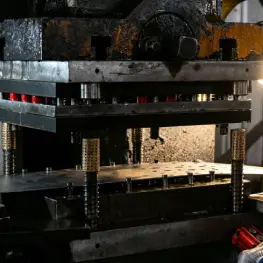
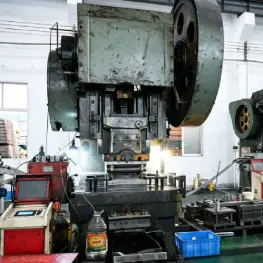
Traditional batch punching followed by press-brake bending causes internal stress concentrations and variable pitch tolerances. Modern lines feature continuous servo-driven roll-forming stands with in-line flying hydraulic dies, punching 50mm or 75mm pitch holes with ±0.2mm precision along a 12-meter upright length for uniform lock-pin seating.
Sub-Millimeter PrecisionHeavy counterbalance forklift traffic makes lower upright damage the leading cause of catastrophic warehouse collapses. Next-generation systems integrate micro-electromechanical (MEMS) triaxial accelerometers into column protectors, transmitting real-time impact alerts and deflection strain measurements directly to facility warehouse management software (WMS).
Predictive Safety TechPharmaceutical and frozen protein distribution facilities operating down to -30°C induce ductile-to-brittle transitions in standard commercial steels. High-performance OEM storage incorporates aluminum-killed, fine-grain alloy steels that maintain Charpy V-notch impact energy ratings ≥27 Joules at -40°C, preventing structural fracture under forklift shocks.
Sub-Zero EngineeringEstablished in 2001, Guangzhou Heda Shelves Co., Ltd. operates as a vertically integrated industrial storage rack manufacturer, delivering turnkey design, precision fabrication, and global project engineering.
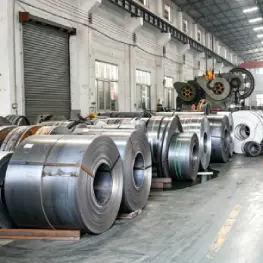
Total vertical production control from premium hot-rolled coil slitting to automated electrostatic powder curing.
Authoritative answers to technical procurement questions regarding structural design standards, seismic engineering, anti-corrosion specifications, and contract OEM fabrication.
Industrial pallet racking design and safety calculations are governed internationally by three primary regulatory design frameworks:
1. European Standards (CEN / FEM): EN 15512 (Steel static storage systems – Adjustable pallet racking systems – Principles for structural design), EN 15620 (Tolerances, deformations and clearances), and EN 15635 (Application and maintenance of storage equipment).
2. American National Standards: ANSI MH16.1 (Specification for the Design, Testing and Utilization of Industrial Steel Storage Racks by the Rack Manufacturers Institute – RMI).
3. Australian Standards: AS 4084-2023 (Steel storage racking). Guangzhou Heda Shelves Co., Ltd. holds verified CE Certification (No. 2435-CPR-8605159) and ISO 9001:2015 management certification (No. 18624Q00169R0M), guaranteeing that our static calculations, perforated column stability, and connector weld shears meet third-party audited compliance.
Because industrial rack uprights are thin-walled, open-section cold-formed members with regular perforation patterns, classical Euler column formulas significantly overestimate capacity. Our engineering team utilizes advanced finite element software (FEA) calibrated with actual laboratory physical test data.
We execute stub column compression tests to establish the effective cross-sectional area (Aeff) accounting for local hole weakening, cantilever upright tests to evaluate baseplate fixity, and beam-end connector portal tests to determine connection stiffness (kni) and moment capacity (MRd). These parameters are inserted into 3D structural matrix frame models to simulate non-linear second-order (P-Δ and P-δ) stability under dead load, rated payload, and live impact conditions.
The primary metallurgical distinction lies in the minimum guaranteed yield strength and chemical carbon equivalency:
Q235B Steel: Offers a nominal yield point of 235 MPa and ultimate tensile strength of 370–500 MPa. It delivers exceptional formability, high elongation (≥26%), and is the cost-effective global standard for light-to-medium pallet racks, retail gondolas, and standard warehouse shelving.
Q355B Steel: Provides a 51% higher yield strength at 355 MPa and ultimate tensile strength of 470–630 MPa. It is deployed in structural high-bay uprights (>8 meters), heavy-duty cantilever arms, drive-in support lanes, and automated ASRS shuttle guide rails where higher sectional stiffness allows down-gauging of wall thickness without sacrificing structural safety margins.
The selection hinges on the dew point, chemical environment, and operating temperature cycle:
Thermo-hardened Epoxy Powder Coating (70–90μm): Fully effective for standard chilled rooms (0°C to +4°C) and controlled deep-freeze environments (-18°C to -25°C) where relative humidity remains consistently low and moisture condensation cycles are rare. It provides superior aesthetic color-coding (e.g., traffic blue frames and hazard orange beams).
Hot-Dip Galvanizing (HDG ≥65–85μm): Crucial for wet cold rooms, blast freezers with aggressive daily defrost cycles, coastal ambient warehouses with salt-laden atmospheres, or fertilizer/chemical stores. HDG metallurgically bonds zinc-iron alloy layers to the steel, providing sacrificial galvanic cathodic protection that prevents rust creep even if scratched by forklift tines.
Improper ocean container packaging leads to transit distortion, scratched coatings, and wasted freight volume. Our knock-down export packaging protocol involves:
1. Upright frames are either shipped disassembled (columns and diagonal/horizontal bracings nested separately in dense rectangular steel-strapped bundles) or pre-assembled using customized wooden spacing battens and corrugated cardboard cushions.
2. Beams are stacked in interlocking pairs, shrink-wrapped with UV-resistant polyolefin film, edge-protected with heavy-gauge corner paperboards, and mounted on integrated wooden skids with steel strapping to facilitate rapid unloading via counterbalance forklifts at the destination port.
3. This nesting methodology achieves 24 to 28 metric tons net steel weight per 40HQ container, reducing transoceanic landed freight costs per pallet position.
To produce an actionable AutoCAD floor plan, 3D BIM rendering, and static structural load calculation within 24 hours, our engineering department requires:
1. Building Civil Plan: Warehouse length, width, clear height under eaves, column spacing grid, floor slab thickness/rebar specification, emergency exit doors, and overhead obstructions (HVAC, fire sprinkler pipes).
2. Pallet Load Profile: Pallet dimension (L × W × H including overhang), maximum gross weight per pallet, and racking orientation preference (long-side or short-side facing).
3. Material Handling Equipment (MHE): Forklift model, turning radius (Ast), maximum mast extended reach height, and aisle clearance specifications.
4. Throughput Requirements: SKU counts, FIFO or LIFO operational flow, and cold-store or ambient thermal parameters.
Whether you require high-volume OEM contract manufacturing for private-label distribution, a heavy-duty cold chain pallet shuttle installation, or custom roll-formed structural steel fabrication, Guangzhou Heda Shelves delivers precision engineering from factory to destination port.