Automation
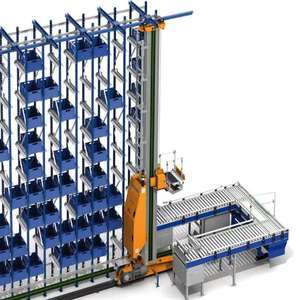
Warehousing Technology Mini-load AS/RS Carton Picking Automatic Racking System
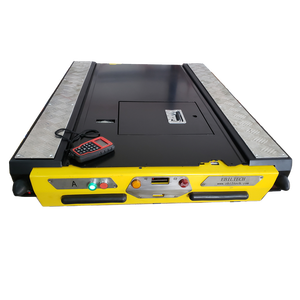
- High-speed micro-shuttle integration
- Carton & tote dynamic buffering
- Precision tolerance: ±1.5mm
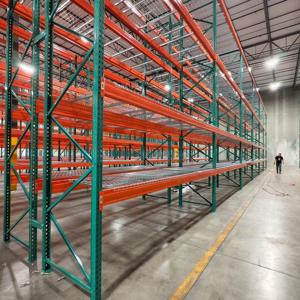
Manufactured strictly with high-tensile Q235B and Q355B cold-rolled steel, verified under EN 15512 and RMI MH16.1 international structural safety standards.
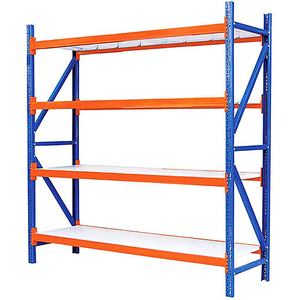
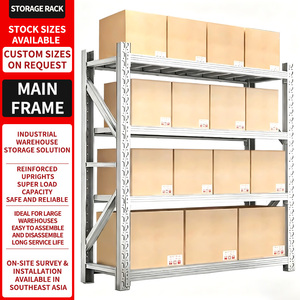
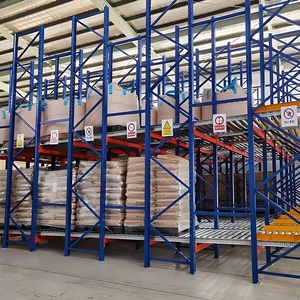
A comprehensive technical evaluation guide for procurement heads, supply chain architects, structural engineers, and logistics EPC contractors.
In the contemporary logistics infrastructure landscape, heavy-duty industrial storage racks are no longer treated as passive metal shelving; they represent critical, dynamically loaded structural systems. Sourcing industrial racking systems at scale from an original equipment manufacturer (OEM) or original design manufacturer (ODM) requires precise engineering verification. A single bay failure in an 11-meter high-bay facility can trigger progressive collapse, catastrophic product loss, structural building compromise, and life-safety hazards. Sourcing from certified manufacturers equipped with direct mill access, automated multi-stage roll-forming lines, and comprehensive Finite Element Analysis (FEA) design protocols is essential for global procurement executives.
The foundation of racking load capacity resides in steel metallurgy. Substandard manufacturers frequently cut costs by utilizing non-certified re-rolled coils with uneven gauge tolerances and micro-inclusions that fail under dynamic impact. Premium OEMs source prime-grade cold-rolled and hot-rolled coils from certified state steel mills (such as Baosteel, Shougang, or Ansteel) with complete 3.1 Mill Test Certificates (MTC).
For standard ambient warehouse environments, Q235B carbon structural steel with a nominal yield strength ($f_y$) of $235\text{ N/mm}^2$ and tensile strength ($f_u$) between $370\text{–}500\text{ N/mm}^2$ provides exceptional ductility and formability for roll-formed uprights and boxed step beams. In seismic geographic zones or high-bay facilities exceeding 12 meters in upright height, Q355B low-alloy high-strength steel ($f_y \ge 355\text{ N/mm}^2$, $f_u \ge 470\text{–}630\text{ N/mm}^2$) is specified to increase torsional and flexural buckling resistance without adding parasitic self-weight to the foundation slab.
Industrial racking columns are thin-walled, open cold-formed sections prone to local buckling, distortional buckling, and global flexural-torsional buckling. Certified ODM suppliers utilize computerized section optimization to incorporate multi-bend profiles (often 8 to 14 cold-bent facets per upright column), which dramatically elevates the cross-sectional moment of inertia ($I_x, I_y$) and Saint-Venant torsion constant ($J$).
Beam-to-column connections are modeled with semi-rigid rotational spring constants ($K_i$). Rather than assuming fully rigid or pinned joints, high-accuracy simulations account for connection loosening under repetitive fork-truck placement cycles, deflection limitations of $L/200$ (where beam sag cannot exceed 1/200th of the clear span under rated pallet load), and progressive frame sway ($P\text{-}\Delta$ effects).
| System Type | Storage Density | SKU Selectivity | Max Bay Load | Automation Readiness | Primary Industry Verticals |
|---|---|---|---|---|---|
| Selective Pallet Racking | Moderate (40%) | 100% Direct | Up to 4,500 kg / Level | Manual / VNA Turret | 3PL, FMCG, E-Commerce, Retail |
| Radio Shuttle System | Very High (85%) | Batch (FIFO/LIFO) | 1,500 kg / Pallet | Semi-Automated | Cold Chain, Beverage, Dairy, Chemicals |
| Gravity Flow Racking | High (75%) | Strict FIFO | 1,200 kg / Lane | Kinetic Mechanical | Food Logistics, Pharmaceuticals, Buffer Zones |
| Drive-In Racking | High (70%) | LIFO Only | 2,000 kg / Position | Forklift Penetration | Bulk Seasonal Storage, Cold Rooms, Raw Materials |
| Mini-Load AS/RS | Extreme (90%) | 100% Automated | 300 kg / Carton Bay | Fully Automated | Electronics, Pharma Sorting, Parts Distribution |
| Structural Mezzanine | Doubles Floor Area | 100% Manual/AGV | 300 - 1,000 kg / m² | Conveyor / AGV Compatible | Apparel Fulfillment, Parts Pick Modules, Archives |
The lifespan of an industrial racking system installed in high-humidity coastal ports, sub-zero cold stores, or chemical fertilizer plants depends directly on surface pretreatment. Direct powder application over mill-oiled steel results in micro-blistering, delamination, and rapid sub-film galvanic rust.
HEDA Shelves applies an automated industrial multi-stage chemical dip and spray pre-treatment process comprising alkaline degreasing, hot water rinsing, acid rust removal (pickling), clear water washing, zinc/iron phosphating (to establish a microscopic crystalline conversion layer), and deionized passivation rinses. Once dried, components enter an automated electrostatic booth where thermosetting epoxy-polyester powder is cured at 180°C to 200°C. The resultant finish delivers 60 to 90 microns of uniform film thickness, passing ASTM B117 salt spray tests for 500 to 1,000 continuous hours without creepage. For outdoor yards and hyper-corrosive deep cold stores, hot-dip galvanizing conforming to ISO 1461 (yielding minimum 65–85 μm zinc coat) is engineered to provide decades of maintenance-free service.
Operating a 30,000 m² production complex with monthly capacity exceeding 30,000 metric tons. Controlled strictly under ISO 9001:2015 and CE certification No. 2435-CPR-8605159.
Certified Q235B/Q355B prime steel coils uncoiled, precision-inspected for gauge tolerance, and slitted to exact section blank widths.
Computerized multi-head shearing stations cut components to millimeter tolerances, mitigating raw material waste.
Continuous hydraulic stamping lines punch 50mm, 75mm, or teardrop pitch patterns with ±0.1mm non-accumulative pitch error.
Progressive multi-roll cold forming lines systematically fold steel strip into complex multi-facet rigid upright profiles.
Continuous twin-C seam rolling creates locked box beams with high section modulus, minimizing mid-span sagging.
Deburring and mechanical edge radiusing remove micro-notches, eliminating stress concentrations and operator abrasion risks.
Multi-axis automated welding robots join beam end connectors with deep-penetration CO2 shielded welds without spatter.
Full-immersion chemical cleaning sequence strips microscopic scale, etching steel for maximum powder molecular adhesion.
Dual-reciprocator Swiss Gema automated spray guns apply uniform polyester powder, baked at 200°C in curing tunnels.
High-density flat knock-down packaging nested with timber dunnage and steel strapping for zero ocean-transit shock damage.
Continuously fabricating storage systems since 2001. Specialized in custom upright tooling, private labeling, color matching, and worldwide port logistics.
Certified CE Factory Production Control (FPC) No. 2435-CPR-8605159, ISO 9001:2015 quality management, and strict RoHS material compliance.
Our dedicated engineering group generates comprehensive DWG warehouse layouts, 3D renderings, and structural weight distribution calculations within 24 hours.
Engineered nesting schemas allow up to 26 metric tons to fit inside 40ft HQ containers, reducing oceanic freight expenditures per pallet position by up to 32%.
Critical macro shifts redefining the procurement of high-bay logistics structures over the next five to ten years.
Traditional static racking is migrating toward high-tolerance hybrid structures designed to host high-speed shuttles, automated guided vehicles (AGVs), and stacker cranes. Fabrication tolerances must compress from ±3.0mm to ±1.0mm along 50-meter runway spans to ensure laser-guided shuttle wheels maintain continuous traction without derailment.
Driven by raw material price volatility and carbon abatement initiatives, next-generation racking incorporates cold-rolled steels exceeding 420 to 550 MPa yield ratings. Precision profile modeling allows a 15% reduction in overall steel tonnage while simultaneously elevating allowable seismic base-shear resistance.
Global multi-national corporations now mandate strict carbon-intensity documentation for logistics equipment under ESG protocols. Tier-1 OEM suppliers utilize electric arc furnace (EAF) scrap-recycled steel, solvent-free VOC-free powders, and clean solar-powered roll lines to deliver measurable reductions in embedded carbon per installed pallet position.
Integrating strain-gauge micro-sensors, impact accelerometers, and optical tilt detectors directly inside column guard assemblies. These smart sensors continuously transmit localized beam overload, fork-truck collision velocity, and foundation settlement data to cloud-based facility warehouse management systems (WMS).
Procurement teams increasingly abandon piecemeal component bidding in favor of turnkey single-source ODM manufacturers who provide integrated engineering: structural base frames, automated shuttles, sprinkler piping brackets, mesh flue separators, and mezzanine floor decks packaged into consolidated shipments.
With ocean shipping volatility, export engineering prioritizes interlocking section geometry. Beams, column frames, and bracing members are detailed with nested interlocking tabs and detachable bolted feet, allowing total container cube fill rates to surpass 92%, mitigating dead shipping volume.
In-depth structural, logistical, and compliance considerations compiled by our senior project engineering desk.
Planning a new logistics park, distribution center expansion, or cold-chain warehouse? Submit your building parameters to receive complete structural load calculations, DWG floor plans, and factory-direct containerized export pricing within 24 hours.