1000 - 3000 KG
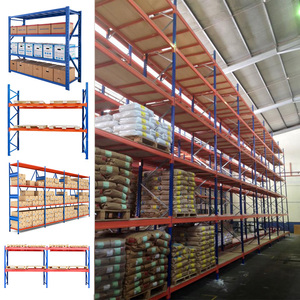
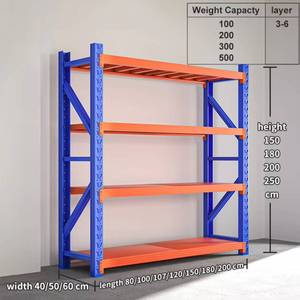
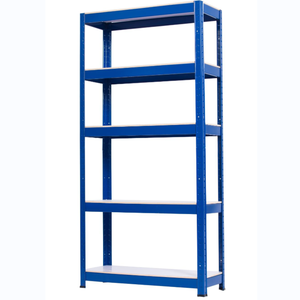
Certified Light Duty Cargo Tile Rack Storage Systems
- Load Range: 1000KG - 3000KG
- Tile, Carton & Pallet Storage
- Custom Beam Spans Available
Engineered for extreme load density, high cubic space utilization, and rigorous warehouse throughput. Browse our certified industrial storage racking units below.
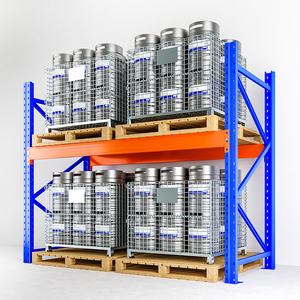
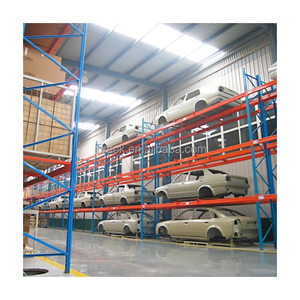
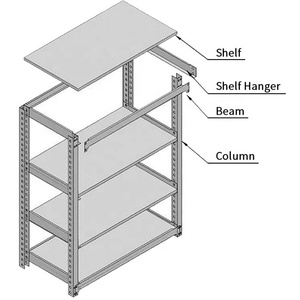
A rigorous investigation into First-In, First-Out (FIFO) volumetric optimization, portal framing mechanics, and dynamic deflection control in high-density facilities.
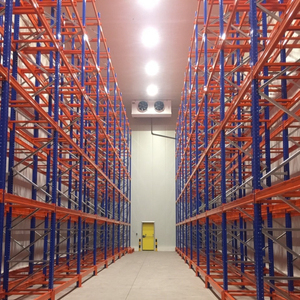
In modern industrial supply chain architecture, floor space represents one of the largest capital expenditure outlays. Conventional selective racking allocates between 50% and 60% of total floor area strictly to forklift operating aisles. Drive-Through Pallet Racking, by contrast, removes conventional intermediate operating aisles, achieving floor area utilization rates exceeding 75% to 85% while providing a genuine First-In, First-Out (FIFO) stock rotation mechanism.
Warehouse Volume Utilization
Capacity vs. Selective Racking
Strict Inventory Rotation
High-Tensile Certified Steel
Unlike Drive-In racking—which features a single access entry point operating on a Last-In, First-Out (LIFO) schedule—Drive-Through racking is configured with separate entry and exit faces. Material handling equipment (forklifts) enters the storage bay from the loading aisle to place pallets onto continuous cantilevered load rails, and retrieves them from the opposite discharging aisle. This structural bifurcation makes Drive-Through racking the premier engineering choice for operations with high batch turnover, strict expiration dating requirements, and temperature-controlled environments such as industrial cold storage and high-throughput FMCG distribution hubs.
Because forklifts must travel entirely through the interior tunnels of the structure, traditional longitudinal and vertical cross-bracing cannot be deployed inside the storage lanes. Structural engineers must compensate for this elimination of transverse rigidity by installing heavy-duty structural overhead portal beam ties, horizontal top bracing trusses, reinforced floor baseplates with multi-point expansion anchors, and heavy-gauge column uprights (engineered from high-strength Q235B or Q355B hot-rolled steel strip, cold-formed with Omega-profile cross-sections).
Evaluation of spatial efficiency, structural expenditure, throughput velocity, and inventory handling protocols across major industrial racking typologies.
| System Architecture | Inventory Logic | Floor Space Efficiency | Cubic Volume Utilization | Forklift Entry Required? | Relative Capex / Pallet |
|---|---|---|---|---|---|
| Drive-Through Racking | Strict FIFO | 75% – 85% | High (Up to 80%) | Yes (Dedicated Tunnel) | Moderate |
| Drive-In Racking | LIFO (Last-In, First-Out) | 70% – 80% | High (Up to 75%) | Yes (Single Access) | Economical |
| Radio Shuttle System | FIFO or LIFO Selectable | 80% – 90% | Maximum (Up to 88%) | No (Automated Shuttle) | High (Automation Premium) |
| Push-Back Racking | LIFO (Nested Carts) | 65% – 75% | Moderate (2 to 6 deep) | No (Aisle Staging) | Moderate - High |
| Selective Pallet Racking | 100% Direct Access | 40% – 50% | Low (Aisle Dependent) | No (Wide Aisle Operation) | Baseline Economy |
When assessing total landed lifecycle cost, Drive-Through pallet racking delivers an optimal equilibrium between high storage density and deterministic inventory rotation. Facilities processing refrigerated dairy, proteins, pharmaceuticals, and agricultural commodities cannot tolerate LIFO inventory stagnation; Drive-Through systems ensure that batch sequencing is mechanically enforced by the structural topology itself, without requiring costly motor-driven automated conveyor systems or high-maintenance electromechanical shuttles.
How Guangzhou Heda Shelves Co., Ltd. configures cold-formed components, rail brackets, impact protections, and metallurgy to client seismic and load requirements.
Engineered from 1.8mm to 3.0mm high-yield steel coils, our upright profiles feature 50mm, 75mm, or 76.2mm teardrop/diamond punch pitches. Custom cold-roll forming ensures optimal radius-to-thickness ratios, maximizing torsional resistance against longitudinal forklift mast deflection.
Fabricated from heavy-gauge galvanized or high-adhesion powder-coated steel angles, our support rails feature tapered lead-in entry funnels. The geometry centers incoming pallets smoothly, reducing side-rail friction and preventing catastrophic corner gouging on timber or polymer pallets.
Because trucks operate directly inside rack lanes, impact avoidance is paramount. We engineer continuous heavy-gauge floor-anchored angle guide rails (typically 100x75x8mm structural steel) and reinforced wrap-around column protectors with high-visibility safety polyurethane finishes.
Our OEM/ODM engineering protocol integrates full finite element analysis (FEA) compliant with EN 15512:2020 (European Steel Racking Standards) and RMI ANSI MH16.1 (Specification for the Design, Testing and Utilization of Industrial Steel Storage Racks). Whether your facility floor slab is engineered to 25 MPa or 45 MPa, our technical department calibrates baseplate surface areas and wedge anchor embedment depths to ensure seismic and shear force compliance.
Strategic perspectives for global procurement directors, logistics engineers, and warehouse investors on emerging intralogistics transitions.
Transition from manual counterbalanced forklifts to automated guided reach trucks equipped with LiDAR SLAM navigation inside Drive-Through lanes, requiring ultra-precise fabrication tolerances under ±1.0mm.
Rapid expansion of cold chain logistics demands steel alloys (such as Q355D/E) that maintain Charpy V-notch impact toughness at temperatures down to -30°C without risk of brittle fracture, combined with hot-dip galvanization.
Procurement teams increasingly stipulate boltless, reconfigurable slot arrangements that enable rapid transformation from drive-through channels into selective or push-back configurations as supply chain profiles evolve.
Integration of wireless strain gauges and deflection transponders on critical portal beams, delivering real-time telemetry to Warehouse Management Systems (WMS) to prevent overload failure and structural fatigue.
Global warehouse real estate vacancy rates remain tightly constrained across key logistics gateways in North America, Western Europe, Southeast Asia, and Africa. Consequently, industrial operators are pivoting aggressively toward vertical space optimization. Warehouse clear heights have risen from 8.5 meters to 12–16 meters in contemporary Grade-A logistics parks. This height escalation requires Drive-Through uprights to exhibit greater second moment of area ($I_x$ and $I_y$) to prevent Euler buckling during heavy live load placement.
Precision engineering, massive production scale, and global structural compliance built over a quarter of a century of direct manufacturing.
From architectural CAD layout drafting and 3D structural simulation to finite element load calculations, export packaging optimization, and on-site engineering supervision in over 120 countries.
Get CatalogIn-depth responses from our structural engineers addressing slab ratings, seismic codes, impact mitigation, and container shipping.
Send our senior engineering team your warehouse architectural floor plan, ceiling clear height, forklift model specifications, and pallet load requirements. We will deliver a CAD layout, 3D rendering, and finite element load calculation within 24 hours.