High-Density Dynamic & Structural Racking Products
Explore heavy-duty storage assemblies engineered for optimal inventory velocity, strict pallet cycle flow, and structural safety across international cross-docking hubs.
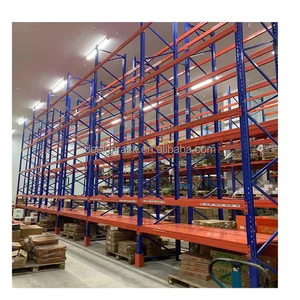
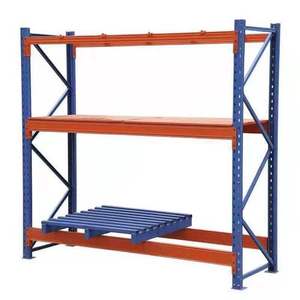
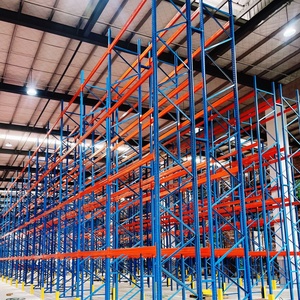
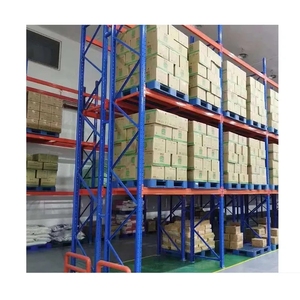
Established Foundation Year
Modern Production Facility
Monthly Processing Capacity
Global Engineering Turnkeys
Why International Supply Chains Rely on Our Facilities
Combining heavy-gauge roll forming, automated robotic welding, and specialized surface preservation engineered specifically for severe climates and high-throughput demands.
25+ Years OEM/ODM Manufacturing
Operating a self-owned 30,000 m² industrial facility since 2001. We provide custom profile cold bending, beam punching, and fully dedicated dynamic roller bed integrations without middleman brokerage markups.
CE, ISO 9001:2015 & RoHS Certified
Full compliance under CE certification No. 2435-CPR-8605159 and ISO 9001:2015 Registration No. 18624Q00169R0M. Every production lot undergoes yield tensile stress calculations and load-bearing deflection verification.
Free 3D Layout & Finite Element Calculations
Our veteran structural design department executes comprehensive CAD layout schematics, 3D structural visual simulations, and seismic shear evaluations completely free of charge prior to manufacturing execution.
10-Stage Anti-Corrosion Treatment
Equipped with an advanced industrial pickling, phosphating, and electrostatic powder coating cycle. Highly resistant to maritime humidity, coastal moisture, and severe cold room condensation down to -30°C.
Container-Optimized Knock-Down Assembly
High-cube freight nesting patterns tailored for 20GP and 40HQ ocean containers minimize dead shipping volume, driving down per-pallet shipping expenditures to international deep-water seaports worldwide.
End-to-End Installation Supervision
Every modular bay ships with precise piece numbering, detailed exploded-view construction schematics, bilingual manuals, and dedicated direct engineer-led remote or on-site field assembly oversight.
Engineering Whitepaper: Gravity Feed Pallet Racking Mechanics & Specifications
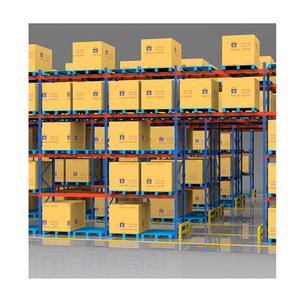
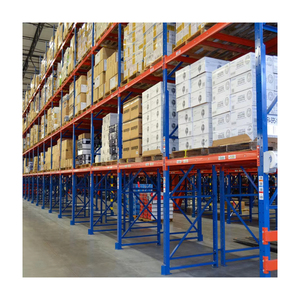
Gravity feed pallet racking systems—conventionally designated as pallet flow racking or dynamic live storage—represent the pinnacle of non-powered, mechanical FIFO (First-In, First-Out) warehousing. By utilizing slight inclines (typically calibrated between 2.5% and 3.5% grades), individual pallet loads advance autonomously from the loading aisle down to the discharge face under the influence of gravity. This eliminates forklift interior transit channels, condensing facility footprints by up to 60% compared to traditional selective pallet frames.
In high-velocity fast-moving consumer goods (FMCG), agricultural packing lines, and automated pharmaceutical cold chains, gravity live storage delivers deterministic inventory rotation. Batches with approaching shelf-life expiration dates are presented systematically at the picking facade without relying on warehouse management software compliance alone. The physical lane layout enforces absolute stock integrity.
Rollers, Brake Cylinders, and Safety Separation Engineering
The core mechanism of an OEM gravity feed system lies within its dynamic wheel tracks. High-quality heavy-duty systems deploy cylindrical zinc-plated steel rollers outfitted with precision sealed bearings. To manage kinetic acceleration across multi-pallet depths (often up to 15 to 20 pallets deep), speed-retarding brake rollers are interspaced at predetermined intervals. These centrifugal controllers absorb energy and maintain a constant, controlled pallet descent velocity regardless of whether a load weighs 300 kg or 1,500 kg.
At the unloading face, an automatic end-stop pallet separation device is paramount. When the leading pallet is extracted by a counterbalanced forklift, the separator isolates the subsequent pallets uphill, preventing backpressure force transfer. This eliminates beam strain, load tipping, and operator jamming, allowing seamless withdrawal before the line clicks and safely indexes forward.
Future Sourcing Trends for Gravity Feed Pallet Systems (2025–2030)
Logistics directors and capital asset managers are fundamentally altering how gravity feed pallet racking systems are acquired, evaluated, and integrated. Driven by land scarcity, fluctuating energy grids, and the expansion of automated cross-dock distribution hubs, our R&D engineering unit has outlined the prevailing macro trends dictating future capital procurement:
Net-Zero Grid Autonomy
Global warehouse operators increasingly hedge against municipal power outages and volatile electricity surcharges. Gravity flow systems require zero kilowatts for internal pallet advancement, maintaining full cross-docking operations while fully automated AS/RS cranes sit idle.
Hybrid AMR / AGV Ingestion
Modern gravity feed installations are shifting toward hybrid automation. Autonomous mobile robots (AMRs) interface seamlessly with the discharge pick faces, demanding sub-millimeter tolerances across front load stops, sensor reflection tags, and reinforced guide entry angles.
Extreme Environment Finishes
Procurement audits prioritize hot-dip galvanization and micro-textured structural polyester coatings. Racks destined for cold chain refrigeration or high-salinity maritime transshipment require robust chemical surface protection against micro-fissuring and metal fatigue.
Frequently Asked Questions on Gravity Feed Racking Systems
Technical, logistical, and architectural answers prepared by our senior engineering division for supply chain executives and project managers.
What minimum and maximum slope angle is engineered for pallet flow lanes?
Standard pallet gravity flow lanes are typically manufactured with an incline pitch ranging from 2.5% to 3.5% (approx. 1.5° to 2.0°). The exact inclination depends heavily on pallet quality, bottom runner profile (Euro, GMA, perimeter base), total weight range, and ambient operating temperature.
How do brake rollers safeguard against uncontrolled pallet acceleration?
Centrifugal internal brake cylinders adjust resistance dynamically. As pallet descent velocity rises above standard operating thresholds (approx. 0.3 m/s), internal centrifugal flyweights expand against the brake housing, stabilizing descent velocity across runs up to 20 pallets deep.
Can gravity feed systems handle defective or lightweight plastic pallets?
Damaged wooden runners, irregular nails, or soft plastic bottom decks risk snagging on roller channels. For facilities utilizing mixed plastic or irregular wood pallets, we configure multi-track full-width steel roller beds paired with secondary stabilizing guide tracks to prevent tracking deviation.
What documentation and test verifications accompany international shipments?
Shipments include mill steel certificates (Q235B/Q355B), finite element analysis (FEA) deflection verifications, CE declaration of conformity (EN 15512), ISO 9001 compliance logs, dry powder film thickness reports, and container packing lists.
Engineering Your High-Density Gravity Storage Layout
Submit your warehouse building dimensions, floor load limitations, pallet parameters, and forklift operating envelopes. Our certified engineers will generate an optimized 3D CAD proposal within 24 hours.
Inquire Now