Engineered High-Density Racking & Heavy-Duty Storage Configurations
From dynamic radio shuttle corridors and drive-in tunnels to structural cantilever architectures and flexible angle shelving, every system is fabricated to custom bay dimensions, load thresholds, and environmental standards.
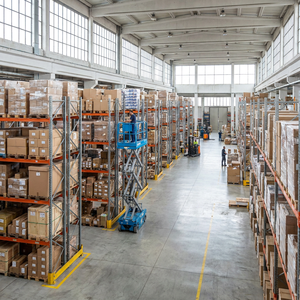
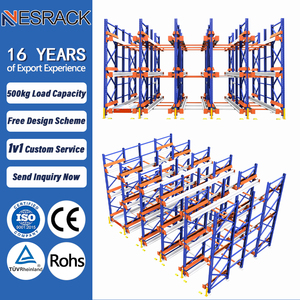
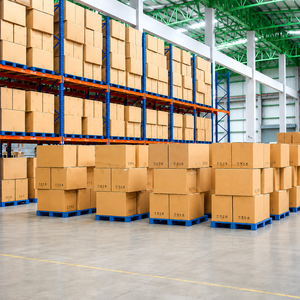
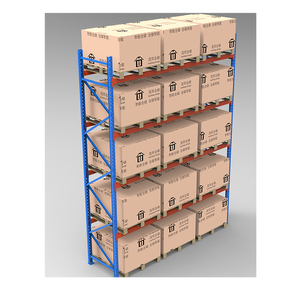
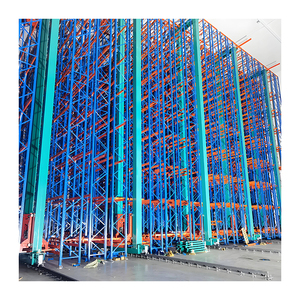
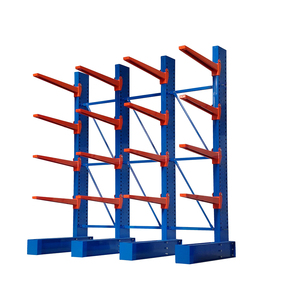
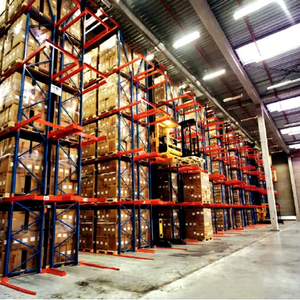
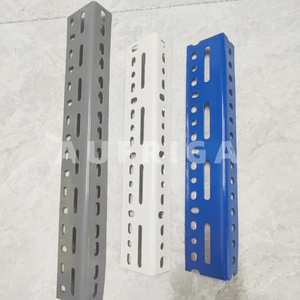
Comparative Engineering Analysis: High-Density Racking Topologies
Selecting optimal racking requires balancing volumetric cube utilization, SKU access selectivity, operating cycle velocities, and capital expenditure amortization over a 15-year lifecycle.
| Racking Topology | Space Efficiency | SKU Selectivity | Pallet Loading Cap | Handling Fleet Profile | Capex Index | Primary Industrial Sector |
|---|---|---|---|---|---|---|
| Standard Selective Rack | 40% - 50% | 100% Direct | 500 - 4,500 kg / Beam | Standard Counterbalance / Reach | Low baseline | General FMCG, Retail 3PL, e-Commerce |
| Drive-In / Drive-Through | 65% - 75% | 15% - 20% (LIFO/FIFO) | 1,000 - 2,000 kg / Pos | Narrow Mast Counterbalance | Moderate | Cold Storage, Beverage, Seasonal Raw Goods |
| Radio Shuttle System | 80% - 88% | Semi-selective (Lane) | 1,000 - 3,000 kg / Cart | Standard Reach (No lane entry) | Moderate-High | Chilled Logistics, High-Throughput Hubs |
| Push-Back Gravity Cart | 60% - 70% | 30% (LIFO 2-6 deep) | 800 - 1,500 kg / Nest | Standard Counterbalance / Reach | Moderate | Chemical Batching, Automotive Sub-assembly |
| Gravity Pallet Flow | 75% - 85% | Strict FIFO Channel | 1,000 - 1,800 kg / Pallet | Standard Reach Separation | High (Roller bed) | Perishable Dairy, Pharmaceuticals, Fast FMCG |
| Structural Cantilever | High Linear | 100% Column Front | 300 - 1,500 kg / Arm | Side Loaders, 4-Way Reach Truck | Moderate | Structural Steel, Timber, Pipe Extrusions |
Finite Element Stress Analysis (FEA)
Every custom beam connection and perforated upright column is engineered through digital FEA simulations. We calculate elastic and plastic deformation, secondary second-order effects (P-Delta), and torsional buckling limits to guarantee full compliance with EN 15512, RMI MH16.1, and AS 4084 guidelines.
- Deflection tolerance bounded inside L/200 thresholds
- Yield testing across certified Q235B and Q355B coils
- Dynamic seismic resistance modeling for active fault zones
Anti-Corrosive Chemical Pretreatment
For installations in tropical coastal climates, high-humidity port warehouses, or sub-zero refrigeration suites, structural integrity hinges on finishing durability. Our automated in-line pretreatment involves rigorous degreasing, acid pickling, and zirconium-phosphating preceding dual electrostatic powder coating.
- Exceeds 500-hour ASTM B117 salt spray endurance tests
- Electrostatic dry thermosetting epoxy-polyester coatings
- Hot-dip galvanizing options available for -30°C freezer rooms
Container Freight Cube Optimization
Overseas landed cost is critically shaped by shipping tariffs. Our engineering design team creates modular, knock-down (KD) configurations featuring interlocking beam connectors and nested column bundles. We calibrate bundle sizing to maximize the volumetric weight profile of standard 40ft High Cube containers.
- Achieves up to 98% internal container volume cubing
- Protective bubble wrap, steel banding & customized dunnage
- Knockdown modularity cuts port handling breakages to <0.05%
Guangzhou Heda Shelves Co., Ltd. — Turnkey OEM & ODM Fabrication Powerhouse
Operating since 2001 from our dedicated 30,000 square meter facility in Guangzhou, China, we operate 12 advanced cold-roll forming lines, high-precision laser profile cutting units, and robotic welding clusters producing over 30,000 metric tons of certified storage systems monthly.
Direct Structural Steel Rolling
Continuous automated profiling mills shape structural steel into 11-fold omega upright profiles, ensuring higher moment of inertia and impact strength without excess tare weight.
Robotic Beam Welding & Precision Punching
Automated punch presses deliver consistent 50mm and 75mm connection pitches. Heavy box beams and stepped beams are welded via multi-axis robotic fixtures for uniform weld penetration.
Global Regulatory Compliance & Traceability
Certified under CE (EN 15512: No. 2435-CPR-8605159), ISO 9001:2015 (No. 18624Q00169R0M), and RoHS. Steel heat numbers and mill certificates accompany every single production batch.
The Custom OEM / ODM Workflow
We collaborate with EPC contractors, system integrators, cold storage developers, and regional distributor brands to supply tailored storage systems built to custom project blueprints.
Submit building blueprints, column grid layouts, forklift models, and pallet dimensions for a complimentary 3D concept drawing and volumetric utilization assessment.
Tailored beam connector hook configurations, custom punched upright designs, private-label branding, customized load warning plates, and exact RAL color powder selection.
In-factory universal testing machine (UTM) validation for weld shearing limits and beam deflection checks before strapping into labeled export bundles.
Technological Trajectories & Future Procurement Dynamics (2025–2030)
Industrial warehousing is moving rapidly from manual static bays toward semi-automated, data-driven, and energy-resilient storage ecosystems. Smart procurement teams factor these key advancements into their capital specifications.
Grid-Resilient Mechanical Automation
In developing logistics corridors across Africa, Southeast Asia, and Latin America, volatile power grids present challenges for fully automated cranes. The market is shifting strongly toward decoupled semi-automation: 4-way radio shuttle systems powered by rapid-swap LiFePO4 batteries paired with solar charging stations or standby generators. This keeps operations running at full capacity during power outages without losing channel tracking data.
Urban Micro-Fulfillment & Multi-Tier Mezzanines
Skyrocketing industrial land costs near urban ports and metropolitan hubs are driving high-density vertical expansion. Rather than investing in new land, facilities are adopting rack-supported structural multi-tier mezzanines. These installations double or triple usable floor space inside existing building envelopes, combining heavy pallet storage at ground level with quick-pick e-commerce zones on upper catwalk decks.
Eco-Resins & High-Yield Micro-Alloy Steels
Global procurement teams prioritize sustainability and carbon-footprint metrics. Next-generation racking uses low-carbon, micro-alloyed Q355B and Q420 steel grades with elevated yield points. This delivers higher structural load capacities while cutting overall steel tonnage by 12% to 18%, significantly lowering oceanic shipping carbon costs and raw material consumption.
Frequently Asked Questions for B2B Racking Importers & Engineers
Everything you need to know about structural load certification, container packing, seismic compliance, and international shipping terms when sourcing directly from Guangzhou Heda Shelves.
Q1: What technical parameters are required to generate an engineering CAD layout?
We require the architectural floor plan indicating clear building internal heights, column positions and spacing, warehouse door and fire exit locations, floor slab load capacity (kN/m²), pallet sizes (Width x Depth x Height, including product overhang), maximum gross pallet weight, and the turning radius and mast reach height of your forklift fleet.
Q2: How do your racking systems ensure structural safety in active seismic zones?
Our engineers calculate seismic lateral force resistance according to regional parameters (such as Eurocode 8 or RMI seismic maps). We specify enlarged footplates, structural Q355B heavy base channels, chemical anchor embedment depths up to 160mm, and heavy-duty horizontal and vertical X-bracing networks designed to absorb cyclic horizontal seismic forces.
Q3: Can you manufacture custom beam profiles compatible with our existing racking?
Yes. As an OEM and ODM specialist, we routinely custom-tool connector lug configurations, claw drop profiles, and beam step geometries. Simply ship a physical component sample or provide comprehensive technical CAD drawings. Our tooling department can produce matching connection clips and upright punch profiles with verified structural fit.
Q4: How do you prevent corrosion during ocean container transit and in coastal facilities?
All cold-formed components pass through automated multi-stage degreasing, acid pickling, and protective phosphating before receiving a high-density electrostatic epoxy-polyester powder coat baked at 200°C. Finished parts are wrapped in protective bubble film and secured with steel bands over wood blocks, with desiccants placed inside the shipping containers to prevent condensation during ocean transit.
Q5: What is the typical production and delivery lead time for large container orders?
Standard manufacturing cycle for a 2 to 5 container order (40HQ) is 15 to 22 working days from CAD engineering approval. Custom color schemes or complex cold-storage galvanized systems require roughly 25 to 30 days. Shipping transit varies from 14 to 35 days depending on the destination port (such as Lagos, Mombasa, Tema, Durban, Rotterdam, or Long Beach).
Q6: How do you assist local installation teams in overseas destination countries?
Every shipment includes an itemized packing list, numbered structural component tags, and comprehensive 3D step-by-step erection manuals. We provide detailed CAD installation drawings showing exact torque settings for all anchor bolts and safety pins. For major projects, our structural engineers can provide real-time remote video guidance or on-site supervision.
Plan Your Warehouse Optimization Project Today
Share your storage dimensions, unit load specifications, or architectural drawings. Our engineering team will supply an integrated CAD floor plan, 3D spatial visualization, and a detailed CIF quotation within 24 to 48 hours.
Inquire Now