Featured Heavy-Duty Warehouse Storage & Mesh Systems
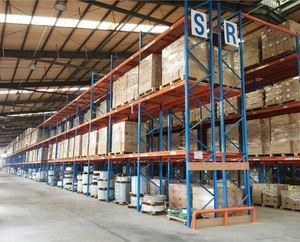
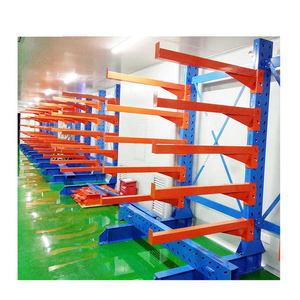
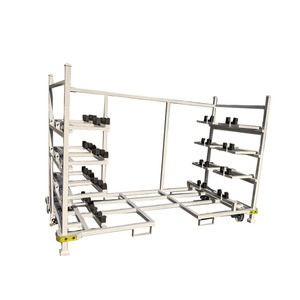
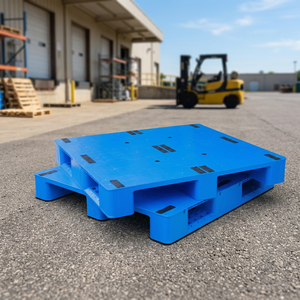
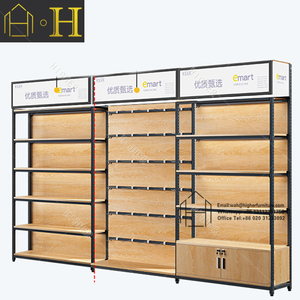
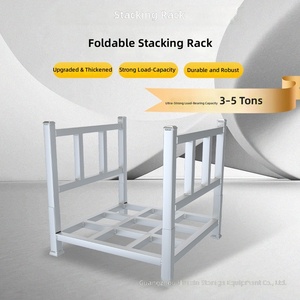
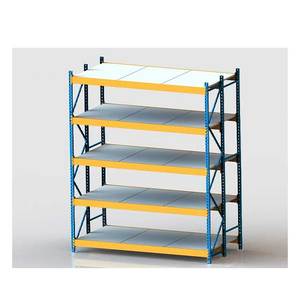
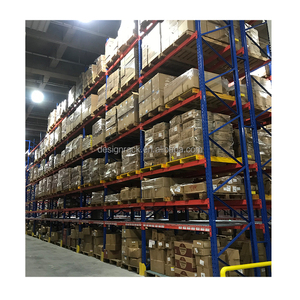
Factory-direct OEM/ODM storage infrastructure manufactured to precise industrial load tolerances, combining automated robotic spot welding with custom structural steel integration.
Structural Mechanics & Metallurgy of Wire Mesh Pallet Cages
A deep metallurgical and load-distribution analysis for industrial supply chain architects, structural procurement officers, and warehouse operations directors.
High-Tensile Cold-Drawn Steel Wire (Q235B)
Industrial wire mesh containers derive structural rigidity from high-grade low-carbon steel wire (grades Q195 and Q235B). Drawn down through precision dies to diameters ranging from 4.8 mm to 6.4 mm, the steel achieves a yield strength surpassing 235 MPa and ultimate tensile resistance of 370–500 MPa. Every wire intersect is fused via synchronized CNC multi-spot resistance welding, ensuring a minimum weld shear fracture value of 3.8 kN per cross joint to eliminate unraveling under dynamic forklift vibrations.
Roll-Formed Base Channel & Stacking Feet
The undercarriage perimeter is reinforced using inverted U-channel cold-formed structural steel profiles (thickness: 1.8 mm to 3.0 mm) seam-welded to an underlying mesh substrate. Stamped heavy-gauge steel stacking feet (thickness: 4.0 mm to 6.0 mm) provide self-guiding alignment cups. When stacked up to 4 to 6 units high under full load (up to 2,000 kg per tier), dynamic vertical downward forces bypass the mesh walls and transfer directly through the hardened corner posts to the floor slab.
Anti-Corrosion Surface Engineering
To counter extreme warehouse humidity, coastal atmosphere, and cold room condensation (-30°C to +4°C), wire pallet cages undergo rigorous multi-stage surface treatments. Standard configurations feature electro-zinc plating with hexavalent-free passivation (8–15 μm), offering 96 hours of ASTM B117 neutral salt spray resistance. For severe marine transport or fertilizer storage, hot-dip galvanizing (ISO 1461, 65–85 μm) or thermoset electrostatic polyester powder coating delivers decades of rust immunity.
| Standard Model | External Dimension (L×W×H mm) | Wire Gauge (Ø mm) | Mesh Grid Pitch (mm) | Dynamic Capacity (kg) | Static Stack Load (kg) | Folded Ratio |
|---|---|---|---|---|---|---|
| HEDA-MC-01 (Standard) | 800 × 600 × 640 | Ø 4.8 / 5.0 | 50 × 50 | 800 kg | 3,200 kg (4-High) | 4 : 1 |
| HEDA-MC-02 (Euro Standard) | 1000 × 800 × 840 | Ø 5.8 / 6.0 | 50 × 50 / 50 × 100 | 1,200 kg | 4,800 kg (4-High) | 4.5 : 1 |
| HEDA-MC-03 (Heavy Industry) | 1200 × 1000 × 890 | Ø 6.0 / 6.2 | 50 × 100 | 1,500 kg | 6,000 kg (4-High) | 5 : 1 |
| HEDA-MC-04 (Gitterbox Stillage) | 1240 × 835 × 970 | Ø 6.0 / Plate Bottom | Solid / Mesh Hybrid | 2,000 kg | 8,000 kg (4-High) | Non-fold/Fold opt. |
| HEDA-MC-05 (Custom Automotive) | 1400 × 1100 × 1050 | Ø 6.2 / 6.4 + Liners | 25 × 50 / Custom | 2,500 kg | 10,000 kg (4-High) | 4 : 1 |
Modular Blueprints: OEM/ODM Design Parameters
Every factory floor and high-throughput distribution center imposes unique spatial and handling demands. Our engineering department develops CAD/FEA blueprints customized around fork clearance, SKU density, and ergonomic picking workflows.
Drop-Gate Latches & Ergonomic Access
Configurable front and rear half-drop gates enable warehouse operators to retrieve inventory without unstabilizing stacked columns. Gate mechanisms can be outfitted with slide-bolt spring latches, gravity drop locks, or dual safety interlocks to prevent unlatching during AGV navigation or bumpy forklift transport.
Internal Dividers, Liners & Dunnage
For finished machined components, automotive electro-plated trims, or loose stampings, cages are fitted with corrugated hollow PP sheet liners, high-density polyethylene (HDPE) dunnage inserts, or electro-galvanized wire partition mesh dividers to prevent component-to-component collision abrasions.
Pallet Runner Bars & Fork Stirrups
Standard four-way entry allows rapid handling with counterbalance and reach trucks. For automated pallet flow tracks or heavy-duty beam racking, cages feature bottom-welded full-perimeter runner skids (three or four base runners), fork guides, and anti-slip stop bars to prevent dislodging when stored at 12-meter heights.
Mobility Wheel Assembly (Trolley System)
Eliminate forklift dependency in lean manufacturing assembly lines. Heavy-duty castors (PU, phenolic resin, or nylon core with dual precision roller bearings) in swivel and rigid configurations are welded directly or bolted to reinforced castor plates, with dynamic load ratings up to 1,500 kg per container.
Hinged & Lockable Security Lids
To counter transit shrinkage, pilferage, and falling debris in high-density facilities, wire mesh cages are engineered with dual-split or top-hinged wire mesh security covers. These integrate with hasps compatible with high-security padlocks or single-use tamper-evident RFID bolt seals.
ASRS & Automated Conveyor Alignment
Automated Storage and Retrieval Systems (ASRS) demand sub-millimeter tolerances. Our OEM manufacturing adheres to ±1.5 mm diagonal tolerance, complete with photo-eye reflection plates, bottom-skid chamfers, and target plates for robotic gantry grippers and automatic guided shuttles.
Future Procurement Trends in Industrial Wire Mesh Cages
The global supply chain is transitioning from disposable packaging and timber pallets toward closed-loop Returnable Transport Packaging (RTP). Discover the regulatory and technological drivers defining the next decade of warehouse procurement.
1. Closed-Loop Circular Logistics & ESG Compliance
Corporate ESG mandates and strict packaging waste regulations across Europe, North America, and Asia-Pacific are compelling multinational manufacturers to replace single-use wooden crates and plastic stretch wrapping with reusable steel wire cages. Delivering an operating lifespan of 10 to 15+ years, high-strength wire cages yield a lifecycle carbon emission reduction exceeding 72% per turnover cycle while fully eliminating wood splinter contamination in pristine food and pharmaceutical centers.
2. 4:1 Reverse Logistics Collapsibility Ratios
International ocean container rates and cross-border freight volatility require superior volume optimization during empty return legs. Advanced helical spiral hinges and drop-down wall designs enable HEDA cages to achieve a 4:1 or 5:1 volume reduction when folded flat. A standard 40-foot High Cube (40HQ) ocean container accommodates up to 360 to 480 folded units, compared to just 70 to 80 assembled rigid stillages, slashing deadhead freight overhead by up to 75%.
3. Sensor-Embedded Smart Mesh Cages (IoT & RFID)
Modern procurement contracts increasingly stipulate smart asset tracking. Leading automotive tier-1 suppliers and 3PL distribution networks integrate passive Ultra-High Frequency (UHF) RFID tags, BLE beacons, and QR barcode identification plates laser-welded directly to the container frame. This allows automated reading portals to log full container payloads in real-time, eliminating manual scanning, inventory shrinkage, and misplacement across complex multi-facility supply chains.
Why Global Buyers Partner with Guangzhou Heda Shelves
With over 25 years of relentless precision manufacturing, Guangzhou Heda Shelves Co., Ltd. operates as a verified direct manufacturing engine for global tier-1 logistics operators, distribution hubs, and industrial suppliers.
Vertical In-House Manufacturing Integration
From coil slitting and automated cold wire drawing to high-speed CNC punching, robotic multi-spot resistance welding, automatic channel roll forming, and environmental electrostatic powder coating lines—every step is executed within our own 30,000 m² facility. This eliminates subcontractor markups, guarantees rigid dimensional control, and allows lightning-fast turnaround on custom tooling.
Certified Quality & Verifiable Compliance
Every batch of wire mesh containers and industrial storage racking is certified under international standards, including CE Certification No. 2435-CPR-8605159 and ISO 9001:2015 Certification No. 18624Q00169R0M (valid through June 2027), in compliance with RoHS environmental restrictions. Mill material test certificates (MTC) and weld shear test reports accompany every ocean export bill of lading.
Free 3D Layout & FEA Structural Simulation
Our dedicated team of 300+ technicians and veteran design engineers provides complimentary warehouse spatial optimization, 3D structural CAD blueprints, and Finite Element Analysis (FEA) stress distribution calculations prior to commercial contracting. We simulate real-world seismic loads, fork-impact deflections, and dynamic stacking conditions to ensure zero structural failure.
Inside Our 10-Stage Precision Manufacturing Line
Rigid multi-point quality control gates at every station turn prime Q235B steel into certified, heavy-duty industrial storage assets.
Quality Verification Checklist for B2B Importers
Avoid catastrophic floor collapses and weld delamination. Audit prospective wire pallet cage suppliers using these non-negotiable physical and metallurgical testing standards.
Weld Penetration & Shear Test Benchmarks
Substandard manufacturers cut costs by reducing welding current, resulting in cold-weld joints with superficial surface adhesion. During dynamic transit, forklift vibration pops these welds.
- Tensile Shear Resistance: Must withstand > 3.8 kN across arbitrary cross-weld intersections.
- Visual Penetration: Weld nugget indentation must measure between 25% to 35% of the total wire cross-section without severe burn-through.
- Hinge Loop Integrity: Helical spiral wire loops must be continuous and cold-clinched to avoid lateral displacement under heavy static bursting forces.
True Wire Gauge vs. Finished Plating Diameter
A common industry malpractice involves quoting nominal wire diameters (e.g., 6.0 mm) but utilizing 5.4 mm raw wire expanded artificially with heavy zinc flash plating, reducing dynamic capacity by over 20%.
- Pre-Coating Micrometer Check: Steel base core must measure within ±0.05 mm of the declared engineering spec sheet.
- Stack Foot Steel Gauge: Stamping feet must be measured via digital caliper prior to powder coating (minimum 4.5 mm for 1,500 kg rating).
- Base Undercarriage Geometry: Bottom channels must be cold-formed U-profiles with stiffening ribs, not flat bar iron.
Frequently Asked Questions for Sourcing Directors
Direct answers on international freight packaging, dynamic load safety factors, coating corrosion longevity, and OEM design customizations from HEDA engineering specialists.
Plan Your Storage Infrastructure with HEDA Engineers
Receive complimentary 3D warehouse CAD design layouts, structural FEA load calculations, and factory-direct OEM/ODM quotation sheets within 24 hours. Connect directly with our structural engineering team.