High-Performance Racking Systems for the Automotive Sector
Engineered for maximum structural integrity, zero-scratch component protection, and high-throughput Just-In-Time (JIT) manufacturing line integration.
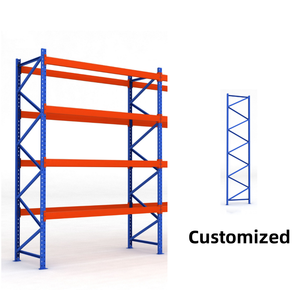
Heavy-Duty Beam Pallet Racking
Designed for heavy engine blocks, cast transmissions, and drivetrain assemblies with custom interlock safety pins.
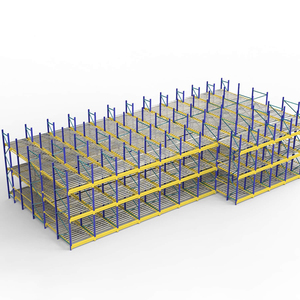
Heavy-Duty Gravity Flow Rack
Gravity-driven roller tracks for line-side Just-In-Sequence (JIS) feeding, eliminating electrical drive reliance.
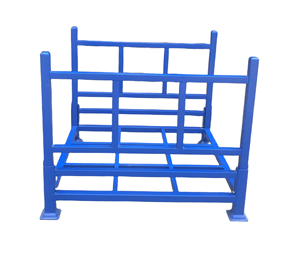
Custom Anti-Corrosion Stamped Racks
Precision-milled storage slots configured for curved sheet-metal body panels, fenders, and side-door weldments.
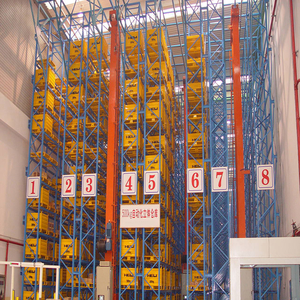
Automated ASRS Pallet Racking
Toleranced for crane and shuttle interfaces in automated gigafactories and EV lithium-ion battery buffer storage.
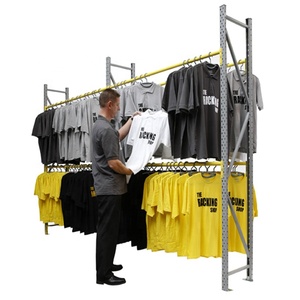
Boltless Industrial Tier Shelving
Fast-assembly multi-tier system for automotive aftermarket distribution, hardware fasteners, and lighting packs.
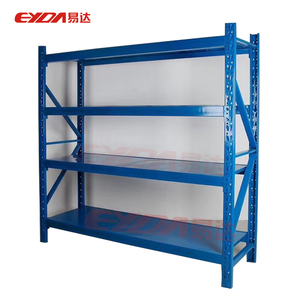
300KG Electrostatic Selective Rack
Electrostatic coated racking for vehicle wire harnesses, ECU modules, onboard sensors, and HVAC ducts.
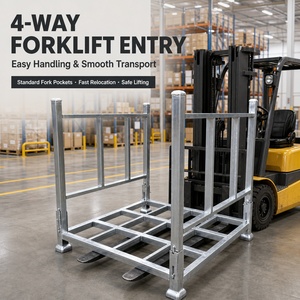
Stackable Portable Pallet Frames
Foldable, nesting stacking cradles optimized for finished tires, alloy wheels, windshield crates, and seasonal overflow.
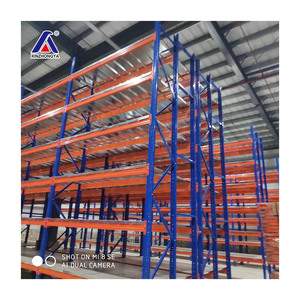
Q235B Die & Heavy Mold Racking
Reinforced upright frames with structural pull-out drawers for press stamping dies, cast molds, and heavy tooling.
Engineering the Modern Automotive Supply Chain: Structural Rigidity, Tolerances & High-Frequency Throughput
Automotive manufacturing and aftermarket distribution represent one of the most operationally demanding arenas in global logistics. Unlike conventional commercial warehousing where uniform pallets are stored statically over extended dwell periods, automotive logistics centers function as high-velocity cross-docks and line-side buffers. In this environment, dynamic structural deflection, cyclic impact fatigue, and sub-millimeter component tolerances dictate operational viability.
A premier automotive racking system exporter must operate beyond basic steel fabrication. Exporters serving OEM assembly plants (such as BMW, Volkswagen, Toyota, Stellantis, or Tesla supply networks) and Tier-1 integrators must meet rigorous international structural building codes, including European EN 15512 (Steel static storage systems), American RMI (Rack Manufacturers Institute) MH16.1, and FEM 10.2.02 standards. Structural members must withstand not only static dead loads of dense cast components (such as 1,800 kg engine blocks and transmission cases) but also substantial dynamic forces generated by rapidly operating counterbalanced and reach forklifts in narrow-aisle geometries.
Key Insight: Automotive racking failure rarely originates from pure static overload; it stems from localized fatigue deflection at the beam-to-column connector, unmitigated baseplate micro-shifting, and lack of dynamic impact dissipation along high-traffic forklift transit corridors.
Material Metallurgy: Why Structural Grade Q235B and Q355B Form the Foundation
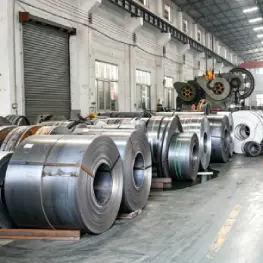
Global automotive racking exporters benchmark their engineering against certified cold-rolled steel coils with guaranteed yield strengths. While consumer-grade steel racks utilize unregulated scrap blends prone to micro-fissures during high-tonnage cold roll-forming, premium automotive racks utilize cold-formed high-strength micro-alloy steels (Q235B with minimum yield strength of 235 MPa and Q355B exceeding 355 MPa). Column profiles feature specialized continuous multi-bend profiles (frequently 9 to 13 distinct cold-rolled bends) that distribute compressive stress along exterior vertices, resisting torsional buckling when point-loaded by irregular automotive dunnage.
Dunnage Co-Engineering & Class-A Surface Preservation
In body-in-white (BIW) stamping facilities, racks must interface seamlessly with delicate metal panels. A single scratch, burr, or hydraulic fluid trace on a cold-rolled steel door panel or aluminum hood compromises robotic paint lines, generating thousands of dollars in scrap per incident. World-class automotive racking exporters design specialized custom dunnage—incorporating injection-molded polyurethane (PU) guides, Ultra-High-Molecular-Weight Polyethylene (UHMW-PE) combs, and high-density flocking. The steel superstructure carries the geometric load, while internal dunnage modules securely cradle automotive parts, dampening vibrational harmonics during inter-plant transit.
Automotive Component Storage System Benchmark Matrix
Select the precise racking geometry based on vehicle component classification, rotation frequency, and throughput automation levels.
| Automotive Sub-System | Ideal Racking Architecture | Typical Payload / Bay | Picking Velocity | Surface Protection Protocol |
|---|---|---|---|---|
| Powertrain (Engines, Transmissions) | Heavy-Duty Selective Pallet Racks | 2,500 – 5,000 kg | Medium (Batch JIT) | Reinforced Steel Decking, Spacing Beams |
| Stamped Panels (Doors, Fenders, Hoods) | Custom Folding Post Dunnage Racks | 800 – 1,500 kg | High (Line-Side Synchronous) | Polyurethane Inserts, UHMW-PE Teeth |
| EV Battery Modules & Packs | Automated AS/RS with Radio Shuttle | 1,200 – 2,200 kg | Continuous Robotic | Fire-Isolated Bays, Anti-Static Powder Coat |
| Line-Side Hardware (Bolts, Clips, Sensors) | Carton Flow / Gravity Roller Racks | 150 – 350 kg/lane | Ultra-Fast (FIFO Push) | ABS Roller Wheels, Stainless Flow Guides |
| Tires, Wheels & Cast Rims | Nesting Stacking Pallet Frames | 1,000 – 2,000 kg | High Velocity | Tubular Radiused Uprights, Anti-Scuff Finish |
| Body Exhaust Pipes & Drive Shafts | Heavy-Duty Cantilever Racking | 1,000 – 3,000 kg/arm | Medium Velocity | End-Stop Retainers, Padded Arm Sleeves |
Key Capabilities of Leading Global Automotive Racking Exporters
Evaluating an international racking supplier requires scrutinizing structural manufacturing tolerances, robotic welding integrity, and export logistics engineering.
1. Metallurgical Traceability
Mill test certificates for every batch of Q235B/Q355B strip coil steel. Chemical composition verification prevents catastrophic brittle failures during high-stress operational cycles.
2. Finite Element (FEA) Stress Modeling
Complete computer-simulated structural load tests verifying torsional resistance, beam weld deflection under seismic acceleration, and dynamic load redistribution under uneven placement.
3. Precision Robotic Welding
Continuous multi-point robotic welding for connector claws and baseplates. Uniform weld throat thickness guarantees zero micro-voids, avoiding structural fatigue failure under cyclic crane loading.
4. Container-Optimized Knockdown Packing
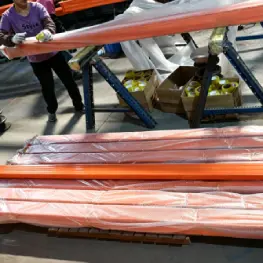
Components engineered to maximize 40HQ ocean container cube utilization. Custom nesting dunnage eliminates shipping container racking rub and transit damage while minimizing landed freight costs.
Future Procurement Trends in Automotive Racking Systems
The transformation to Electric Vehicles (EV), autonomous mobile robots (AMRs), and smart gigafactories is reshaping automotive storage architectures.
EV Battery Fire-Safe Isolations
Lithium-ion pack storage demands specialized racking with integrated overhead in-rack sprinkler channels, early thermal-runaway detection conduits, and blast-deflecting heavy-gauge partition walls.
AMR & AGV Floor-Level Interfacing
Eliminating conventional forklift drive-ins in favor of autonomous low-profile robot tunnels beneath racking bays. Demands laser-surveyed bottom beam clearances and precision optical reflector mounts.
Modular Reconfigurable Dunnage
Automakers shifting from welded permanent custom dunnage to standardized bolt-on modular PU cassettes that can be reconfigured within hours during annual vehicle model line changeovers.
Low-Carbon Green Steel Sourcing
European and North American OEM procurement guidelines now mandate validated Environmental Product Declarations (EPD) and recycled scrap-ratio audits to meet corporate Scope 3 decarbonization mandates.
Guangzhou Heda Shelves Co., Ltd.: Global Manufacturing & Engineering Excellence
Established in 2001, Guangzhou Heda Shelves Co., Ltd. has grown into one of the world's most trusted manufacturers and exporters of heavy-duty warehouse racking, automated AS/RS storage, and industrial mezzanine platforms. Operating from an advanced 30,000 m² centralized manufacturing facility in Guangzhou, China, HEDA Shelves delivers over 30,000 metric tons of precision cold-formed racking steel each month to automotive, industrial, and FMCG supply chains spanning more than 120 countries.
For automotive industry procurement officers and general contractors, HEDA Shelves provides a single point of structural accountability. From initial computerized layout consultation and finite element stress analysis to custom dunnage engineering, containerized shipping consolidation, and remote or on-site installation supervision, our team of 300+ structural engineers and certified master fabricators ensures seamless execution.
Verified Credentials: CE Certified (No. 2435-CPR-8605159) • ISO 9001:2015 Quality Management Certified (No. 18624Q00169R0M) • RoHS Material Safety Compliance • Complete In-House Physical Load Deflection Testing.
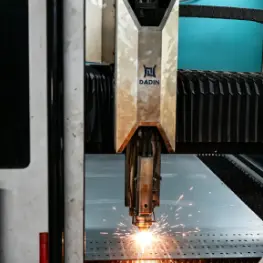
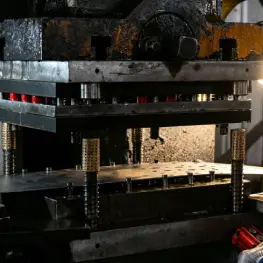
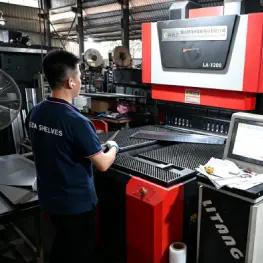
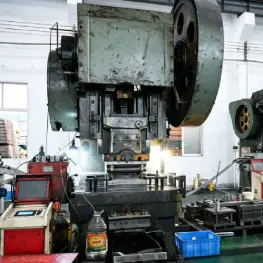
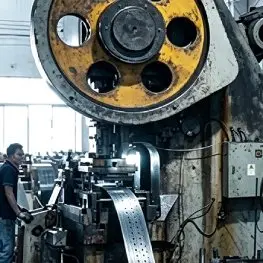
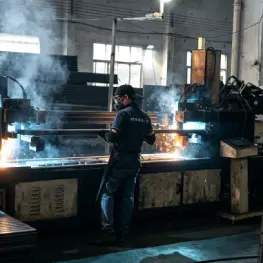
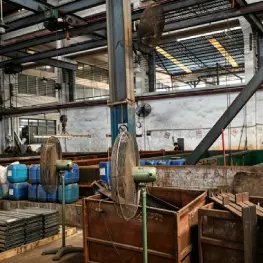
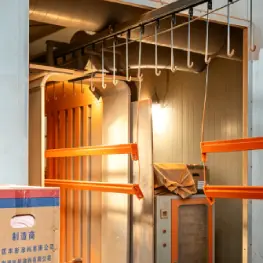
10-Stage Precision Production Line for Heavy-Duty Racking
The superior durability, rust resistance, and structural dimensional accuracy of HEDA Shelves racking systems stem from our tightly controlled, in-house continuous 10-stage fabrication workflow:
Frequently Asked Questions on Automotive Racking Procurement
Straightforward technical answers from our senior structural engineers covering load testing, export packing, seismic engineering, and installation.
How do leading exporters calculate maximum allowable beam deflection for dense automotive parts?
What surface treatment is required to prevent corrosion in humid coastal warehouses and assembly plants?
How can overseas automotive facilities handle installation without local factory personnel?
What engineering provisions are mandatory when storing high-voltage EV battery modules?
How do exporters optimize shipping container cube space to minimize ocean freight costs per pallet position?
What specific building and floor data are required before generating a free 3D CAD automotive racking layout?
Accelerate Your Automotive Warehouse Storage Project
Whether you are designing a high-density Tier-1 manufacturing line-side buffer, expanding an aftermarket spare parts center, or engineering an automated EV gigafactory AS/RS system, our engineering team delivers precision CAD blueprints, structural FEA calculations, and export pricing within 24 hours.
- Free 3D CAD Layout & Renderings
- CE & ISO 9001:2015 Certified Quality
- Direct Factory Pricing (No Intermediaries)
- Container Loading Optimization
Connect Directly with a Senior Structural Engineer
Review your warehouse floor plan, calculate payload tolerances, and obtain an international export estimate with complete landed ocean freight estimates.