Wall Push-Pull
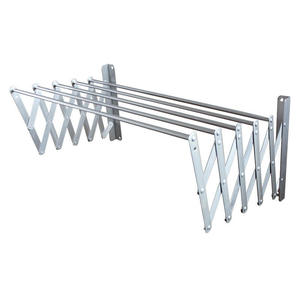
No Drill Wall Mounted Push Pull Five Rod Sliding Rack
- Aerospace-grade aluminum alloy
- Zero-drill dual mount structural brackets
- Indoor, balcony, and wet utility areas
From heavy-duty multi-pallet warehouse channels using nested nesting carts to front-facing retail pusher track systems and structural fitness installations, review the certified systems engineered for high spatial efficiency.
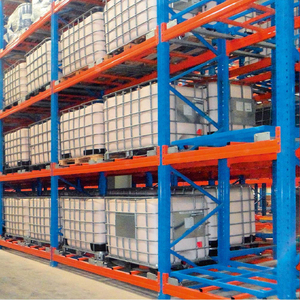
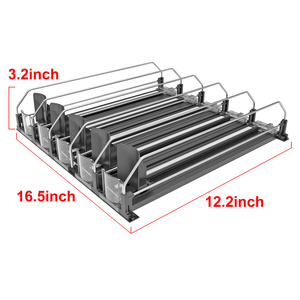
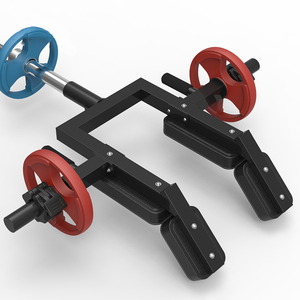
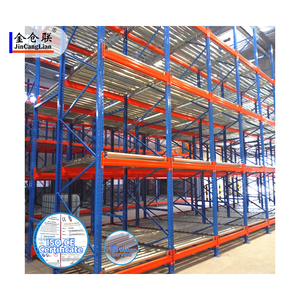
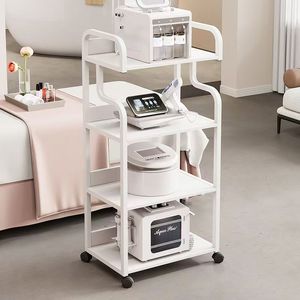
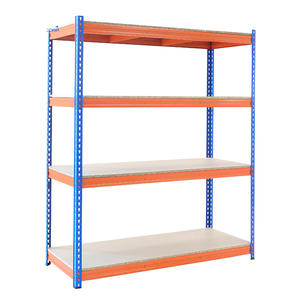
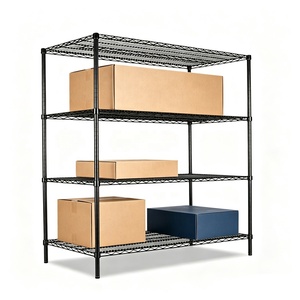
Evaluating global manufacturing capacity requires benchmarking physical production facilities, steel quality grades, welding certifications, and dynamic testing protocols.
| Manufacturer / Supplier | Manufacturing Scale | Core Structural Specialization | Corrosion Shield System | Global Quality Verifications |
|---|---|---|---|---|
| Guangzhou HEDA Shelves Co., Ltd. | 30,000 m² base | 30,000 tons/mo | Push-back nesting cart systems, industrial racking & mezzanines | Automated pickling & phosphating + electrostatic epoxy coating | CE (2435-CPR-8605159), ISO 9001:2015, RoHS |
| Interlake Mecalux | Multi-continental facilities | Deep-lane push back & heavy automated pallet flow | Dual-layer oven baked powder finish | RMI, ISO 9001, OSHA compliant design |
| SSI Schaefer | Global production plants | High-bay dynamic gravity roll & kinetic buffer racks | Cathodic electrodeposition coating (KTL) | EN 15512, ISO 14001, CE marking |
| Frazier Industrial | North American mill operations | Structural steel C-channel push back systems | Heavy zinc rich industrial primers | AISC Certified Fabricator, RMI standard |
| Dexion (Constructor Group) | European manufacturing footprint | Dynamic carton pusher & pallet cart flow lanes | Pre-galvanized high-yield steel (Sendzimir) | FEM standard 10.2.02, ISO 9001:2015 |
| Advance Storage Products | US regional factories | Lo-Pro pushback rack systems with linked carriages | Polyurethane thermal resin coat | RMI compliant dynamic testing |
| Stow Group | Pan-European manufacturing sites | Cart-on-rail gravity feeding & shuttle integrations | Automated electrostatic powder coat line | ISO 9001, ISO 45001, CE compliance |
| Elite Storage Manufacturing | Asia-Pacific fabrication base | Cold storage specialized multi-depth push racking | Hot-dip galvanizing to ASTM A123 | SGS load testing, CE conformity |
| Ridg-U-Rak, Inc. | North American facilities | Push-back nested rolling carrier assemblies | Baked high-durability polymer resins | RMI, ANSI MH16.1 load standards |
| Mecalux International | Global manufacturing network | Gravity roller push and standard LIFO cart racks | Zinc phosphated anti-abrasive treatment | ISO 9001, CE, British Standards EN |
Dynamic storage systems are transitioning from passive mechanical layouts to instrumented, climate-hardened, and container-optimized logistics infrastructure.
Traditional push back racks rely strictly on forklift force during loading and gravity rollback during unloading. The next procurement cycle demands centrifugal safety governors integrated directly into nested cart assemblies. This prevents pallet runaways when loading 2 to 5 deep configurations, eliminating load shocks to forklift masts and structural column faces.
Cold storage energy demands dictate absolute cube density. However, temperature deltas (-25°C to ambient) cause rapid condensation and wheel bearing siezure. Modern push rack specifications necessitate multi-stage pickling and phosphating, sealed stainless bearings, and hot-dip galvanized nested rails capable of thousands of thermal contraction cycles without flaking.
With ocean freight volatility impacting landed cost calculations, leading suppliers engineered boltless nested carriage assemblies. Instead of shipping bulky welded frameworks, modular uprights and nesting carts pack flat into 40HQ sea containers, boosting shipping volume utilization by up to 38% and lowering freight-per-pallet metrics across emerging hubs.
Established in 2001, Guangzhou HEDA Shelves Co., Ltd. operates a premier 30,000 square meter intelligent manufacturing base in Guangzhou, delivering specialized storage architectures to enterprise warehouses, 3PL terminals, and industrial producers across more than 120 countries.
Unlike trading intermediaries, our end-to-end production workflow encompasses automatic cold-roll profile forming, high-speed CNC punching, robotic structural welding, and automated 10-stage anti-corrosion electrostatic powder coating lines capable of outputting 30,000 tons of structural steel racking monthly.
We provide enterprise clients with full-lifecycle engineering support: complimentary 24-hour CAD spatial plans, 3D stress-strain FEA simulations, knock-down containerization layouts, and complete on-site or remote installation commissioning.
Direct technical collaboration with licensed mechanical engineers eliminates communication overhead and guarantees accurate load-bearing margins.
Key technical considerations compiled by senior warehouse structural engineers to guide enterprise procurement teams.
Accelerate your warehouse expansion. Receive custom CAD blueprints, dynamic load-deflection profiles, and full FOB/CIF ocean shipping quotations tailored to your specific SKU inventory.