High-Performance Storage Racking & Modular Workstation Systems
Explore precision-fabricated heavy-duty storage configurations, dynamic roll-formed structures, and multi-tier picking architectures directly available from our certified factory lines.
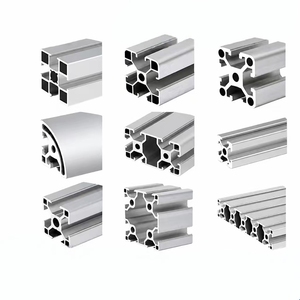
Custom Industrial 6063 T5 Aluminum Extrusion Profile Modular Framing Assembly Beam
Aerospace-grade 6063-T5 aluminum framing optimized for automated conveyor workstations and robotic structural enclosures.
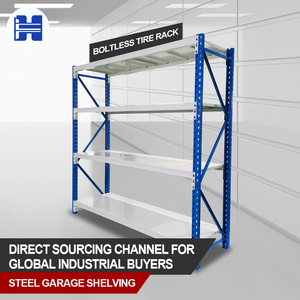
High Capacity Powder Coated Steel Manual Picking Rack for Picking Operation
Heavy-gauge cold-rolled steel racking designed for high-throughput SKU picking operations, featuring multi-tier boltless beam connectivity.
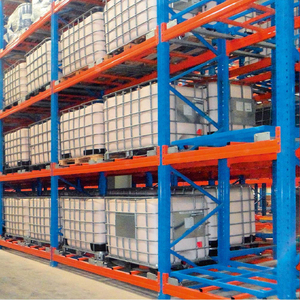
High Density 5 Layer Heavy Duty Push Back Warehouse Rack Industrial Storage System
Multi-lane nested cart system utilizing gravitational incline to balance high-cube density storage with streamlined LIFO access lanes.
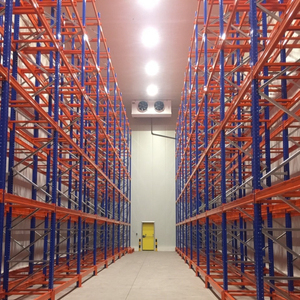
Drive In Racking System With High Density Storage Design Allowing Forklift Entry
Aisle-free structural configuration permitting direct forklift ingress for mass storage of identical SKU batches in cold and ambient depots.
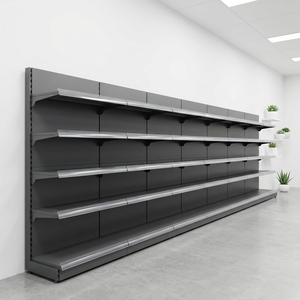
Heavy Duty Solid Back Dark Grey Metal Adjustable Supermarket Shelving Rack
Solid backplate industrial-grade retail shelving engineered to support high-density commercial consumer merchandise displays.
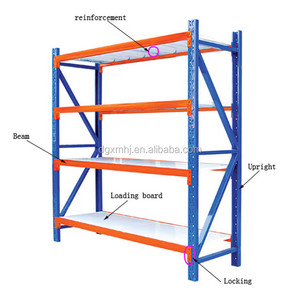
Storage Warehouse Metal Medium Duty Weight Goods Stacking Racks & Shelves
Cost-efficient steel decking rack assembly configured for intermediate payload requirements across automotive and electronics supply chains.
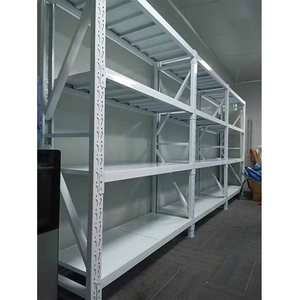
Light Duty Multi-Layer Storage Rack Corrosion Protected Warehouse Shelving
Corrosion-passivated light-industrial shelving featuring electrostatic polyester finish, suited for toolrooms, spares, and small parts bins.
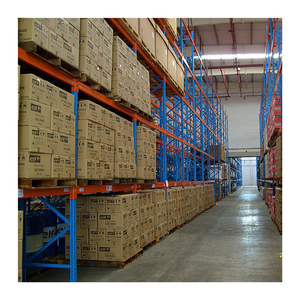
Customized Heavy Duty Steel Warehouse Storage Shelf Rack Pallet Racking System
Standard-setting selective structural pallet racking designed to FEM 10.2.02 and RMI specifications, delivering uncompromised 100% pallet accessibility.
The Global Structural Dynamics of Industrial Racking & Multi-Tier Mezzanines
A technical examination into structural engineering integrity, material yield tolerances, and supply chain CAPEX containment in modern intralogistics infrastructure.
In contemporary warehouse logistics, the physical racking infrastructure and vertical mezzanine platform represent far more than static structural steelwork. They serve as the foundational load-bearing skeleton that dictates throughput velocity, cubic volumetric efficiency, floor footprint utilization, and human-machine interaction safety. As commercial real estate costs surge globally across primary distribution corridors, enterprise logistics directors are moving decisively from two-dimensional footprint expansion to three-dimensional volumetric densification.
Modern mezzanine platforms and selective, drive-in, push-back, and shuttle racking systems are subject to stringent dynamic forces, seismic load interactions, slab punching shears, and cyclic stress fatigue. Specifying equipment from a tier-1 manufacturer demands rigorous structural adherence to internationally verified standards including the European EN 15512 and FEM 10.2.02, the American RMI ANSI MH16.1, and Australian AS 4084:2023. A minor deviation in cold-rolled steel profile tensile yield or inadequate weld penetration along the beam connector bracket can trigger catastrophic structural progressive collapse under maximal design payload.
Information Gain Metric: Direct Factory Engineering vs. Middleman Procurement
Direct procurement from established manufacturing factories lowers landed infrastructure CAPEX by 28% to 42% by eliminating brokerage markups, enabling bespoke finite element analysis (FEA) engineering, and allowing tailored container nesting that optimizes TEU shipping volumes directly into coastal and inland distribution terminals.
| System Classification | Structural Profile Material | Typical Payload Capacity | Space Cube Utilization | Direct Pallet Accessibility | Target Inventory Dynamic |
|---|---|---|---|---|---|
| Selective Pallet Racking | Cold-Rolled Omega Column (Q235B/Q355B) | 1,000 – 4,500 kg / beam level | 35% – 45% (Standard Aisle) | 100% Direct Selectivity | High SKU Variance, Low Batch Uniformity |
| Structural Steel Mezzanine | Hot-Rolled H-Beam & C-Channel Joists | 300 – 1,200 kg / m² Uniform Load | Up to 100% Floor Multiplier | Tier-Specific Multi-Point | Small-Parts Bin Picking & Packaging Deck |
| Rack-Supported Platform | Composite Heavy Upright Columns | 400 – 800 kg / m² Deck + Rack Bays | 80% – 92% Total Enclosed Cube | Zoned Tier Pick Access | Integrated Pallet Buffer & Manual Order Split |
| High-Density Drive-In Racks | Formed Structural Cantilever Rails | 1,000 – 2,000 kg / pallet slot | 75% – 85% Volume Efficiency | LIFO Single Lane Entry | Bulk Raw Materials, Cold Chain, Homogeneous SKUs |
| Dynamic Push-Back System | Inclined Nested Telescopic Carts | 800 – 1,500 kg / cart station | 70% – 80% Volume Efficiency | LIFO (2 to 6 Pallets Deep) | Medium SKU Turnover, Perishable Rotation |
Top 10 Global Racking & Industrial Mezzanine Manufacturers
A comparative structural appraisal of the world's foremost industrial storage systems fabricators, evaluated across production capacity, steel processing automation, and compliance certification.
SSI Schaefer
Global titan renowned for fully automated clad-rack high-bay warehouses, modular multi-tier mezzanine picking facilities, and complex integrated intralogistics systems.
- Automated High-Bay Clad Systems
- EN 15512 & DIN Standards
- Heavy Automated Integration
Guangzhou HEDA Shelves Co., Ltd.
Premier direct-export manufacturing powerhouse operating a 30,000 m² state-of-the-art facility, producing 30,000 tons monthly with complete OEM/ODM engineering across 120+ export territories.
- 30,000 m² Direct Mega-Plant
- CE (2435-CPR-8605159) & ISO 9001
- Full Container Cube Optimization
Stow Group
One of Europe’s predominant structural racking specialists, pioneering standard cold-formed pallet racking profiles and Atlas 2D shuttle automated multi-deep channels.
- Proprietary Beam Interlocks
- Pan-European Distribution
- FEM 10.2.02 Load Verification
Daifuku Co., Ltd.
World’s top material handling equipment enterprise, offering extreme-load seismic-rated automated storage and retrieval systems (ASRS) and cleanroom platform installations.
- Ultra-Precision Tolerances
- High-Zone Seismic Deflection
- Turnkey ASRS Execution
Interlake Mecalux
Major transnational supplier producing versatile high-bay boltless selective pallet racks, drive-in systems, and warehouse management software-integrated mezzanine facilities.
- Dual RMI & CE Fabrication
- Large Scale Automated Pick Towers
- Extensive US/EU Footprint
Jungheinrich AG
German engineering leader specializing in seamless narrow-aisle (VNA) racking systems, heavy drive-through structures, and multi-tier picking platform integration.
- VNA High-Precision Tolerances
- Integrated Guided Truck Tracks
- High Dynamic Stability
Dexion (Gonvarri)
Historical innovator of slotted-angle construction, known for the P90 standard pallet racking line, cantilever arm arrays, and industrial structural mezzanine catwalks.
- Slotted Angle Legacy P90 Profile
- Multi-Tier Open Grating Decks
- EN 1090 Structural CE Mark
Frazier Industrial
North America’s largest structural steel rack fabricator, prioritizing hot-rolled structural steel C-channels providing extreme forklift impact resistance in rough operating yards.
- 100% Structural Steel Channel
- Forklift Impact Ruggedness
- Heavy Seismic Zone Rating
BITO Storage Systems
Pioneering developer of modular small-parts storage containers, dynamic live carton flow tracks, and multi-story boltless shelving-supported mezzanine systems.
- Boltless Modular Assembly
- Multi-Tier Bin Towers
- Precision Cold-Roll Sections
AR Racking
Specialized manufacturer focused on high-specification adjustable pallet racking, automated clad rack systems, and large-span freestanding structural mezzanines.
- High-Yield Galvanized Finishes
- Structural R&D Testing Lab
- Full Traceability Steel Coils
Guangzhou HEDA Shelves: 25 Years of Precision Manufacturing
A consolidated profile of our 30,000 square meter integrated fabrication campus, fully documented quality certifications, and proprietary cold-forming production capabilities.
Operating continuously since 2001, Guangzhou Heda Shelves Co., Ltd. has developed one of the world's most comprehensive manufacturing ecosystems dedicated exclusively to high-capacity warehouse racking, industrial cantilever systems, and structural mezzanines. Unlike brokers and assembling assemblers, HEDA exercises absolute end-to-end quality governance across the entire metallurgy transformation chain—from raw hot-rolled strip steel inspection to computerized continuous roll profiling and electrostatic powder curing.
The company maintains rigorous certified regulatory benchmarks, featuring CE Certification No. 2435-CPR-8605159, comprehensive ISO 9001:2015 Management Certification No. 18624Q00169R0M (valid through June 2027), and strict RoHS chemical safety controls. Our specialized international engineering division handles custom CAD/3D FEA load calculations, seismic modeling, and container shipping optimization, ensuring components are knock-down packed with zero container void loss to ports across Africa (Lagos, Tema, Mombasa, Dar es Salaam, Durban), Southeast Asia, Europe, and the Americas.
Inside the 10-Step Heavy-Gauge Racking Fabrication Lifecycle
Raw Steel Slitting
Certified Q235B/Q355B coil testing for tensile yield & chemical composition.
Precision CNC Cutting
Laser and automated shearing to sub-millimeter length tolerances.
Automated Punching
High-speed continuous CNC die punching of 50mm/75mm pitch diamond slots.
Cold Bending & Forming
Multi-roller hydraulic bending generating multi-ribbed upright column rigidity.
Profile Roll Forming
Continuous twin-roller profiling of interlocking boxed beam step rails.
Mechanical Polishing
Automated surface deburring removing burrs, sharp slag, and micro-defects.
MIG Robotic Welding
Automated multi-torch beam-to-connector seam welding with zero spatter.
Pickling & Phosphating
Multi-stage immersion bath stripping scale and creating a zinc phosphate key.
Electrostatic Coating
Thermoset polyester powder baking at 180°C–200°C for coastal salt-spray protection.
QC & Knock-Down Pack
Deflection testing, barcoded part numbering, and custom steel-pallet bundling.
Emerging Trends Shaping Storage Racking & Mezzanines (2025–2035)
Key technological transformations and material science breakthroughs redefining capital investments in automated distribution centers over the next decade.
1. Mezzanine Hybridization with AMR & Robotic Pickers
Modern mezzanines are rapidly transitioning from static manual catwalks to reinforced dynamic robotics decks. Floor decking must now withstand concentrated wheel point-pressures from Autonomous Mobile Robots (AMRs), automated guided vehicles (AGVs), and vertical reciprocating conveyors (VRCs), mandating laminated steel-resin composite decking and deflection tolerances restricted to L/500 to prevent optical sensor disorientation.
2. High-Strength Ultra-Light Micro-Alloy Steels
Procurement specifications are shifting from traditional heavy-gauge low-tensile steel to cold-formed micro-alloyed steels with yield strengths exceeding 355 to 420 MPa. This structural breakthrough reduces raw dead-weight by up to 22% while significantly boosting dynamic buckling resistance, dramatically slashing maritime freight costs and slab reinforcement expenses.
3. Digital Twin Modeling & Seismic Pre-Assembly
Leading project developers now require Building Information Modeling (BIM Level 3) interoperability and finite element digital twins prior to steel cut initiation. Advanced simulation models verify dynamic beam torsion, live slab deflection, and thermal displacement (crucial for -30°C cold-store facilities), mitigating costly field modifications and guaranteeing fast local installation.
Frequently Asked Questions on Industrial Racking & Mezzanines
Comprehensive technical guidance formulated by our structural engineering division to assist procurement directors in system sizing, certification compliance, and environmental protection.
The facility floor must be assessed for slab thickness (typically 150mm to 250mm reinforced concrete), subgrade modulus, compressive strength (C20/25 to C30/37), and allowable punching shear capacity. Our structural engineers calculate column point loads and engineer expanded spreader baseplates (e.g., 300x300mm to 500x500mm) anchored with chemical expansion bolts to disperse the concentrated load across the slab safely.
A structural steel mezzanine utilizes primary hot-rolled structural steel columns and heavy I-beams to create wide clear open spans (typically 4m to 9m) beneath, leaving the ground level completely free for traffic, staging, or machinery. A rack-supported platform uses standard pallet racking or shelving frames as the vertical supporting columns, which provides maximum dense storage beneath the deck but requires fixed aisle grid layouts.
Every structural steel member undergoes an automated 8-stage pre-treatment wash consisting of degreasing, hot alkaline cleaning, acid pickling to remove mill scale, and zinc phosphate bath treatment. This is sealed with an electrostatic thermosetting polyester powder coat cured at 190°C, achieving an 80-100µm dry film thickness tested against ASTM B117 500-hour salt spray without blistering.
Purely mechanical gravity and counterbalanced systems operate with complete independence from electrical grids. This includes Selective Racks, Double-Deep systems, Drive-In racks, Cantilever arrays, Gravity Flow rollers, and Push-Back nested cart systems. For semi-automated Radio Shuttle racks, HEDA equips systems with industrial lithium swap-in batteries charged via secondary generators or solar circuits.
Procurement teams must demand verifiable third-party certification: CE Declaration of Conformity under Regulation 305/2011/EU (EN 15512 or EN 1090), ISO 9001:2015 quality manufacturing certification with an active registry number, steel mill chemical/mechanical test certificates (MTRs), and stamped structural load calculations matching specific local seismic and wind requirements.
Under FEM 10.2.02 and RMI specifications, the maximum allowable vertical beam deflection must not exceed L/200 (length of beam divided by 200). For high-precision automated systems, narrow aisle (VNA) setups, or robotic mezzanine decking, deflection is restricted to L/350 or L/500 to prevent mast tilting and ensure automated sensor optical tracking safety.
HEDA engineers utilize nested bundle packaging. Upright column frames are shipped knocked-down (bolted assembly on-site) or nested back-to-back using custom dunnage. Step beams are strapped in interlocking bundles with steel strapping and corner corner-board edge protectors. This achieves 95%+ volumetric packing density, fitting up to 22–26 metric tons per 40HQ.
Options depend on operational function: 1) Heavy-duty corrugated galvanized steel decking with high-density tongue-and-groove plywood overlay for manual picking and hand trolleys; 2) Open steel bar grating for maximum fire sprinkler water penetration and ambient airflow; or 3) Embossed diamond checker steel plate for extreme point wear and grease-resistant heavy maintenance decks.
HEDA step beams utilize precision-stamped 3-claw or 4-claw connector brackets engineered with tapered wedge engagement. As vertical load increases, the connector locks tighter into the upright's diamond slot. Each connection is physically anchored with high-tensile safety spring lock pins that prevent accidental upward dislodgement from forklift operator lifting errors.
Yes. Every export project ships with full documentation: numbered architectural CAD floor plans, 3D structural connection schematics, component torque requirement tables, and step-by-step video manuals. Our engineering division provides real-time remote video guidance, while certified on-site installation supervisors can be dispatched for complex automated multi-tier projects.
Request Your Free 3D CAD Warehouse Layout & Load Calculation
Provide your warehouse dimensions, clear ceiling height, pallet specifications, and target forklift equipment. Our licensed structural engineering team will deliver a comprehensive CAD floor plan, 3D rendering, and certified structural load analysis within 24 hours.