Engineered High Bay & Heavy-Duty Storage Configurations
Evaluated against EN 15512, FEM 10.2.02, and RMI MH16.1 design codes. Compare structural capacities, upright section profiles, and automation compatibility across our primary industrial racking lines.
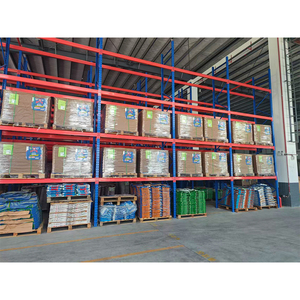
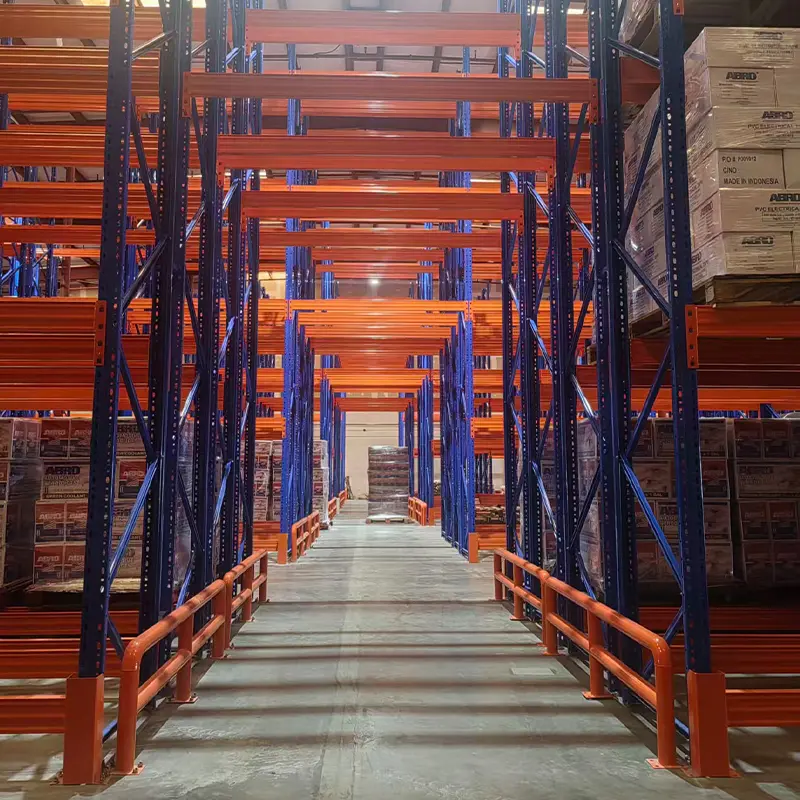
High Bay Heavy Duty Steel Pallet Racking System
Custom-engineered for ultra-high vertical clearances up to 30 meters. Built using certified Q235B/Q355B structural cold-rolled steel with safety factor exceeding 1.65.
- Payload Capacity: Up to 5,000 kg/level
- Max Building Height: 32.0 Meters
- Upright Pitch: 50mm / 75mm Adjusted
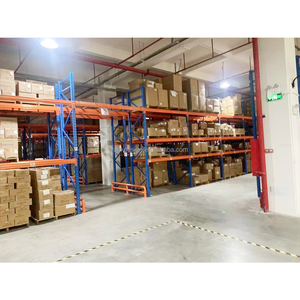
Selective High Bay Racking with 24" Upright Profiles
Reinforced omega-profile upright columns designed for narrow-aisle (VNA) reach truck operations, featuring precision punching for positive boltless lock-in.
- Aisle Width Required: 1,650mm – 1,900mm
- Profile Form: Omega Cold-Bent Box
- Surface Tech: Epoxy-Polyester Coat
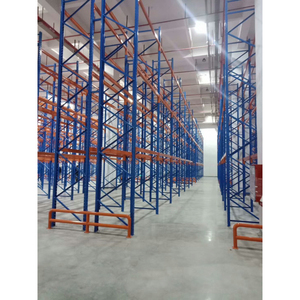
Heavy-Duty Drive-In & Drive-Through Racking System
Eliminates operating aisles to increase cubic capacity by up to 85%. Engineered with cantilever support arms and structural floor guides for sub-zero cold storage.
- Volume Gain: +80% Cubic Density
- Operating Scheme: FILO / FIFO Hybrid
- Finish Available: Hot-Dip Galvanized
Multi-Tier High Bay Shelving & Industrial Rack Hybrid
Modular multi-level carton flow and piece-pick high bay framework. Connects seamlessly with automated sorting conveyor circuits and vertical lift modules (VLMs).
- Level Loading: 300 – 1,000 kg/tier
- Decking Medium: Galvanized / Steel / Wood
- Assembly Method: 100% Boltless Wedge
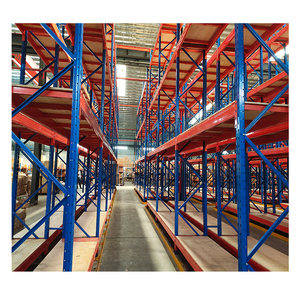
Commercial Factory High Bay Steel Storage System
Designed for fast-turnaround FMCG distribution hubs. Features interlocking step-beams and welded connector claws with automatic safety locking pins.
- Beam Section: 80×50 to 160×50 Box
- Deflection Ratio: < L/200 Under Max Load
- Certification: CE EN1090 / ISO9001
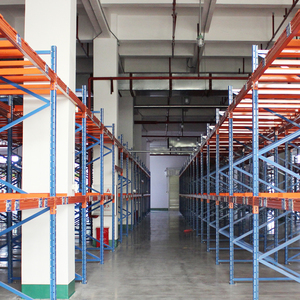
Industrial Selective Stacking Pallet Rack System
High-frequency access configuration facilitating 100% immediate selectivity. Fitted with heavy-duty baseplate anchors and seismic bracing cross-ties.
- Standard Bays: Single & Double Entry
- Pallet Types: Euro, ISO, Custom Skids
- Column Guards: Included Solid Poly/Steel
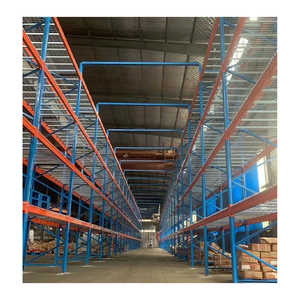
Versatile Custom Engineered High Bay Steel Racks
Bespoke structural solutions engineered for irregular footprints, heavy coil/cylinder storage, hazardous materials containment, and crane-interfaced picking.
- Steel Tensile: 355 N/mm² Guaranteed
- Seismic Analysis: Site-Specific FEA
- Design Output: AutoCAD & 3D SolidWorks
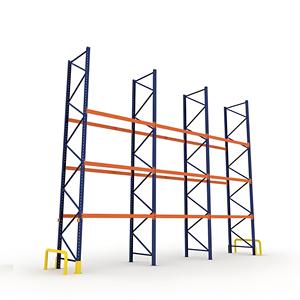
Industrial Pallet Racking Organizers & Cladding Racks
High bay steel organizer matrix optimized for double-deep pallet reach applications, third-party logistics fulfillment centers, and transit cross-docks.
- Floor Utilization: Up to 68% Footprint
- Impact Factor: EN 15635 Compliant
- Coating Spec: AkzoNobel Powder Baked
The Engineering Reality of Sourcing High Bay Racking Systems from China
In modern supply chain engineering, vertical air rights have superseded horizontal warehouse square footage as the primary determinant of land capital productivity. As global real estate indices increase and fulfillment cycle targets compress, supply chain directors face a pivotal threshold: transitioning from conventional 8–10 meter low-bay configurations to high bay racking storage exceeding 15 to 40 meters. Selecting a premier China high bay rack storage supplier is no longer a rudimentary bid comparison based on raw steel weight; it is an intricate structural engineering evaluation governed by global tolerances, metallurgical reliability, automated system compatibility, and life-cycle safety assurance.
China's premier manufacturing ecosystem, spearheaded by advanced facilities like Guangzhou Heda Shelves Co., Ltd., has transformed cold-formed steel manufacturing. By pairing continuous CNC continuous roll-forming lines with rigorous finite element analysis (FEA), Chinese Tier-1 suppliers deliver storage structures that fulfill and frequently surpass stringent European (FEM 10.2.02, EN 15512), American (RMI MH16.1), and Australian (AS4084-2023) structural mandates. Understanding the technical divergence between standard commercial shelving and true structural high bay racking is essential for minimizing long-term Total Cost of Ownership (TCO) and mitigating catastrophic collapse vulnerabilities in dynamic logistics facilities.
Engineering Benchmark: Structural Comparison Across High Bay Typologies
The selection matrix below delineates operational parameters, structural height limitations, clearance tolerances, and material handling compatibility for contemporary high bay warehouse architectures:
| Racking Topology | Clear Height Scope | Floor Area Utility | Access Selectivity | Aisle Width (AST) | Handling Mechanism |
|---|---|---|---|---|---|
| Selective High Bay | Up to 18.0 Meters | 40% – 45% | 100% Direct | 3,000 – 3,500mm | Counterbalance / Reach Truck |
| Very Narrow Aisle (VNA) | 12.0 – 22.0 Meters | 55% – 62% | 100% Direct | 1,600 – 1,900mm | VNA Turret Truck / Rail Guide |
| Drive-In / Drive-Through | Up to 14.0 Meters | 70% – 80% | Batch (FILO) | Lane Dependent | Direct Drive-In Forklift |
| High Bay Radio Shuttle | 12.0 – 28.0 Meters | 75% – 85% | FIFO / FILO Deep | Forklift Front Access | Semi-Auto 24V Shuttle Carrier |
| AS/RS High Bay (Rack-Clad) | 20.0 – 45.0+ Meters | 85% – 95% | 100% Automated | 1,350 – 1,500mm | Stacker Crane (SRM) / Autonomous |
High bay racking systems reaching heights beyond 12 meters introduce exponential non-linear second-order $P-\Delta$ (sway) structural moments. Unlike low-tier commercial racks, high bay uprights cannot rely exclusively on friction-fit beam connectivity to guarantee lateral stiffness. They require rigid portal frames, horizontal spine bracing, and precise anchor prestressing into high-strength fiber-reinforced slab concrete (minimum C30/37 per EN 206). Guangzhou Heda Shelves validates these dynamics using three-dimensional finite element modeling to determine accurate second-order elastic deflections under combined static dead loads, dynamic operational seismic loads, and pallet placement impact factors.
Technological Evolution in High Bay Rack Engineering
Modern automated logistics centers demand micro-millimeter dimensional tolerances, advanced cold-roll metallurgical properties, and intelligent sensor-assisted load monitoring.
1. Transition to Rack-Clad Building Architecture
The conventional construction sequence—building a steel-framed warehouse shed and subsequently installing freestanding racking inside—is being supplanted by Rack-Supported Building (Rack-Clad) Systems. In this typology, the racking uprights serve dual structural purposes: supporting thousands of pallet loads while simultaneously functioning as the primary structural skeleton that carries building exterior wall cladding, roof trusses, and dynamic wind/snow live loads. This integration compresses capital expenditure by 18% to 26% and slashes construction timelines by up to 4 months.
2. Micro-Tolerances for AS/RS Crane Integration
As automated high-speed stacker cranes travel through aisles at velocities exceeding 240 m/min with vertical accelerations up to 1.5 m/s², allowable rack deflection tolerances transition from civil millimeter standards to optical millimeter precision. High bay systems manufactured by certified Chinese suppliers strictly adhere to FEM 9.831 and FEM 9.832 codes. Plumbness tolerances for upright columns across a 30-meter height must remain under $\pm 10\text{mm}$, ensuring automated optical sensors on crane shuttles experience zero optical obstruction or spatial misreads.
3. High-Strength Cold-Formed Micro-Alloys
Global demand for lightweight structural profiles with elevated load-bearing capability has catalyzed the shift from legacy commercial Q235B steel ($F_y = 235\text{ MPa}$) to micro-alloyed high-yield Q355B and Q420B cold-rolled steel coils. High bay upright profiles engineered with optimized multi-bend omega shapes increase local torsional buckling resistance by over 34% without increasing linear mass, driving down ocean freight tonnage while augmenting overall system safety margins.
4. Advanced Seismic Dissipation & Base Damping
Seismic events impose severe lateral shears upon high bay racking due to massive overhead masses. Cutting-edge engineering protocols incorporate ductile sacrificial baseplate fuse plates and energy-dissipating friction dampers at key vertical diagonal nodes. In seismic zones 3 and 4 (governed by Eurocode 8 and ASCE 7-22), these engineered dampeners absorb lateral kinetic shockwaves, preventing sudden progressive column buckling and ensuring structural integrity.
5. Embedded Structural IoT Health Monitoring
Smart warehousing mandates transition from periodic manual safety audits to predictive structural telemetry. Modern high bay installations integrate wireless piezoelectric strain gauges and MEMS tilt sensors along critical upright sections. These low-power nodes continuously monitor localized deflection strain, beam load imbalances, and accidental forklift collisions, broadcasting real-time safety warnings straight to facility management dashboards before minor structural yielding leads to rack failure.
6. Advanced Corrosion Protection for Extreme Climates
For cold-storage pharmaceutical distribution centers operating at -25°C to -30°C and coastal port facilities facing high atmospheric salinity, legacy paint treatments deteriorate rapidly. The technological benchmark requires full automated 10-stage pickling and phosphating followed by thermosetting pure polyester powder baked at 200°C, or hot-dip galvanizing per ISO 1461, guaranteeing structural longevity beyond 25 operating years without surface oxidation.
Future Procurement Trends Shaping Global Racking Sourcing
Procurement executives are recalibrating their international supply chains from transaction-based equipment purchasing toward integrated manufacturing partnerships, lifecycle TCO metrics, and automated engineering modeling.
Direct-to-Factory BIM Level 2 Procurement
The era of disconnected 2D CAD floorplans is ending. Forward-thinking procurement teams require Chinese suppliers to furnish parametric Building Information Modeling (BIM Level 2 / Revit) families. This interoperability allows structural engineers, MEP contractors, and automated logistics integrators to run automated collision detection algorithms before roll-forming commences, eradicating costly on-site installation delays and structural re-working.
TCO Prioritization Over Initial Ex-Works Price
While initial purchasing cost remains critical, enterprise buyers increasingly evaluate high bay investments across a 20-year Total Cost of Ownership (TCO) lifecycle model. Key financial drivers include container packing density optimization (reducing landed ocean freight cost per pallet position by up to 25%), structural adjustability to accommodate future pallet dimension variations, and standardized component modularity that minimizes ongoing maintenance and beam replacement expenditures.
Sustainable Steel Sourcing & LCA Transparency
Environmental, Social, and Governance (ESG) compliance is becoming a non-negotiable procurement covenant across multinational logistics tenders. Global operators require certified Life Cycle Assessments (LCAs) detailing the carbon footprint of structural steel fabrication. Leading Chinese suppliers are adopting scrap-assisted Electric Arc Furnace (EAF) steel sourcing, clean-energy automated manufacturing, and zero-VOC electrostatic powder coatings to furnish verified Environmental Product Declarations (EPDs).
Engineered Knock-Down Container Utilization
With volatile transpacific and Europe-bound sea freight rates, shipping volume efficiency dictates real-world procurement viability. Tier-1 manufacturers engineer boltless knock-down upright frames with specialized nesting geometries. Beams, bracing struts, and step decks are packaged with customized steel banding and container lifting cradles, achieving maximum allowable 40HQ container payload weight (up to 26–28 metric tons) without volumetric cargo dead space.
Third-Party Mill Certification & Traceability
Savvy international sourcing teams refuse non-traceable commercial grade steel. Contractual specifications now standardly demand mill test certificates (MTC per EN 10204 Type 3.1) proving yield strength, ultimate tensile capacity, elongation percentage, and Charpy impact testing at freezing temperatures. Top China suppliers provide full heat-number traceability stamped directly onto each structural upright and load beam.
Turnkey Engineering & Remote Supervision
Overseas buyers no longer seek mere component fabricators; they demand comprehensive engineering partners. Leading suppliers offer complete end-to-end support packages including structural foundation anchoring calculations, customized 3D erection sequencing manuals, augmented-reality remote installation supervision, and on-site certified engineering supervisors for critical automated AS/RS alignment phases.
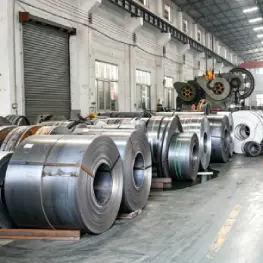
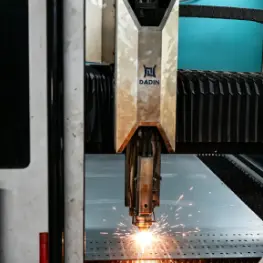
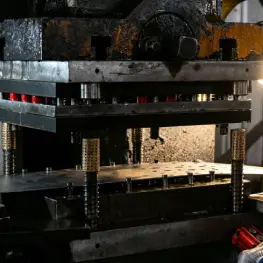
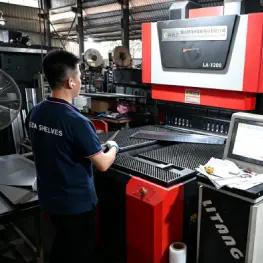
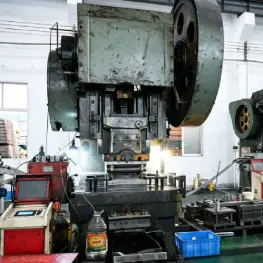
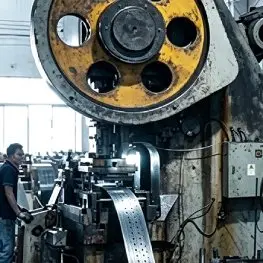
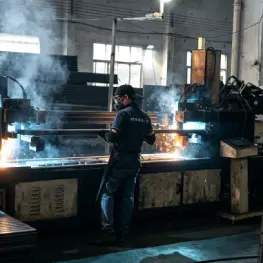
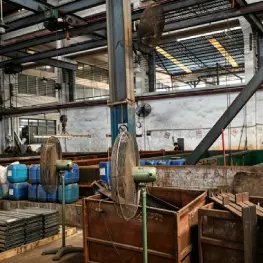
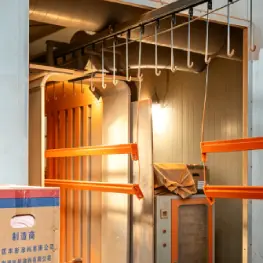
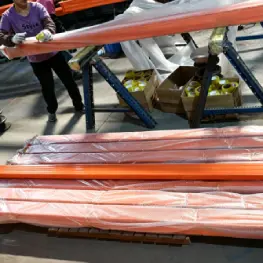
10-Stage Precision Manufacturing Protocol
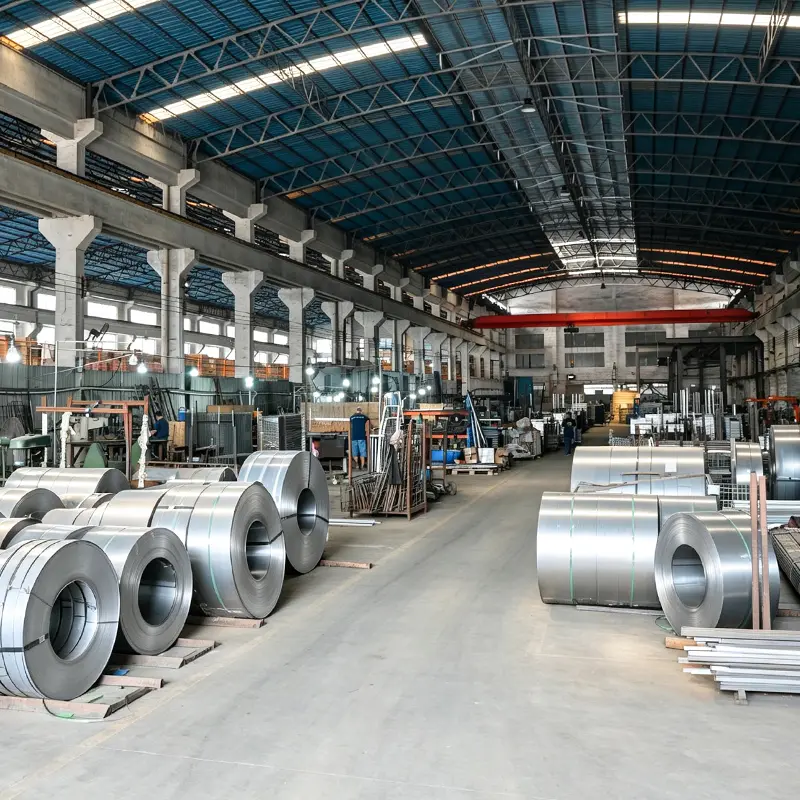
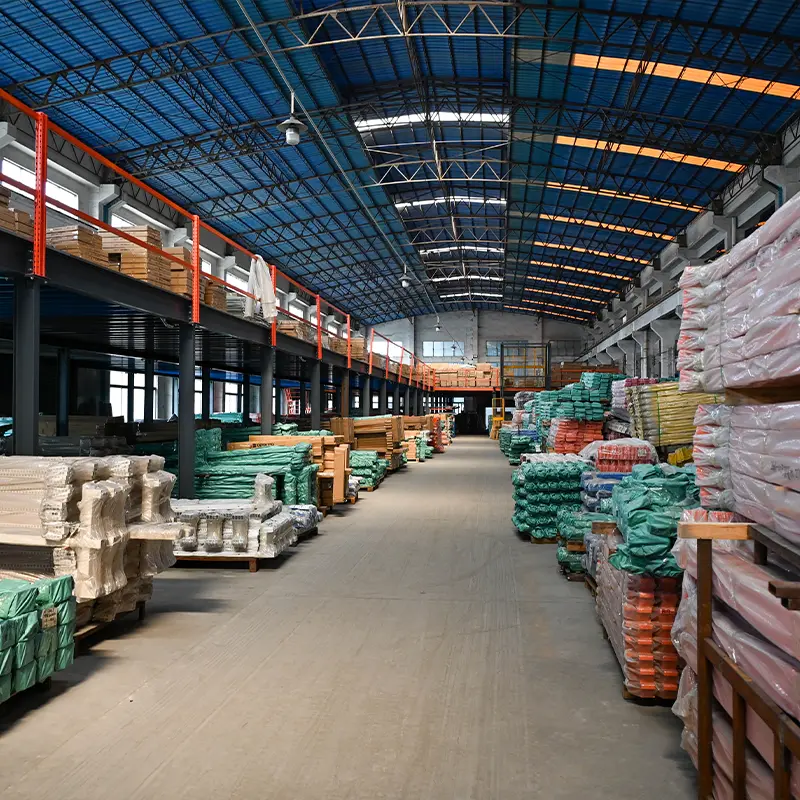
Quality is embedded at every transformation stage from primary steel coil to certified sea-packed shipment inside Guangzhou Heda Shelves' 30,000 square meter manufacturing base.
Why Global Supply Chains Partner with HEDA Shelves
Headquartered in Haizhu District, Guangzhou, HEDA Shelves stands as an industry benchmark in heavy-duty racking engineering, certified quality assurance, and international logistics execution.
25+ Years Industrial Heritage
Founded in 2001, Guangzhou Heda Shelves Co., Ltd. has accumulated over two decades of specialized manufacturing expertise, engineering bespoke storage installations for over 10,000 corporate warehouses across 120+ countries.
Complimentary 3D & CAD Design
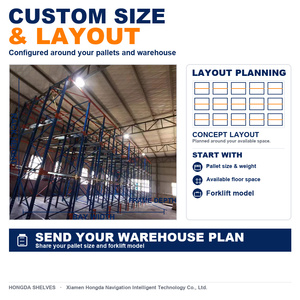
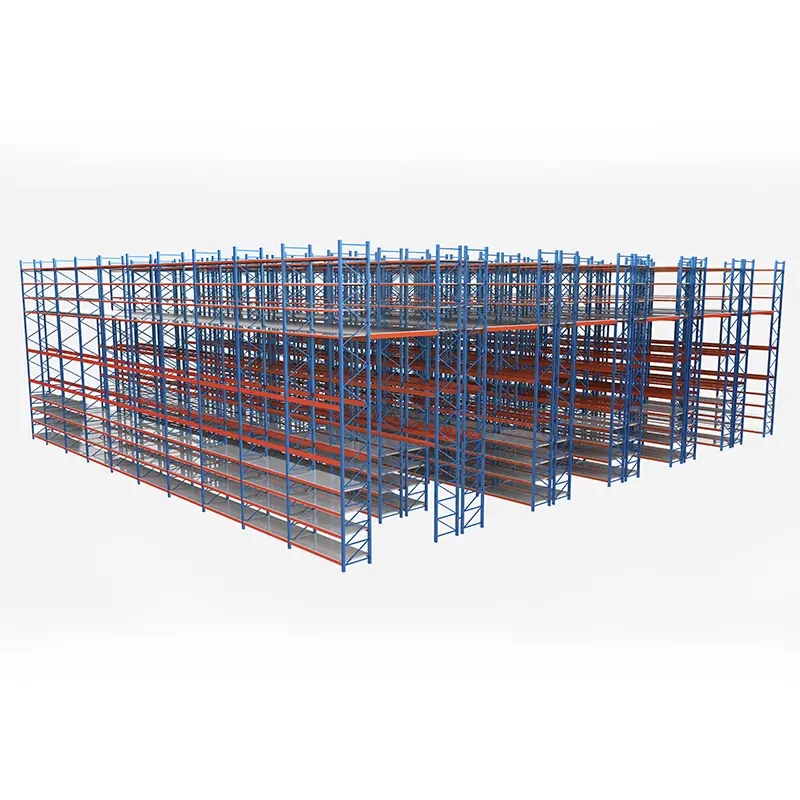
Our dedicated engineering department provides complimentary preliminary architectural layouts, AutoCAD warehouse drawings, 3D photorealistic renderings, and rigorous structural static load calculations within 24 to 48 hours.
Dual European CE & ISO Quality
Holding official CE Certification No. 2435-CPR-8605159, ISO 9001:2015 Management System Certification No. 18624Q00169R0M (valid through June 2027), and verified RoHS hazardous material compliance.
Full Custom OEM/ODM Production
Tailored structural engineering: custom upright gauge thicknesses from 1.5mm to 3.0mm, customized beam heights, custom powder-coat RAL color profiles, and customized structural steel accessories tailored to your facility parameters.
Frequently Asked Questions for High Bay Storage Procurement
Critical structural, engineering, logistical, and commercial inquiries answered by HEDA Shelves' lead structural application engineers.
What structural steel grades are utilized for high bay upright columns and load beams?
What international design codes and deflection tolerances govern HEDA high bay racks?
What foundation concrete slab requirements are required for high bay installations?
How are components protected against corrosion in sub-zero cold stores or humid coastal ports?
Can high bay racking operate reliably during electrical grid outages?
How does HEDA Shelves optimize container freight volume to minimize landed cost?
What installation support and safety documentation do you provide for international projects?
What information is needed to receive a complete 3D layout, load analysis, and quotation?
Accelerate Your High Bay Storage Project
Connect directly with our senior structural racking engineers. Submit your warehouse floor plan today to receive a comprehensive AutoCAD layout, 3D visualization model, structural load calculation sheet, and factory-direct quotation within 24 to 48 hours.