Precision Live & Dynamic Pallet Racking Systems
Factory-engineered in Guangzhou by HEDA Shelves. Each system utilizes certified structural Q235B/Q355B cold-rolled steel, precision-machined brake rollers, and durable powder-coated finishes engineered to DIN EN 15512 and FEM 10.2.02 standards.
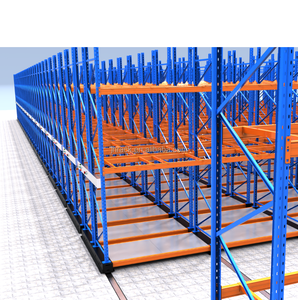
Corrosion-Resistant Automatic Electric Mobile Pallet Racking for Cold Room Storage
- Operating Temp: Down to -30°C
- Capacity: Up to 32,000 kg/bank
- Control: PLC Semi-Automated Touch
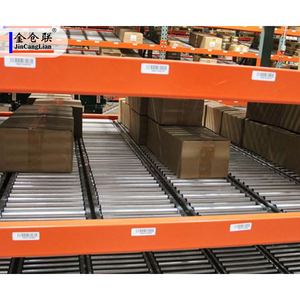
Warehouse Gravity Storage Racking Live Gravity Pallet Flow Rack Cooler Gravity Shelving
- Rotation: Strict FIFO Flow
- Incline Gradient: 2.5% to 3.5%
- Speed Dampers: Centrifugal Internal
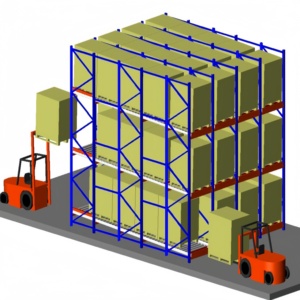
Industrial Live Pallet Racking Cold Storage Heavy-Duty Steel 4-Layer Roller Protection TUV
- Load: Up to 1,500 kg / Pallet
- Surface: Dual Zinc-Epoxy Finish
- Certification: TUV Rheinland / CE
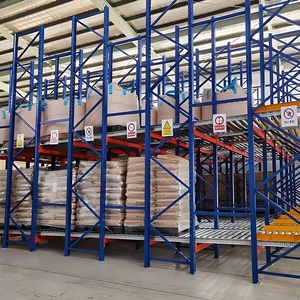
Factory Warehouse Storage Steel Foldable Gravity Flow Racking Live Pallet Rack Heavy Duty
- Lane Depths: 2 to 25 Pallets Deep
- Upright Frame: Omega Profile 90-120mm
- Separation: Heavy Load Exit Separators
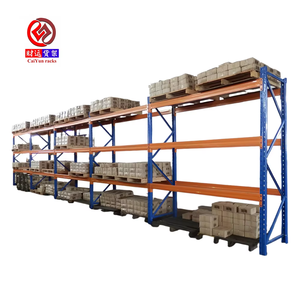
Factory Supply Heavy Duty Warehouse Storage System Live Heavy Rack Selective Stacking Shelves
- Adaptability: Pallet & Case Hybrid
- Pitch: 50mm / 75mm Adjustable
- Max Bay Load: Up to 22,000 kg
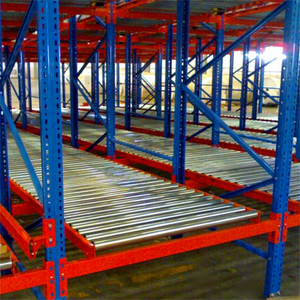
Heavy Duty Live Rack Pallet Flow Racking for Warehouse Storage Cargo Gravity Roller Equipment
- Roller Spec: Galvanized Steel Ø50-60mm
- Roller Pitch: 52mm, 78mm, 104mm
- End Stop: Spring Shock Cushioned
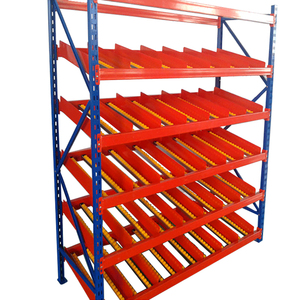
Warehouse Gravity Storage Racking Metal Live Rack Pallet Flow Cooler Gravity Shelving
- Application: Beverage, Dairy, Pharma
- Floor Footprint Savings: Up to 60%
- Tracking: Precision Full-Width Rollers
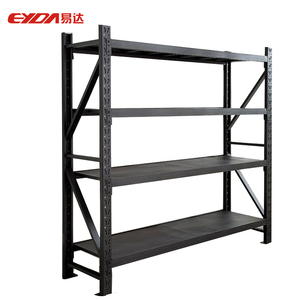
Supermarket Warehouse Light-Duty 4 Tier Steel Storage Rack Boltless CE Certified Pallet Rack
- Assembly: 100% Boltless Interlock
- Capacity: 200–800 kg / Level
- Target: Supermarket, Picking Tiers
1. The Mechanical Engineering Principles of Live Pallet Racking (Pallet Flow)
Live pallet racking—frequently referred to in materials handling engineering as gravity flow racking or dynamic roller storage—is an ultra-high-density storage configuration operating on the pure thermodynamic principle of gravity-fed kinetic flow. Unlike static selective pallet systems that mandate dedicated forklift access corridors for every single storage row, live pallet flow structures compress inventory into deep storage lanes spanning anywhere from 2 to over 25 pallet positions deep.
The operational philosophy enforces strict First-In, First-Out (FIFO) stock rotation. Unit loads are deposited at the higher, inclined charging face (entry portal) and gently glide down a fixed decline gradient toward the lower discharging face (exit portal). The core mechanical integrity rests upon four calibrated engineering subsystems:
Calibrated Decline Gradients
Engineered slopes between 2.5% and 3.5% (approx. 1.5° to 2.0°). Steeper gradients cause runaway pallet acceleration; shallower slopes cause load stalls. Gradient calculations factor pallet bottom deflection, skid runner orientation, and payload weight variables.
Centrifugal Brake Dampers
Internal planetary geared or eddy-current speed controller rollers mounted flush along the track bed at predetermined intervals (typically one brake roller per pallet length). They mechanically arrest velocity, limiting pallet movement to a stable 0.2 to 0.3 meters per second.
Separators & Safety Stops
Mechanical separation latches isolate the leading discharge pallet from line pressure generated by the queue behind it (which can exert multiple metric tons of cumulative dynamic thrust). This ensures forklifts retrieve the front pallet without bound friction or back-pressure entrapment.
Structural Rigidity Insight: Dynamic live storage requires beam-to-column deflection ratios far superior to static racking. While standard static pallet beams permit deflections of L/200 under nominal static loading, live flow rack stringers are restricted to L/350 or L/500 under peak dynamic rolling impact to prevent roller axle binding and structural skew.
2. Dynamic Live Storage vs. Alternative High-Density Systems
Procurement directors and facility engineers must objectively evaluate the capital expenditure (CapEx), operational throughput, and power reliability of dynamic live flow systems versus competing configurations such as Drive-In, Push-Back, Radio Shuttle, and Electric Mobile Racking:
| System Type | Rotation Logic | Space Density | Throughput Speed | Energy Grid Reliance | Forklift Travel In Aisle |
|---|---|---|---|---|---|
| Live Pallet Racking (Gravity Flow) | Strict FIFO | Ultra-High (Up to 85%) | Ultra-High (Simultaneous Put/Pick) | Zero Power Required | Exterior Perimeter Only |
| Drive-In Racking | Strict LIFO | High (70% - 75%) | Low (Forklift enters lane) | Zero Power Required | Deep Interior Entry (High collision risk) |
| Push-Back Racking | Strict LIFO | Moderate-High (70%) | Moderate (Single aisle) | Zero Power Required | Aisle Face Only |
| Semi-Automated Radio Shuttle | FIFO & LIFO Flexible | Ultra-High (Up to 90%) | High (Battery carrier travel) | Rechargeable DC Batteries | Aisle Face Only |
| Electric Mobile Racking | Selective Random Access | Maximum (Up to 95%) | Moderate (Motorized rack shifting) | Continuous Three-Phase Grid | Single Mobile Aisle Face |
From an operational resilience standpoint, Live Pallet Racking eliminates the mechanical single point of failure. Automated shuttle systems depend upon sensitive circuit boards, optical sensors, lithium-ion battery duty cycles, and laser navigation heads that degrade under severe conditions (such as tropical condensation or sub-zero freezing). Live pallet flow operates via unyielding physical mechanics: gravity, counterbalanced weight, and centrifugal force.
3. Future Procurement Trends & Sourcing Trajectories (2025–2030)
As international supply chain professionals navigate sourcing strategies across Chinese manufacturing hubs, several macro shifts are dictating the engineering specifications for dynamic storage infrastructure:
Trend 1: Cold Chain Logistics & Sub-Zero Cryogenic Steels
The global surge in chilled biologics, frozen foods, and climate-controlled agro-processing has shifted live rack specifications. In sub-zero environments down to -30°C, ordinary structural carbon steels experience ductile-to-brittle transitions, resulting in micro-fractures under fork impacts. Premier Chinese manufacturers now specify micro-alloyed structural steels (such as Q355ND/E) paired with synthetic cryogenic grease in sealed roller ball bearings and specialized cold-room powder polymers to eliminate surface embrittlement.
Trend 2: Automation Convergence (AMR/AGV & Crane Interfacing)
Modern live pallet flow lanes no longer terminate exclusively at human-operated counterbalance or reach truck stations. Production lines are increasingly integrating automated guided vehicles (AGVs) and autonomous mobile robots (AMRs). This transition requires extreme tolerances: exit separators, photo-reflective optical sensors, and reinforced terminal impact beams must align to precision tolerances within ±1.5mm to avoid triggering safety fault stops on robotic load handlers.
Trend 3: Smart Telematics & Self-Regulating Roller Mechanics
Next-generation dynamic roller tracks are seeing the integration of magnetic eddy-current brake controllers. By utilizing permanent rare-earth neodymium magnetic fields rather than mechanical friction pads, eddy-current speed controllers deliver frictionless kinetic deceleration proportional to pallet mass. Whether decelerating an 800 kg pharmaceutical pallet or a 1,600 kg beverage crate stack, speed regulation remains constant without component wear, brake fluid degradation, or dust generation.
4. Technical Sourcing Standards & Manufacturing Quality Control
Procuring heavy-duty live pallet racking from Chinese manufacturers requires rigorous verification of material composition, fabrication techniques, and structural testing methodologies. Top-tier Chinese production facilities adhere to the following baseline standards:
Baseline Engineering Matrix:
• Steel Substrate: Minimum yield strength $R_e \ge 235\text{ N/mm}^2$ (Q235B) or $R_e \ge 355\text{ N/mm}^2$ (Q355B), strictly complying with GB/T 700 and EN 10025-2.
• Pretreatment Integrity: Automated continuous 10-stage immersion or spray wash including hot alkaline degreasing, zinc phosphate conversion coating, and multiple deionized water rinses.
• Powder Coating Chemistry: Thermosetting epoxy-polyester architectural hybrid coating baked at 180°C–200°C metal temperature, maintaining film thickness of 80–120 microns and passing ISO 2409 Cross-Cut Adhesion Class 0.
• Roller Assembly Durability: Solid steel shafting with precision-ground double-sealed ball bearings (6001/6204 2RS), zinc-electroplated roller casings ($\ge 12\mu m$ plating thickness), and spring-loaded hex axle retention.
Structural reliability must be validated via Finite Element Analysis (FEA) simulating static loads, dynamic wheel impacts, baseplate soil anchor shear forces, and seismic accelerations in accordance with FEM 10.2.02 and RMI MH16.1 specifications.
Why Global Supply Chains Partner with Guangzhou Heda Shelves
Combining over two decades of metallurgical precision, high-capacity roll forming lines, and direct international logistics to deliver container-optimized racking solutions worldwide.
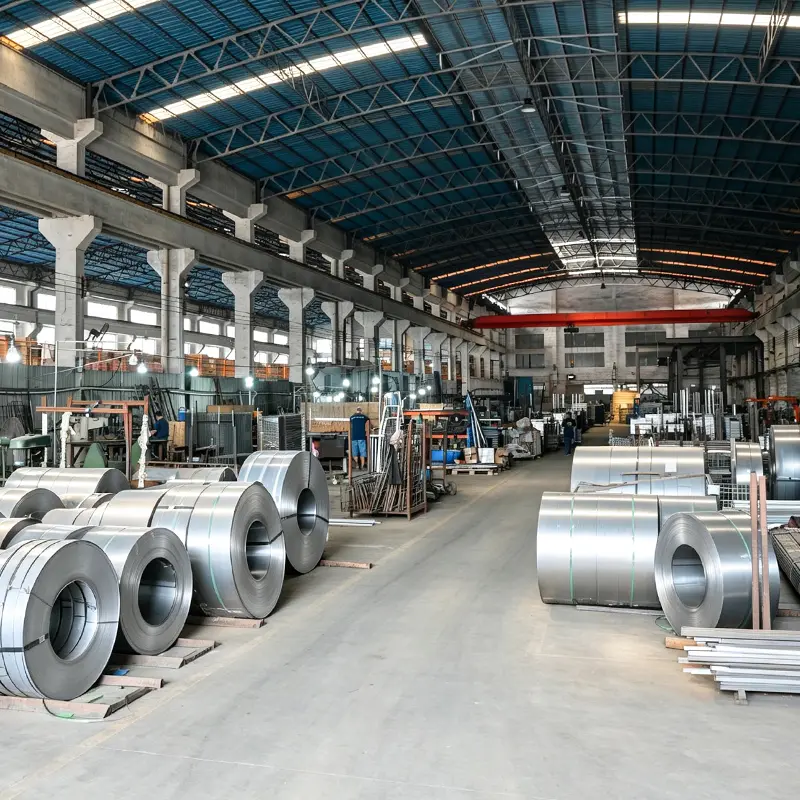
25-Year Engineering Lineage
Established in 2001, Guangzhou Heda Shelves Co., Ltd. has grown from a specialized metalworks to a global material handling powerhouse, delivering bespoke dynamic storage solutions across 120+ countries.
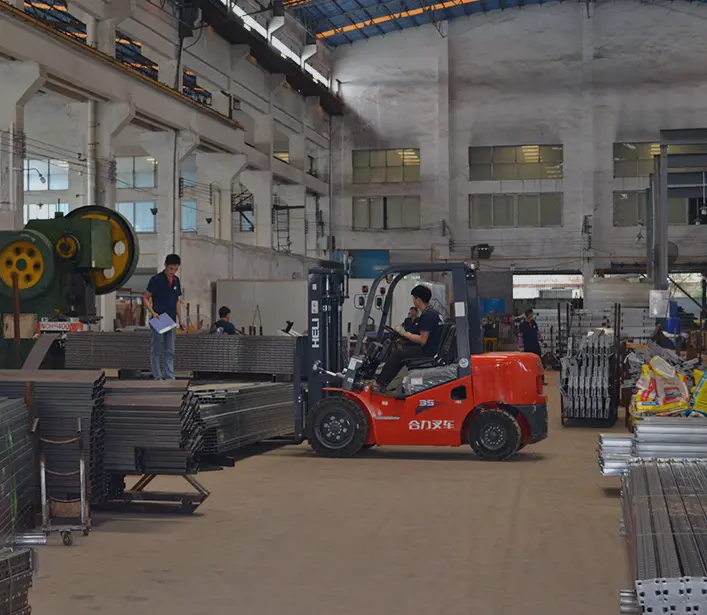
30,000 m² Integrated Plant
Every upright column, box beam, roller bed, and brake support bracket is precision cut, stamped, cold-roll formed, welded, and electrostatic powder-coated under one roof to maintain total quality control.
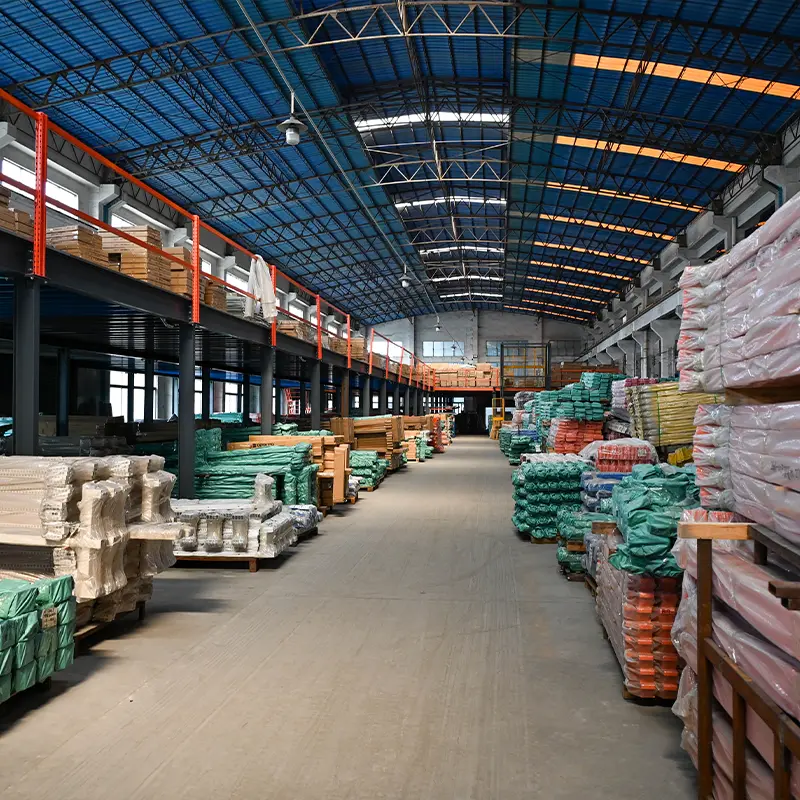
Independently Certified Integrity
Complete documented compliance including official CE Certification (No. 2435-CPR-8605159), ISO 9001:2015 Quality Management (No. 18624Q00169R0M), and full RoHS compliance.
Frequently Asked Questions (Live Pallet Racking Sourcing)
Direct answers to the critical engineering, shipping, and commercial inquiries encountered when procuring live pallet flow systems from China.
What pallet quality and dimensional specifications are required for live flow systems?
How do dynamic brake controllers prevent dangerous pallet acceleration in deep lanes?
Can live pallet racking operate reliably in sub-zero cold room environments (-20°C to -30°C)?
How does HEDA Shelves optimize container stuffing for export shipping?
What technical data is required to provide a complete structural layout and price quotation?
What is the expected maintenance schedule and lifespan of the dynamic components?
Accelerate Your Warehouse Logistics with Factory-Direct Engineering
Connect with Guangzhou Heda Shelves' senior intralogistics engineers today. Receive a comprehensive CAD floor layout, structural dynamic load calculation, and factory-direct quotation within 24 hours.