[email protected] Serving West, East, Southern & North Africa
ISO 9001:2015 & CE EN 1090 Structural Certified Facility

Top China Pallet Racking And Shelving Manufacturers & Exporter

Delivering High-Precision Intralogistics Systems, Custom Storage Steel Structures, and Automated ASRS Solutions Since 2001 with Complete Turnkey Export Engineering.

2001
Founded Year
30,000m²
Factory Base
30,000T
Monthly Output
10,000+
Global Projects
120+
Export Countries
24h
Free 3D CAD Plan
Precision Engineered Equipment

Featured Industrial Storage Systems & Warehouse Racking

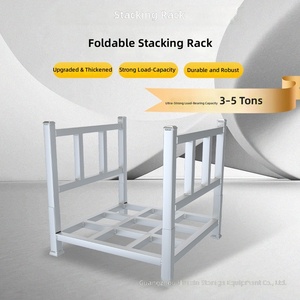
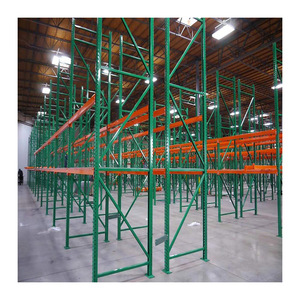
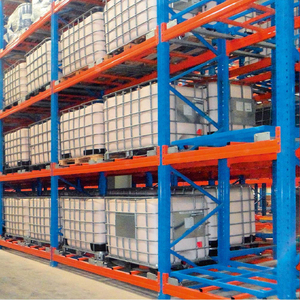
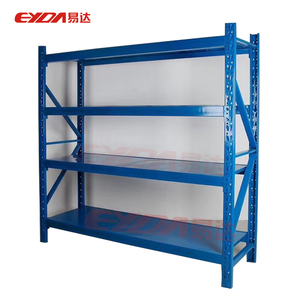
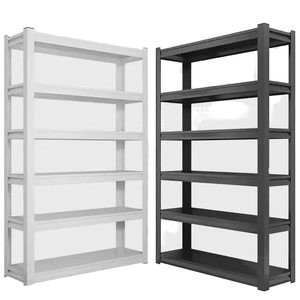
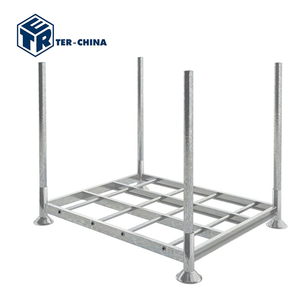
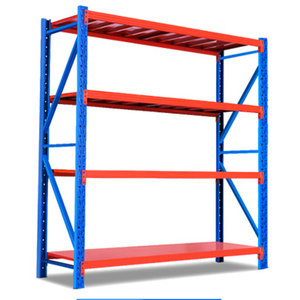
Discover our primary export portfolio, encompassing heavy-duty pallet racks, high-density shuttle installations, automated material handling structures, and modular boltless shelving engineered for international logistics hubs.
E-E-A-T Verified Authority

Guangzhou HEDA Shelves: Enterprise Strengths & Factory Infrastructure

Headquartered in Guangzhou with over two decades of dedicated manufacturing, Guangzhou HEDA Shelves Co., Ltd. represents the zenith of Chinese cold-formed structural steel engineering, serving multi-national third-party logistics (3PL) operators, hypermarket retailers, and global distribution EPCs.

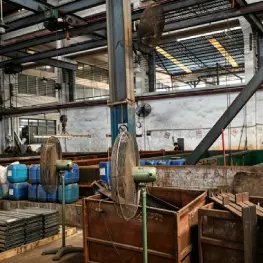
30,000 m² Integrated Manufacturing Hub

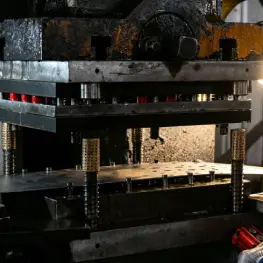
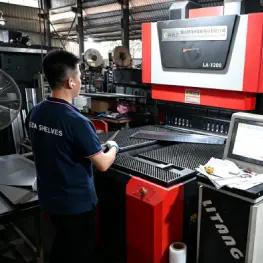
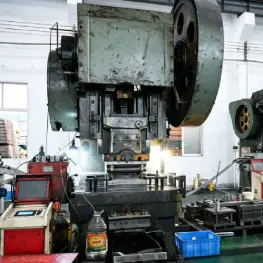
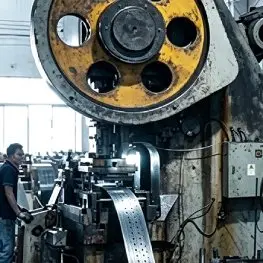
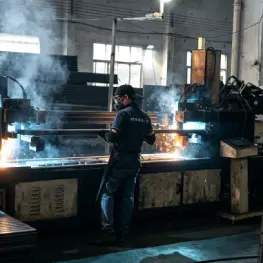
Unlike trading intermediaries, HEDA produces from cold steel coil to powder-coated component within our wholly-owned modern fabrication plant in Guangzhou. Outfitted with automatic CNC roll-forming lines, robotic welding arms, and automated punching machines, our monthly processing throughput reliably scales beyond 30,000 metric tons.

Rigorous International Certifications

Our quality assurance framework is governed by third-party audited compliance protocols: CE Certificate No. 2435-CPR-8605159 for structural steel components, ISO 9001:2015 Certification No. 18624Q00169R0M (valid through June 2027), and complete EU RoHS compliance verifying non-hazardous ecological pre-treatment processes.

Free Structural CAD & 3D Modeling

Within 24 hours of receiving site boundaries and clear floor heights, our structural engineering department generates finite element analysis (FEA) load calculations, seismic drift assessments, and collision clearance 3D CAD schematics entirely free of charge, eliminating specification blind spots before production.

Container Loading Optimization

International ocean freight demands engineering precision. Our computerized KD (knock-down) nesting protocols optimize bundle dimensions for 20GP and 40HQ maritime containers, eliminating void volume to load up to 26–28 metric tons per container and saving overseas purchasers 18%–32% in landed logistics costs.

The 10-Stage Precision Manufacturing Protocol

Every upright frame, load beam, and horizontal brace traverses a strictly monitored ten-phase metallurgical cycle to ensure microscopic coating adhesion and structural deflection compliance.
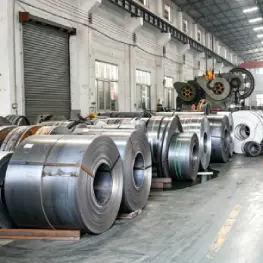
Certified Q235B & Q355B Hot-Rolled Coils
01Raw Material Coil QA
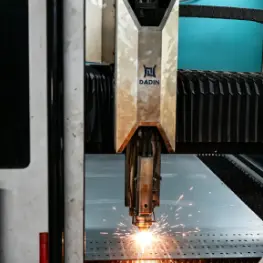
Precision CNC Steel Strip Slitting
02Precision Slitting
Automated High-Speed Column Punching
03CNC Hole Punching
Multi-Pass Cold Bending Forming
04Cold-Roll Forming
Structural Profile Continuous Roll-Forming
05Profile Calibrating
Automated Seam and Edge Polishing
06Mechanical Polishing
Robotized Gas Shielded Connector Welding
07Robotic CO2 Welding
Acid Pickling & Phosphating Immersion Line
08Pickling & Phosphating
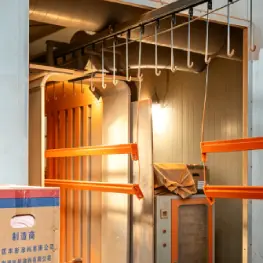
Automated Electrostatic Powder Coating Line
09Powder Coating Cure
Ultrasonic Deflection Testing and Container Packaging
10QC Load Test & Packing
Strategic Supply Chain Procurement

Future Procurement Trends in Industrial Storage Systems (2025–2030)

Global supply chain leaders are fundamentally reshaping their warehouse racking procurement criteria. The traditional focus on raw steel price per kilogram is giving way to complex Total Cost of Ownership (TCO) matrices, life-cycle decarbonization, and engineering modularity.

Direct Mill-to-Site Procurement

To eliminate high domestic distributor margins (often reaching 35%–55%), tier-1 logistics operators are pivoting toward direct factory relationships with verified Chinese OEMs. By pairing direct purchasing with third-party pre-shipment inspections (e.g., SGS, TÜV), enterprises achieve substantial cost reductions while retaining direct control over structural steel tolerances and custom RAL finishes.

Decarbonized & Recyclable Metallurgy

Corporate ESG directives are penetrating warehouse construction mandates. Enterprise tenders increasingly require Environmental Product Declarations (EPD) and the utilization of Electric Arc Furnace (EAF) low-carbon steel. Furthermore, the substitution of toxic solvent-based paints with volatile organic compound-free (zero-VOC) thermosetting epoxy powders has evolved into a baseline procurement benchmark.

Hyper-Modular, Reconfigurable Framing

Rapidly shifting SKU profiles driven by e-commerce velocity render static, single-purpose installations obsolete within 36 months. Forward-thinking procurement officers demand multi-profile boltless framing systems capable of transforming standard selective bays into multi-tier mezzanines, carton flow beds, or push-back lanes with zero cutting, welding, or structural field modifications.

Storage System Type Floor Space Utilization Stock Access (FIFO/LIFO) Load Deflection Index Relative Cost / Position Recommended Sector
Selective Pallet Racking 40% – 50% 100% Direct (FIFO) L/200 (EN 15512) Low Baseline General 3PL, FMCG, E-Commerce
Radio Shuttle System 75% – 85% Dual Mode (FIFO / LIFO) L/250 (Class 200) Moderate-High Cold Storage, Beverage, Dairy
Push Back Racking 65% – 75% Strict LIFO L/200 (RMI MH16.1) Moderate Chemicals, Hardware, Medium SKUs
Drive-In / Drive-Thru 70% – 80% LIFO (Drive-In) / FIFO L/180 (Structural Cantilever) Low-Moderate Raw Materials, Bulk Seasonal Stock
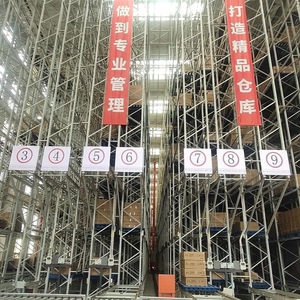
Automated ASRS Clad Racks 85% – 95% 100% Automated System L/300 – L/400 (EN 15620) High Capital Investment Pharma, High-Bay Logistics hubs
Intralogistics Innovation

Technological Frontiers & Product Development Trends

Racking is no longer passive static steelwork; it is rapidly transforming into a precision-machined kinematic framework that interfaces seamlessly with robotics, autonomous navigation systems, and smart sensor fabrics.

Sub-Millimeter AMR & AGV Integration

As Autonomous Mobile Robots (AMR) replace conventional counterbalance forklifts, upright punching and beam locking connectors must adhere to ultra-tight mechanical tolerances (EN 15620). Column plumbness deviations cannot exceed 1:1000, prompting Chinese top-tier manufacturers to introduce continuous in-line optical laser calibration throughout roll-forming passes.

IoT Structural Health Sensors

Modern mega-hubs in seismic-prone zones are now incorporating wireless piezo-electric impact sensors and fiber-optic strain gauges directly into column baseplates. These intelligent nodes alert facility managers to unrecorded forklift mast impacts, beam overstress conditions, and anchor shear stress before catastrophic progressive collapses can occur.

Advanced Cryogenic Metallurgy

The explosive expansion of biologics, pharmaceuticals, and frozen food logistics requires cold-rolled steel capable of retaining structural ductility at -30°C to -45°C. Special low-carbon steel formulations with elevated manganese and aluminum micro-alloying prevent the standard ductile-to-brittle transition phenomena in sub-zero freezer vaults.

Engineering Whitepaper Note: Seismic Damping & Beam Deflection Limits

Under international standards (FEM 10.2.02 / ANSI MH16.1 / EN 15512), the maximum permissible deflection for horizontal pallet load beams under uniformly distributed design load is restricted to δ = L / 200 (where L is the clear span between upright columns). For sensitive automated crane interfaces and ASRS shuttle channels, deflection tolerances are tightened to δ = L / 300 or L / 400.

When engineering projects for earthquake-active regions (e.g., the Pacific Rim, Mediterranean belt, or Rift Valley), HEDA Shelves integrates high-ductility seismic base isolators, enlarged anchor bolting schedules using Grade 8.8 structural anchors, and back-to-back reinforced row spacers to absorb transient ground acceleration up to 0.4g without structural failure.

Procurement Intelligence

Frequently Asked Questions for Global Racking Buyers

Detailed technical, logistical, and commercial answers compiled by our senior structural engineering and international trade compliance teams to simplify your import lifecycle.

What steel grades are utilized, and how do they compare against international equivalents?
Our structural columns and load beams are roll-formed predominantly from prime certified Q235B and high-tensile Q355B hot-rolled steel coil procured directly from premier state-owned mills (Baosteel and Shougang). In structural engineering terms, Q235B features a yield strength of ≥ 235 MPa and tensile strength of 370–500 MPa, serving as the direct metallurgical equivalent of European S235JR (EN 10025) and American ASTM A36. For ultra-high bay columns and heavy-duty structural cantilevers, Q355B provides a yield strength of ≥ 355 MPa, correlating to European S355JR and American ASTM A572 Grade 50. Every mill heat lot is supplied with official 3.1 EN 10204 inspection certificates detailing chemical composition and Charpy V-notch impact values.
How does Guangzhou HEDA Shelves prevent rust and corrosion in coastal or high-humidity regions?
Corrosion resistance is dictated by pre-treatment metallurgy rather than the topcoat alone. Our automated finishing line incorporates a complete 5-stage immersion pre-treatment: alkaline degreasing, water rinse, acid pickling to eliminate mill scale, surface phosphating, and final deionized water passivation. This process deposits a micro-crystalline iron-phosphate layer that chemically bonds with the automated electrostatic epoxy-polyester hybrid powder coating (applied at 80–120 microns and baked at 200°C). This process withstands over 500 hours of continuous neutral salt spray testing (ASTM B117) without blister propagation. For outdoor yard racking, marine docklands, or chemical fertilizer plants, we offer full hot-dip galvanizing (HDG) compliant with ISO 1461, providing a zinc shield thickness of 65–85 microns for 25+ years of maintenance-free service.
What site architectural parameters are required to receive a comprehensive CAD layout and quotation?
To enable our structural team to calculate load capacity and run finite element analysis (FEA), prospective buyers should supply:
  1. Architectural building drawings: Clear warehouse length, width, and eave/beam clear height, including column grid spacing, floor expansion joints, and fire door/dock positions.
  2. Floor slab engineering details: Concrete slab thickness (e.g., 200mm, 250mm), reinforcement mesh type, and compressive strength (e.g., C20/25, C25/30, or 30 MPa).
  3. Palletized load specifications: Pallet dimension (W x D x H, including goods overhang), maximum gross pallet weight, and bottom runner configuration (Euro two-way, four-way, or perimeter base).
  4. Material handling equipment (MHE): Forklift model, maximum lifting height, mast collapsed height, and required right-angle stacking aisle width (Ast).
Can our local warehouse installation crew erect the racking without on-site Chinese supervisors?
Yes. Over 85% of our international shipments are safely and efficiently installed by local rigging and mechanical contractors. We provide an exhaustive installation package containing: 3D exploded assembly diagrams, color-coded floor grid plans matching container bundle markings, torque wrench setting specifications for structural baseplate anchors and beam safety pins, and step-by-step HD video guides. Additionally, our project engineering team provides live video-conferencing walkthroughs at critical phases (e.g., baseline column plumbness checks, row spacer tie-in, and load deflection trials). For massive distribution installations exceeding 15,000 pallet positions, on-site bilingual supervising engineers can be dispatched globally.
How are shipping damage risks managed during multimodal international container freight?
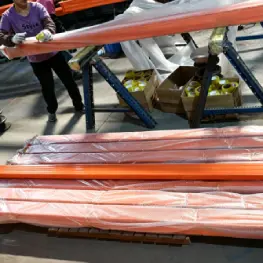
Racking components are subject to transit vibrations, marine humidity, and port handling forces. We utilize high-density steel strapping cushioned with heavy-gauge corrugated edge protectors and waterproof multi-layer stretch wrap. Structural uprights are bundled on customized timber runners allowing direct forklift tines entry. Horizontal load beams are nested connector-to-connector to prevent paint abrasion and flange distortion. Small hardware, baseplates, shims, and safety locking pins are sealed in reinforced polybags within export-grade plywood crates. Furthermore, container stuffing incorporates heavy dunnage bags and tension tie-downs to ensure zero cargo shifting during transoceanic sea transit.
What are the payment terms, warranty coverage, and production lead times?
Standard payment terms are 30% T/T deposit upon contract signing and CAD approval, with the remaining 70% balance payable against the scanned Bill of Lading (B/L) and shipping documents (or irrevocable Letter of Credit at sight for qualified institutional buyers). Standard manufacturing lead time ranges from 15 to 25 calendar days depending on steel tonnage and custom color requirements. All structural racking members carry a comprehensive 5-year warranty against weld failure, structural micro-fissures, and abnormal coating delamination when operated within certified uniform distributed load (UDL) guidelines.
Engineer-to-Engineer Consultation

Request Your Custom Warehouse Layout & Factory Quote

Eliminate costly space planning errors. Connect directly with Guangzhou HEDA's structural design engineering team for an exact, code-compliant storage proposal.

24-Hour 3D CAD & Capacity Plan
Direct Mill Cost Optimization
Seismic & FEM Load Calculation
Global Container Shipping Support

Connect With an Engineer

Direct live chat with our engineering desk for immediate technical sizing and quotes.

Get a Quote